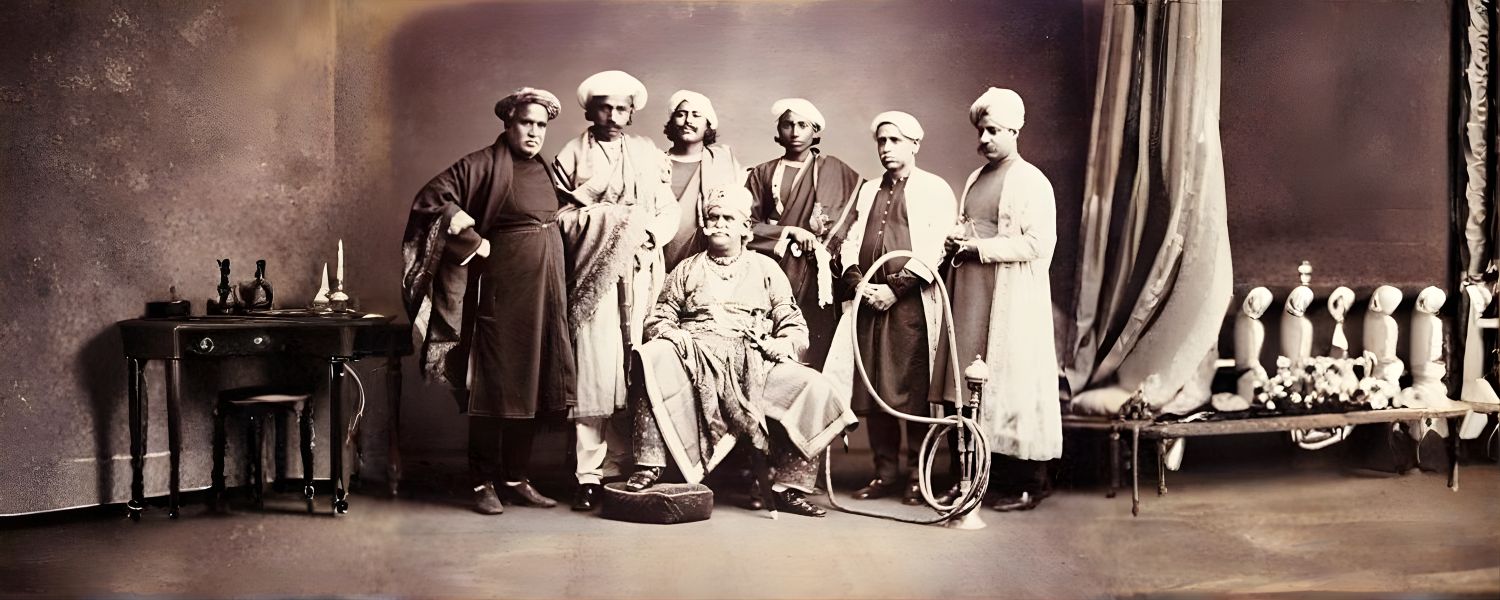
Babhan / Bhumihar...
Welcome
Many websites and blogs on the internet claim to be authoritative sources on Bhumihars or Babhans, but in most cases the information they provide is incomplete or outright misleading. In fact, much of it is factually incorrect and not supported by credible historical or academic references, which makes it difficult to take their claims seriously, therefore such sites unintentionally spread misinformation and create embarrassing confusions about Bhumihars among gullible readers who mistake them for a valid source.
What sets this website apart from them is that we have tried to include as much information here as it’s humanly possible to collect, making this almost an A-Z repository of Bhumihar history and tribal information. Every piece of information posted here is verified and backed with valid references whose names, images and links are given at the bottom of every page to build trust with our readers and ensure the authenticity of all the information posted.
Who are Bhumihars ?
Bhumihars (also known as Babhan in South Bihar and Tirhut) are an endogamous caste, divided into more than 450 exogamous Mools and over a dozen Rishi Gotras, with a population of about 5 million, of whom 3.8 million are in Bihar [1] Caste Survey in Bihar 2023 Go to References according to the Bihar Government’s Caste Survey of 2023, about 1 Million in Eastern Uttar Pradesh [2] United Provinces of Agra and Oudh - Census Go to References , 2-3 Hundred Thousand in Jharkhand and 32000 in Nepal. [3] The Bhumihars of India and Nepal Go to References They were originally the native Brahmins of Magadha, Anga & South Trihut who converted en masse to Buddhism but reconverted to Hinduism after Buddhism declined. Having spent many centuries as Buddhists, they had almost completely shed their ritual status and priestly characteristics and emerged as a distinct caste, yet they still retained their gotras, ved and other genealogical identifications. (refer Origin for more details).
Where do they originate from
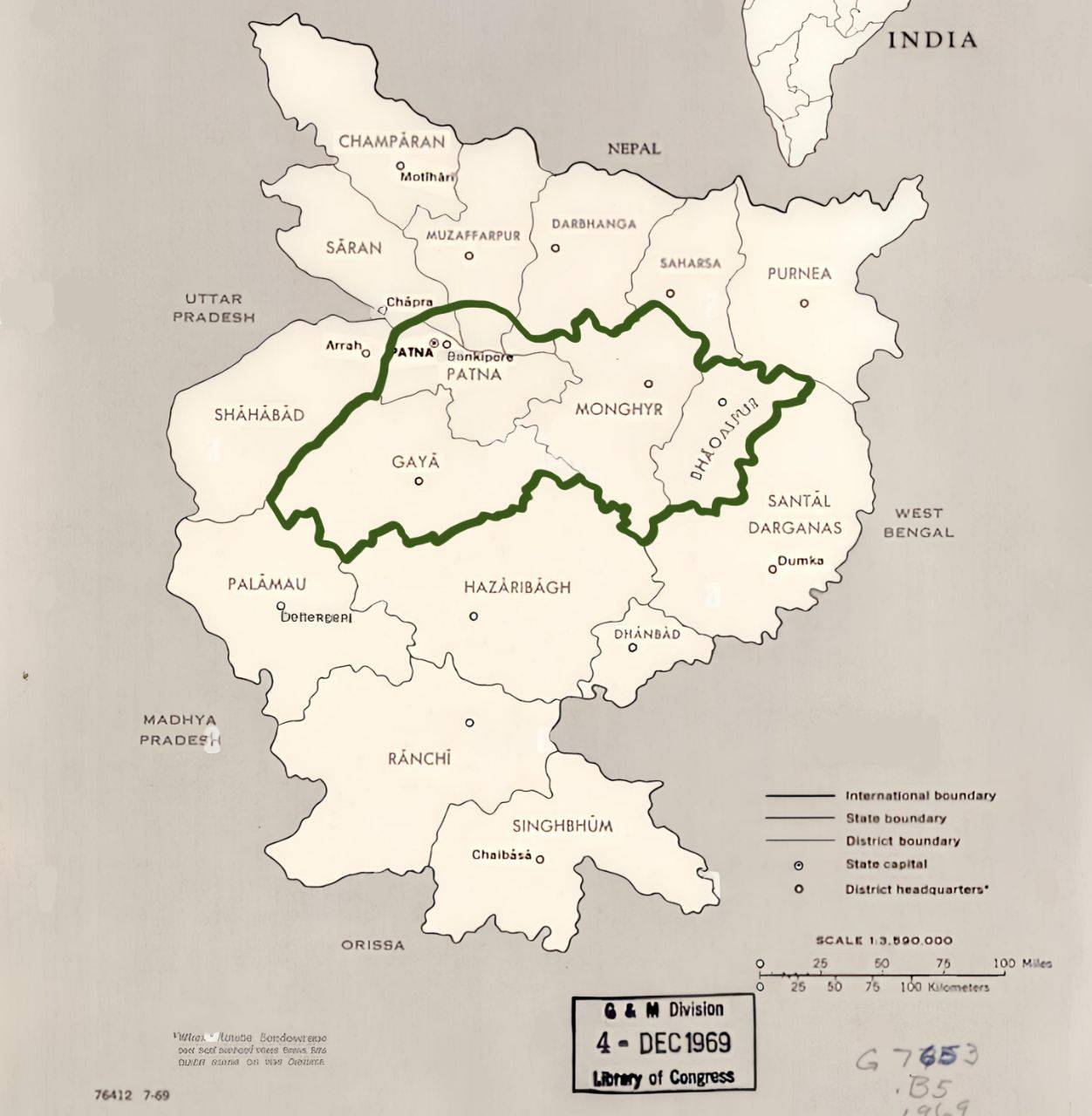
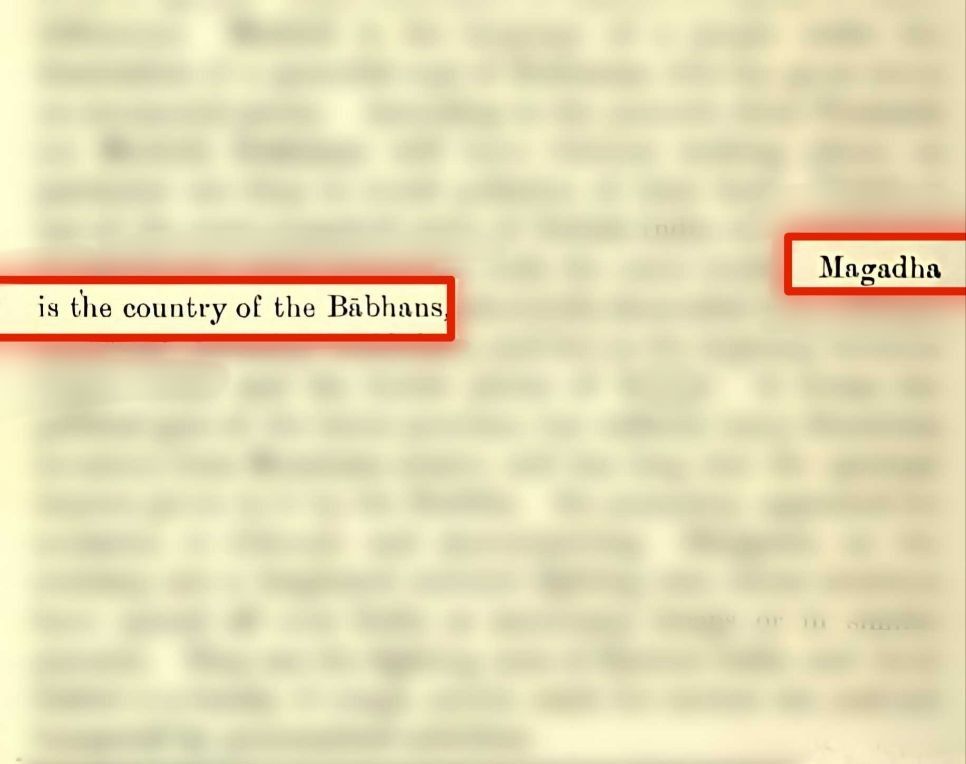
They originated in the Magadha, Anga, and southern Tirhut regions of Bihar and gradually migrated to the Bhojpuri speaking regions of western Bihar and eastern Uttar Pradesh, as well as to the Maithili speaking region of Mithilanchal. However, even today, nearly 50% of their population remains concentrated in their original homeland—Magadha, Anga, and south-central Tirhut (Muzaffarpur and Vaishali).
Although मगध (Magadh) remains the core area of their population, over several centuries they migrated outward and became native to neighbouring regions as well. Their traditional area of settlement stretches from the Bhojpuri-speaking districts in eastern Uttar Pradesh, entire Bihar and into a few Magahi-speaking districts of northern Jharkhand.
More commonly known simply as Babhan, the community began using the name “Bhumihar” more widely in the 20th century, when some Bhumihar caste activists from Uttar Pradesh campaigned in every district of Bihar & Jharkhand to promote this new 'Bhumihar' name and urged people to abandon the real & older Babhan designation. [11] Community Warriors: State, Peasants and Caste Armies in Bihar Go to References
Some Bhumihar Mools also originate from Central UP and Nepal, but they’re a miniscule minority. The overwhelming majority (90%) of Bhumihar’s "Mūla Sthāna", i.e, their place of origin are traced to Magadh region, Bihar.
What is the present day official classification of Bhumihars ?
Under the modern caste classification of the Government of India, they are considered a forward caste i.e. they don't require government sanctioned emancipation program and therefore and placed in the “General Category” or “Unreserved” category nationally and in every state as well. This means they are not entitled to reservation, the system of affirmative action of the Indian government, since they were historically not backward, oppressed and could never be deprived of basic rights by any other Hindu caste or tribe.
Stature and traditional position in society
Nearly all the big Zamindars of Bihar were Bhumihars. They were the principal जमींदार (zamindars) and landlords, [4] Constructing Caste in Colonial India Go to References and and have been landlords since before the advent of the Muslims and the British in the eastern Gangetic plains, [5] Genealogies of Labor Servitude in Colonial India Go to References despite constituting only about 2.8% of the state’s population, they headed many of its most prominent zamindaris, nearly all the big Zamindars of Bihar were Bhumihars. The only & the largest princely state in the region spanning from Central UP till Bihar, belonged to Bhumihars. In the censuses of 1901 & 1911, it’s reported that the local people considered Bhumihars as superior to the Rajpoots, effectively placing them at the 2nd position in public estimation. [6] Census of India, 1911, Volume I Go to References [7] Census of India, 1901, Volume VI Go to References
The 1901 Census of British India recorded Bhumihars as holding the largest number of zamindaris in Bihar, that is, they were the caste with the highest number of landlords in the province. [8] Bihar Mein Samajik Parivartan Ke Kuch Aayam Go to References In Uttar Pradesh, Bhumihars expanded their zamindaris by launching conquests against the estates of other Rajputs and Brahmins, [9] Tradition and Transition in Northern India Go to References thereby extending their landed influence beyond Bihar. Despite making up only about 2.8% of the population, or around 3.8 million people in a province of 130 million, Bhumihars have produced the first and second longest-serving Chief Minister of Bihar, several Directors General of Police, Chief Justices of the Patna High Court and one, even of the Supreme Court of India, as well as multiple Chief Secretaries. Their contributions form a long and never ending list, but the main takeaway is that Bhumihars have consistently punched far above their weight and secured a distinctive position in the social and political fabric of the eastern Gangetic plains, despite being numerically small and demographically insignificant in terms of sheer population and limited geographical spread.
Explore
Navigate through our sections to learn about the origins of the Bhumihar community, read about genetic research, discover the legacy of our rulers and find out more about this project