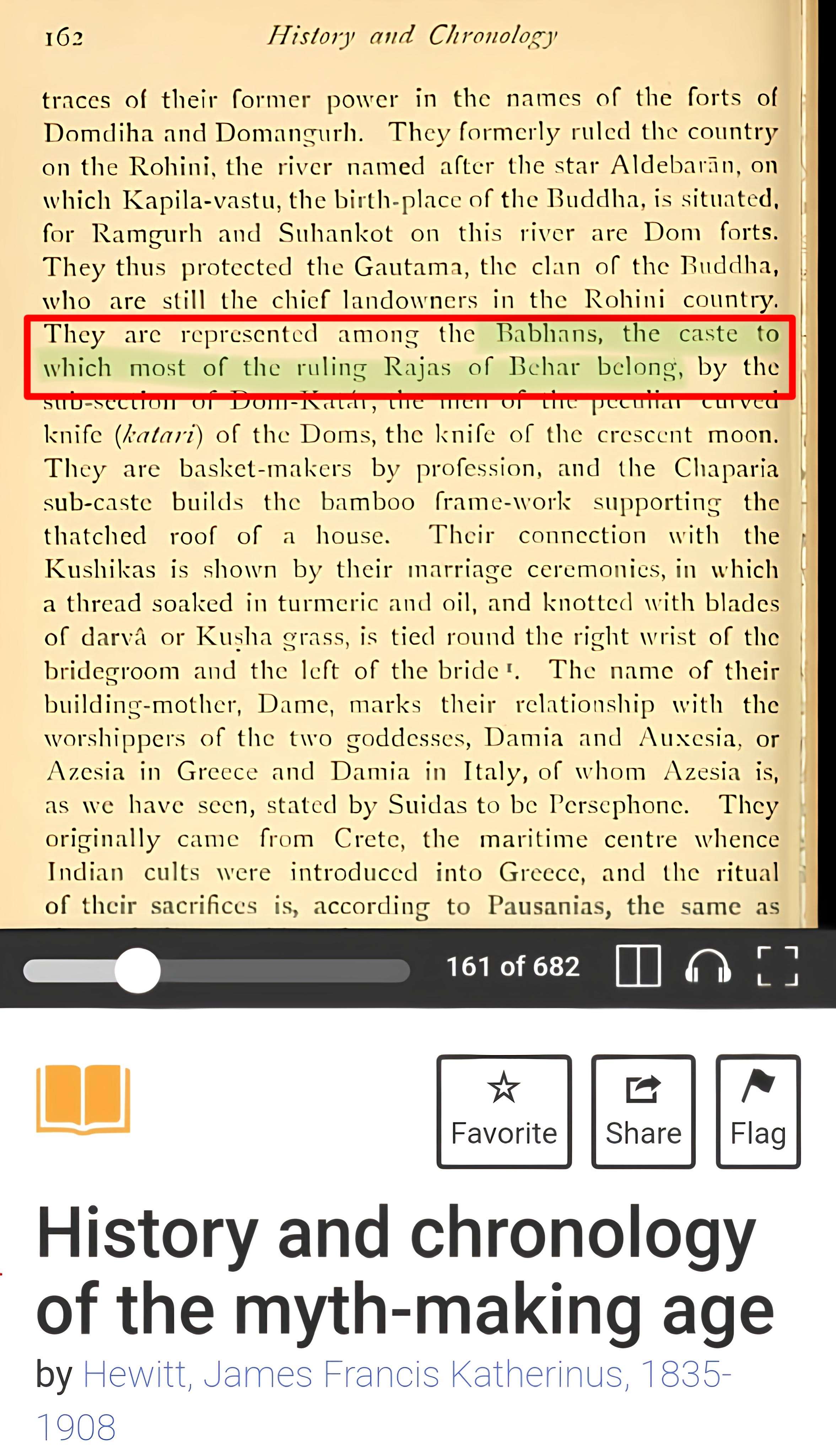
1)
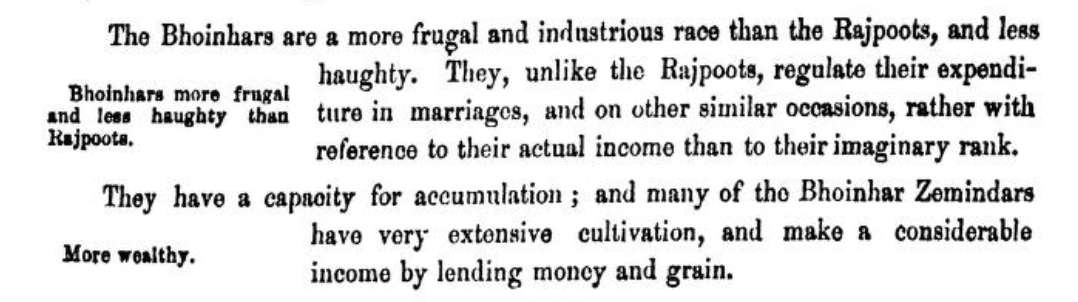
Bhumihars are more industrious and better at managing their expenses than
Rajputs.
[1]
Memoirs Of The Ghazeepoor District
Go to References
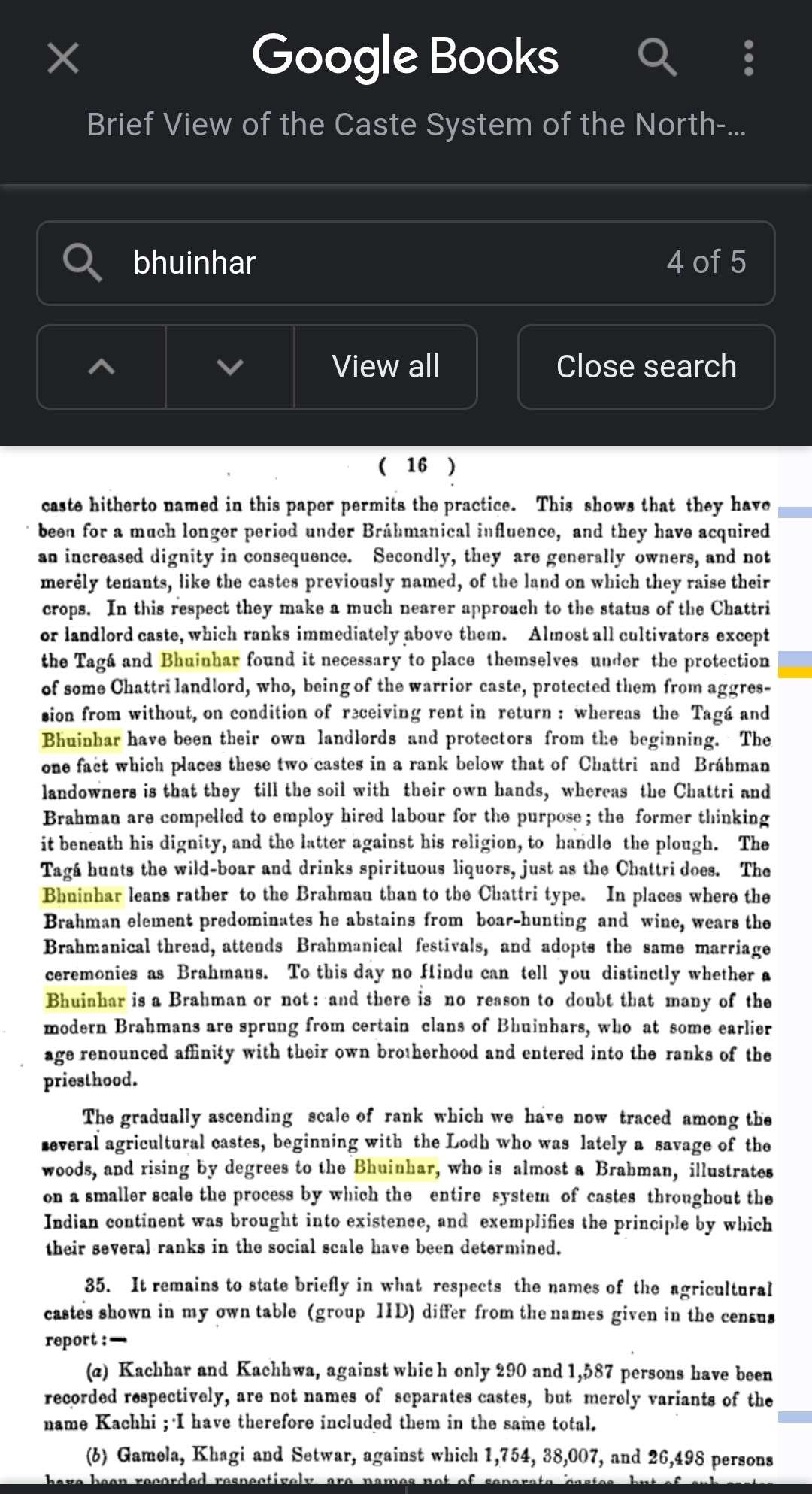
2)
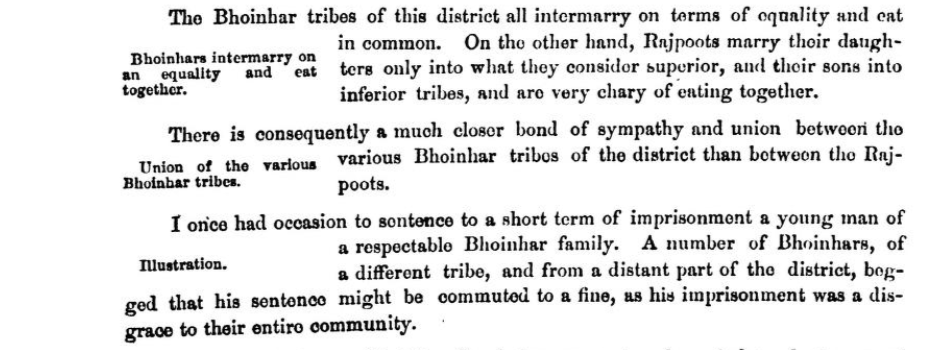
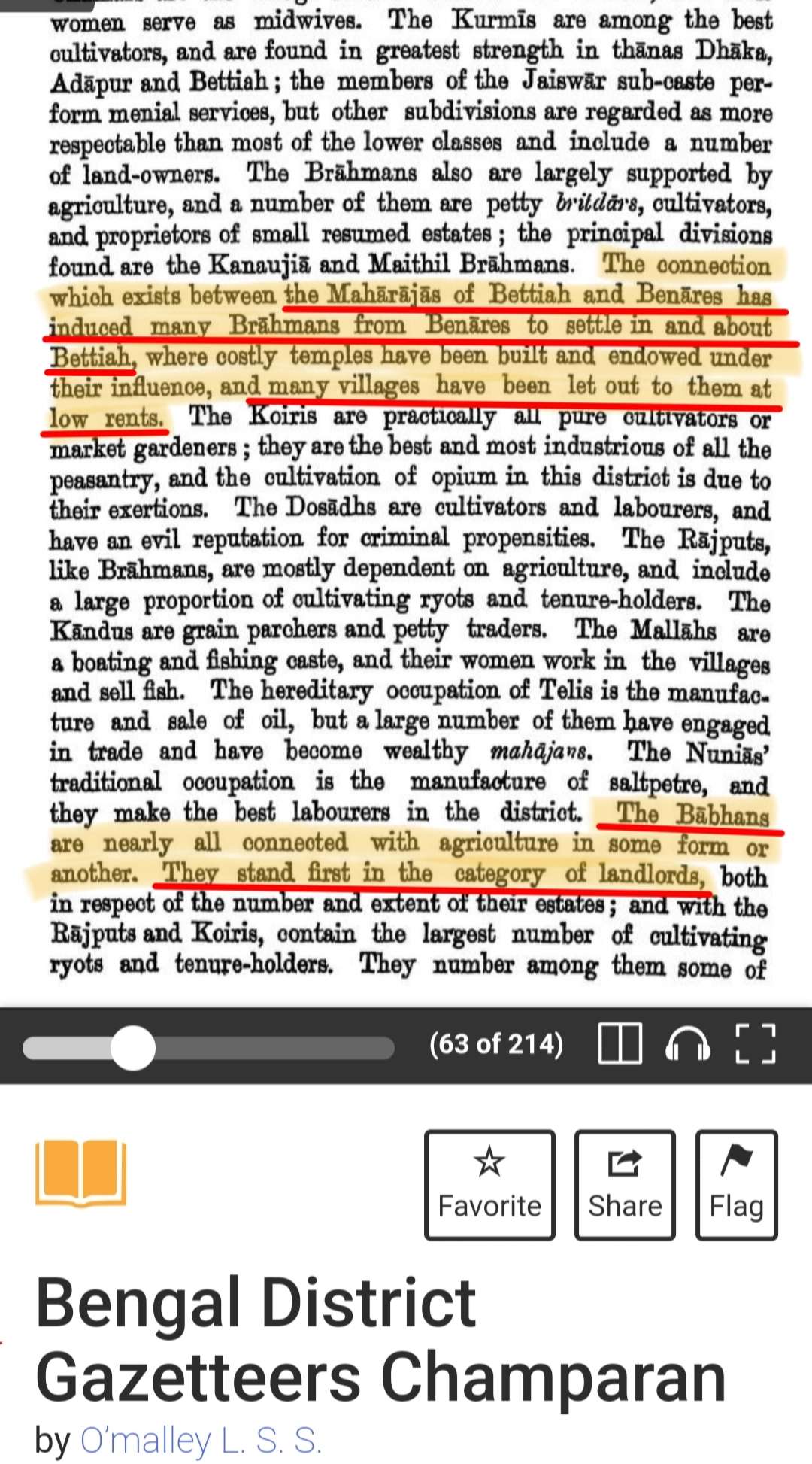
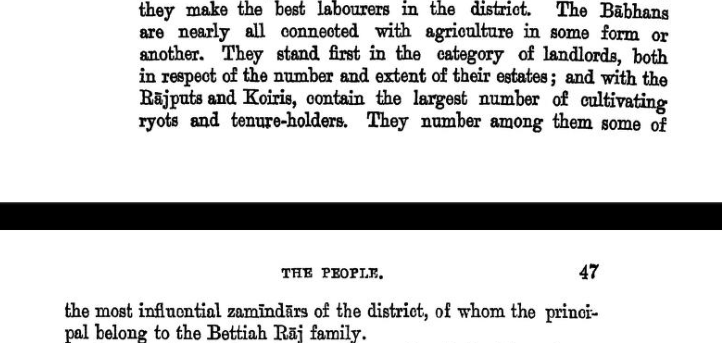
Brits also highlighted the extremely cohesive nature of Bhumihar society, when a
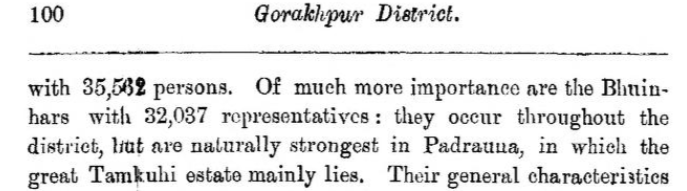
Bhumihar was found in trouble, other Bhumihars even from faraway places, used to
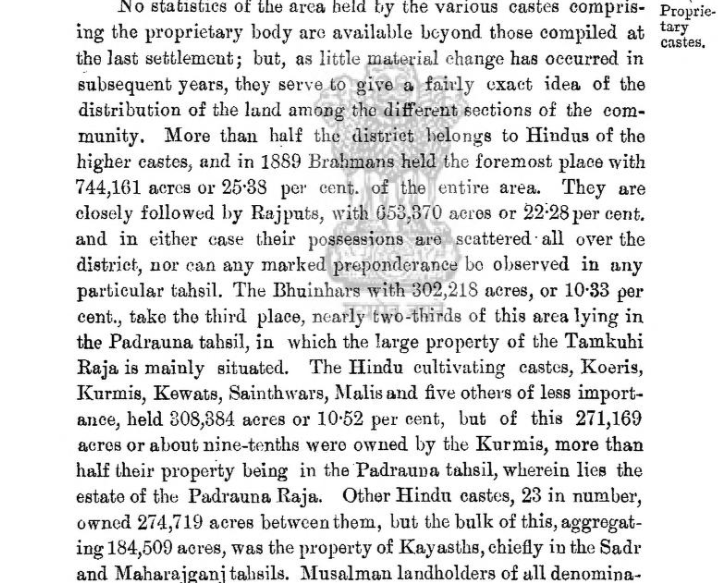
come
forward and vehemently oppose the sentencing of a Bhumihar if he was to be
penalised
[1]
Memoirs Of The Ghazeepoor District
Go to References
3)
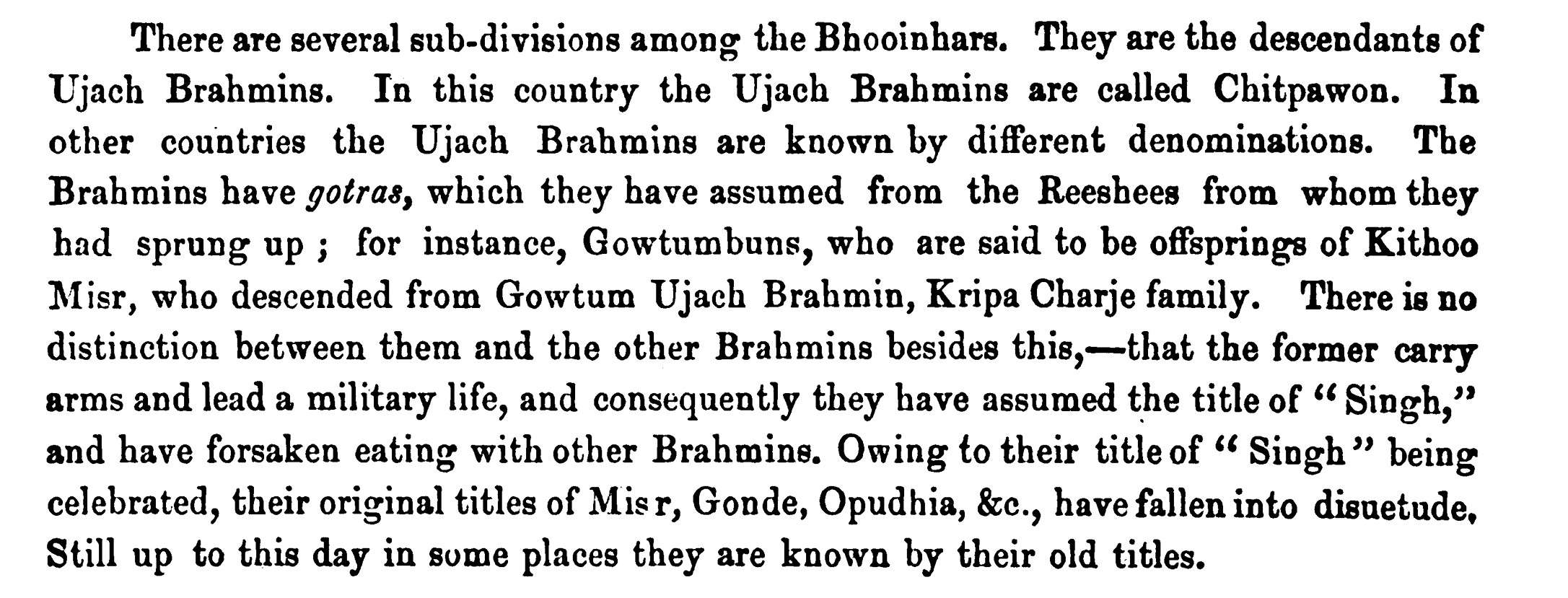
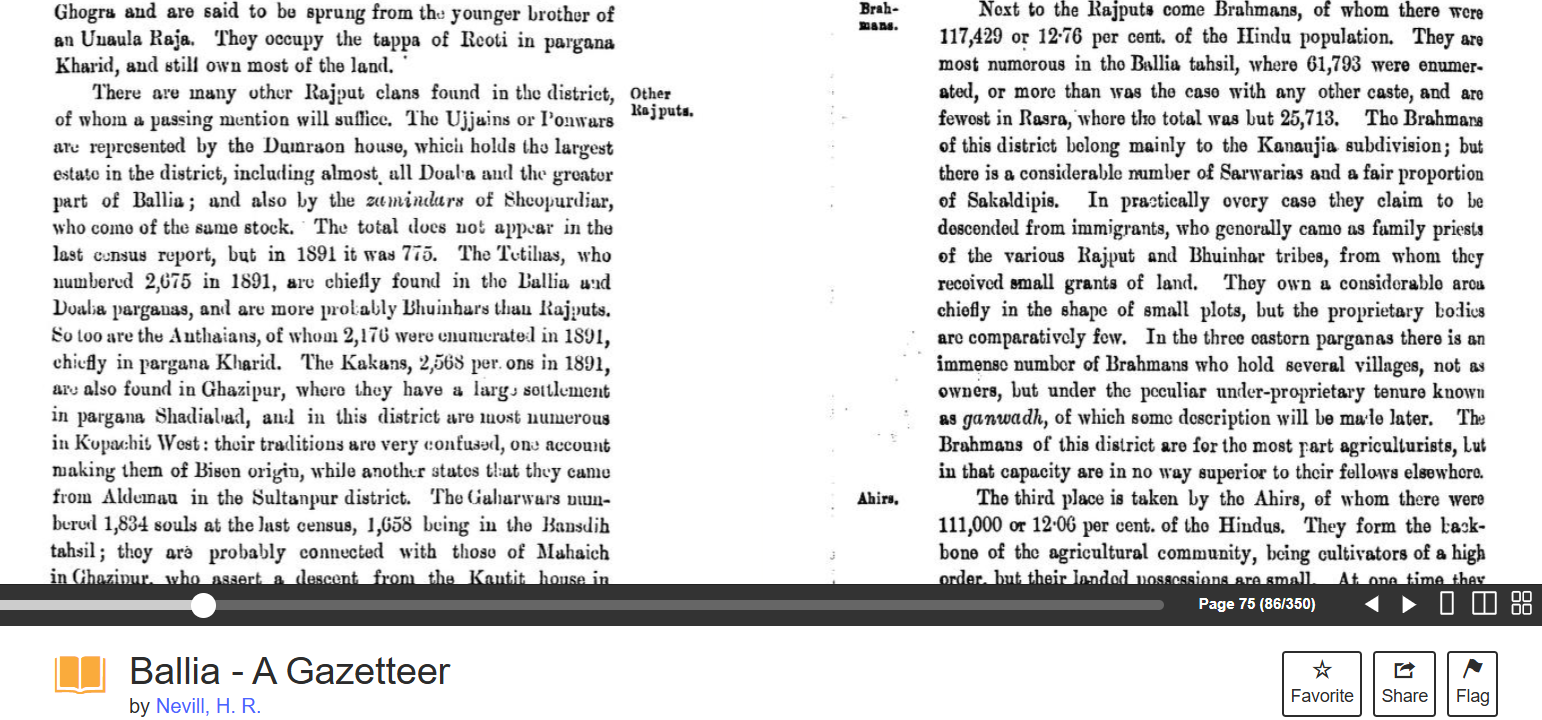
Bhumihars affixed the title of Singh signalling their enlistment in the army
[1]
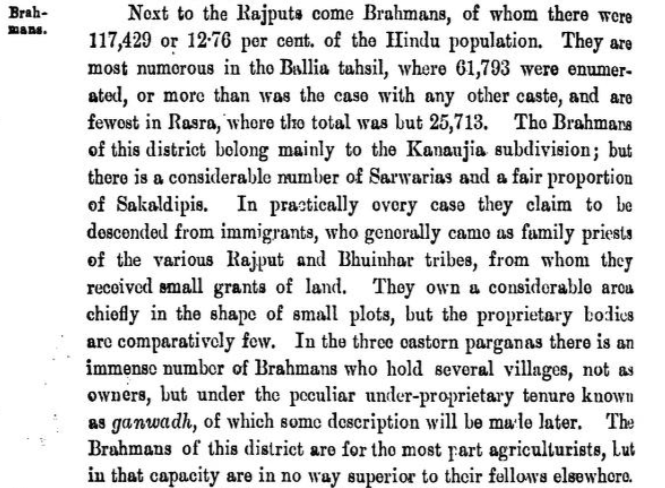
Memoirs Of The Ghazeepoor District
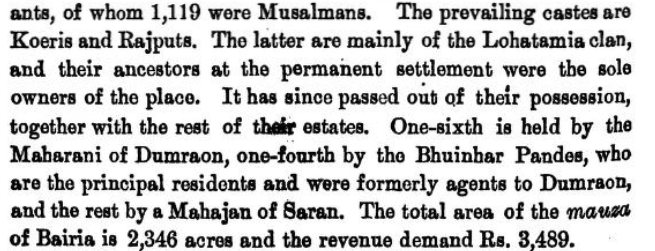
Go to References

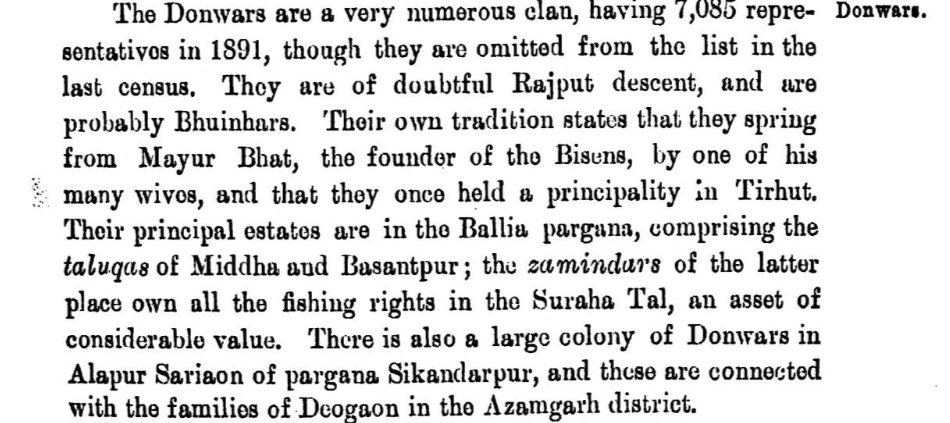
4)
Bhumihars living in Benares were exempted from capital punishment, like the genuine
Brahmans, but they did not undertake priestly services nor were they sought after by
other castes too
[1]
Memoirs Of The Ghazeepoor District
Go to References

5)
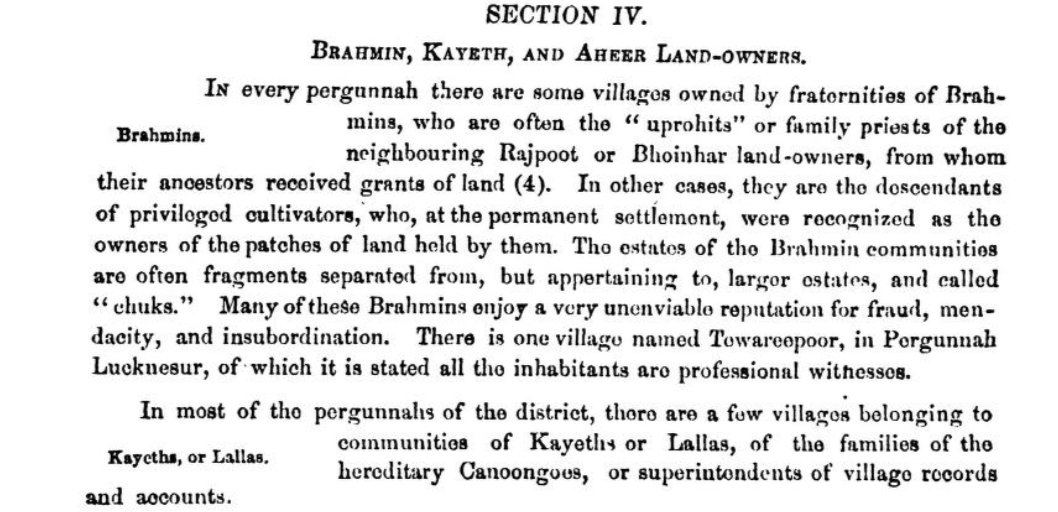
The Brahmans used to receive grants of land from Bhumihar landlords in Ghazipur
[1]
Memoirs Of The Ghazeepoor District
Go to References
6)
British noted that Bhumihars were the only cultivators who didn't seek the
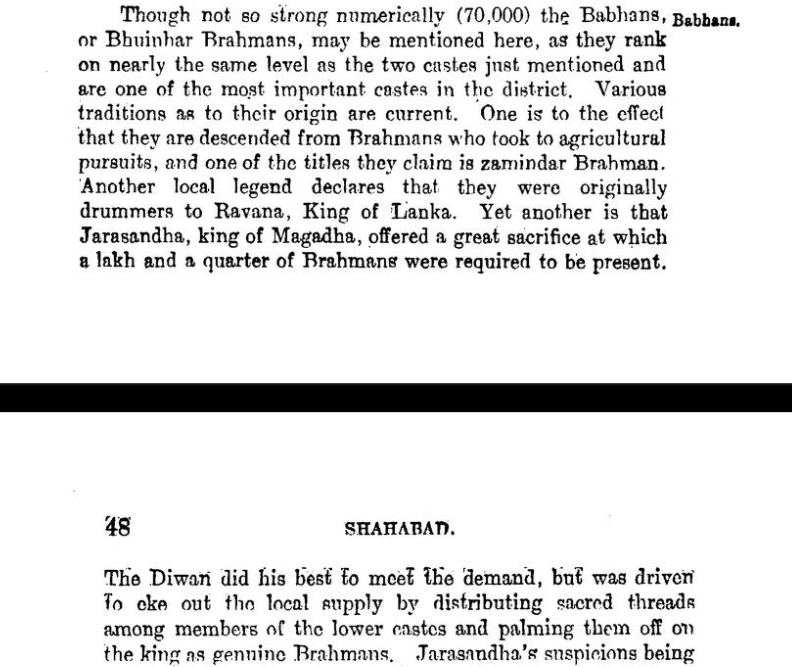
protection of
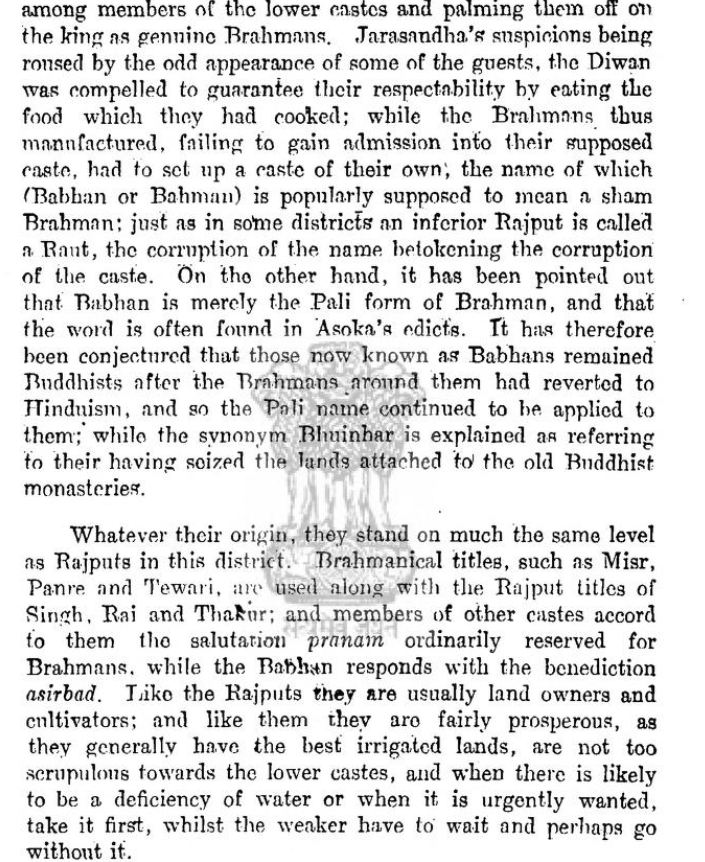
Kshatriyas or paid them any rent. Bhumihars were their own protectors.
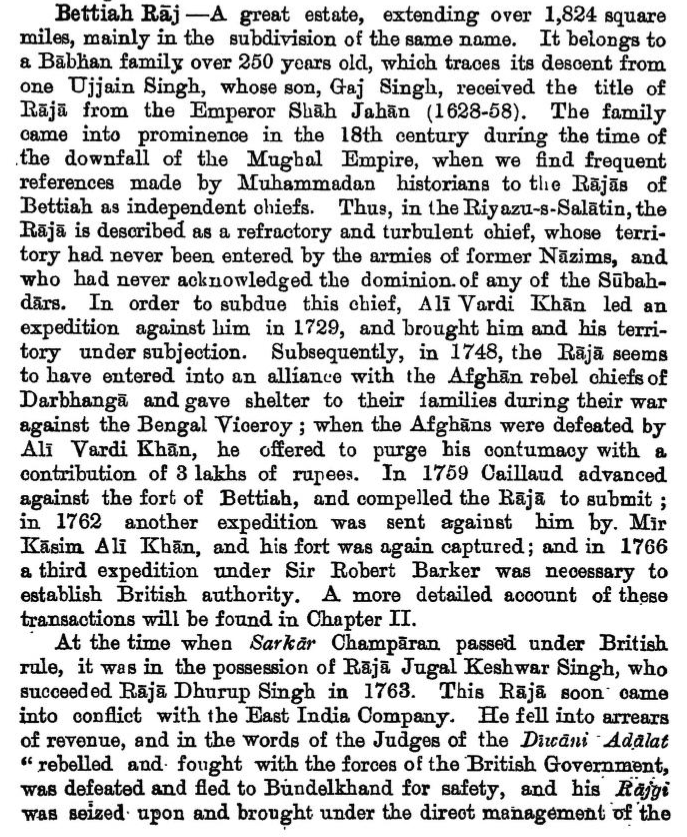
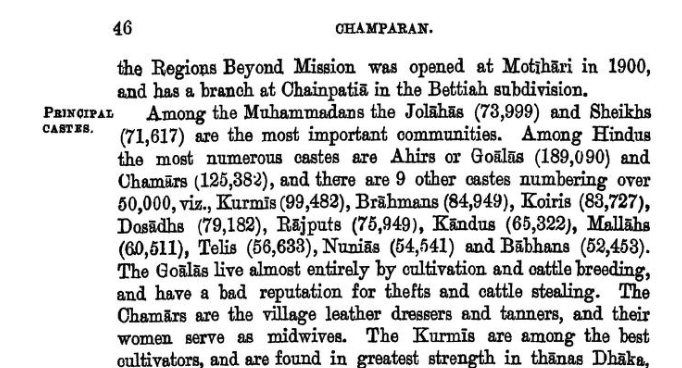
[2]
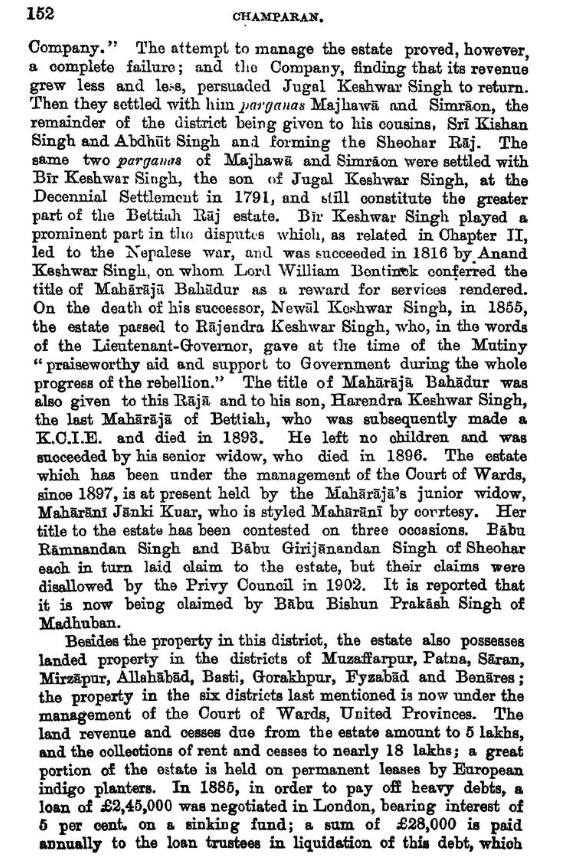
Brief View of the Caste System of the
North-Western Provinces and Oudh
Go to References
7)
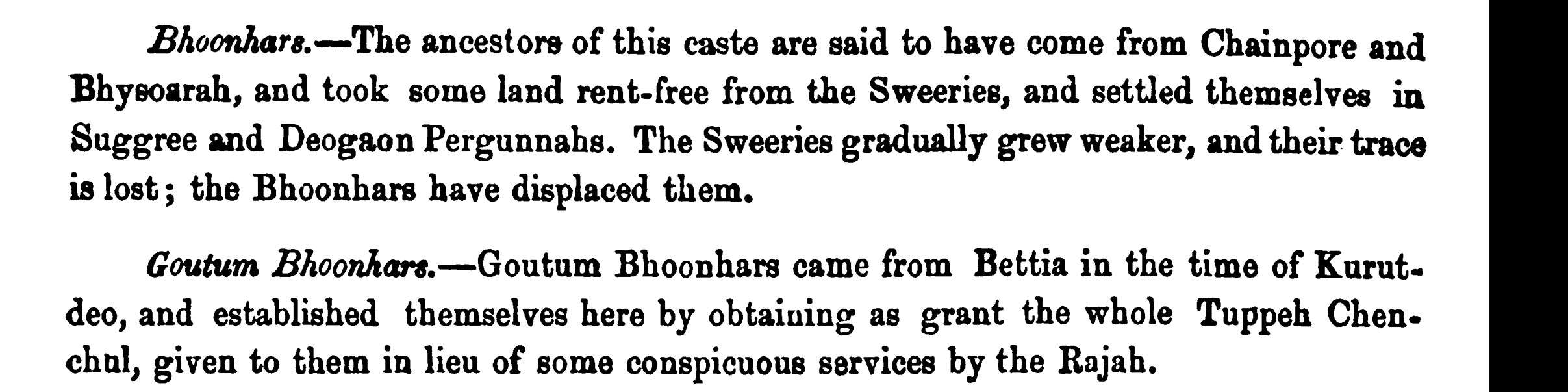
Bhumihar Maharajas used to displace and resettle Brahmans in and out of their states
as
they felt necessary
[3]
Champaran Gazetteer
Go to References
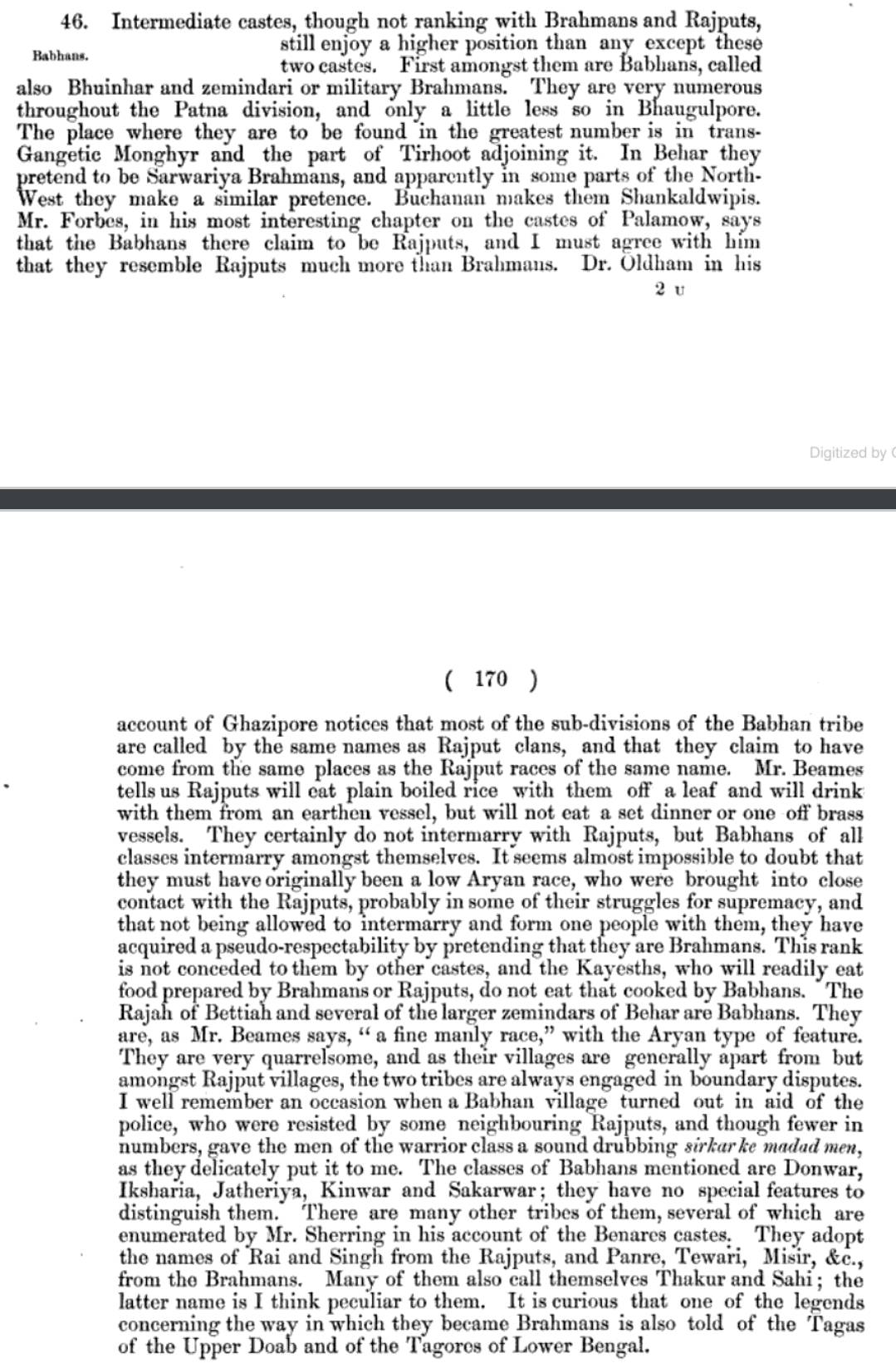
8)
Bhumihars were only 35000 in Gorakhpur Division
Gorakhpur Gazetteer
9)
Bhumihars had the highest land ownership per capita in Gorakhpur Division of British
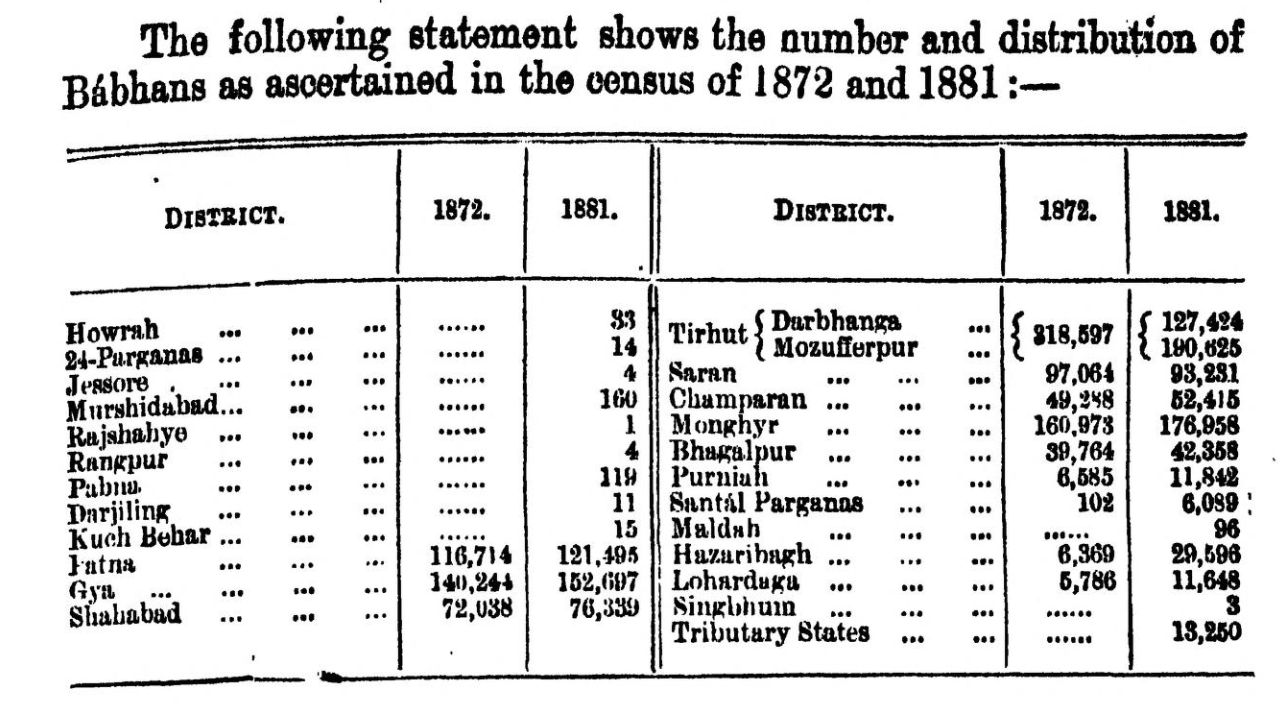
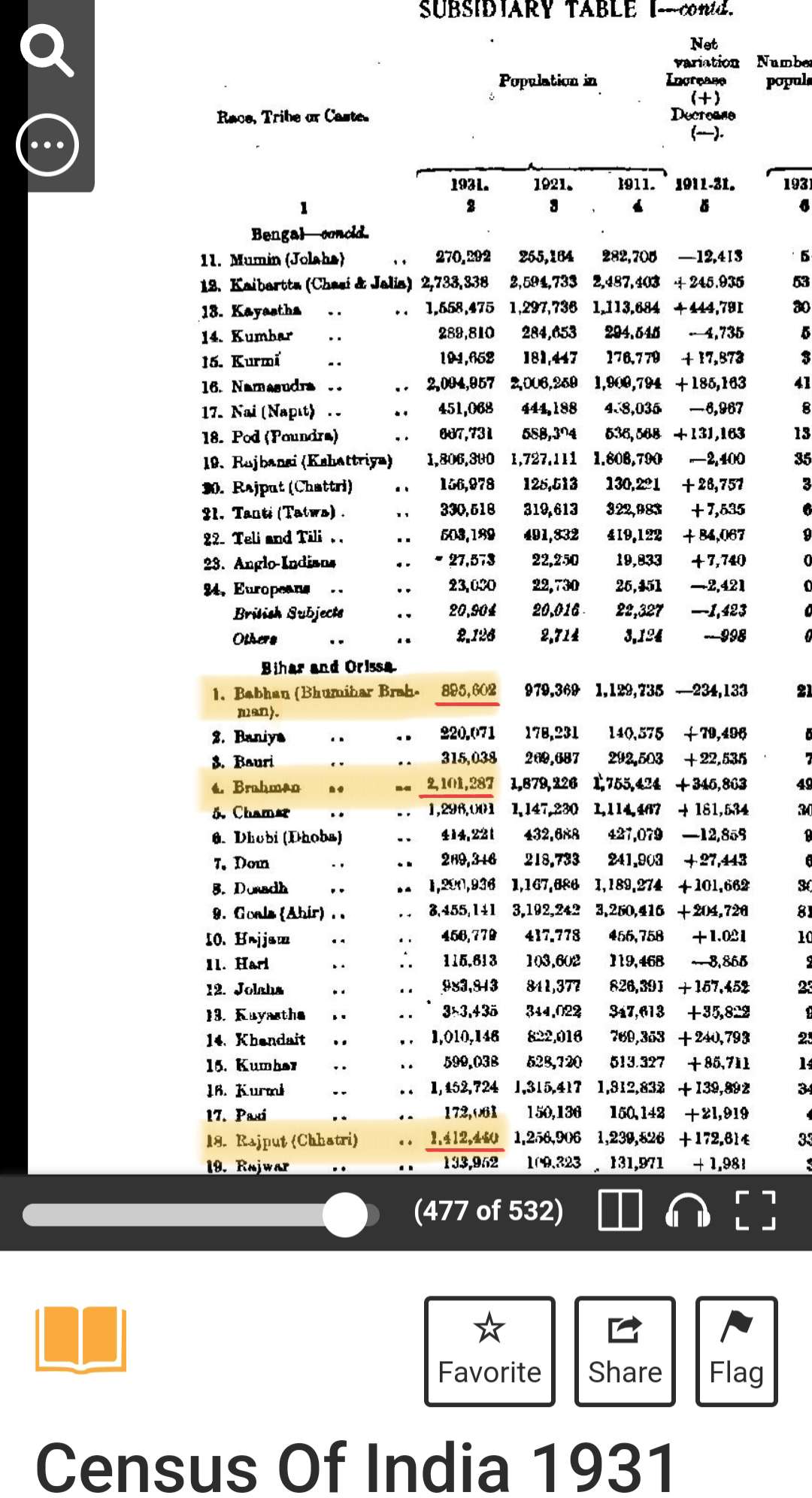
times (Present day Gorakhpur+Deoria+Kushinagar)
Bhumihars were only 35000 in Gorakhpur, but held 10% of the total land whereas
Brahmans
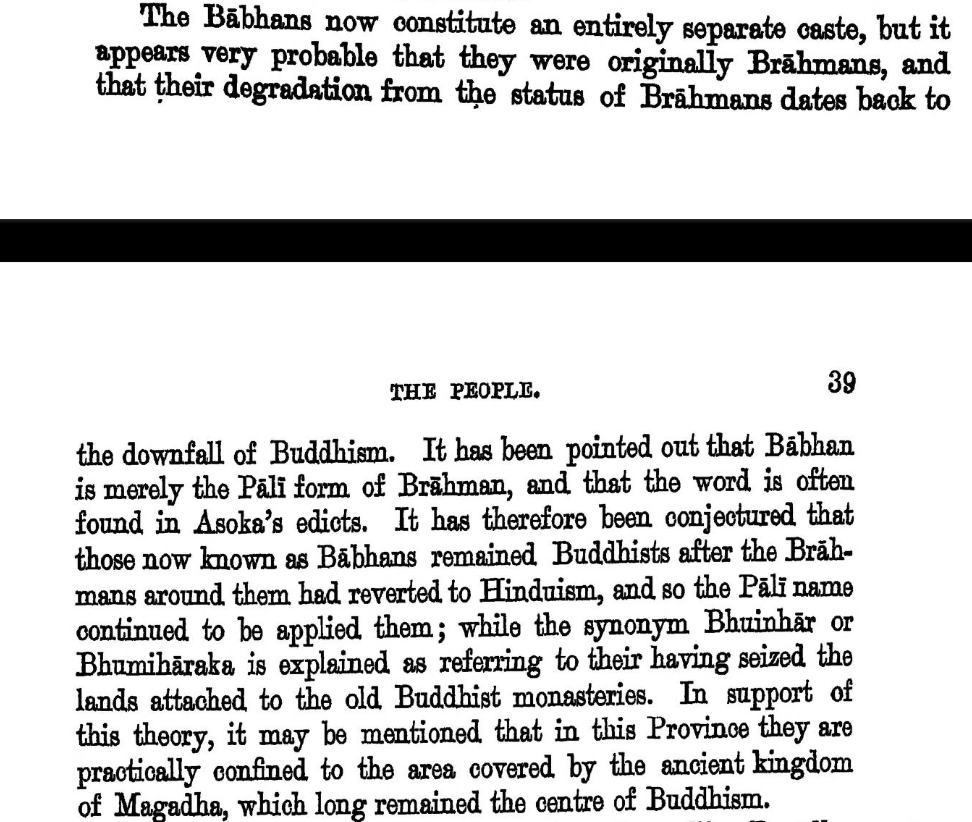
and Rajputs were 260000 and 140000 respectively, but held only 25% and 22% of the
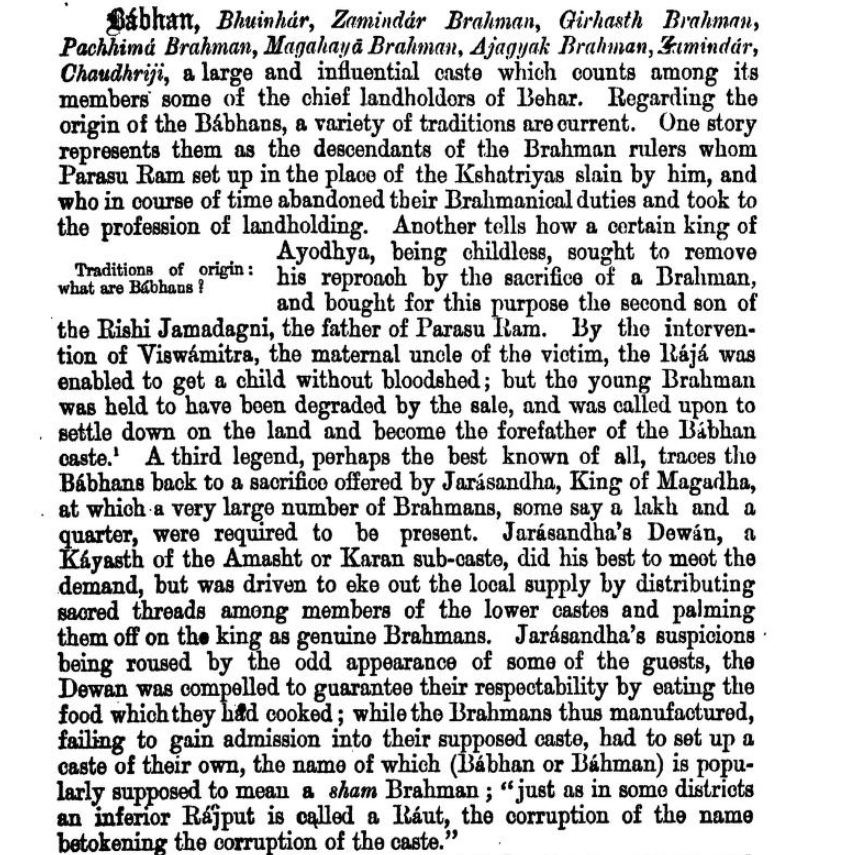
land.
Rajputs were 4 times and Brahmans were 8 times more than Bhumihars in Gorakhpur
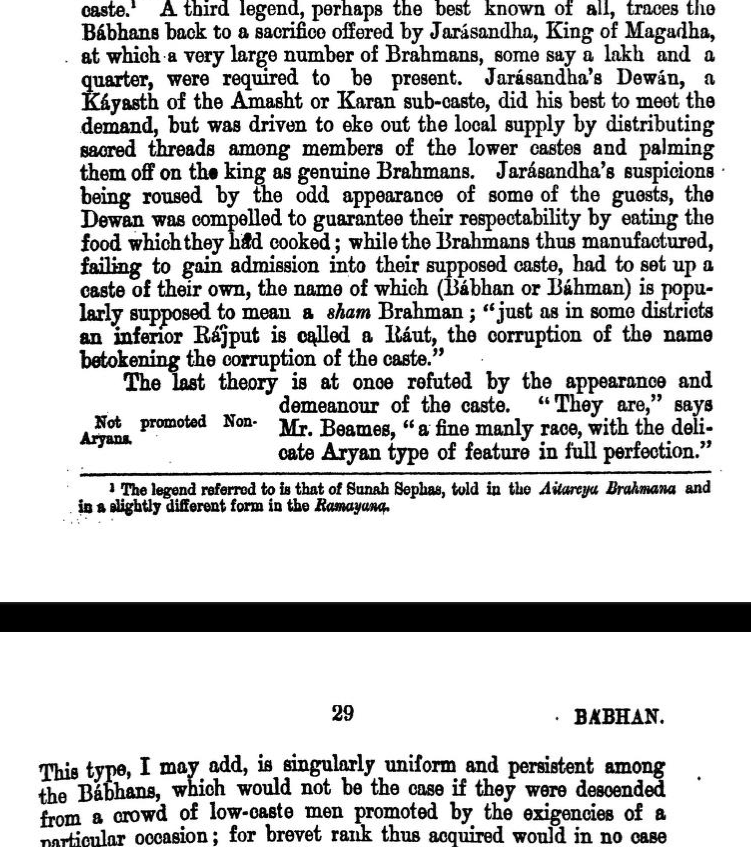
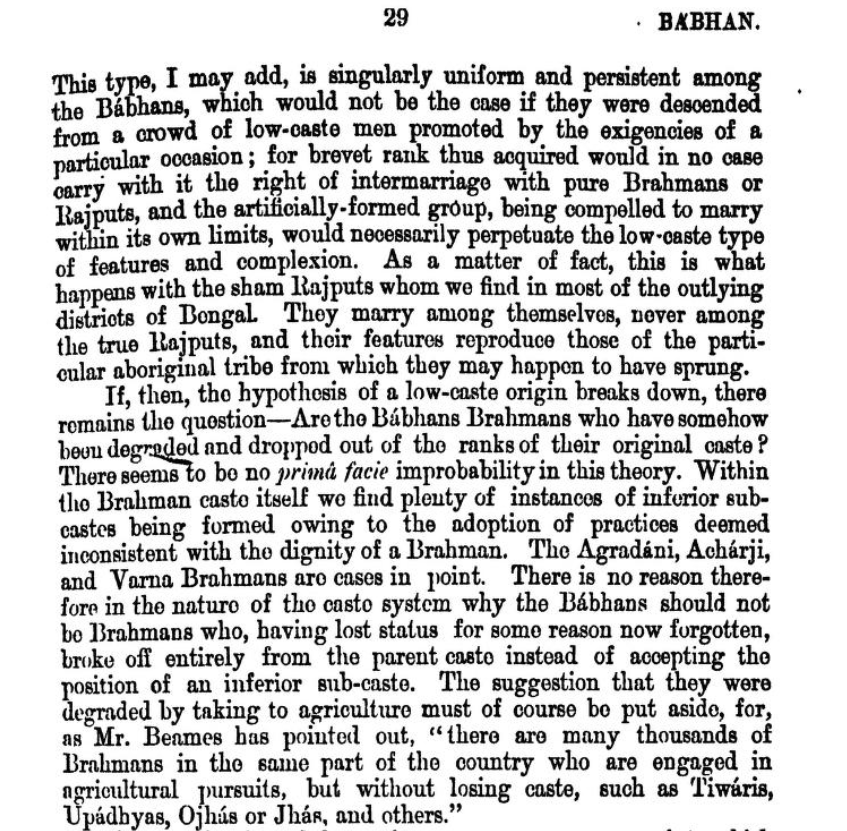
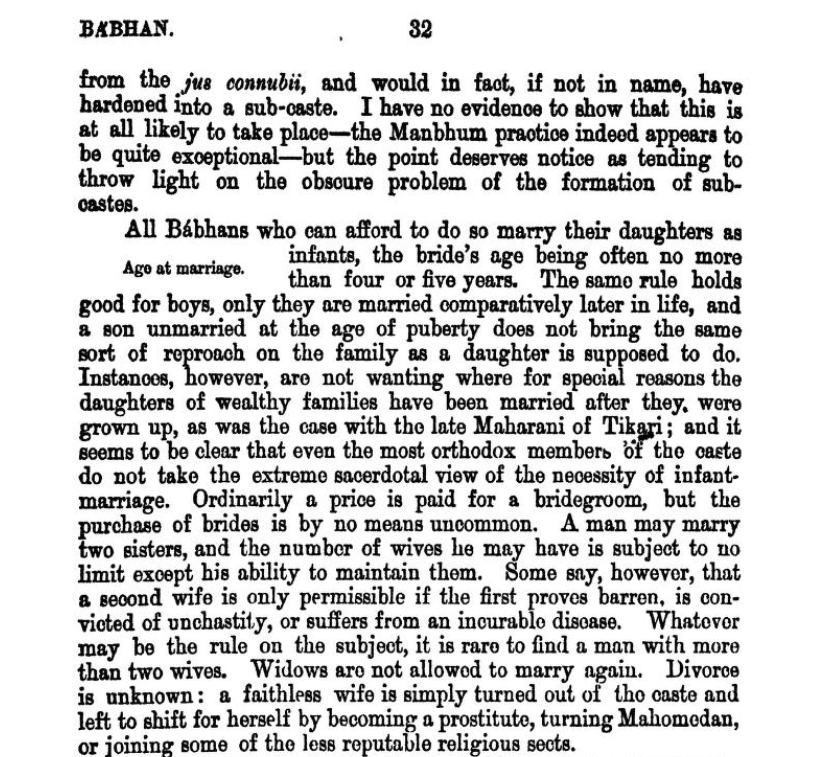
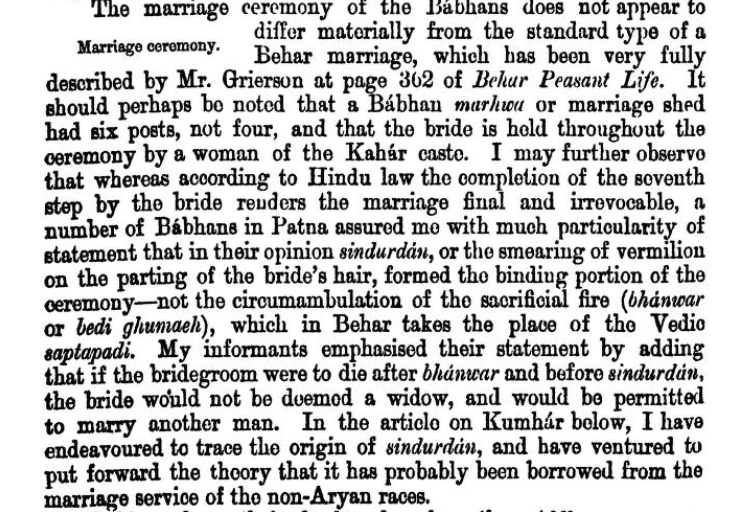
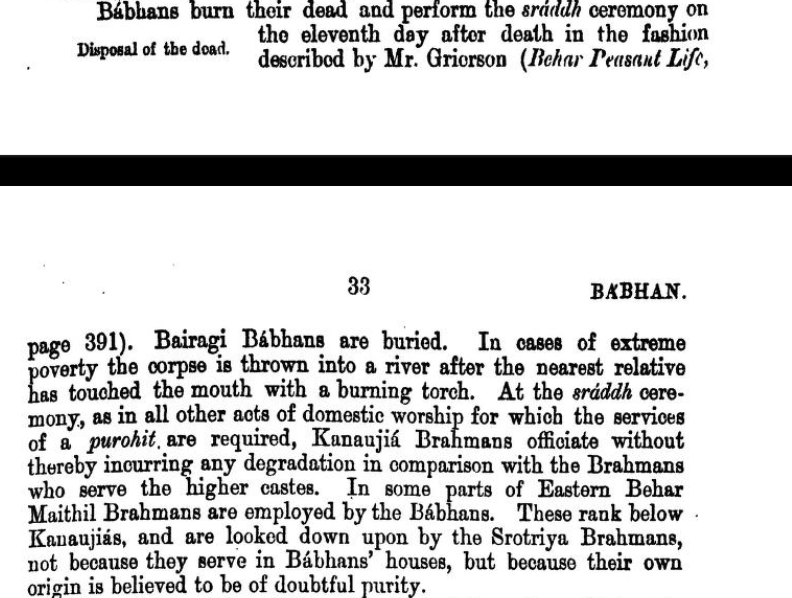
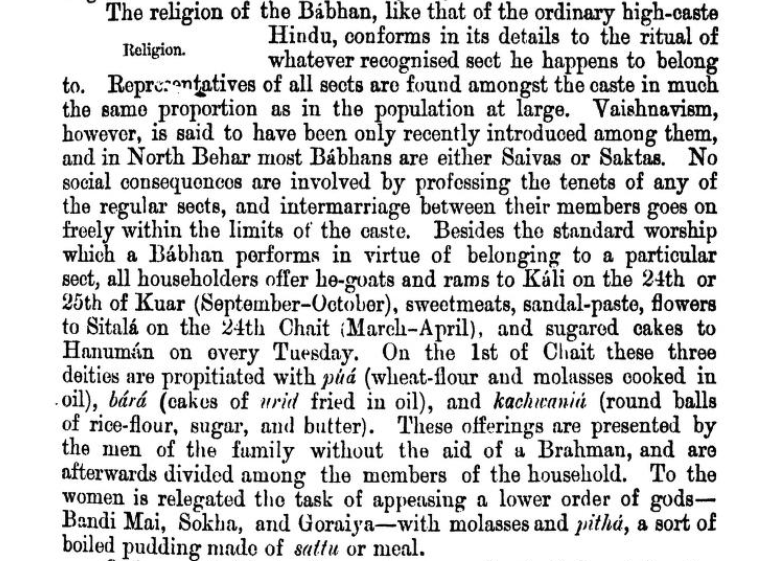
Division, but held only 2.2 times and 2.5 times more land.
Bhumihar's land ownership per capita was more than Brahmans and Rajputs in the
Gorakhpur
Division
[4]
Gorakhpur Gazetteer
Go to References
10) Ghazipur
Population.
Bhumihar - 37000
Brahman - 62000
Rajput - 78000
Landholdings.
Bhumihar - 23%
Brahman - 10%
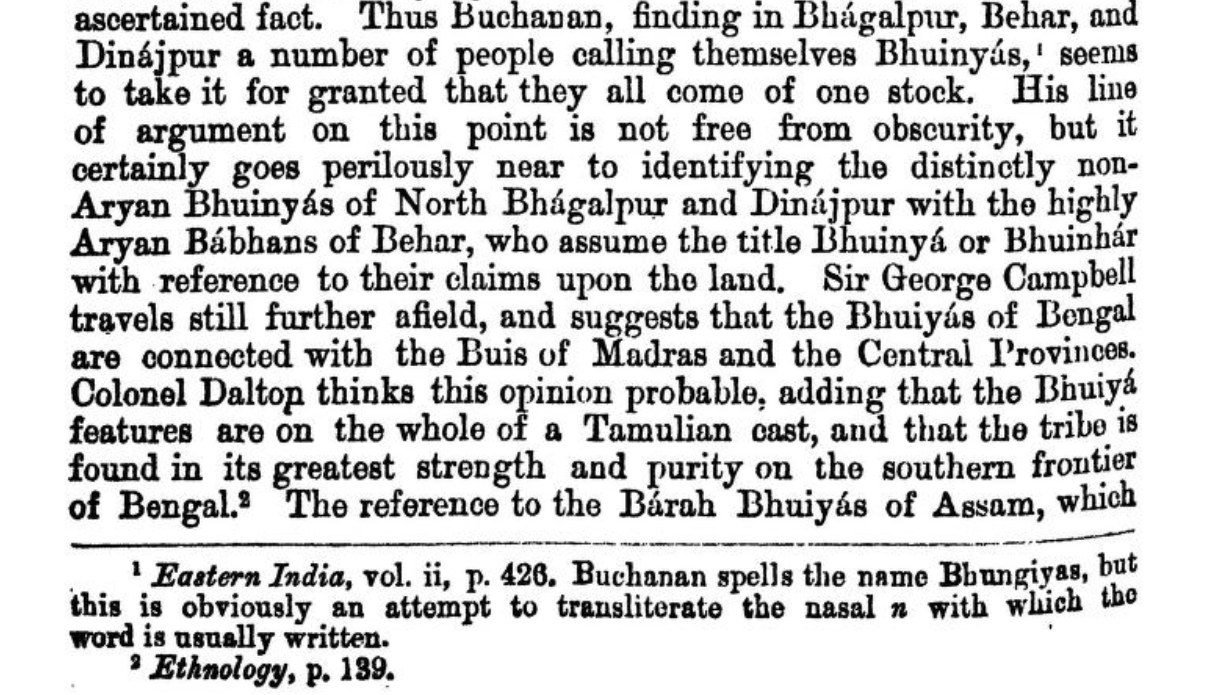
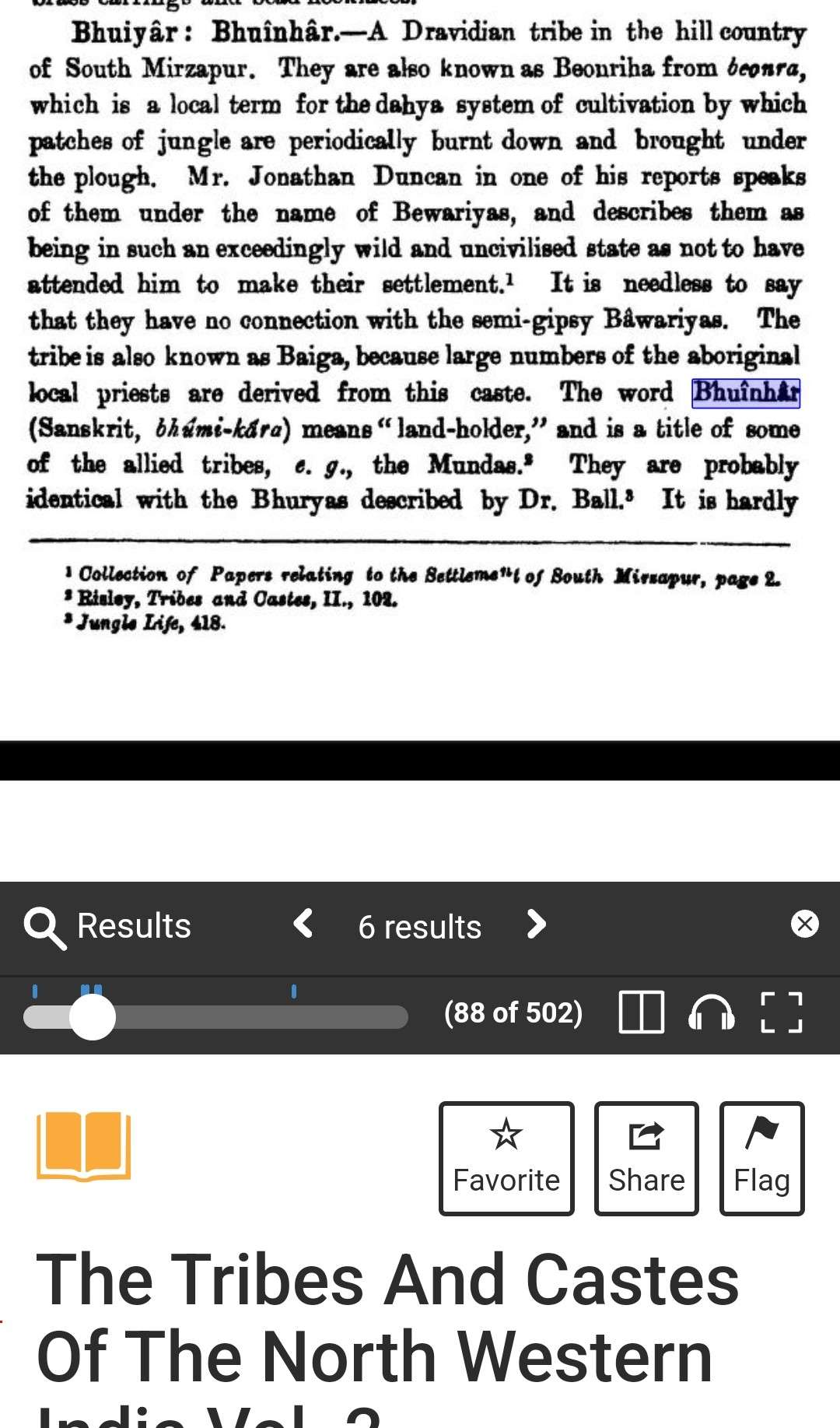
Rajput - 31%
Land ownership per capita was the highest of Bhumihars
[5]
Ghazeepoor Gazetteer
Go to References
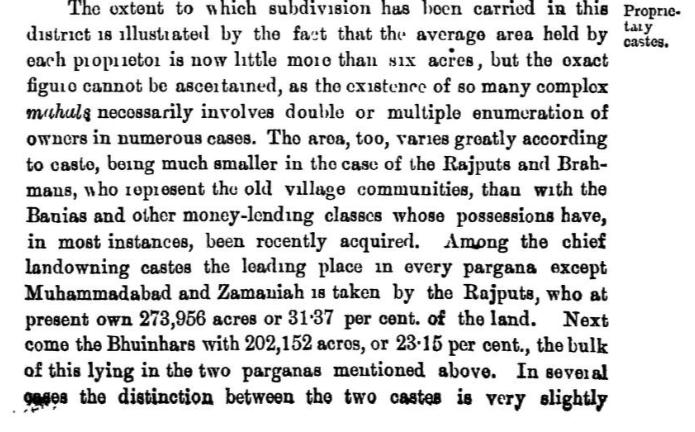
11) Rajputs were two times more than
Bhumihars in
Ghazipur
[5]
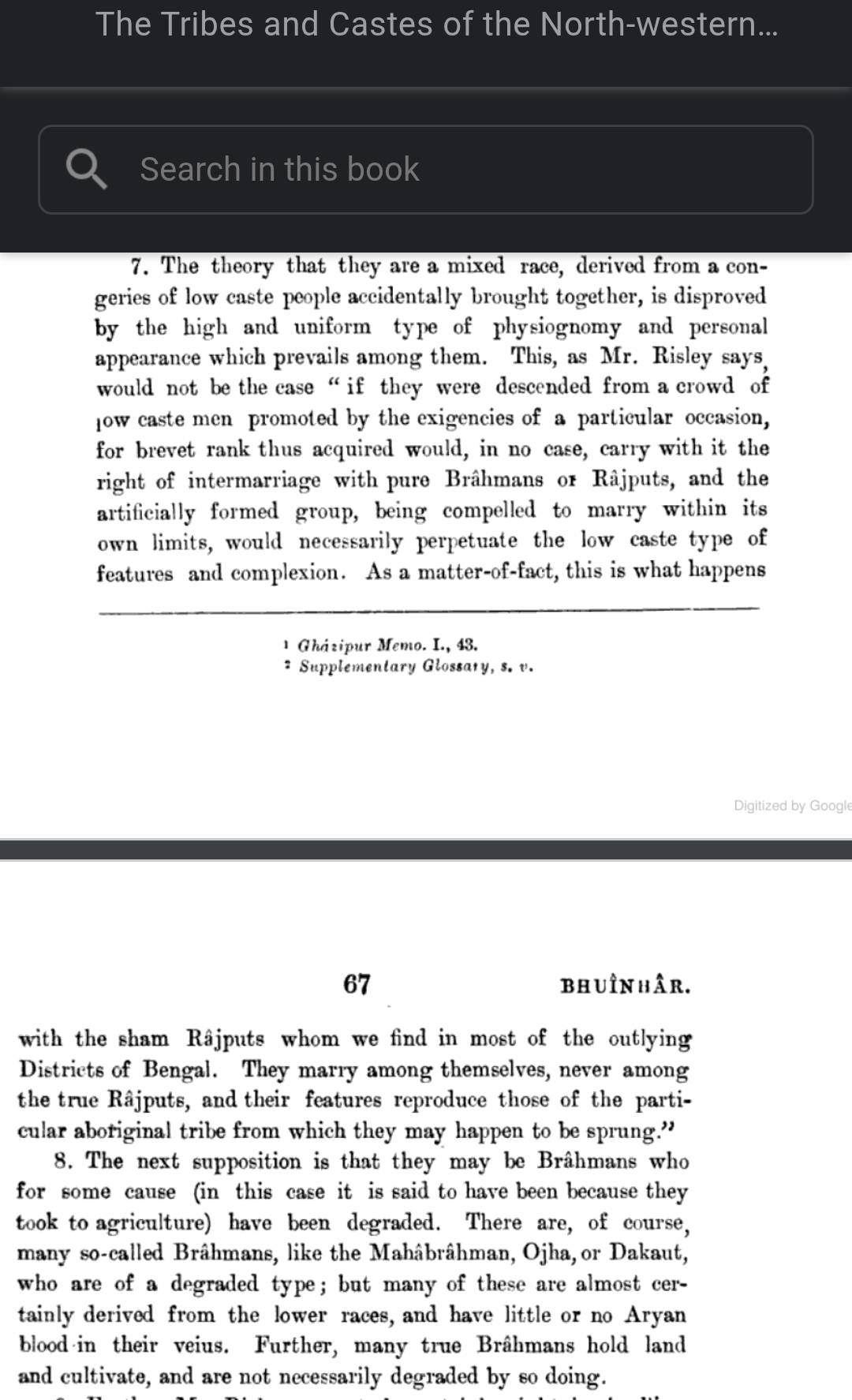
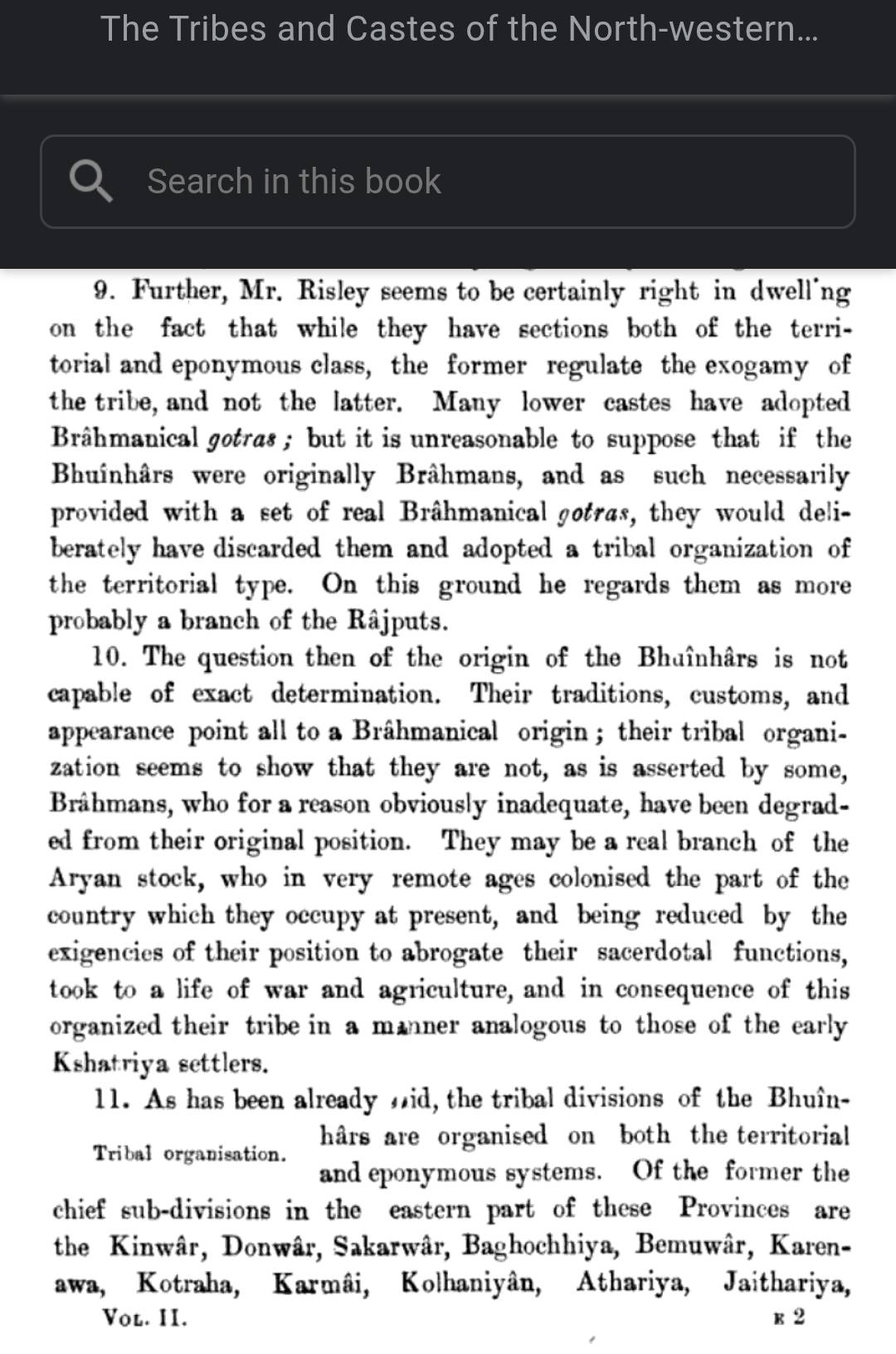
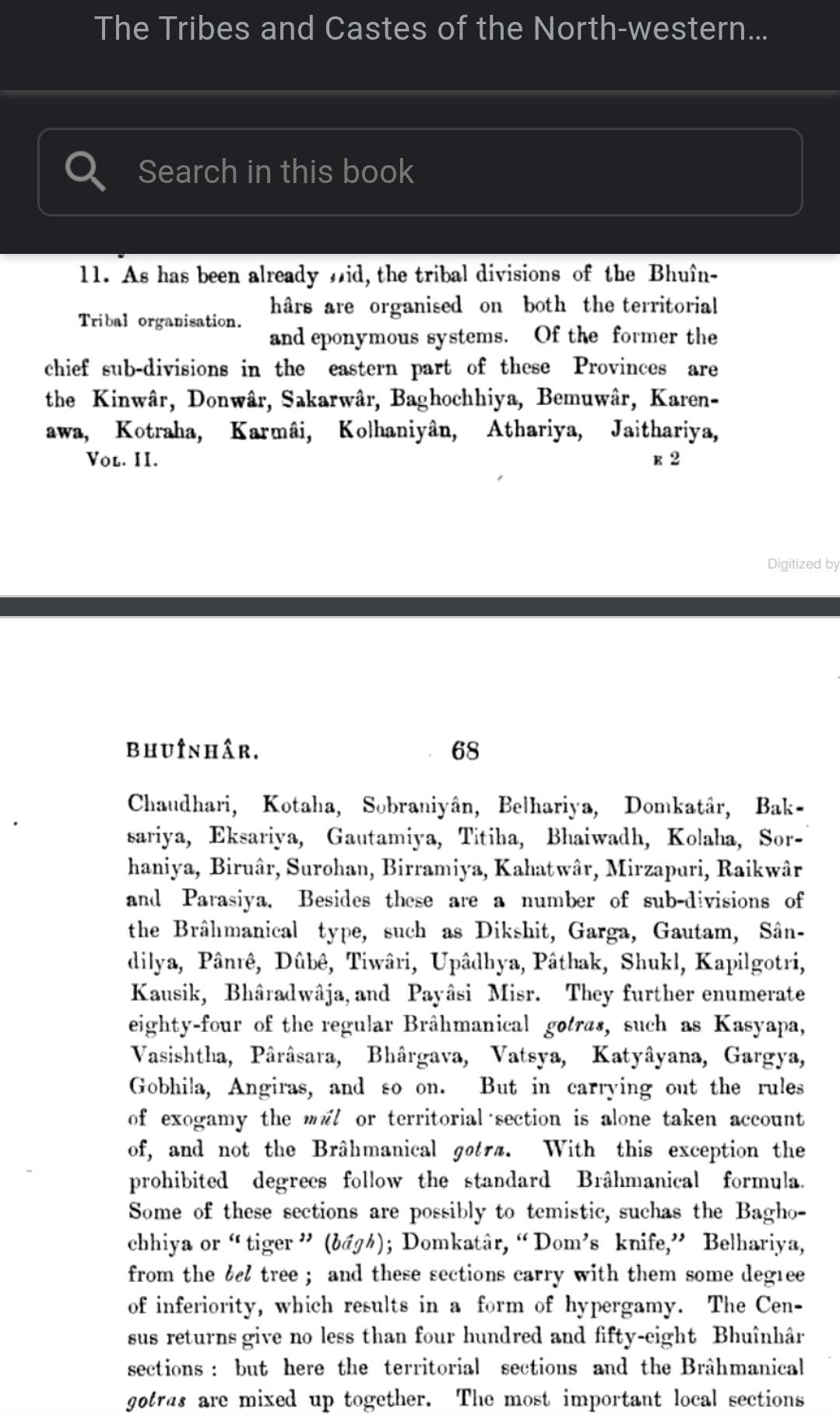
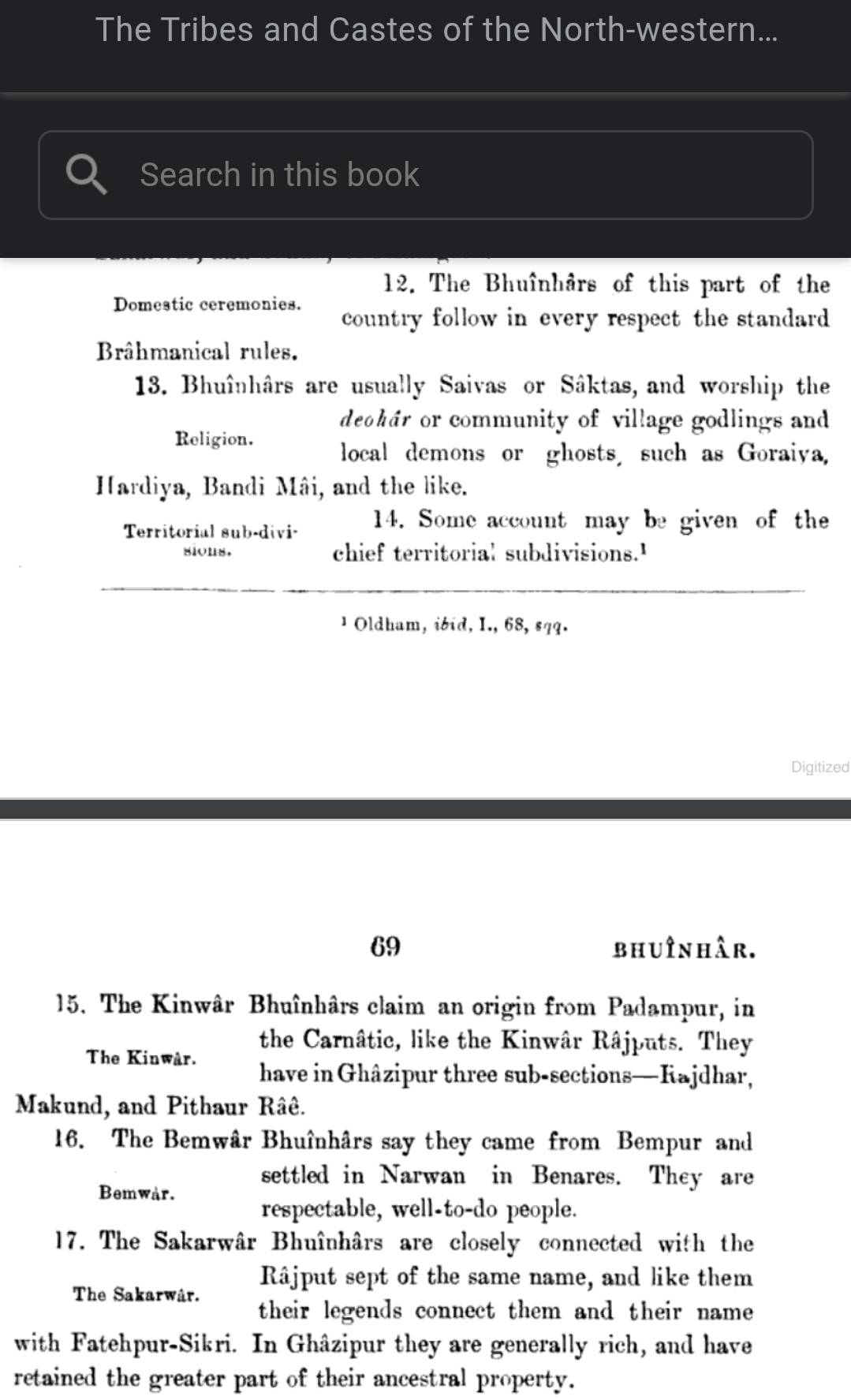
Ghazeepoor Gazetteer
Go to References

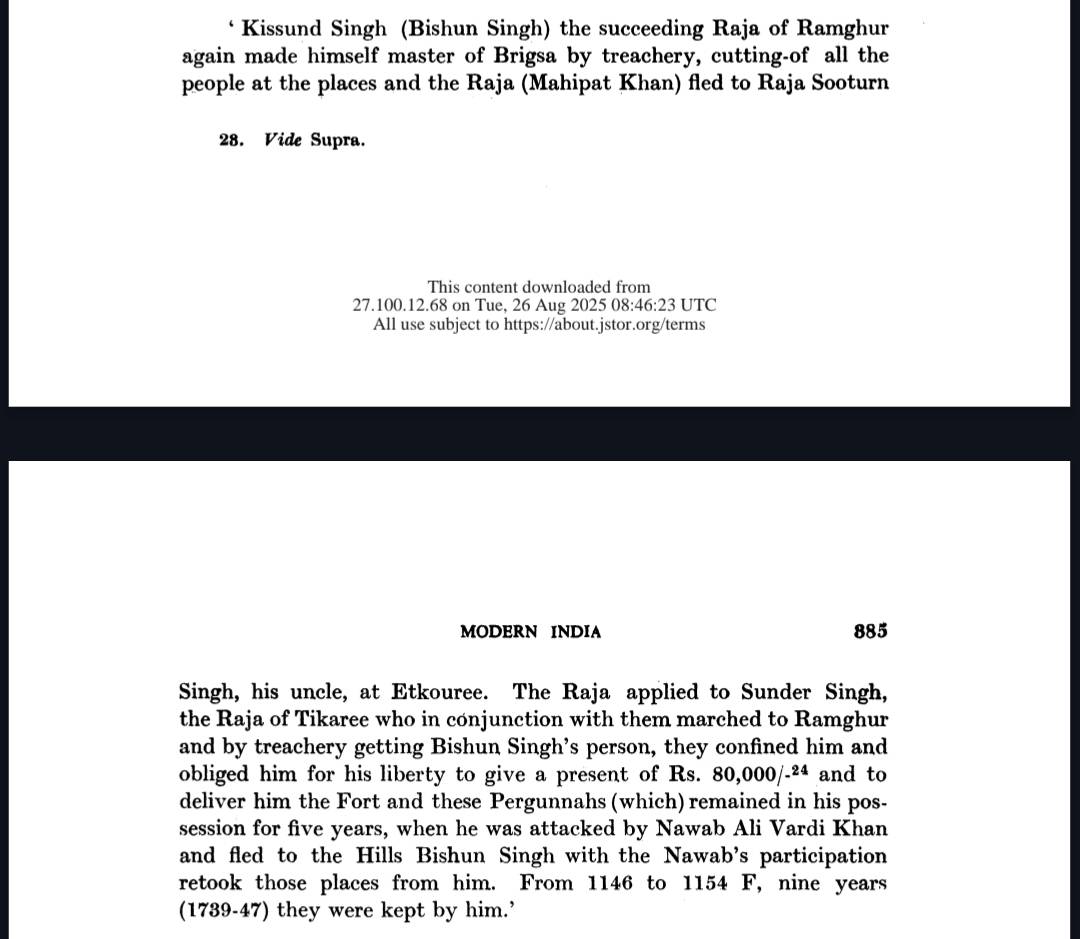
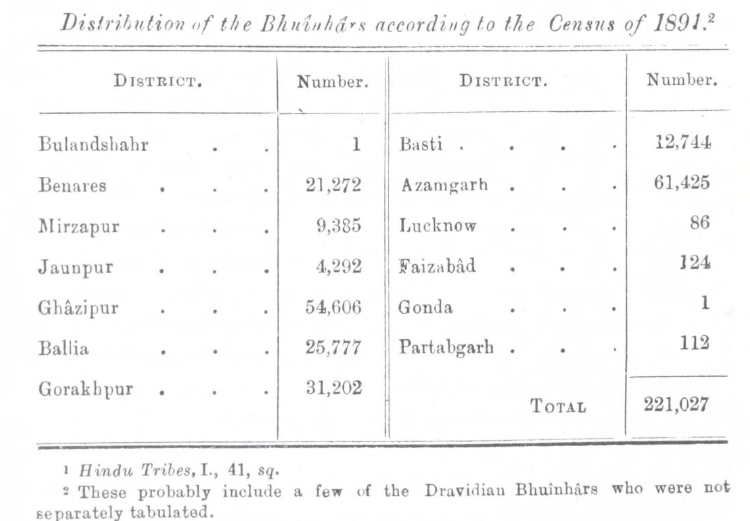
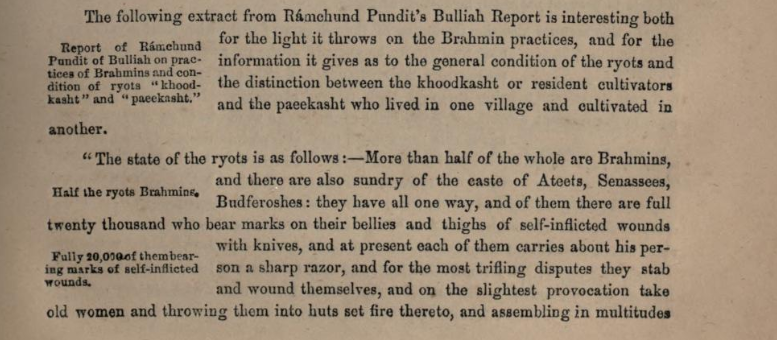
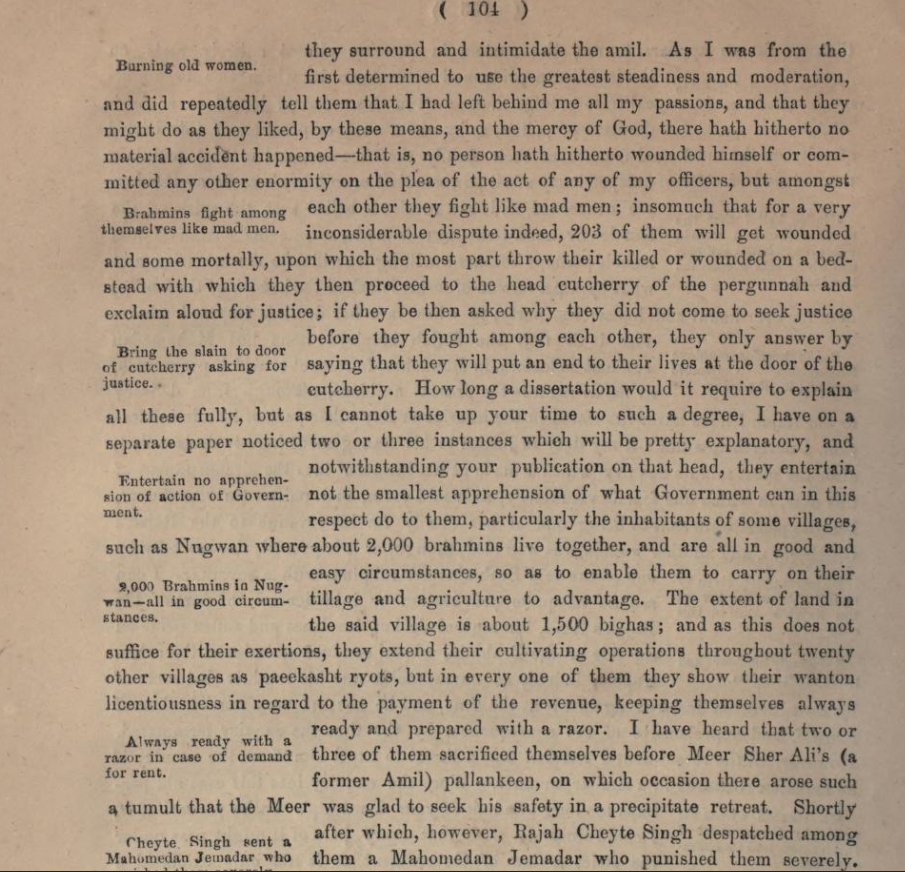
12) Ghazipur Bhumihars converting to Islam

13) Kinwar Bhumihars of Ghazipur converted to
Islam in good numbers
[5]
Ghazeepoor Gazetteer
Go to References
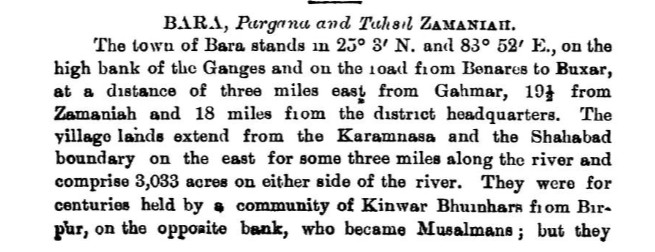
14) Composition of a Muslim Bhumihar
village.
[5]
Ghazeepoor Gazetteer
Go to References

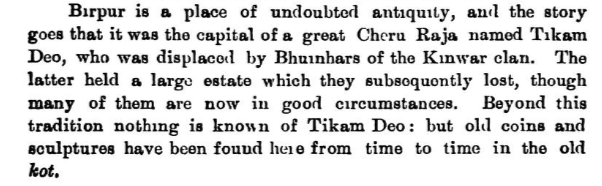
15) Bhumihars also played a part in driving
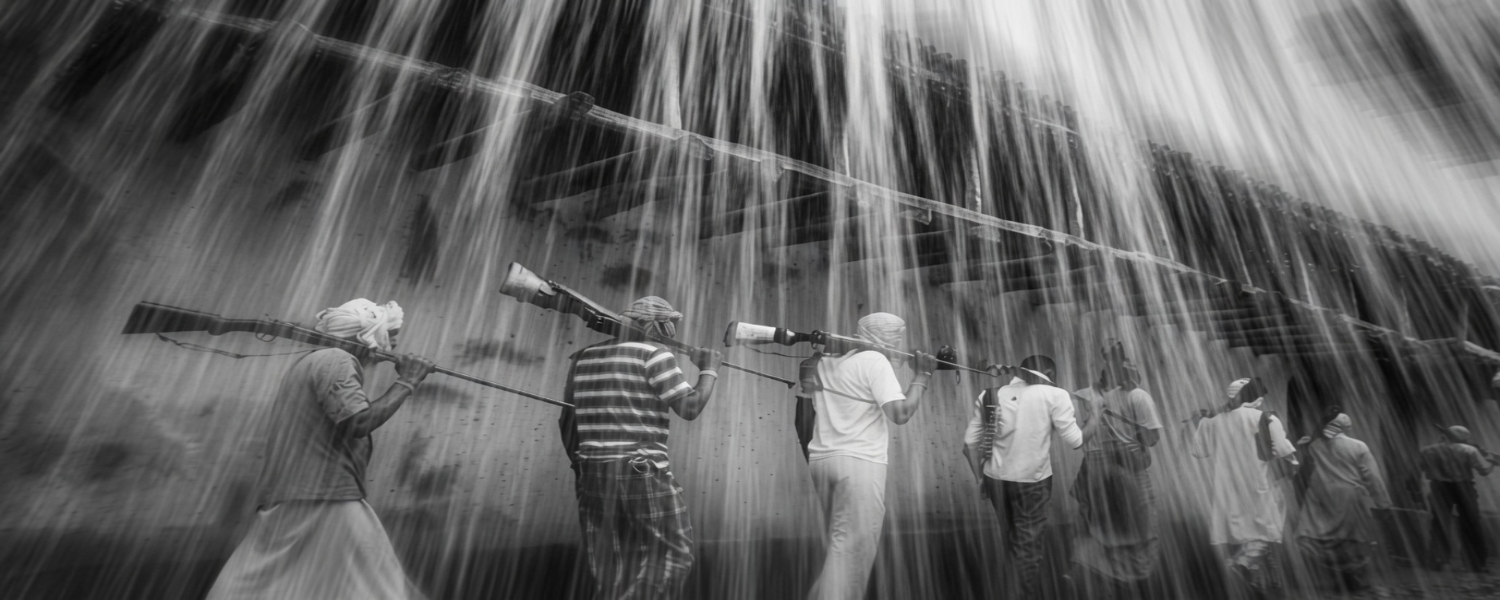
away
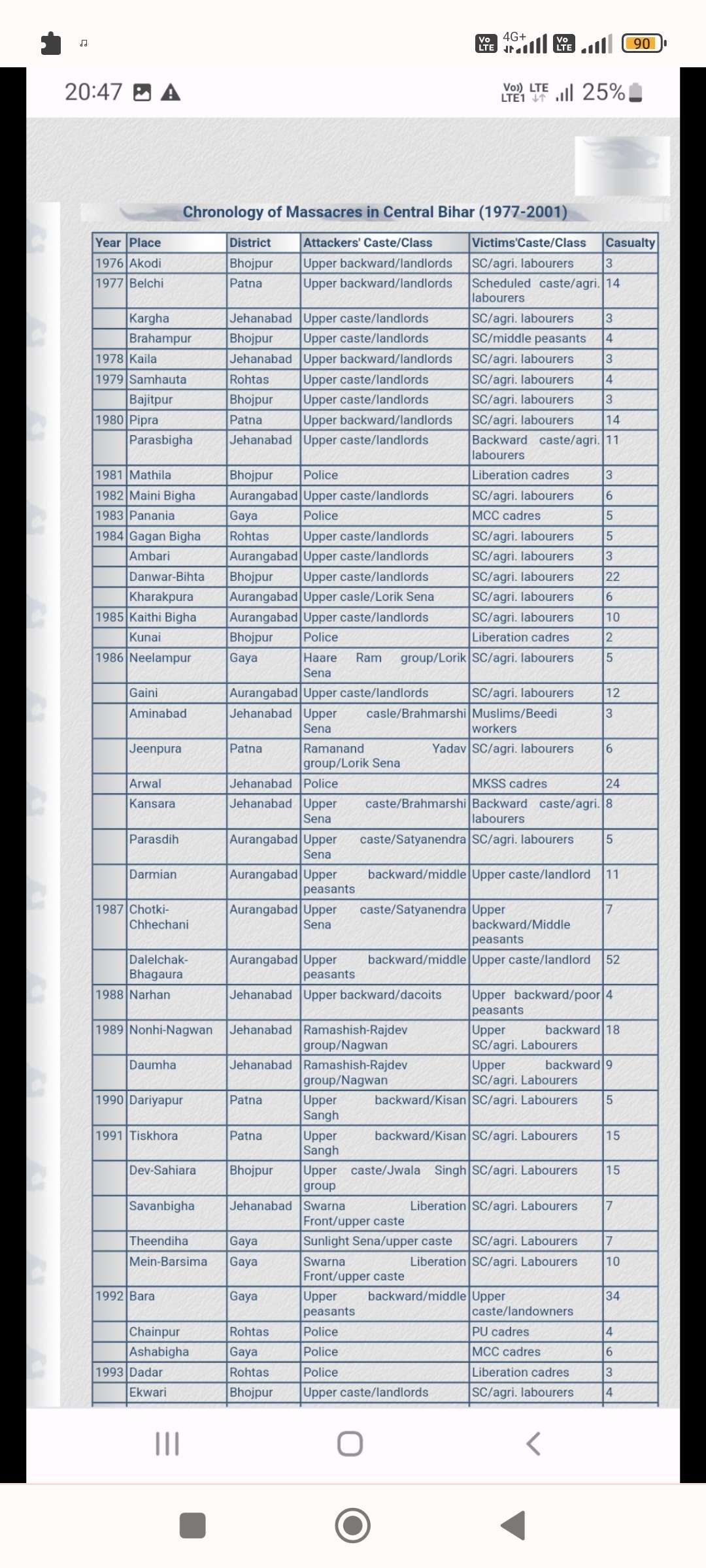
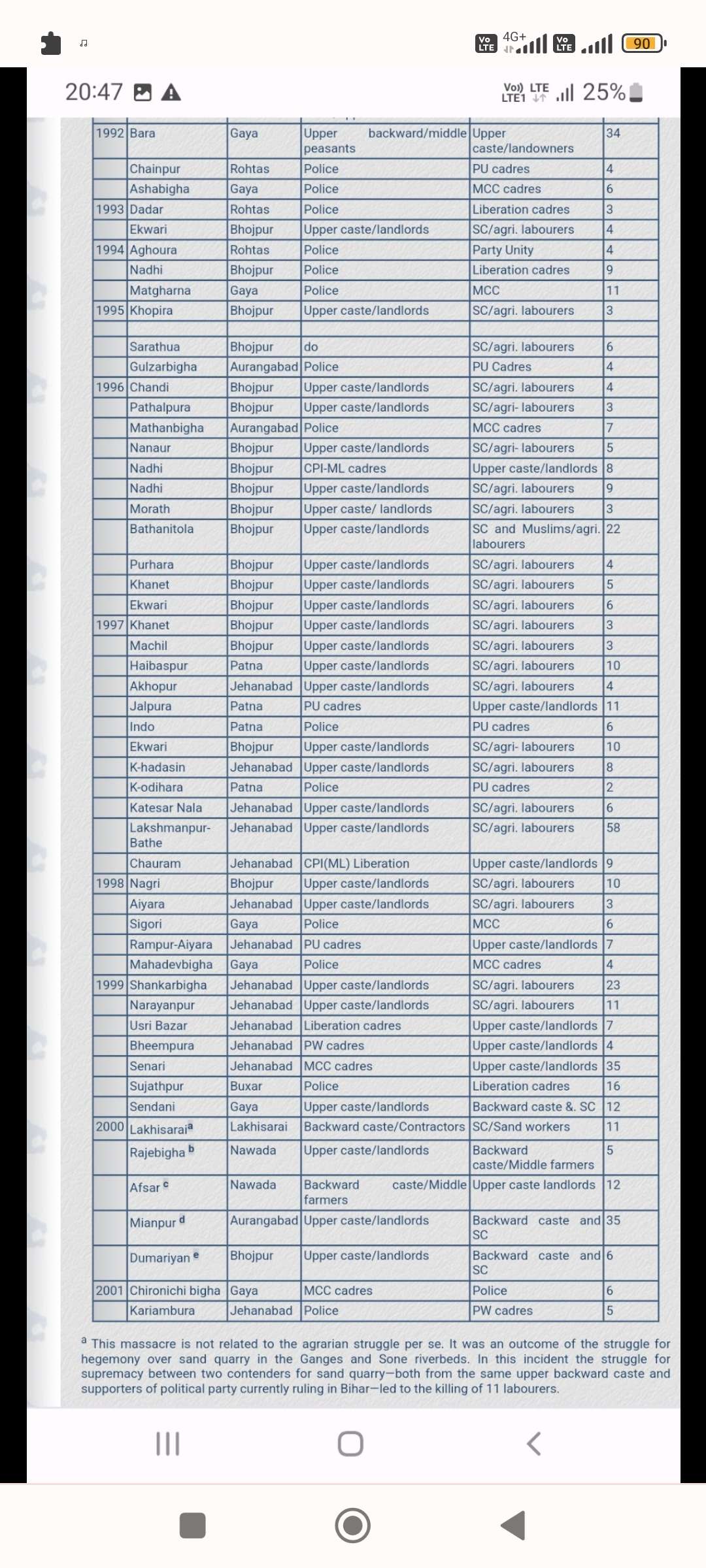
old Chero lords of the region.
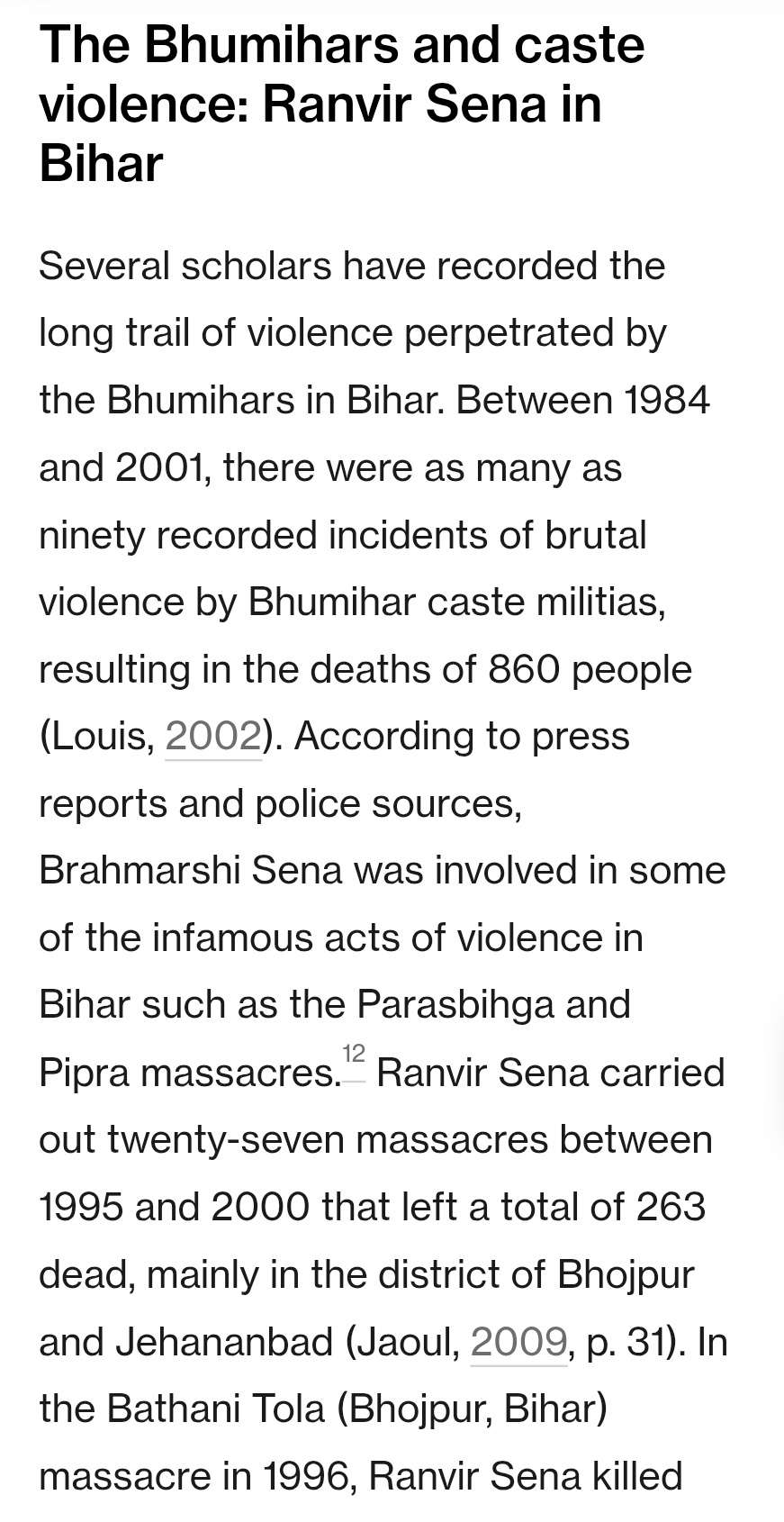
[5]
Ghazeepoor Gazetteer
Go to References
16)
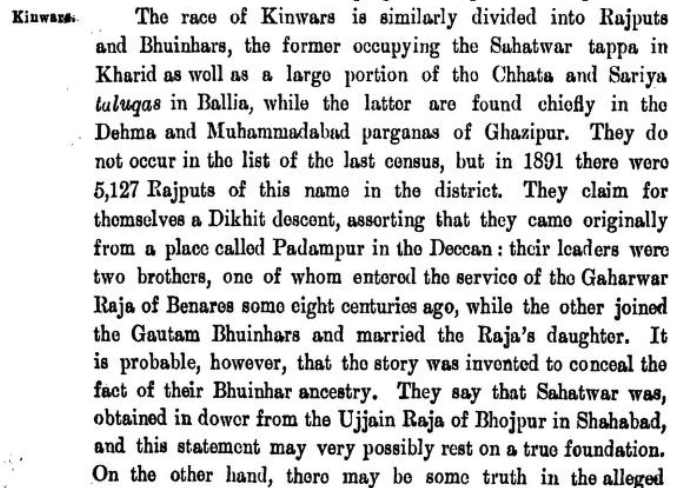
The British reported that Kinwar Rajputs often made up stories to conceal the fact
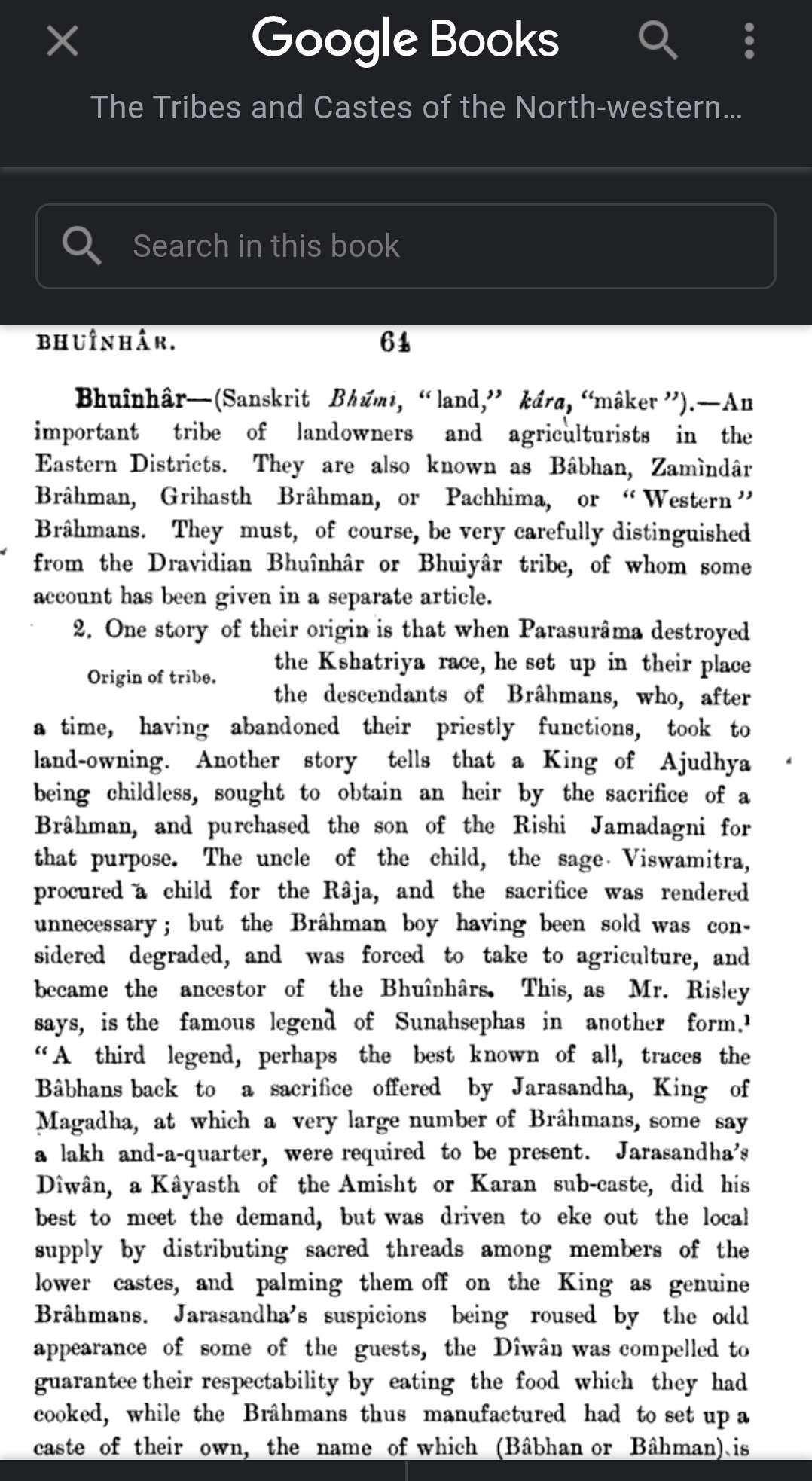
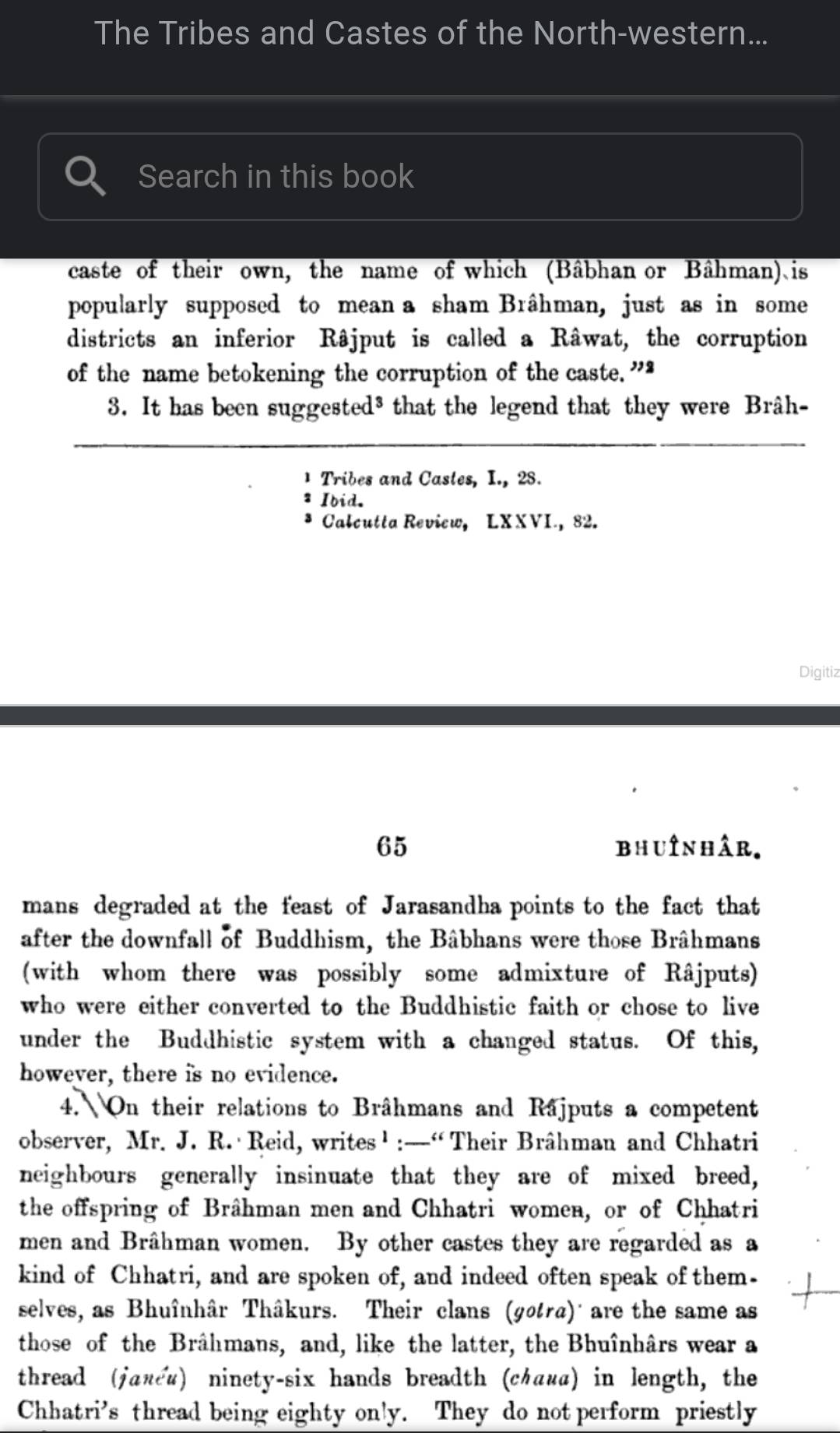
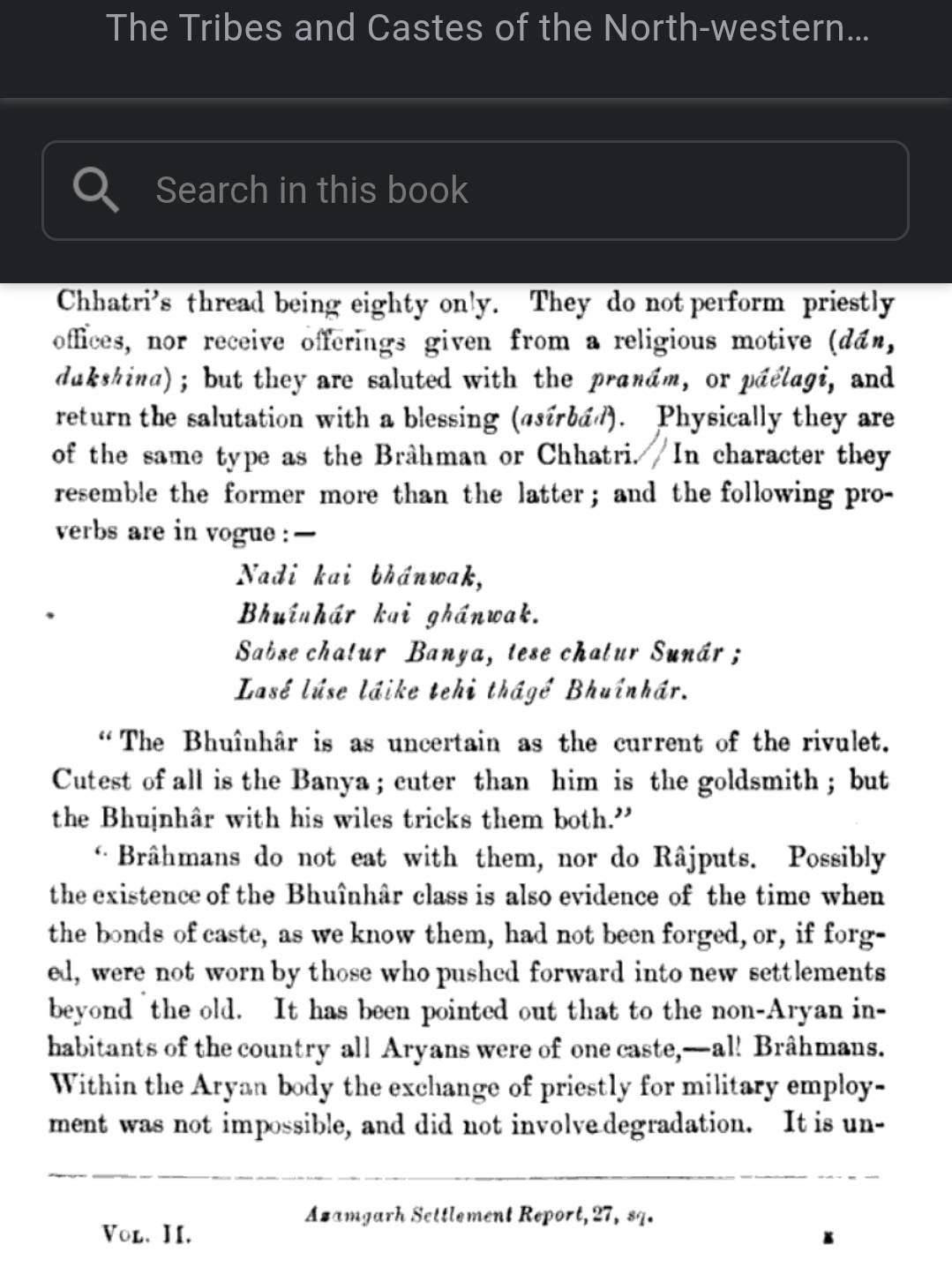
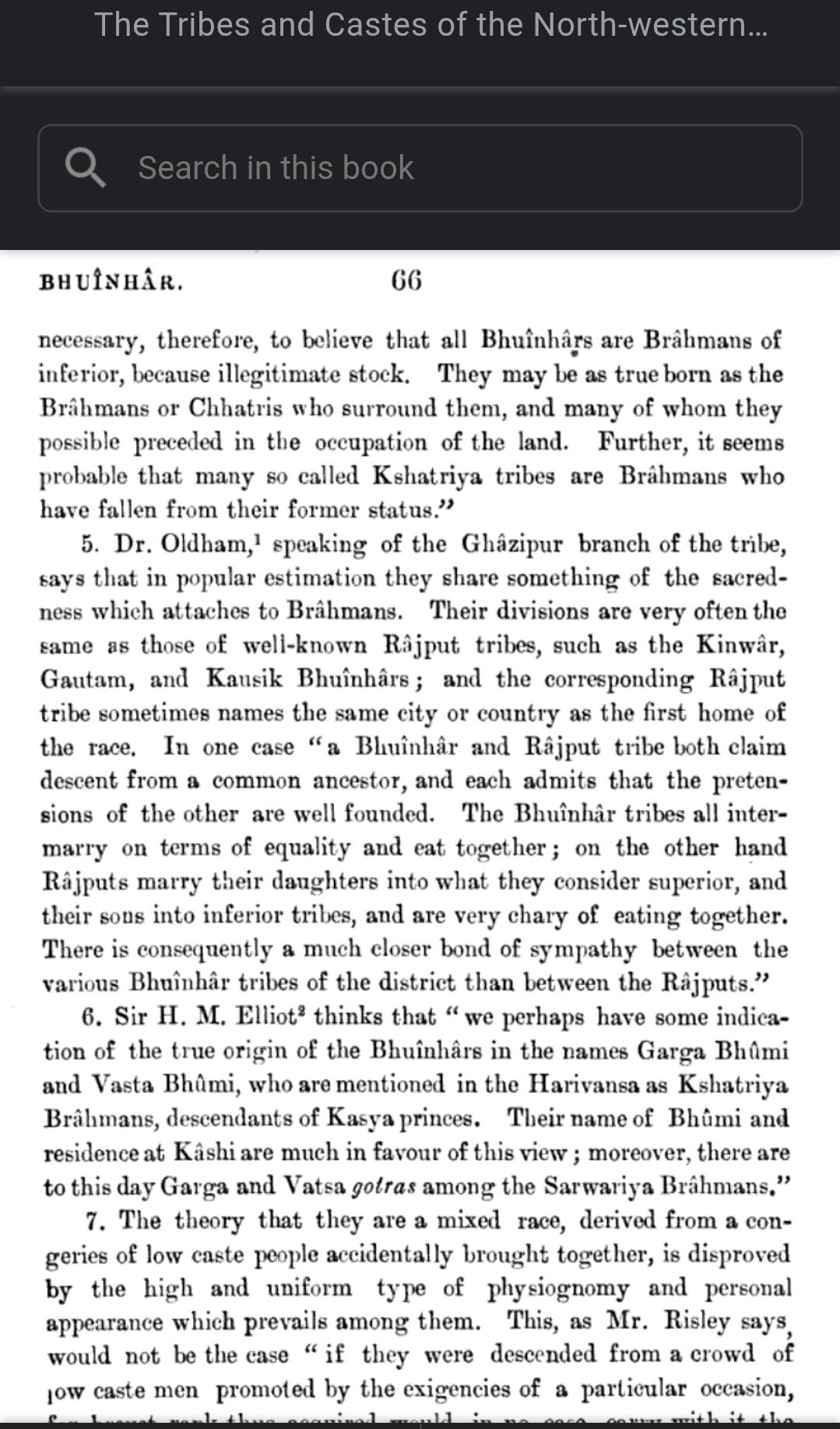
of
their Bhumihar ancestry
[6]
Ballia Gazetteer
Go to References
17)
18)
The Brahmans of Ballia claimed they settled in Ballia as family priests of
Bhumihars,
from whom they received small grants of land
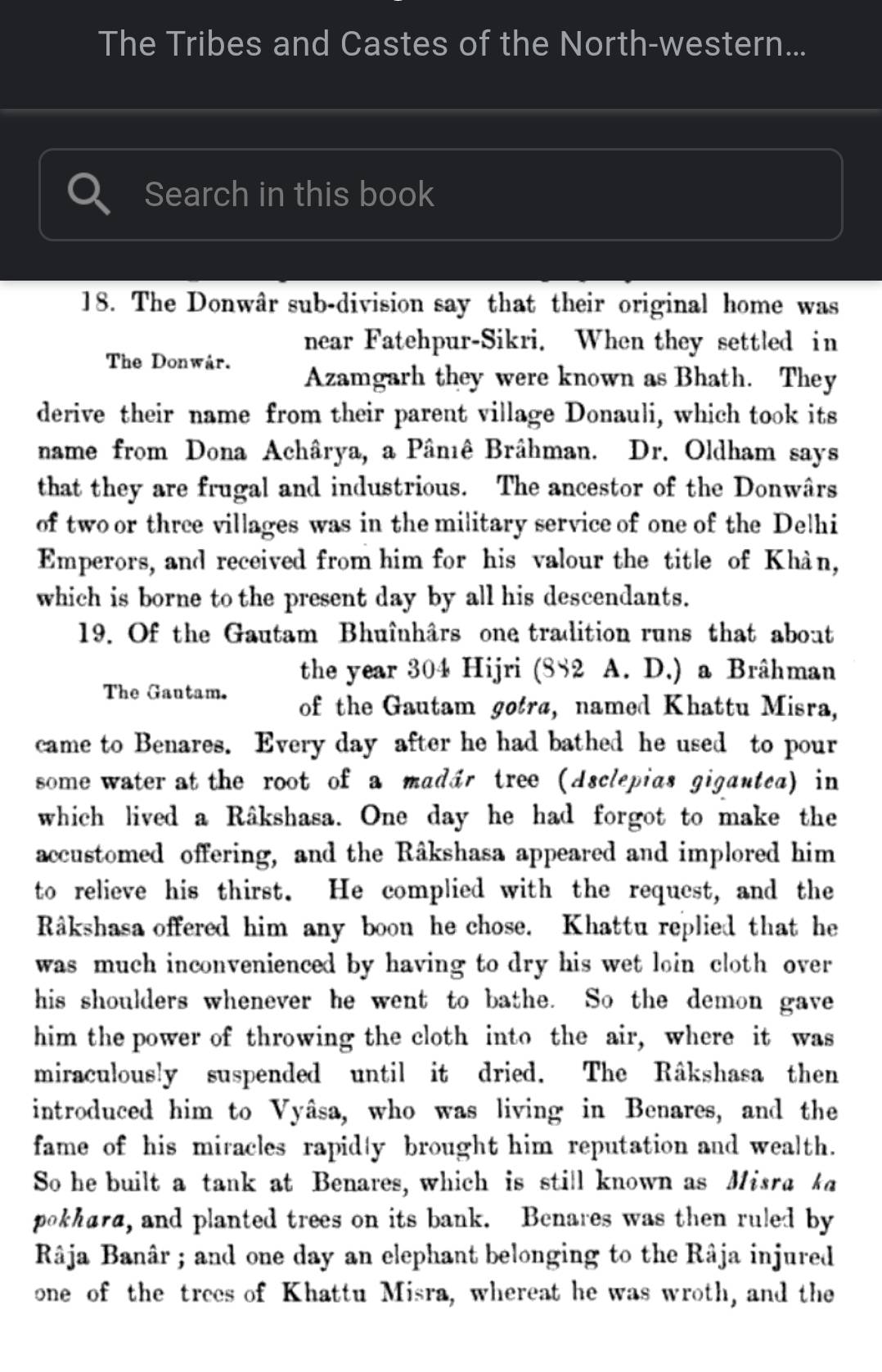
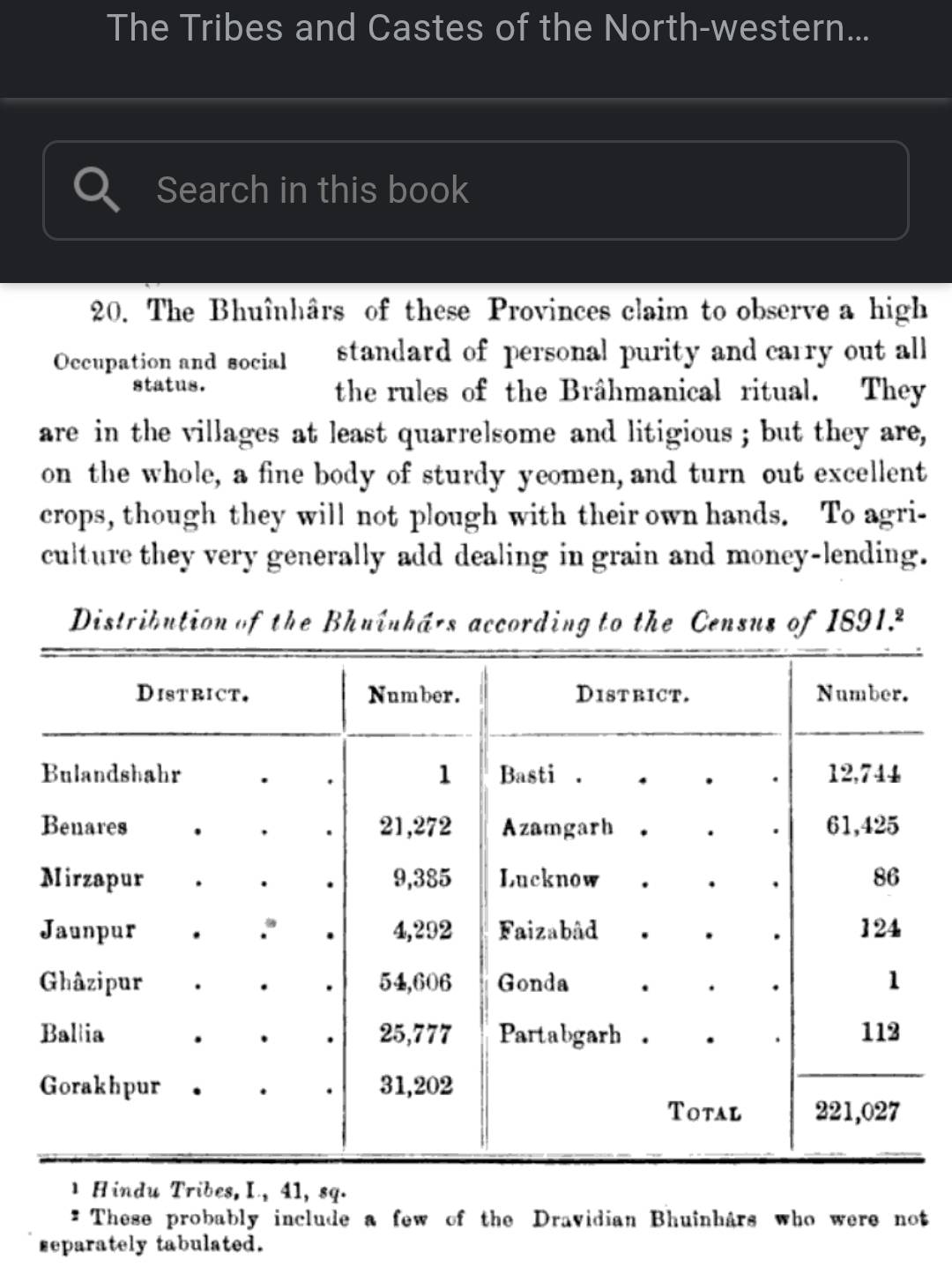
[6]
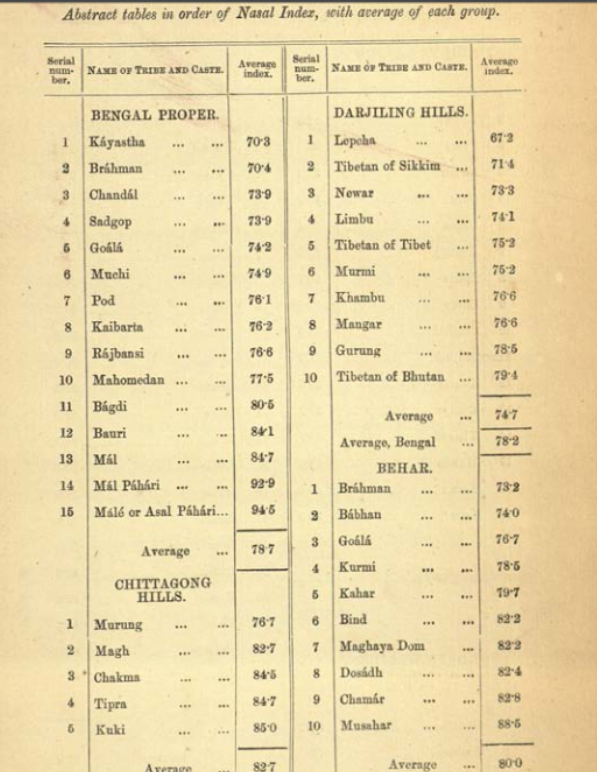
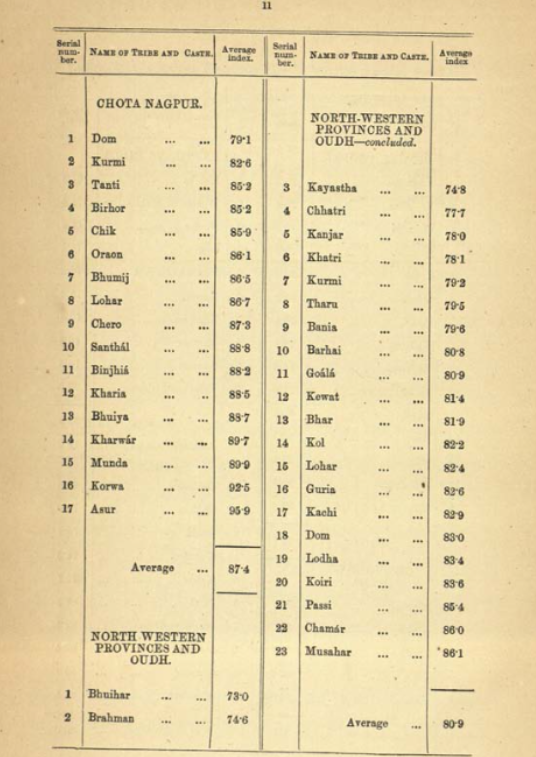
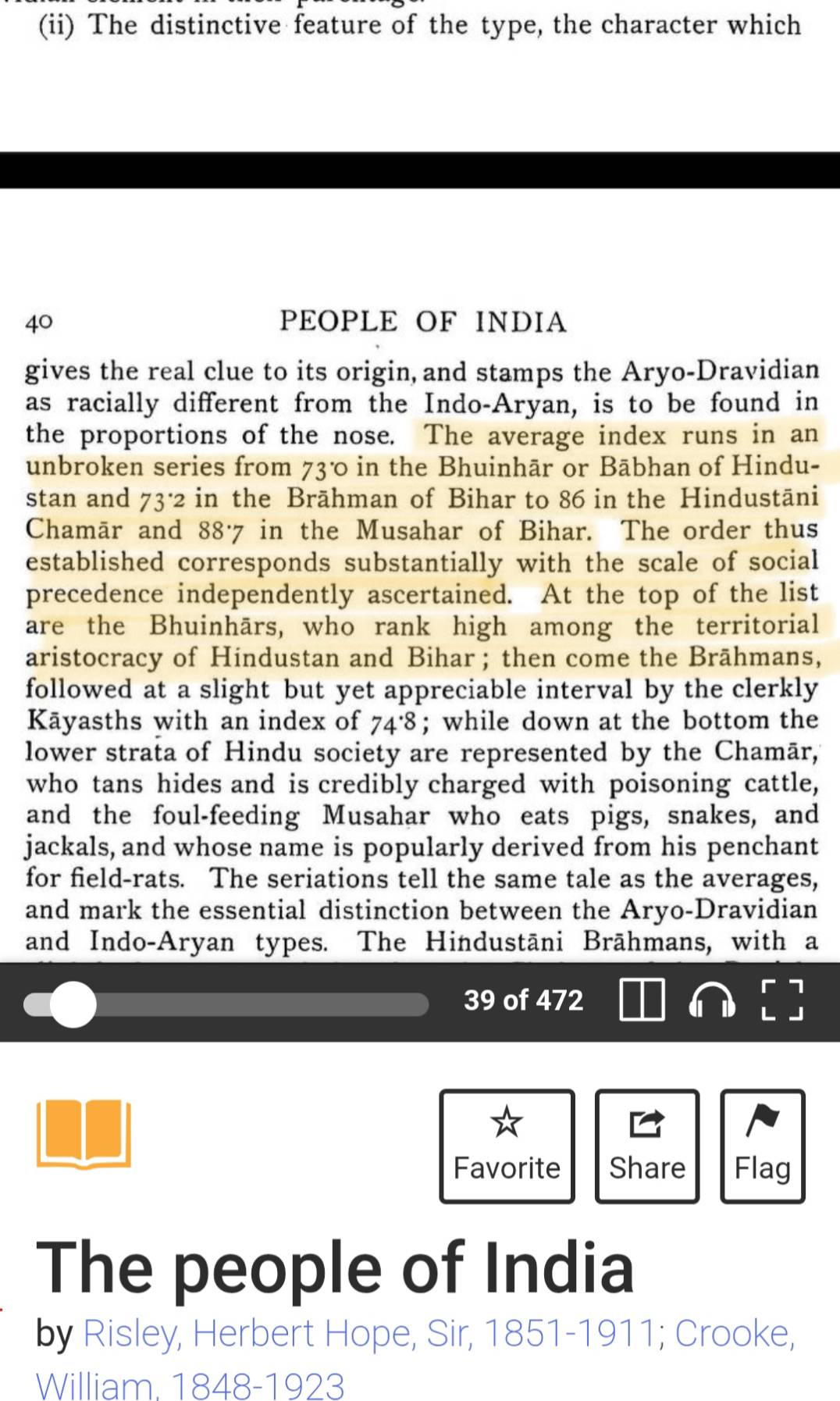
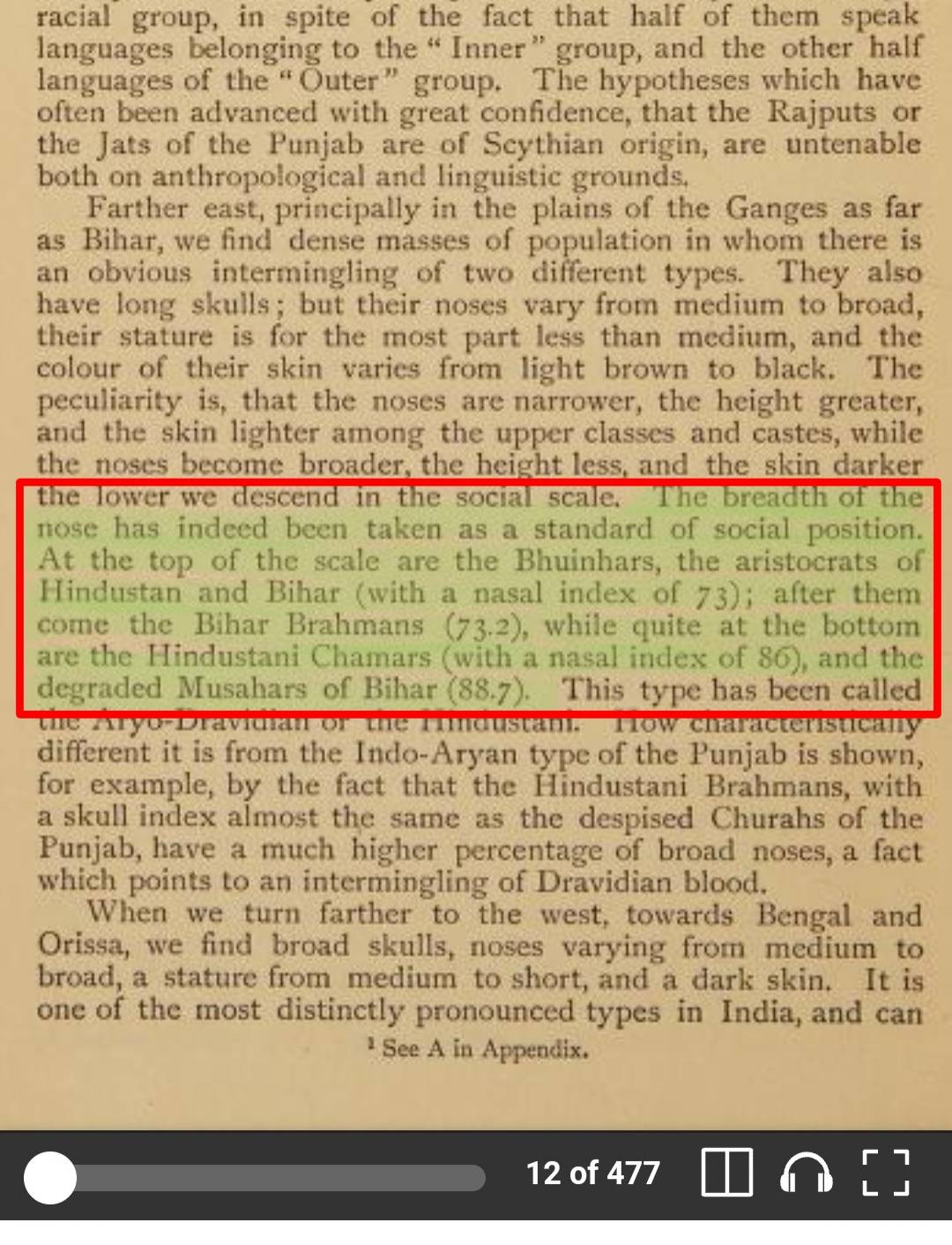
Ballia Gazetteer
Go to References
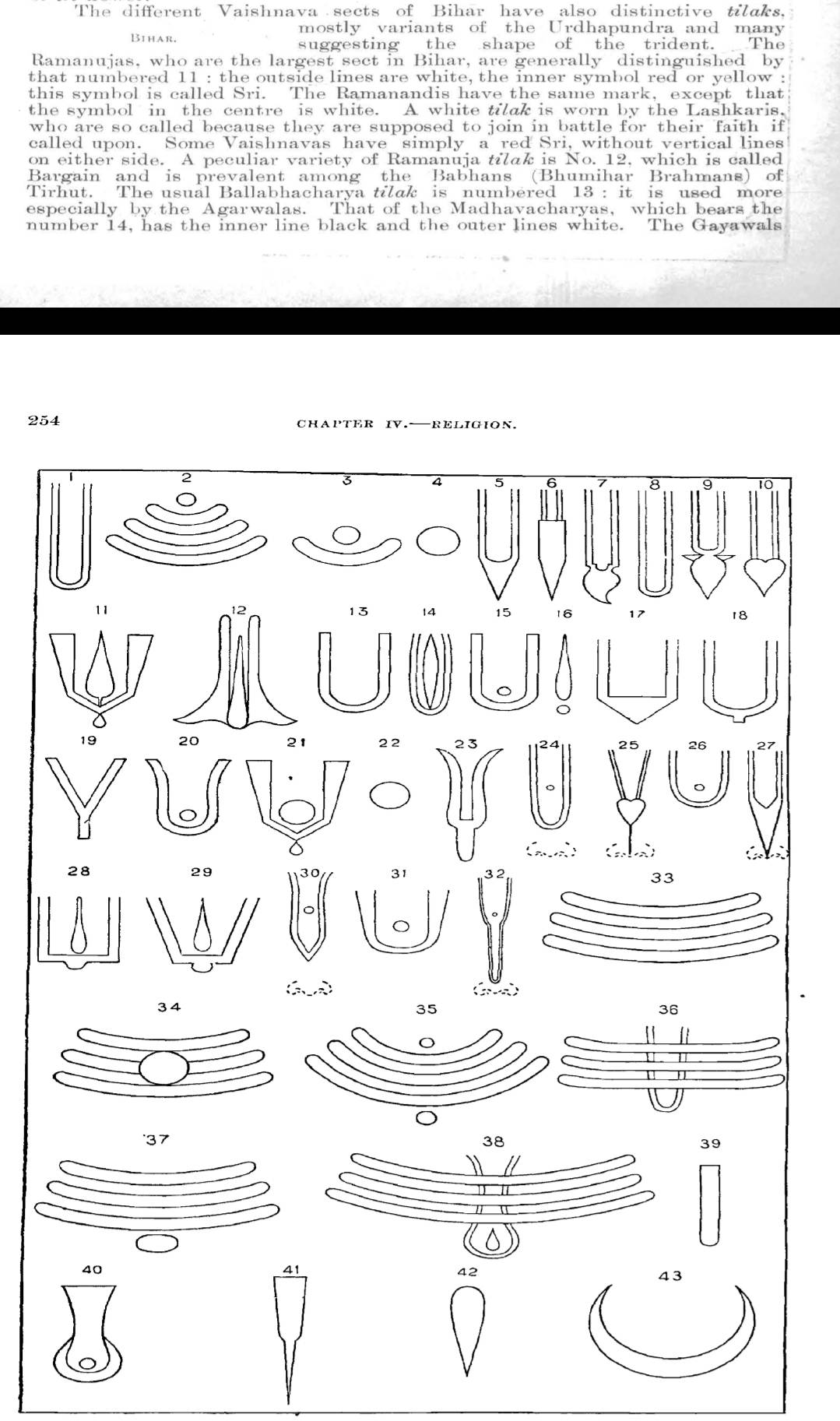
19)
Bhumihar Mahajan of Saran and Bhumihar Pandeys held more land in Ballia than Rajput
Maharani of Dumraon
[6]
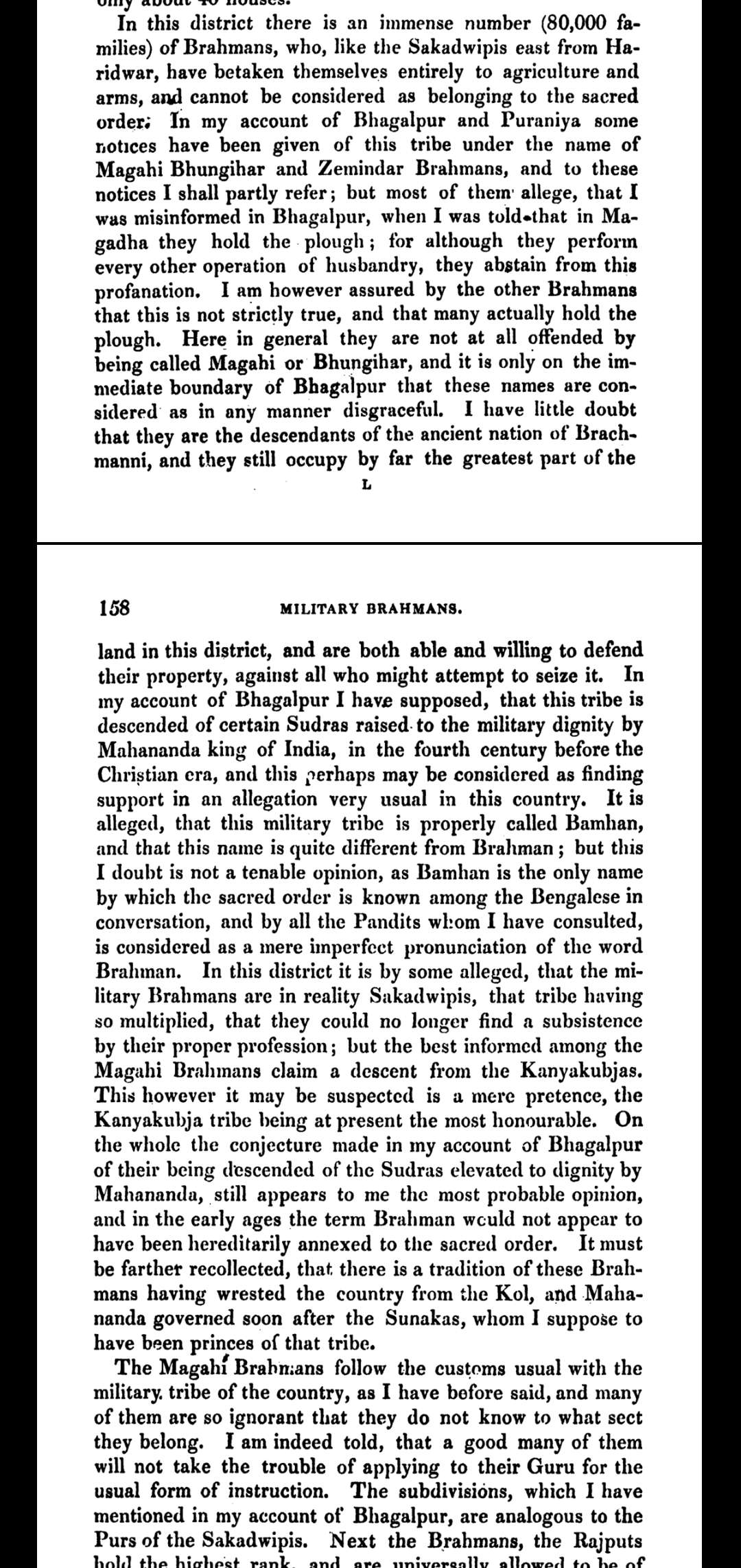
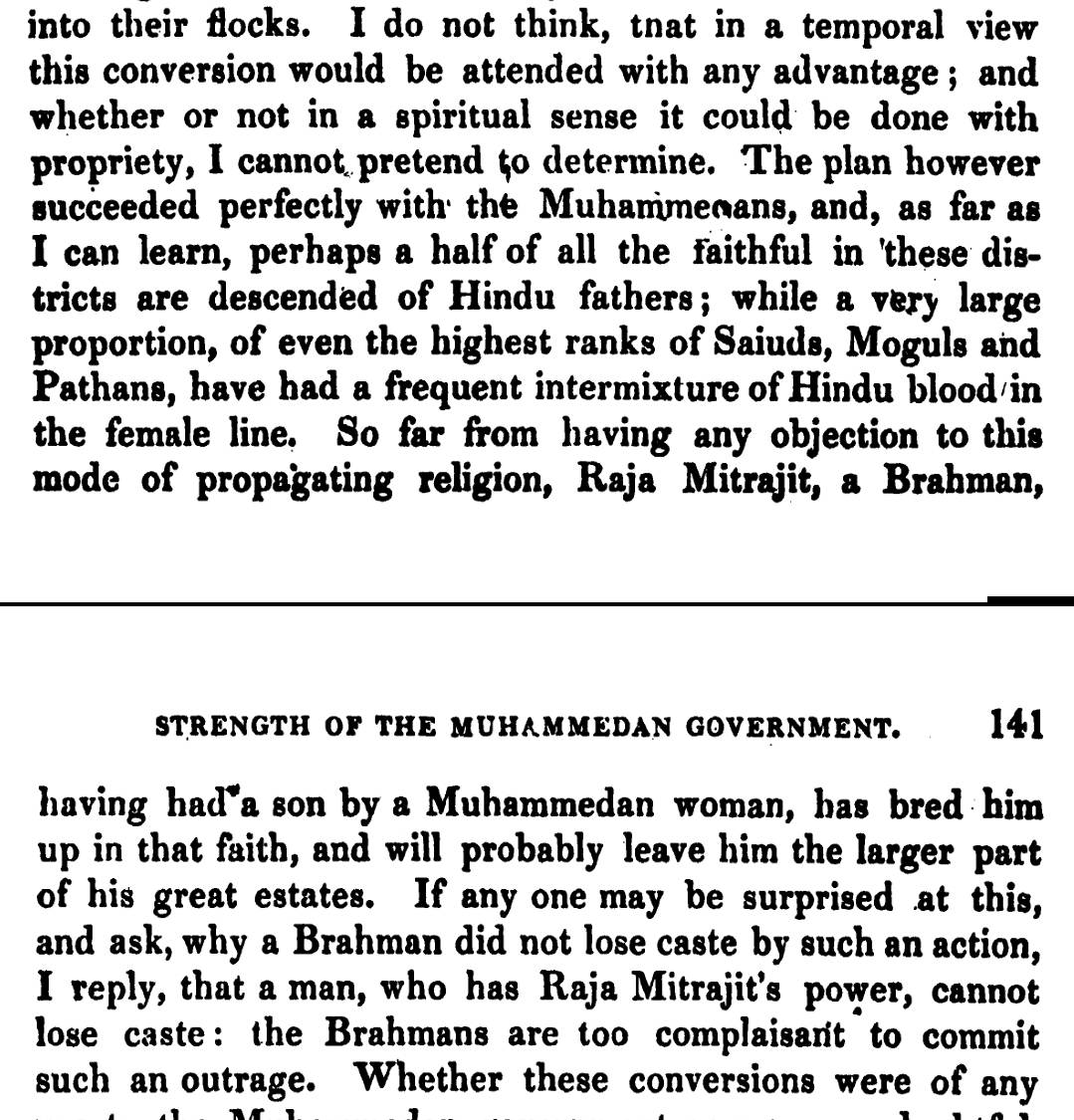
Ballia Gazetteer
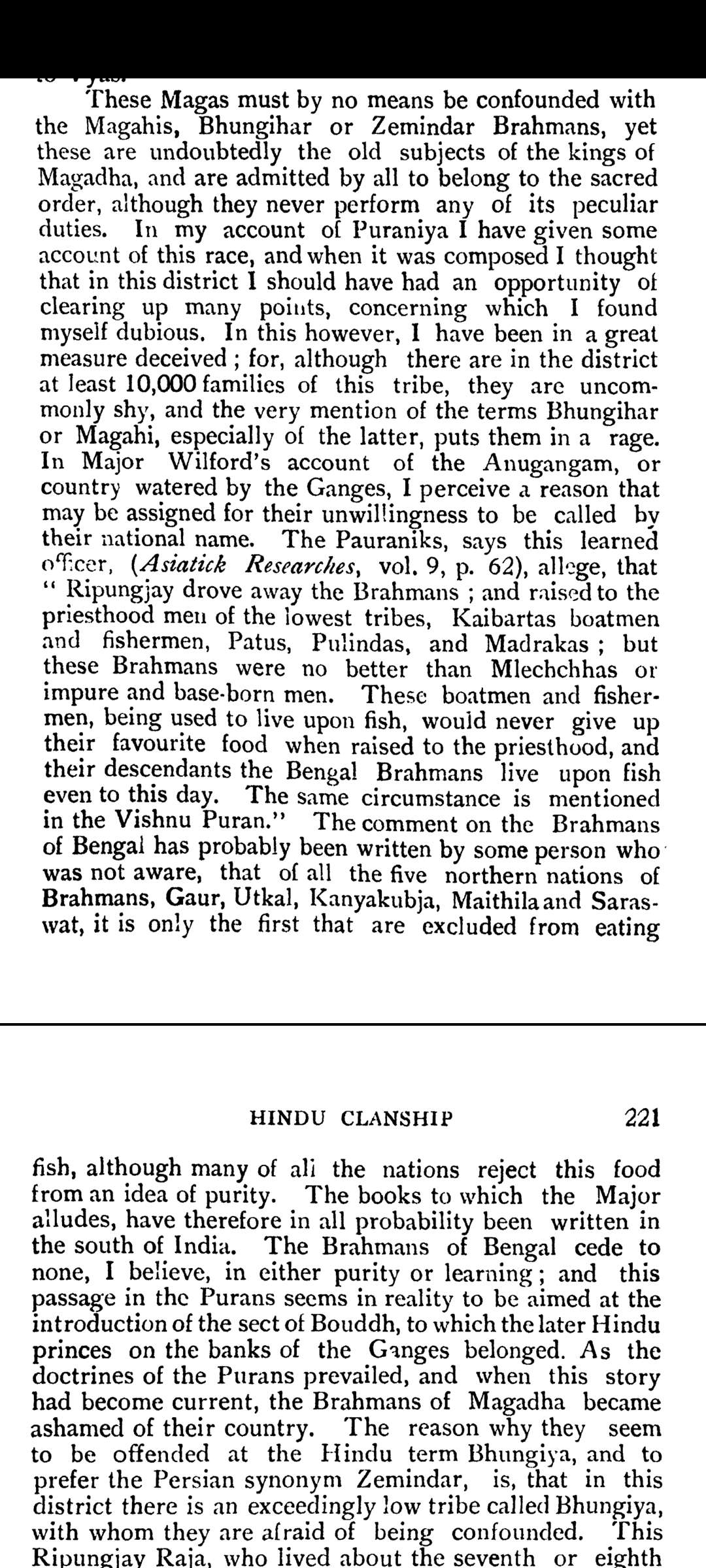
Go to References
20)
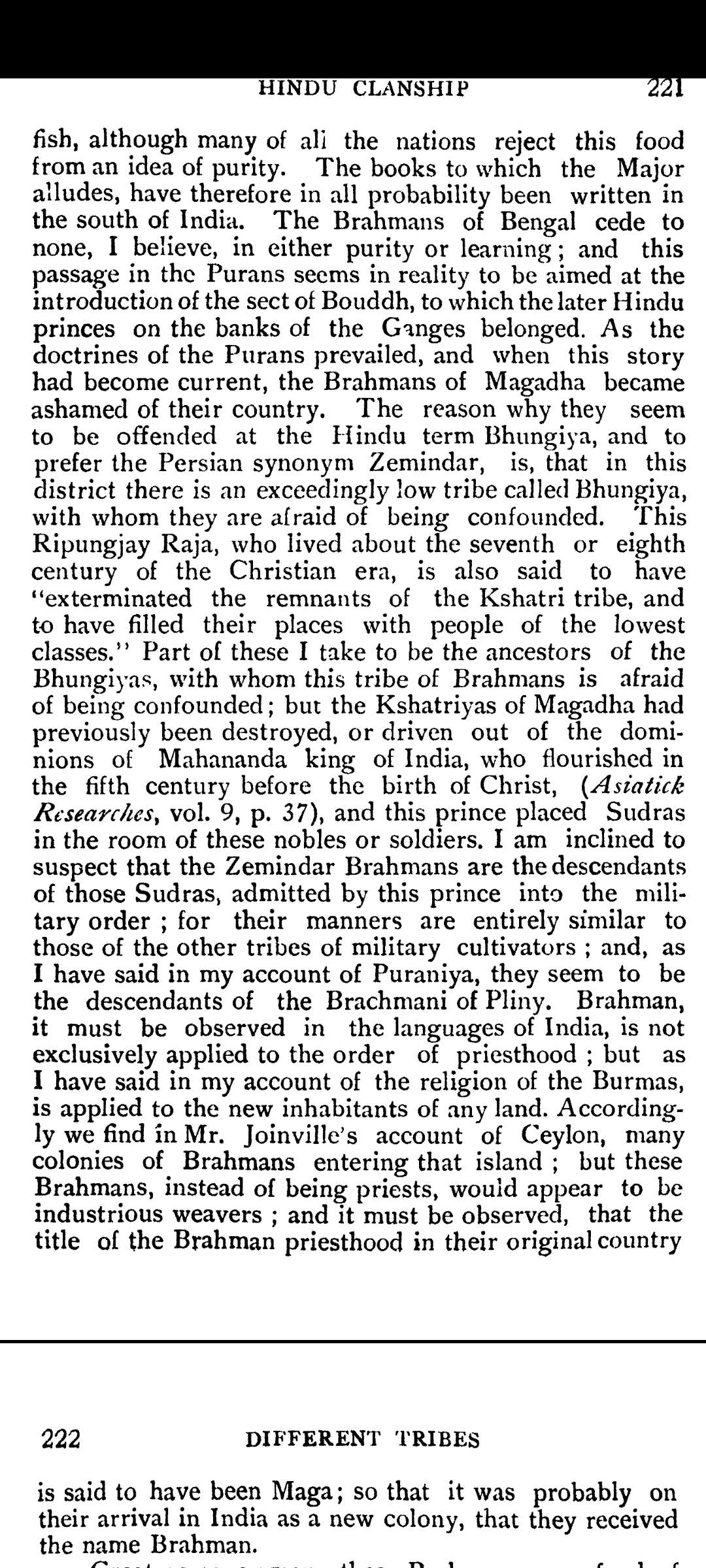
British considered the Donwar Rajputs of Ballia, to be of Bhumihar descent
[6]
Ballia Gazetteer
Go to References
21)
The British also considered Tetiha Rajputs of Ballia to be of Bhumihar descent
[6]
Ballia Gazetteer
Go to References
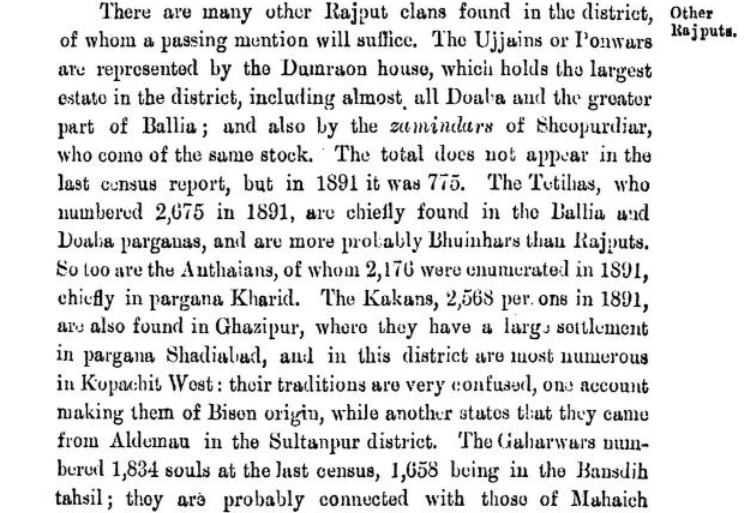
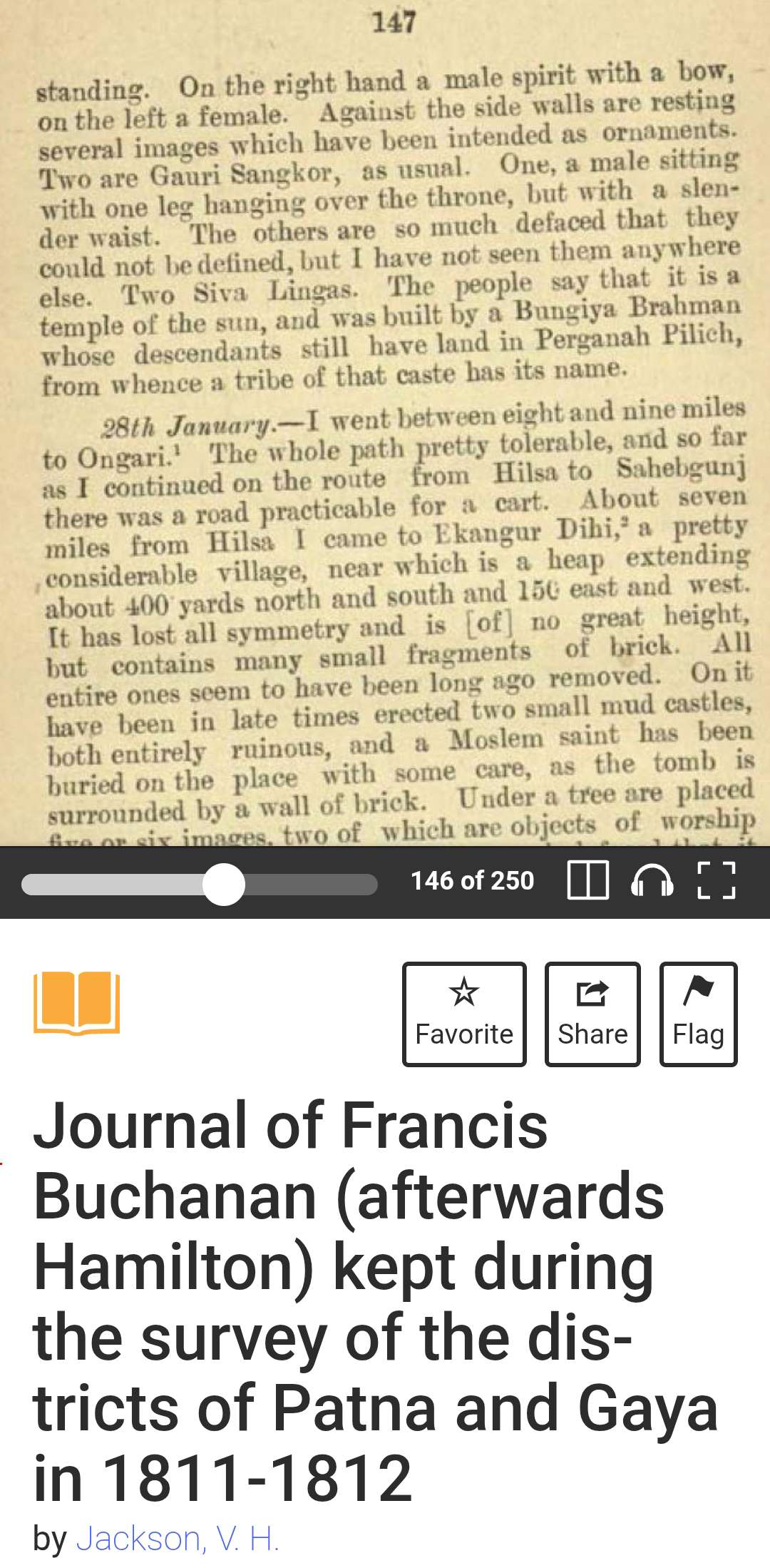
22)
The British were strongly of the opinion that many Rajputs of Ballia should rightly
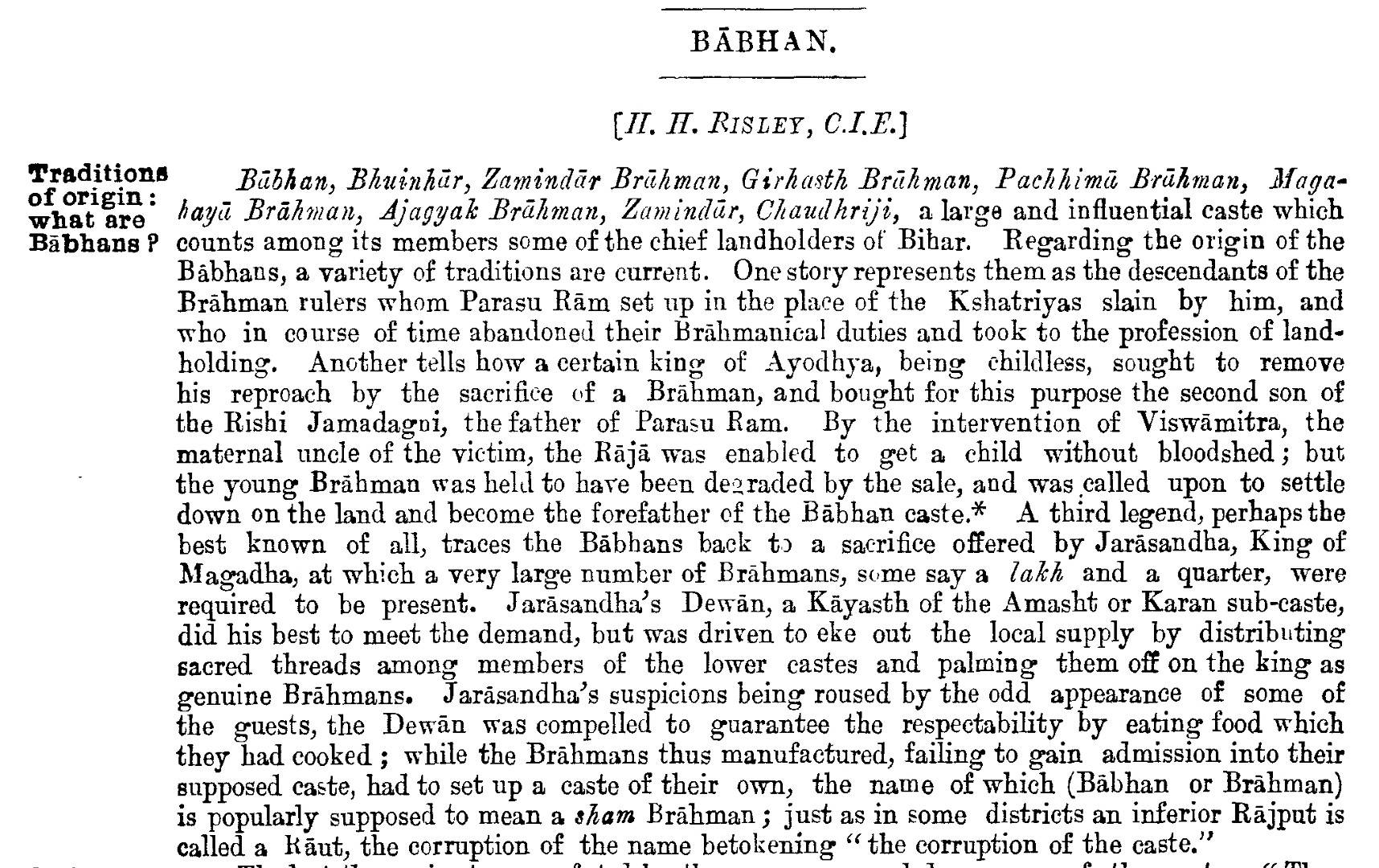
be
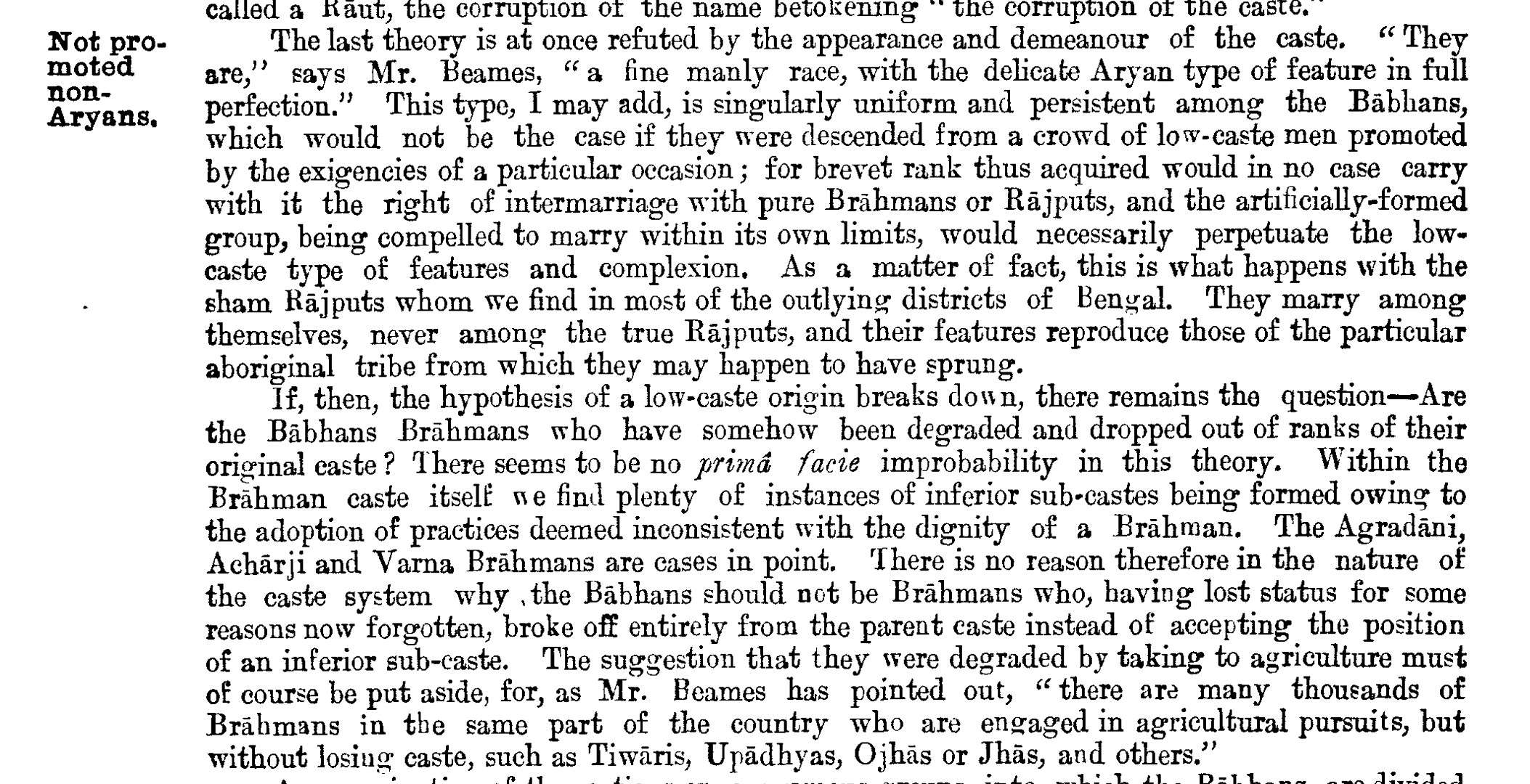
classified as Bhumihars, signalling their descent from Bhumihars
[6]
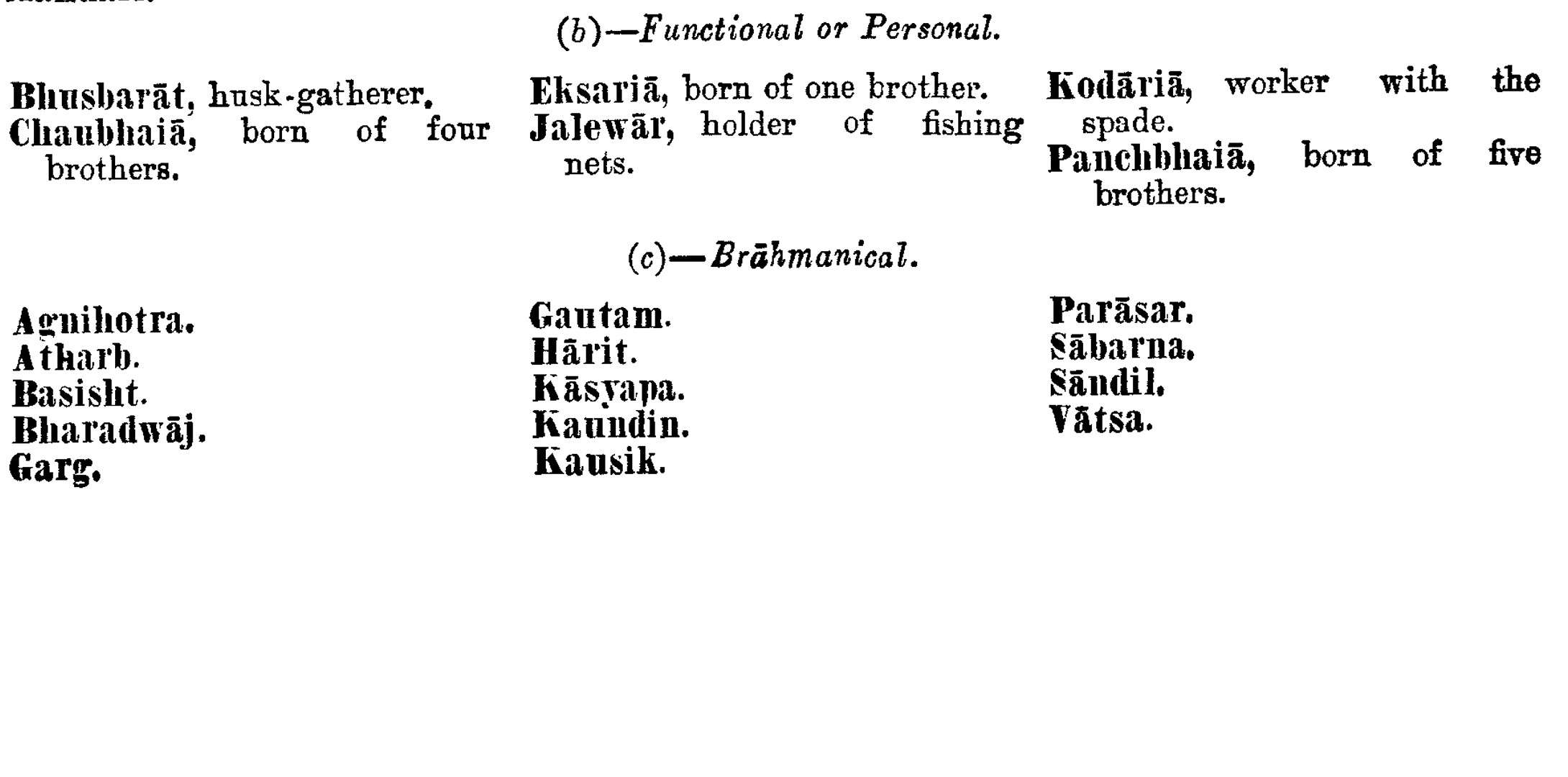
Ballia Gazetteer
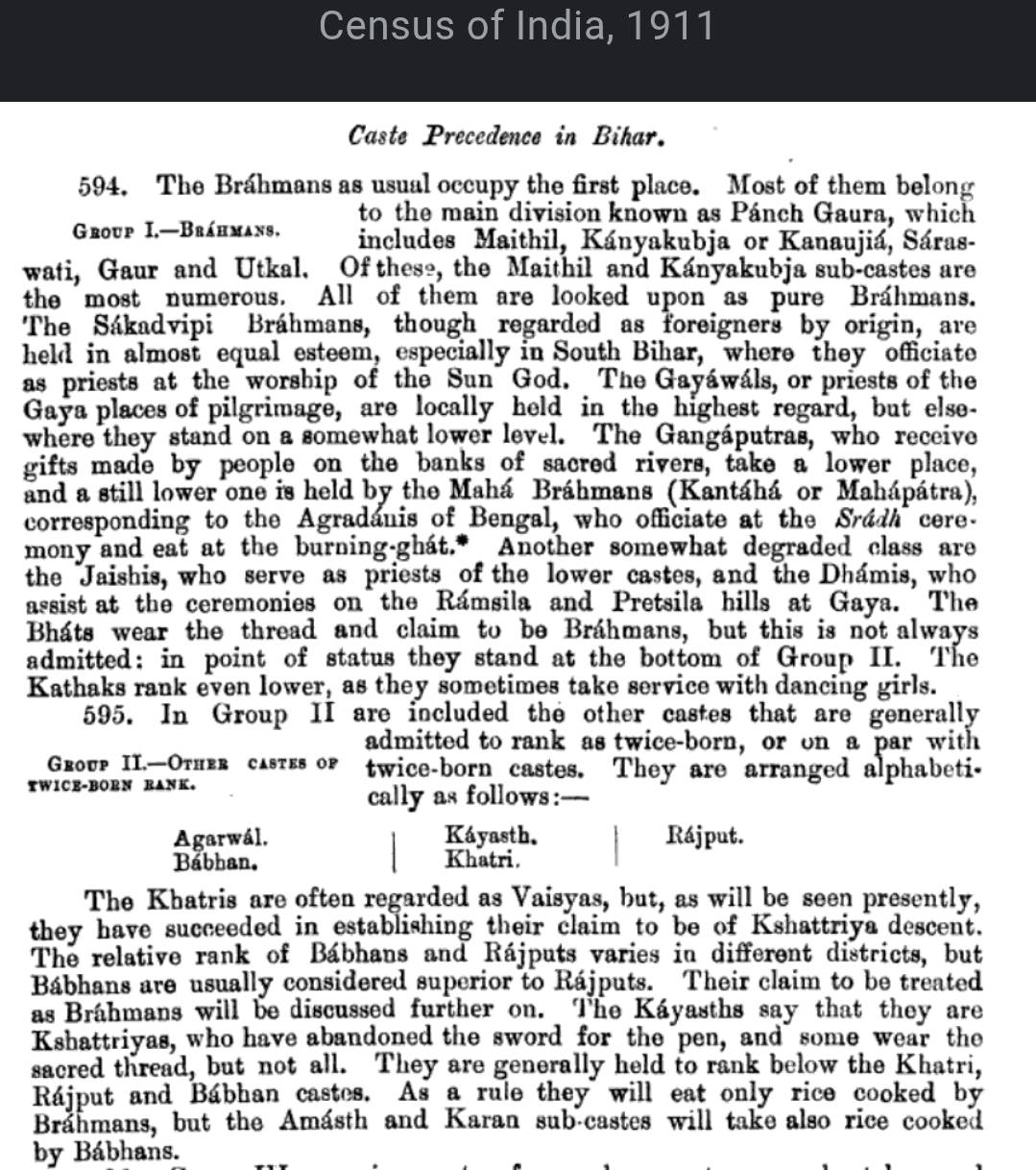
Go to References
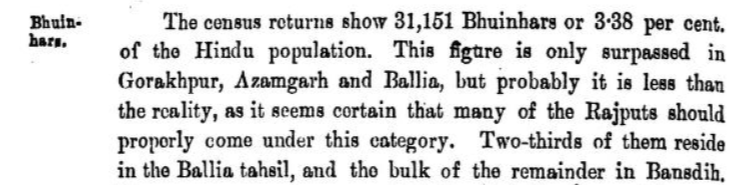
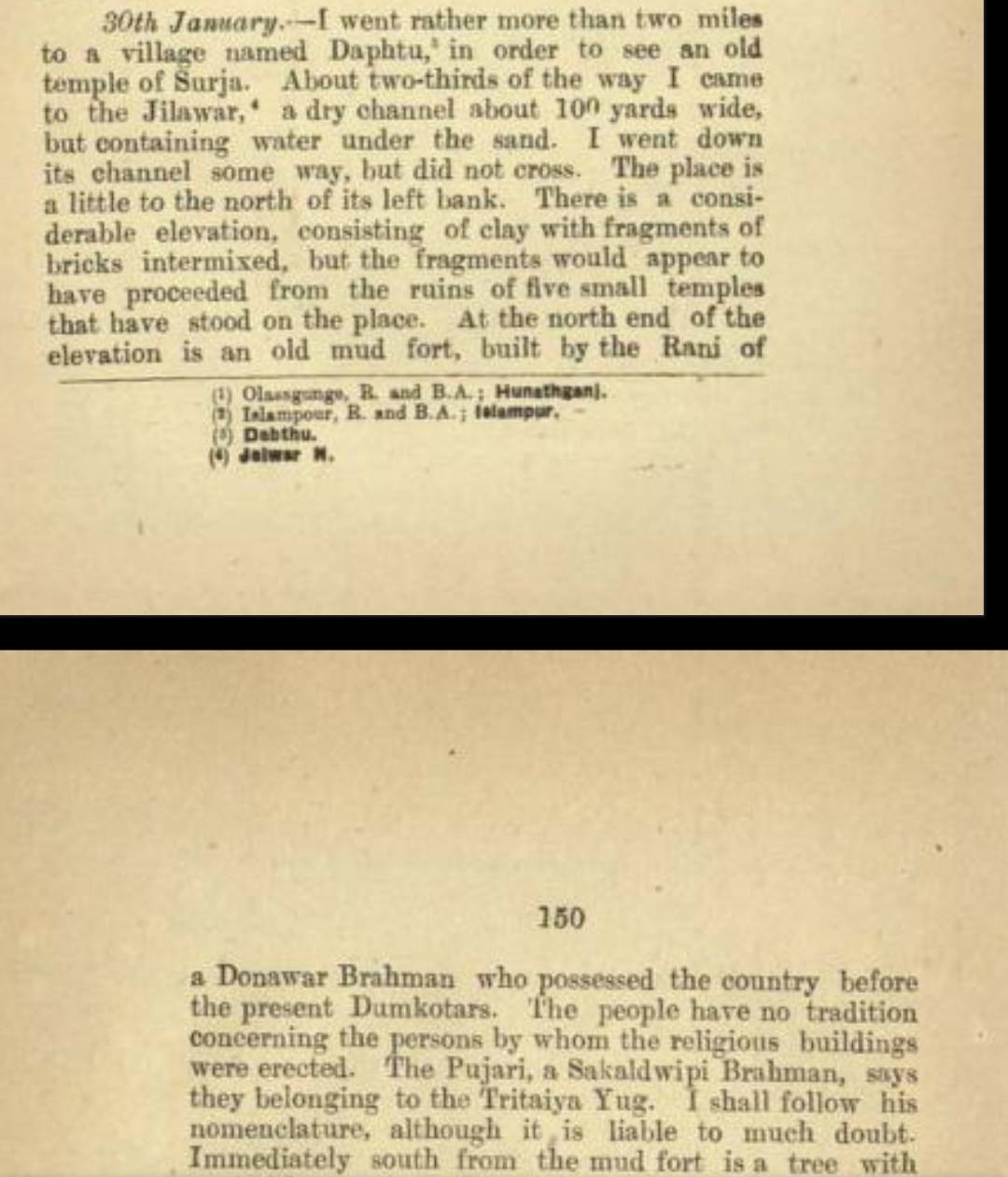
23) Lorem Ipsum
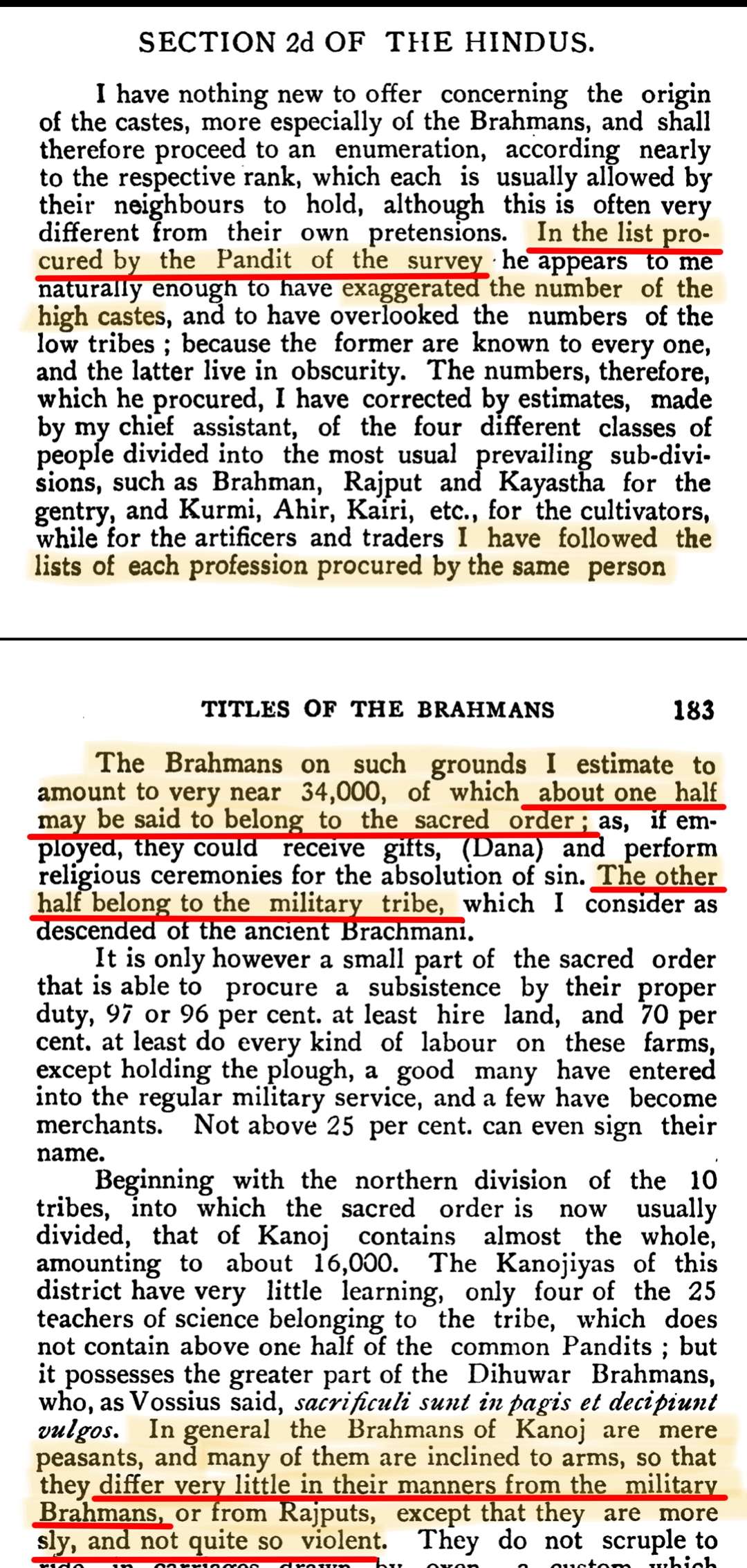
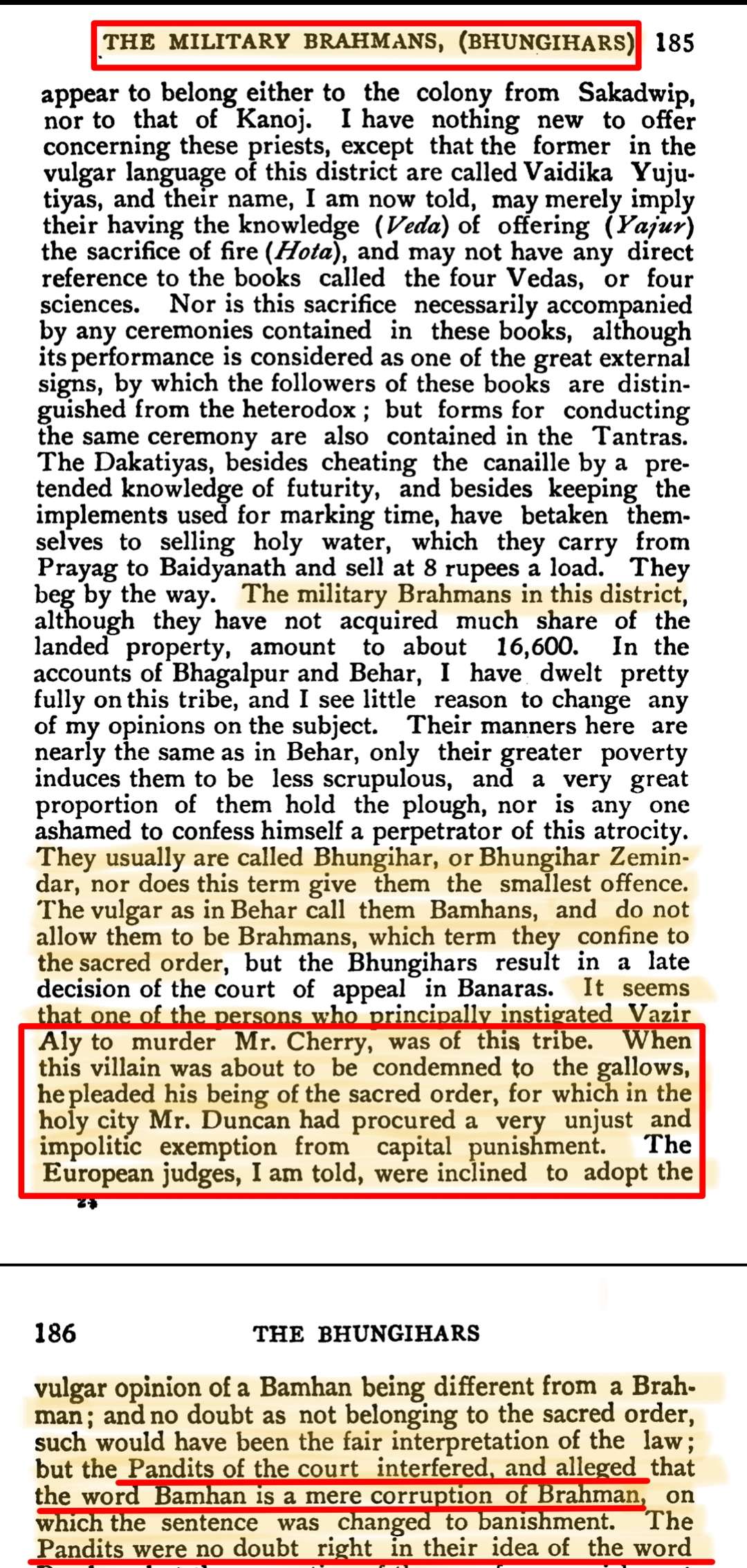
[6]
Ballia Gazetteer
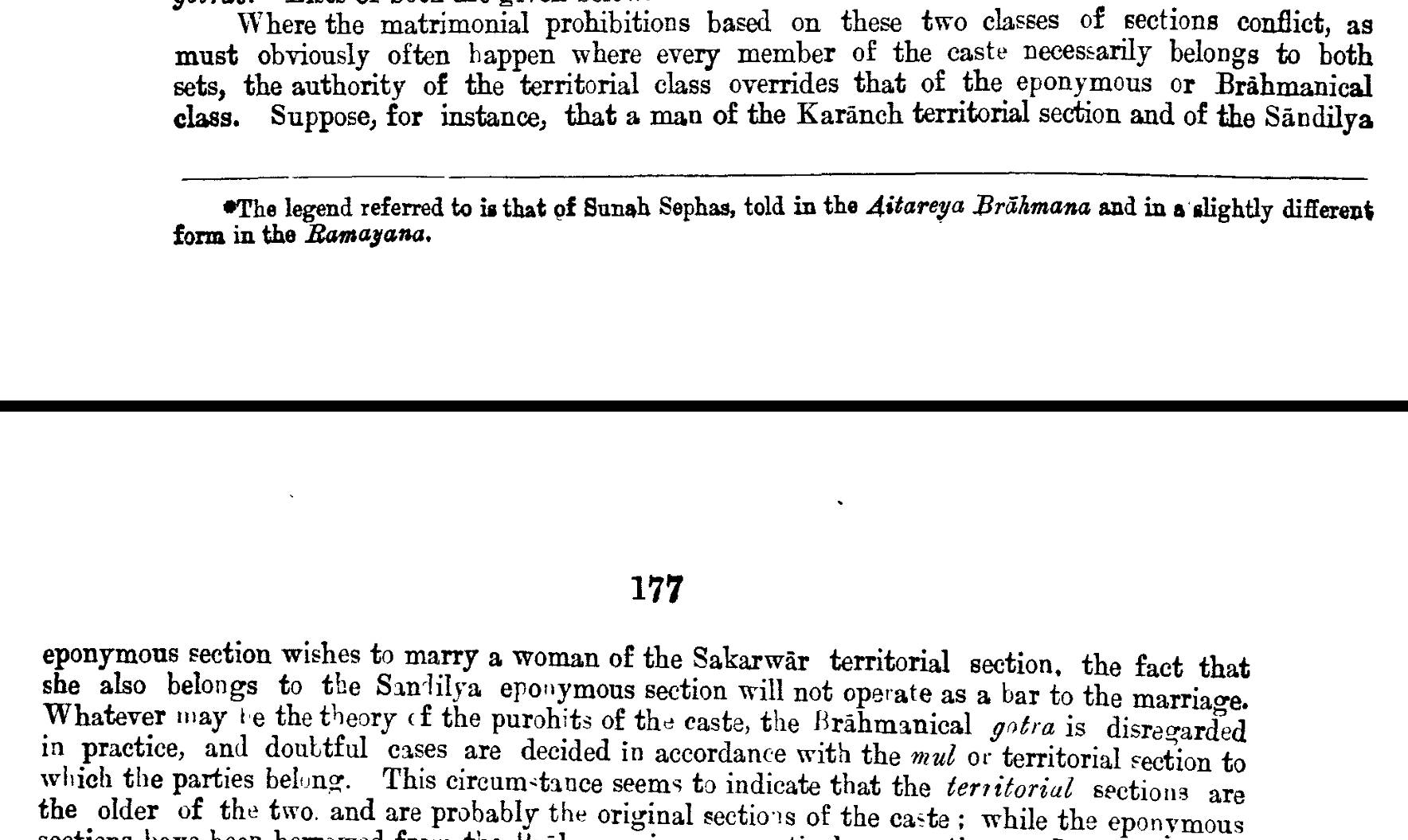
Go to References
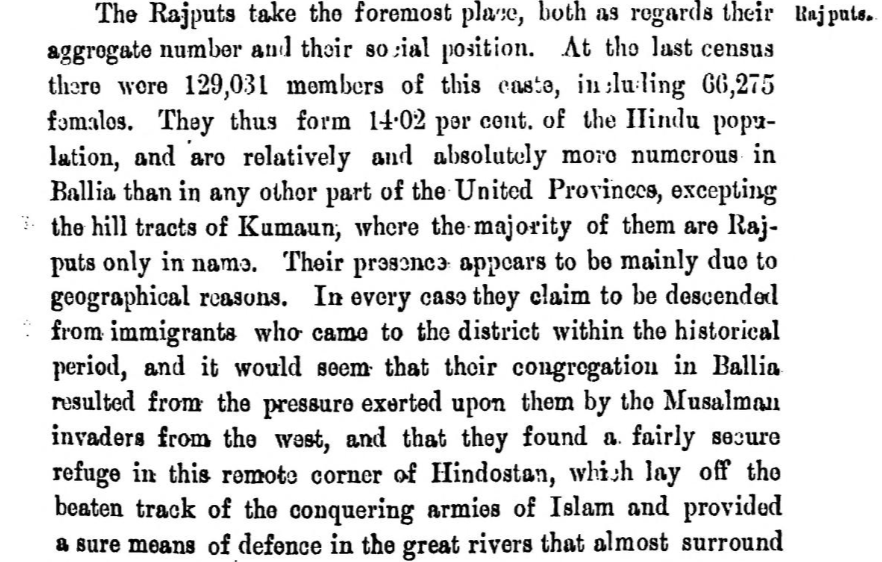
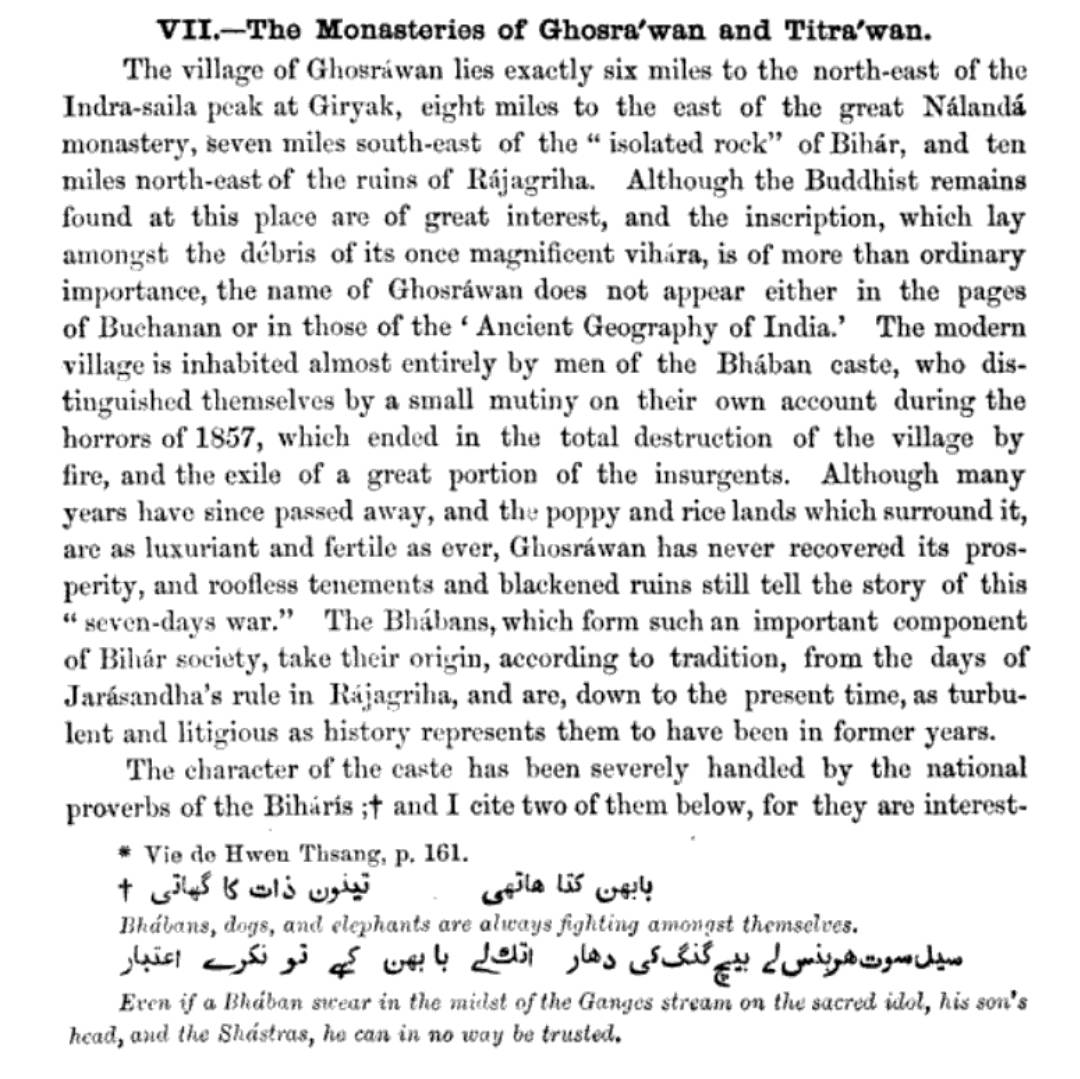
24)
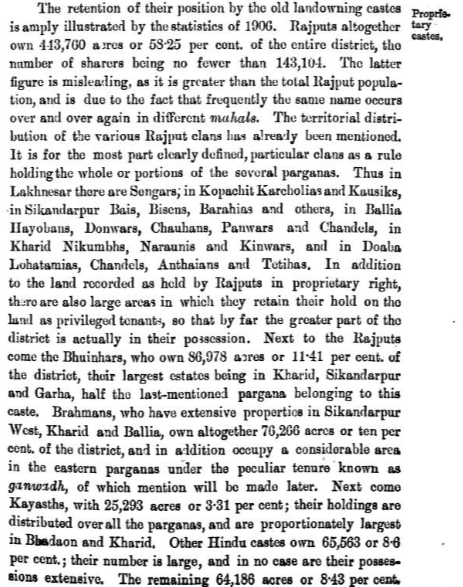
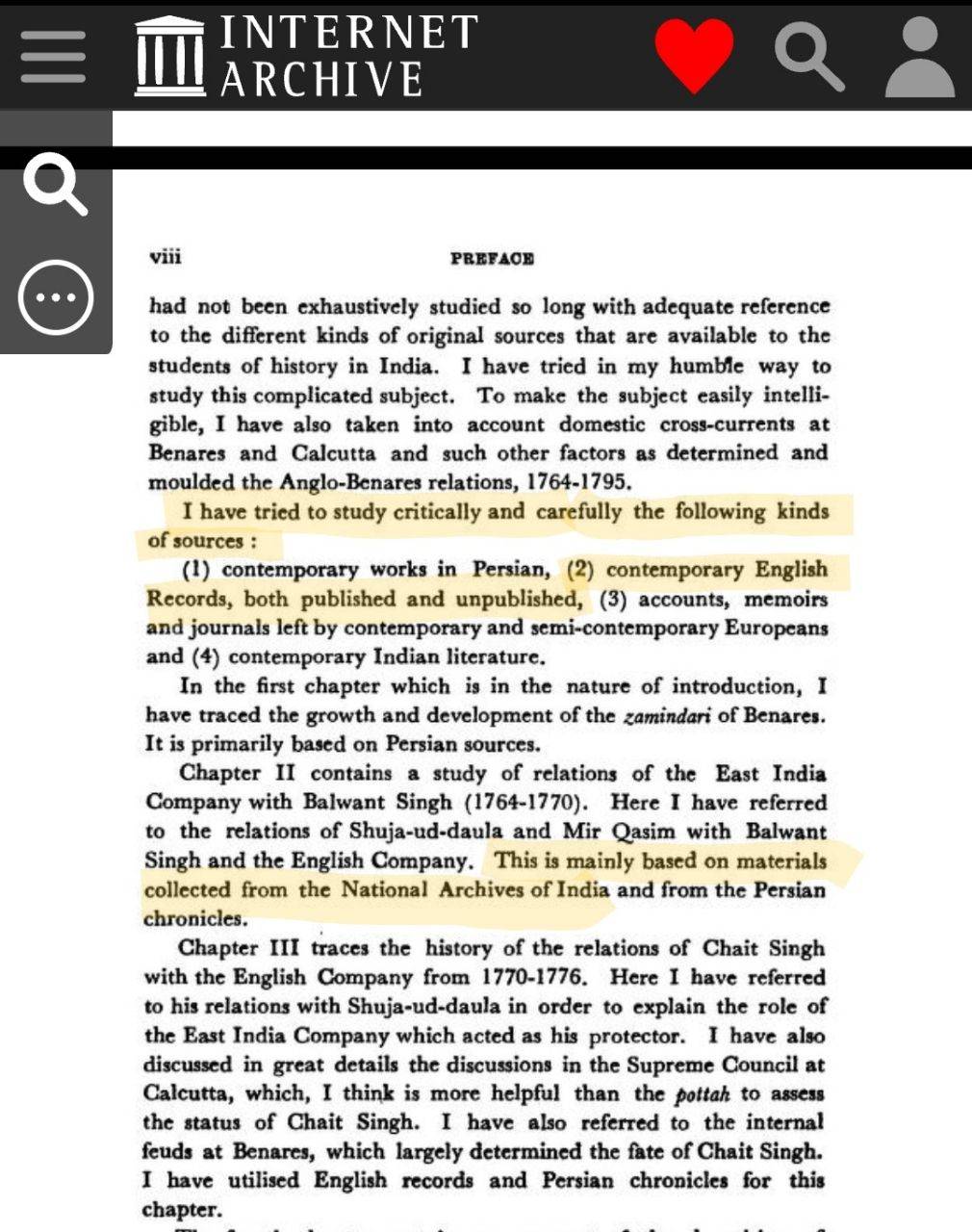
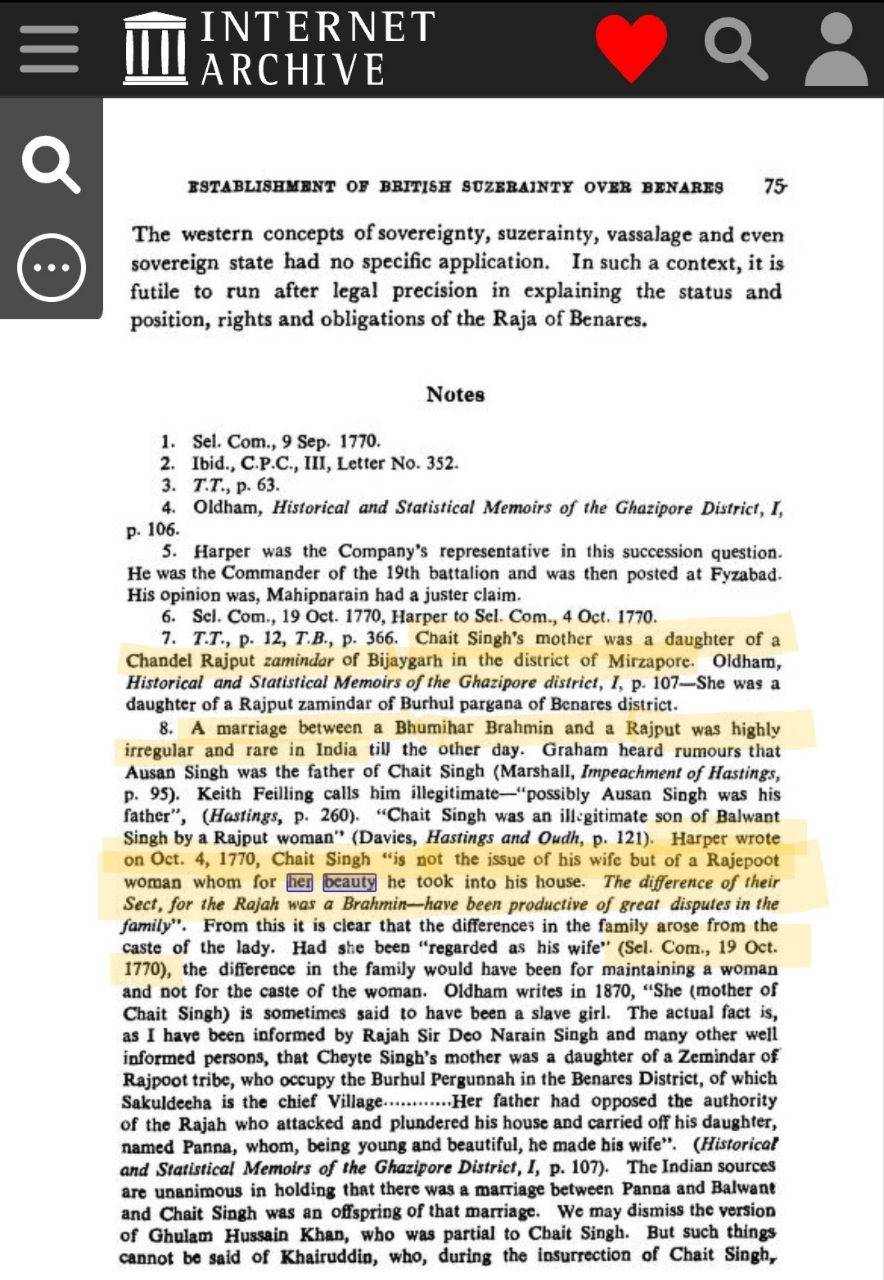
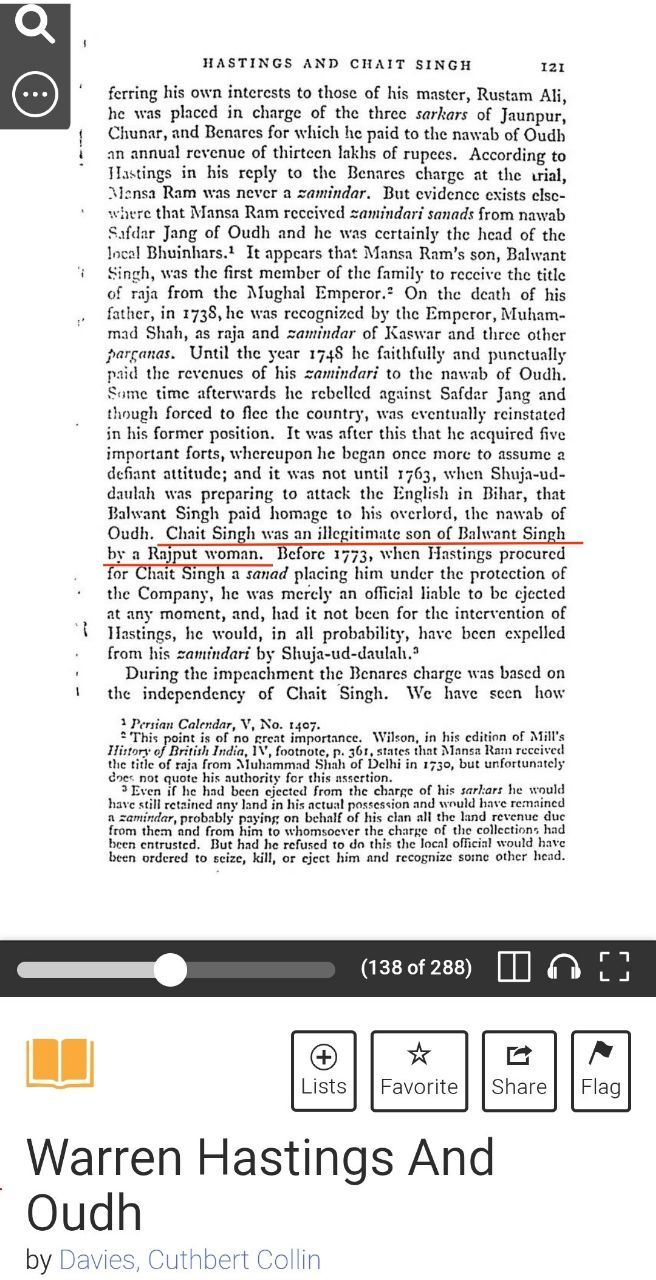
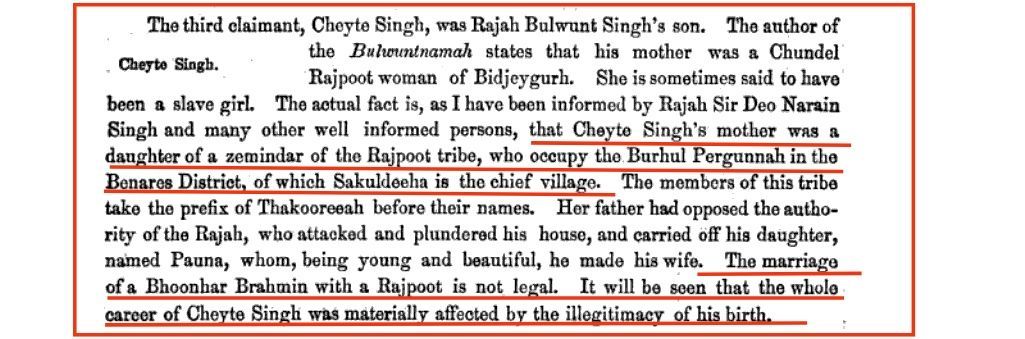
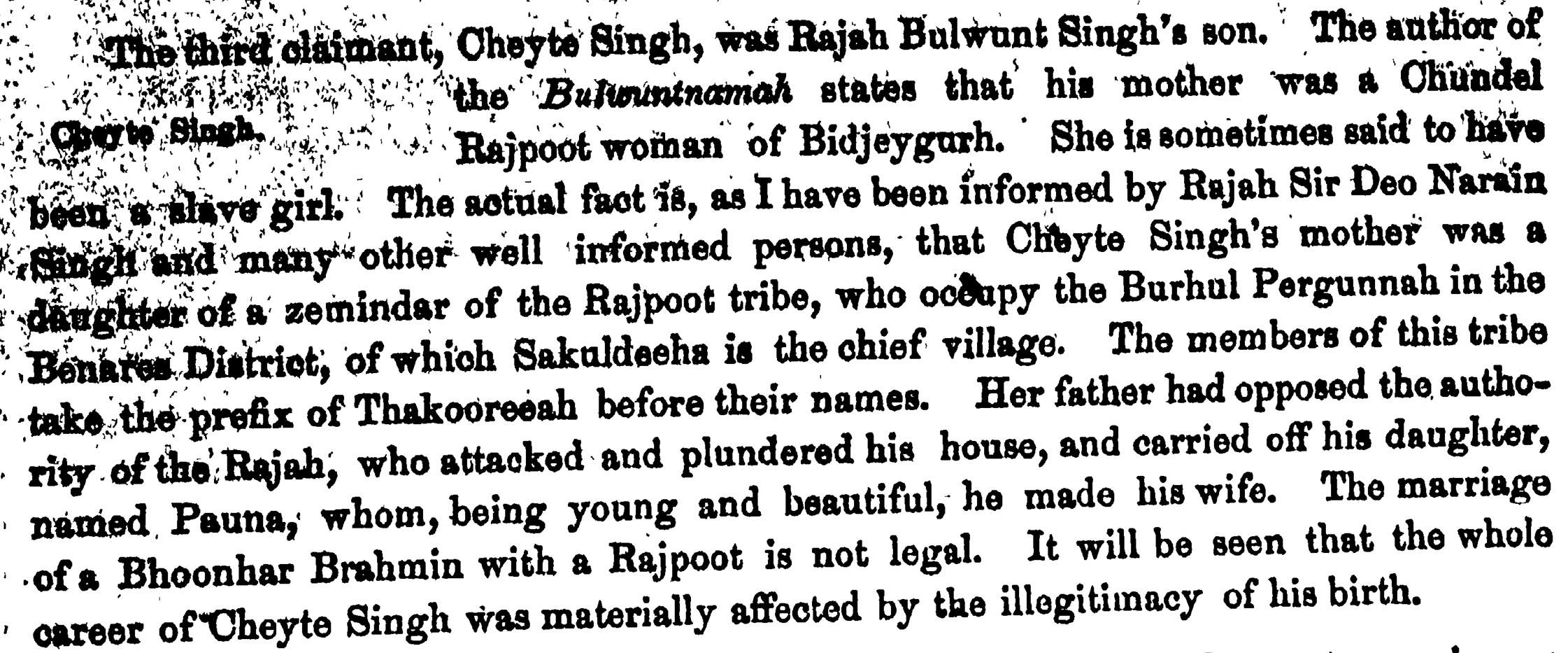
25)

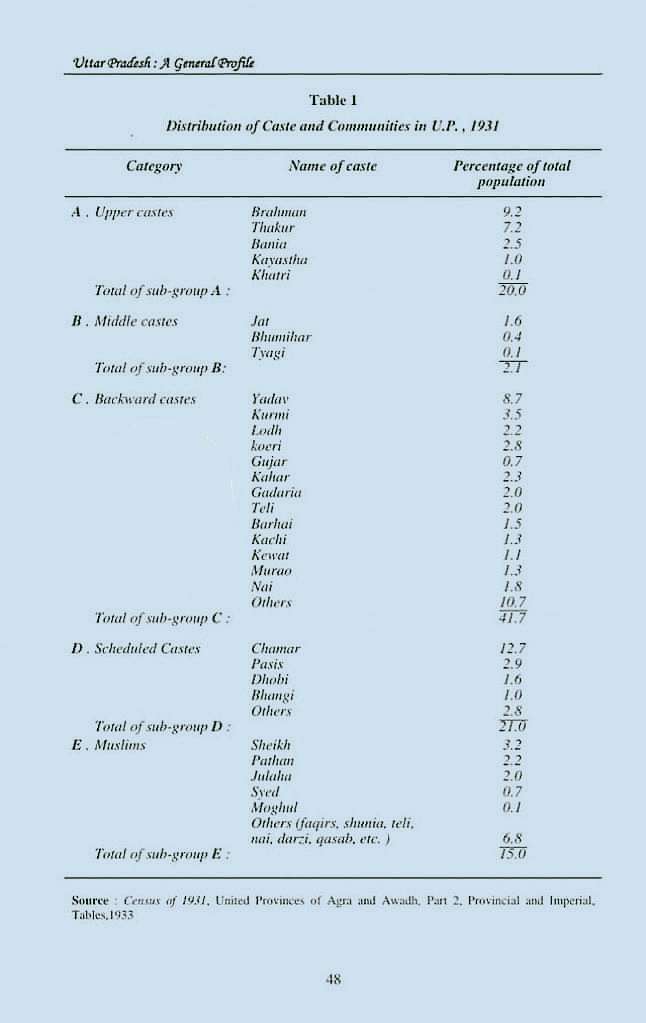
26)
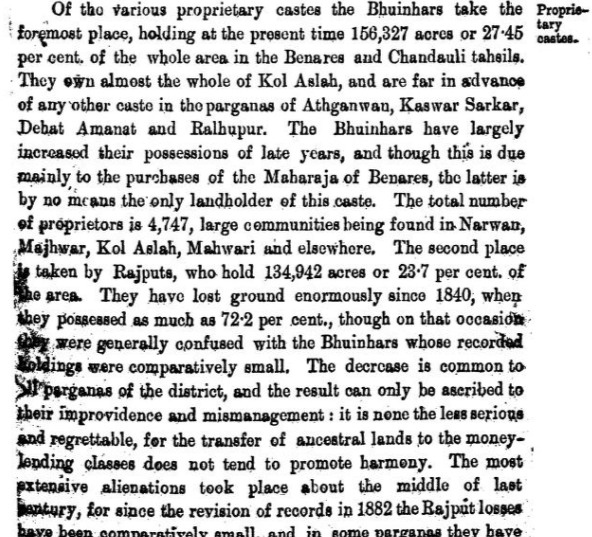
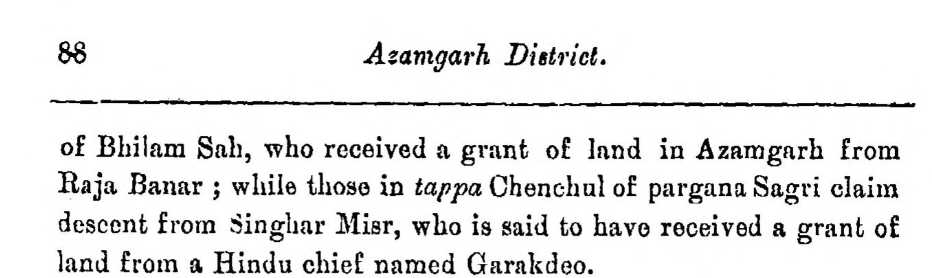
27) Azamgarh
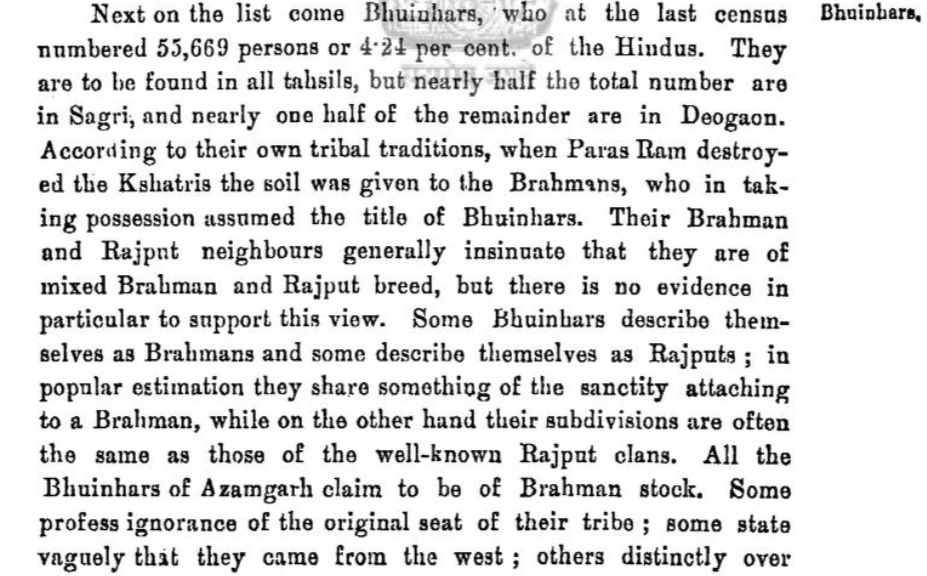
28)
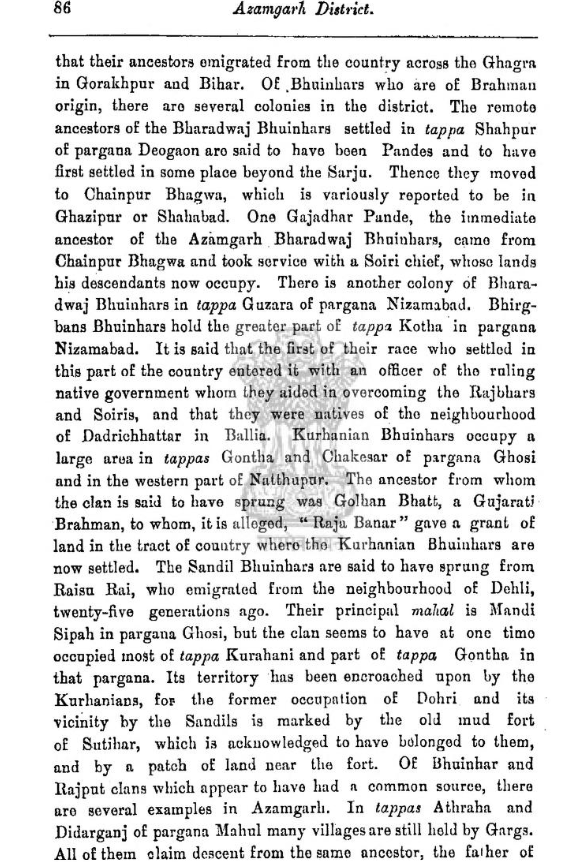
29)
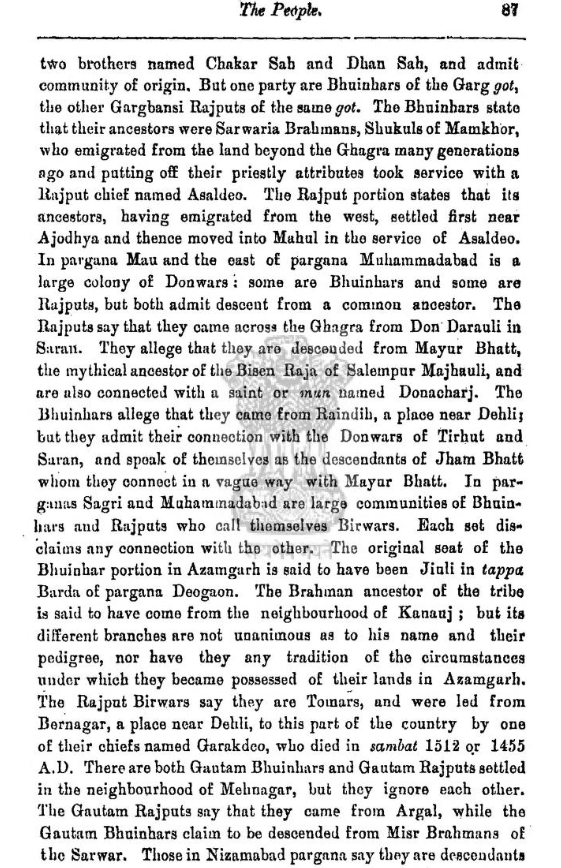
30)
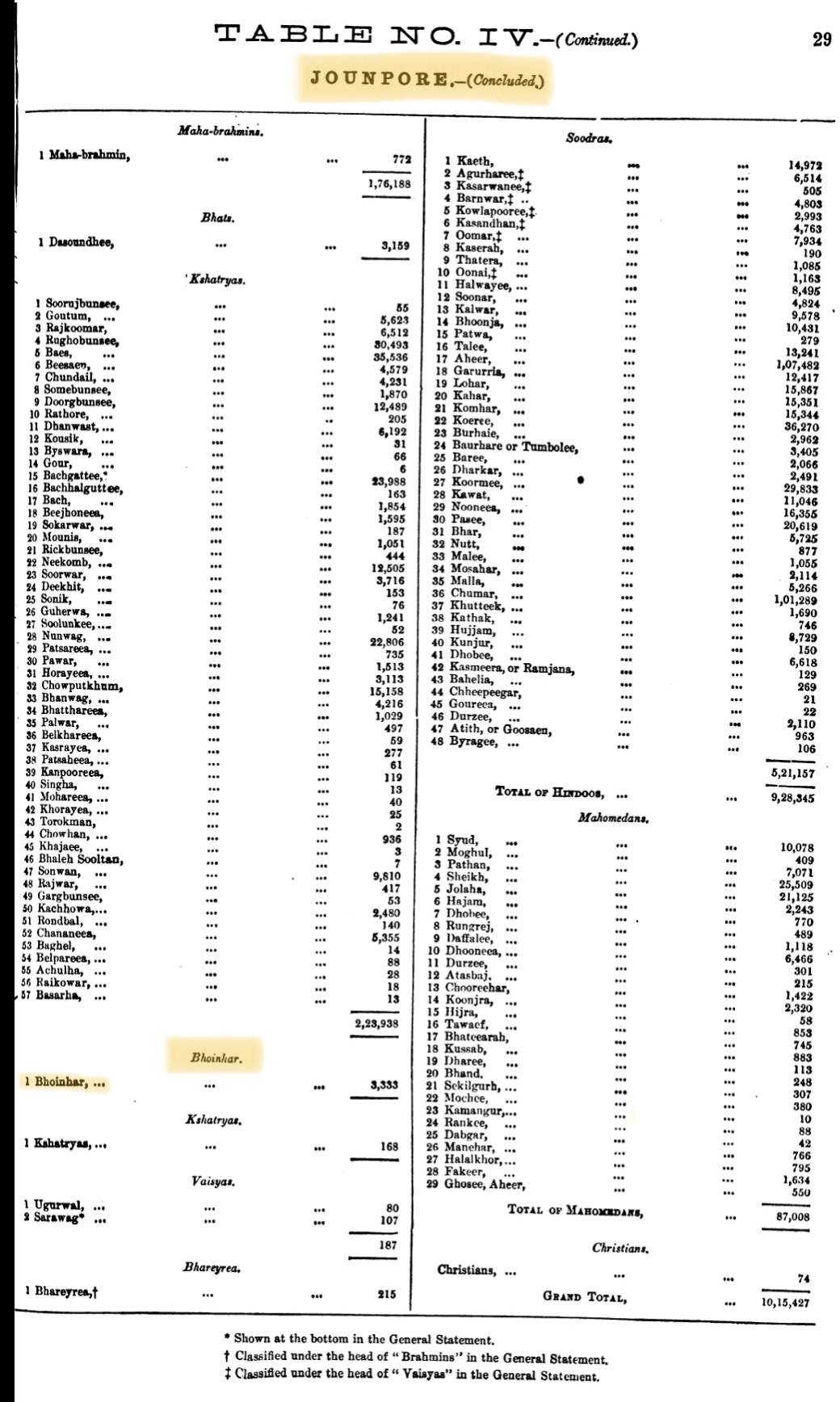
31) Saran
32)
33)
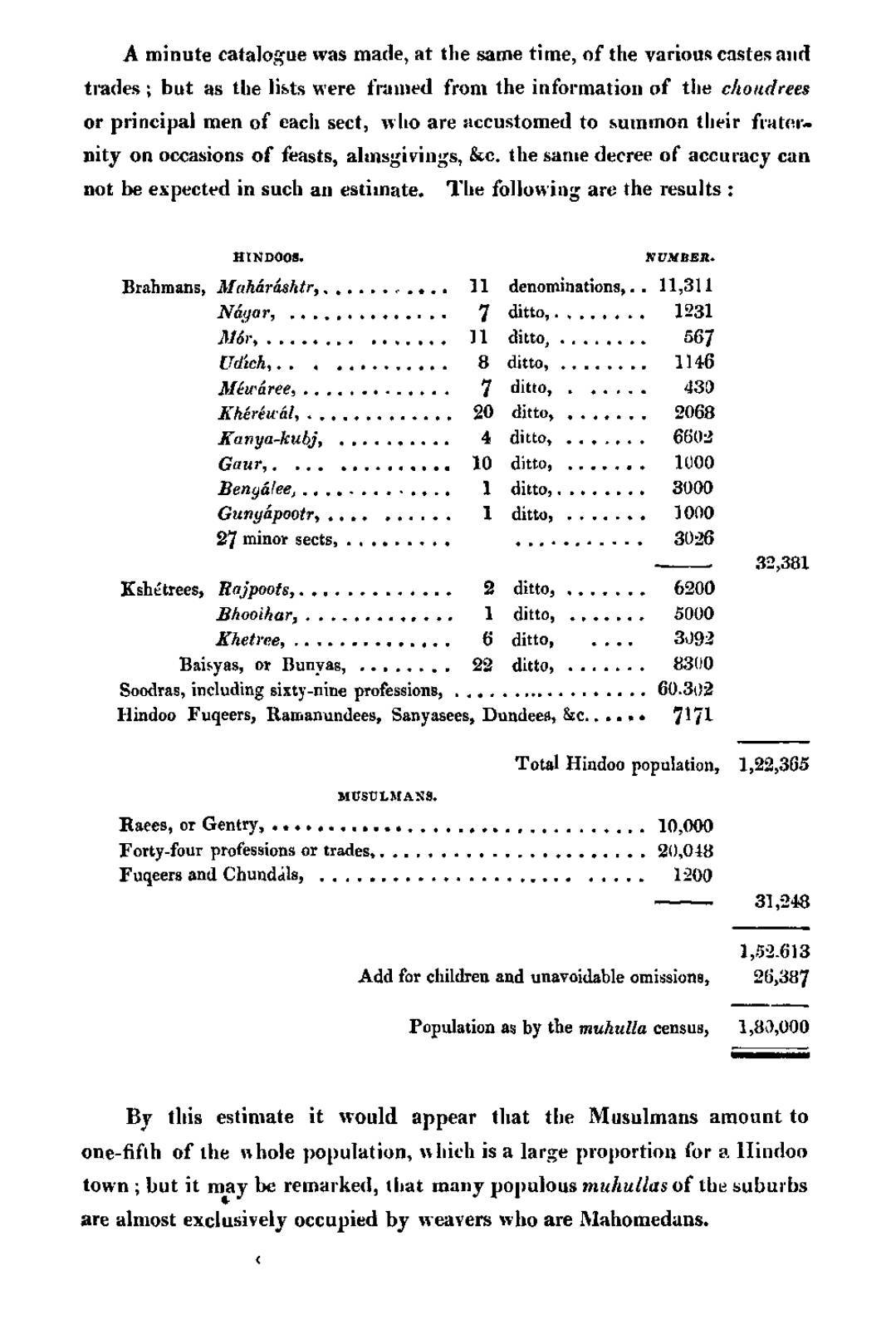
34) Shahabad
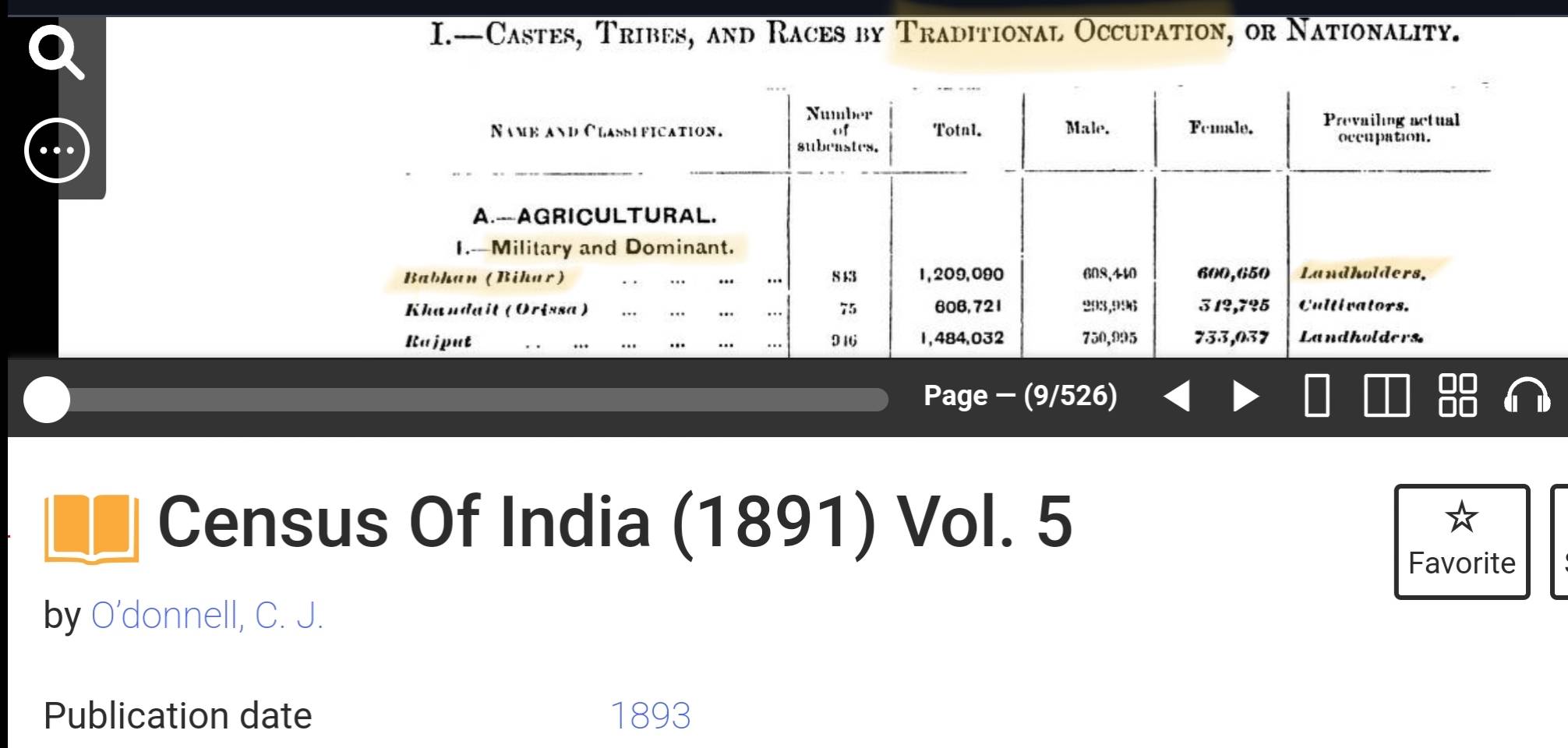
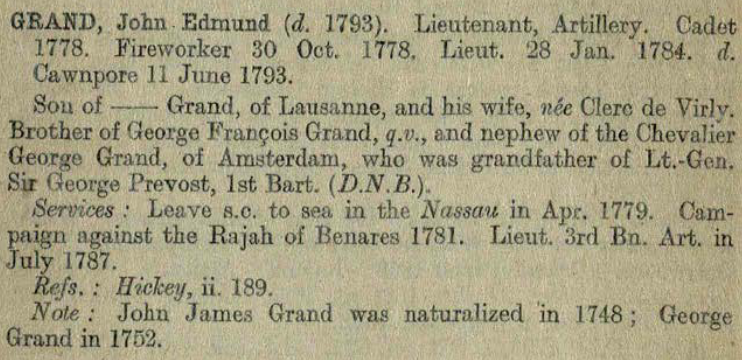
35)
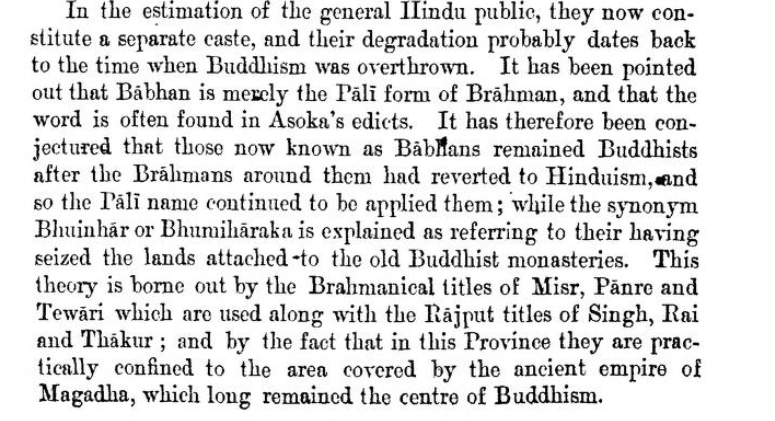
36) Champaran
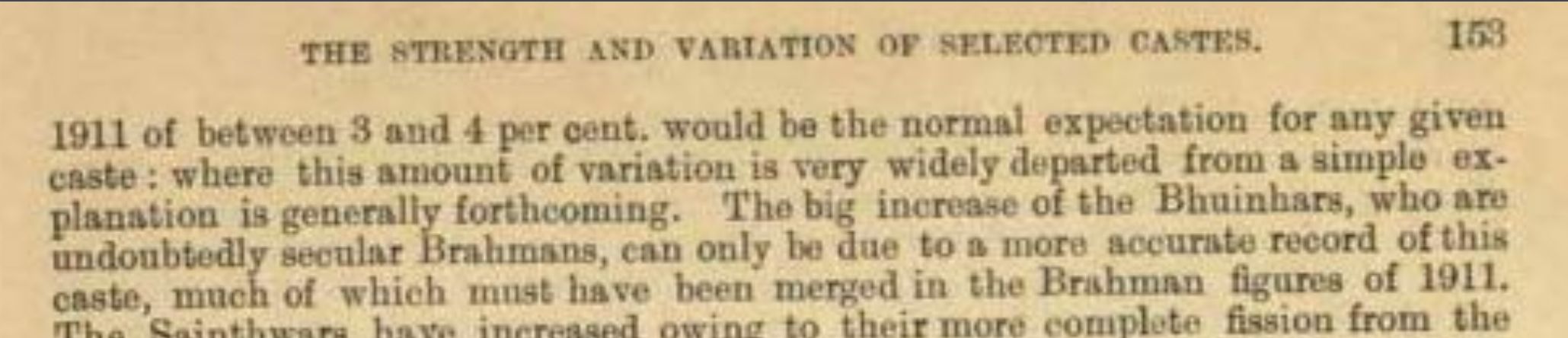
37)
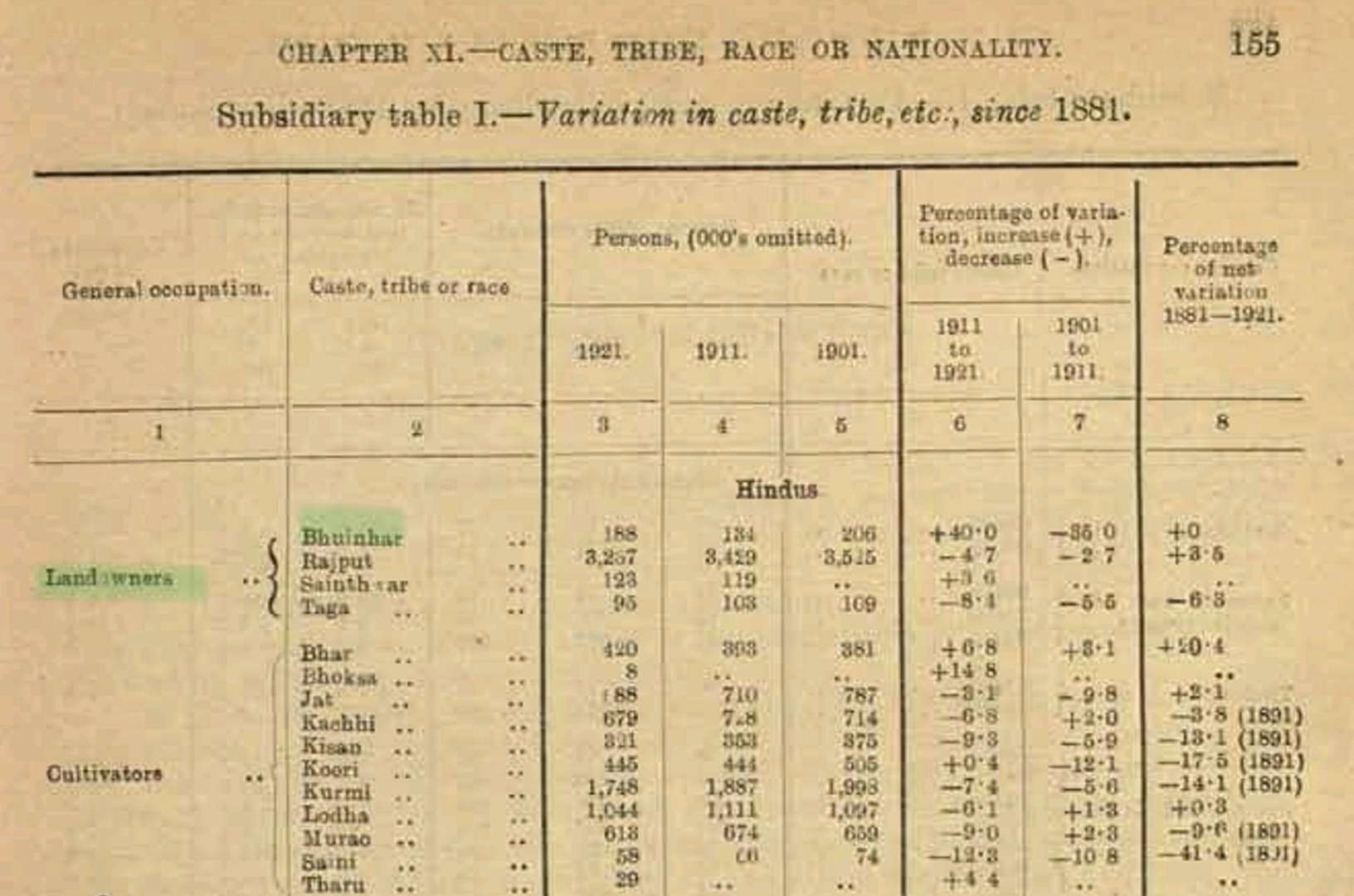
38)

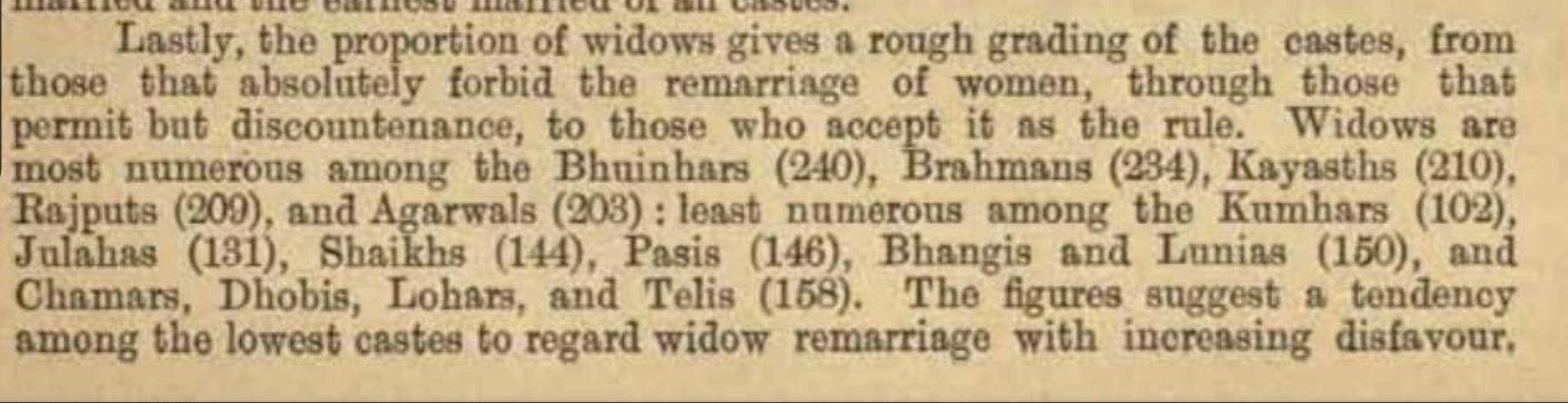
39)
40)
41) Gaya
Bhumihars converting to Islam

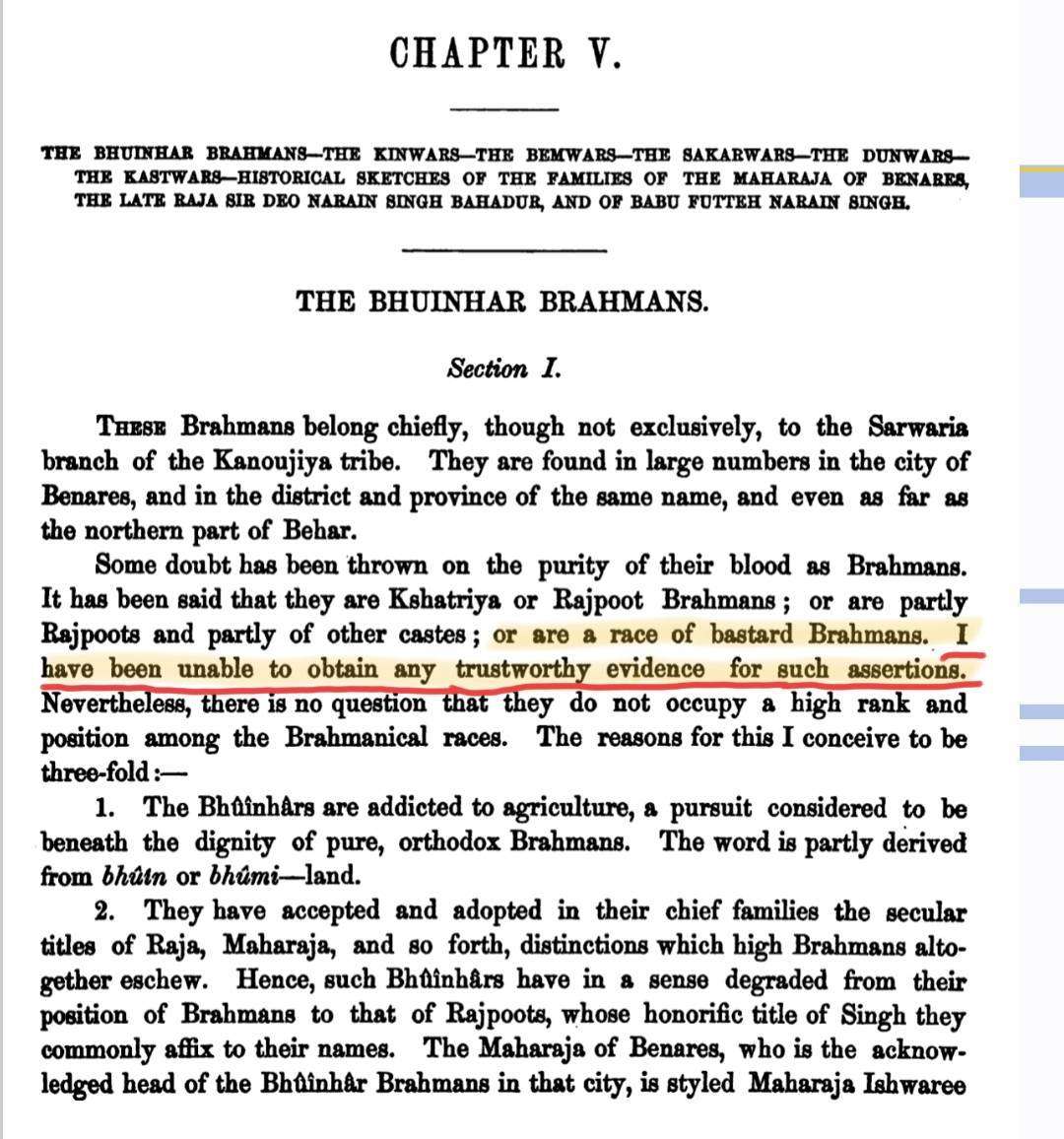
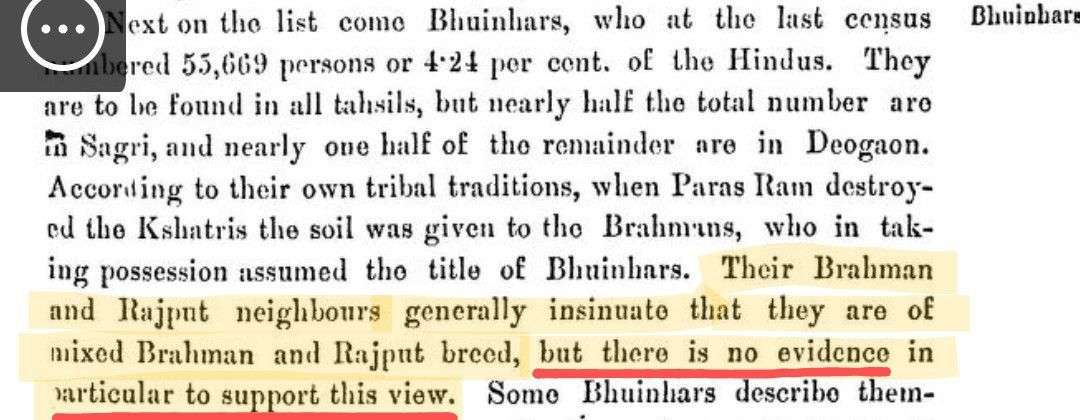
42) Here 👇🏻 the Brits themselves debunked
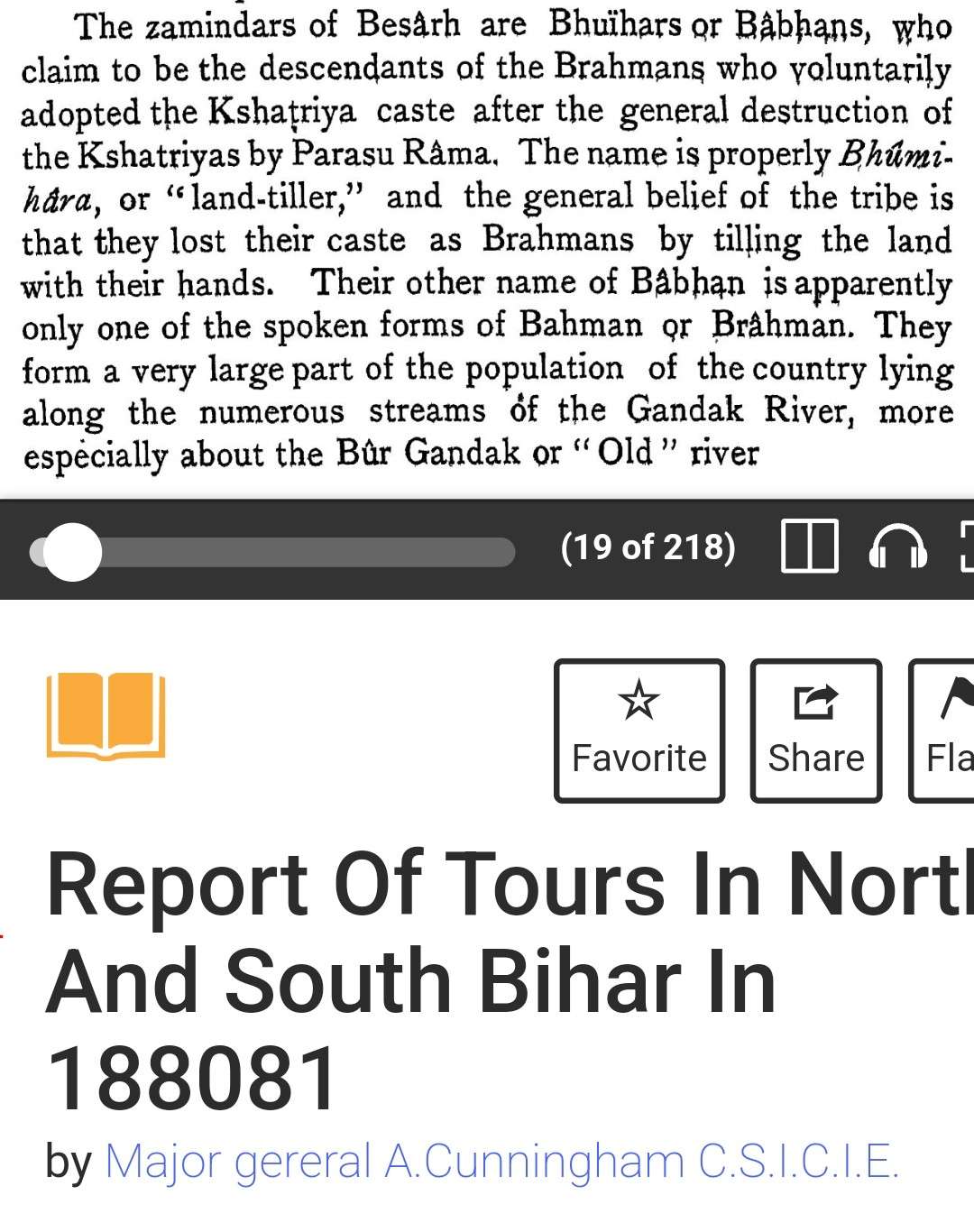
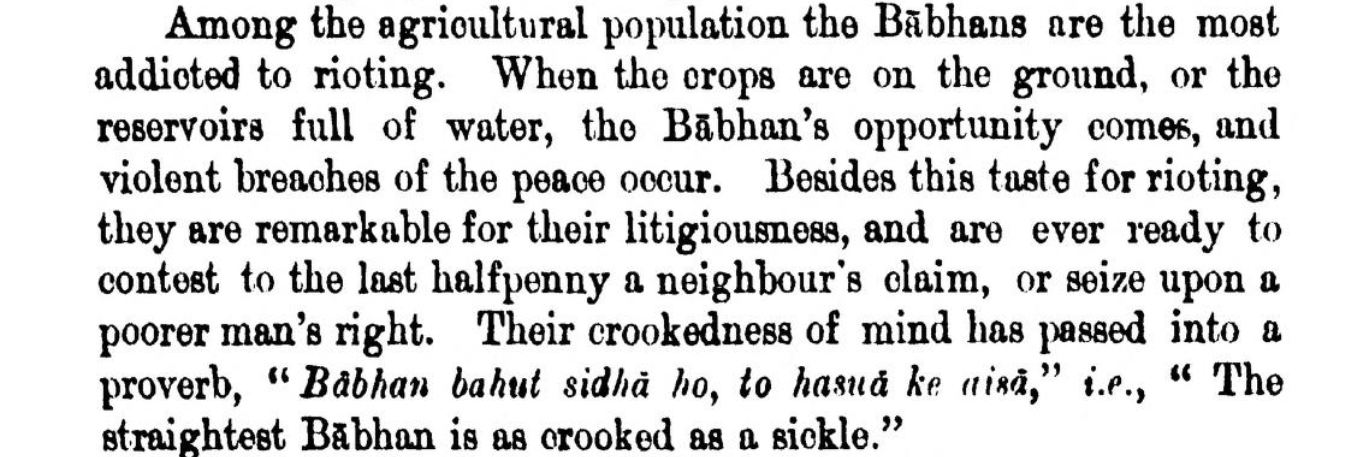
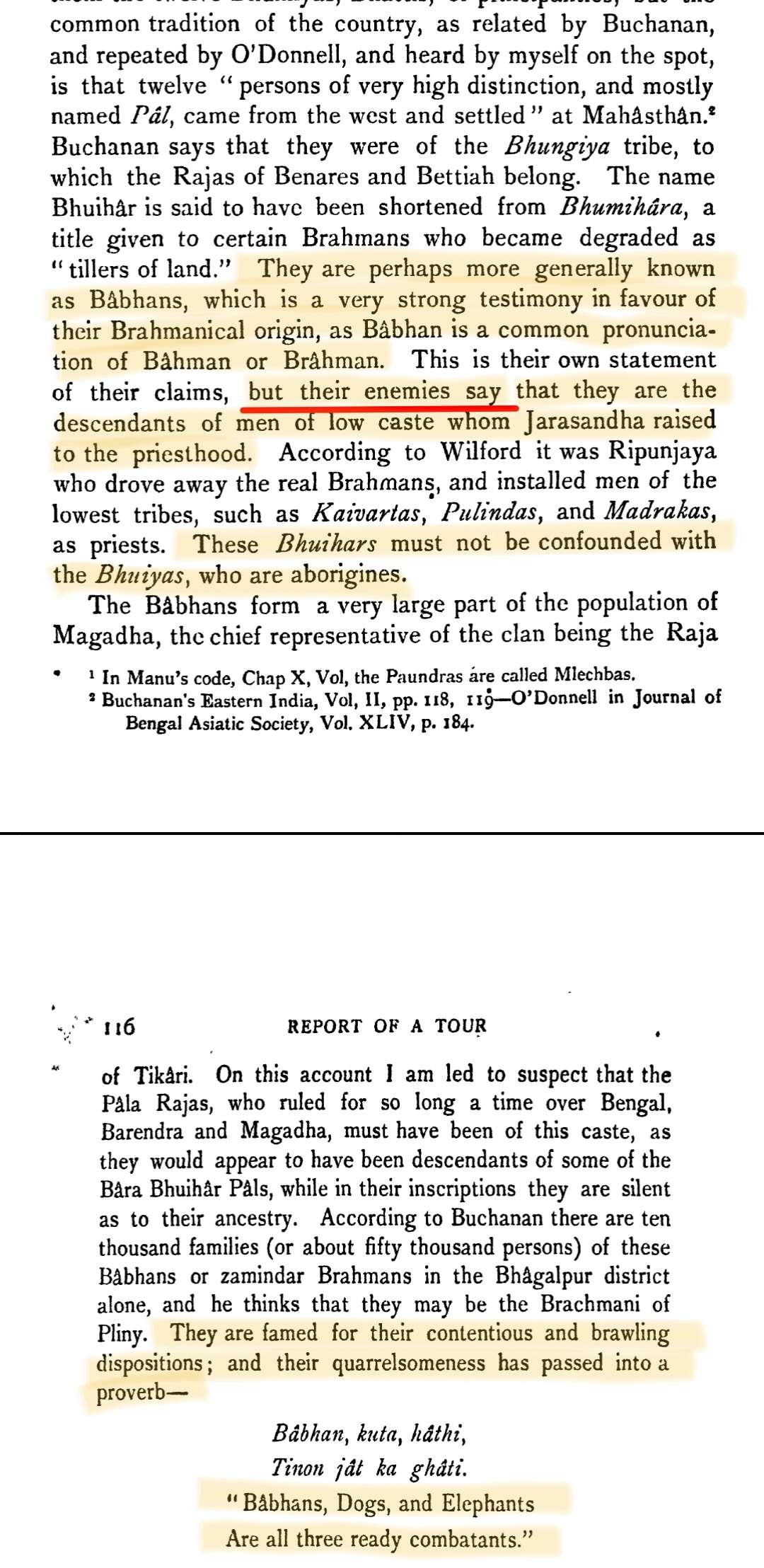
and
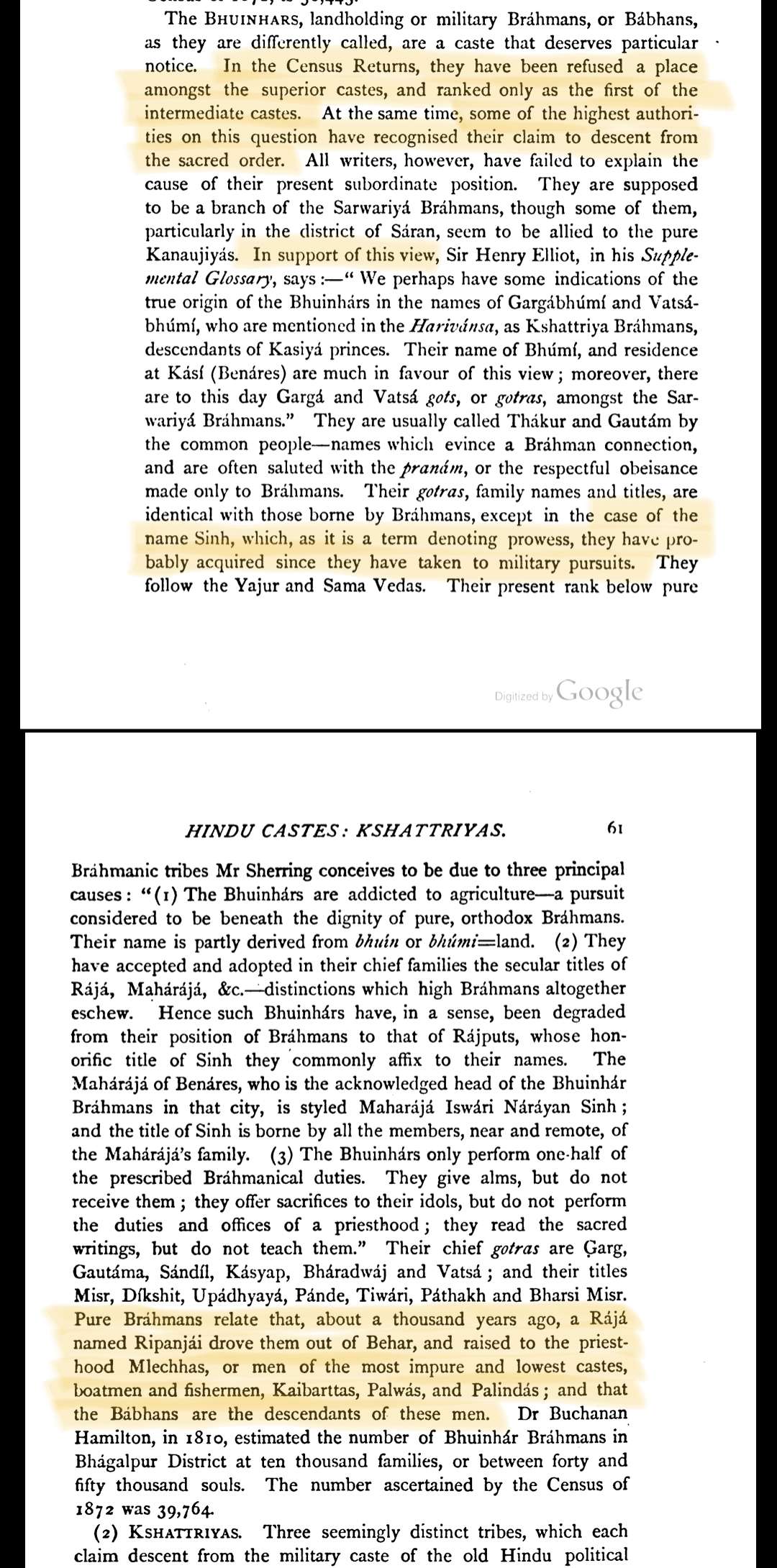
dismissed the fake assertions by Hindus against the Bhumihars.
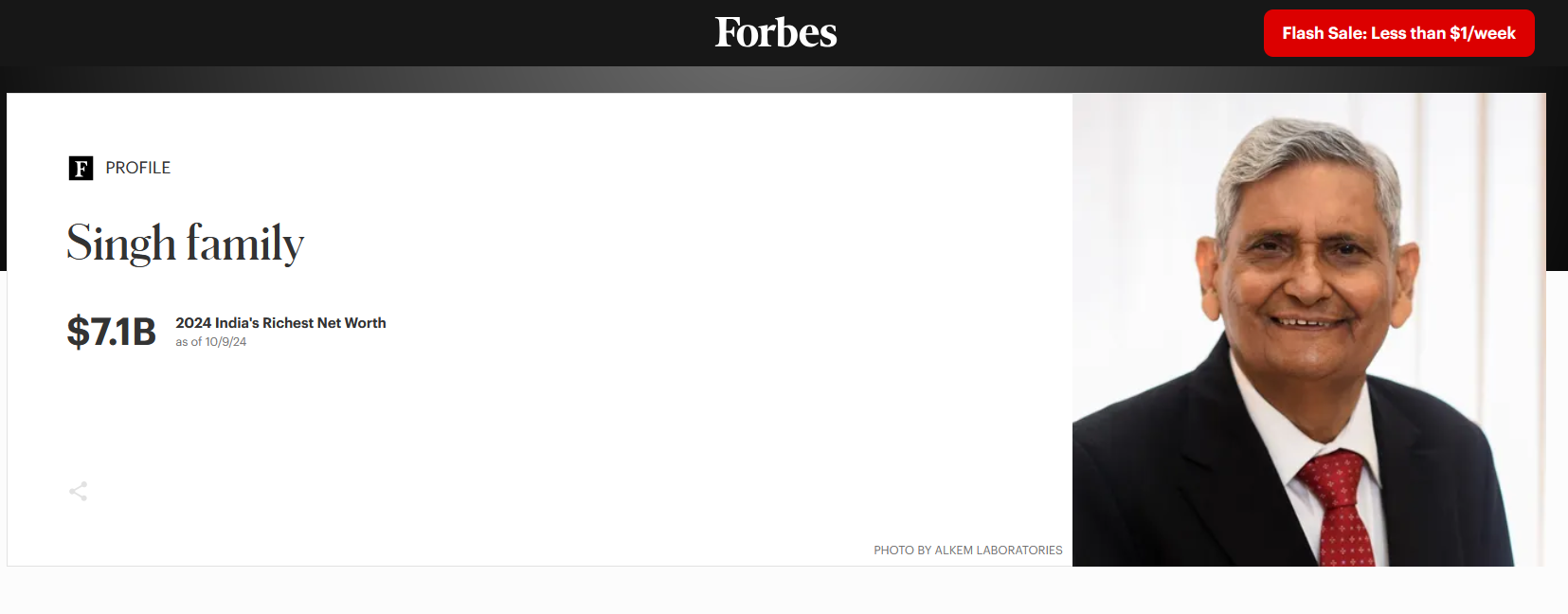
Left : MA Sherring
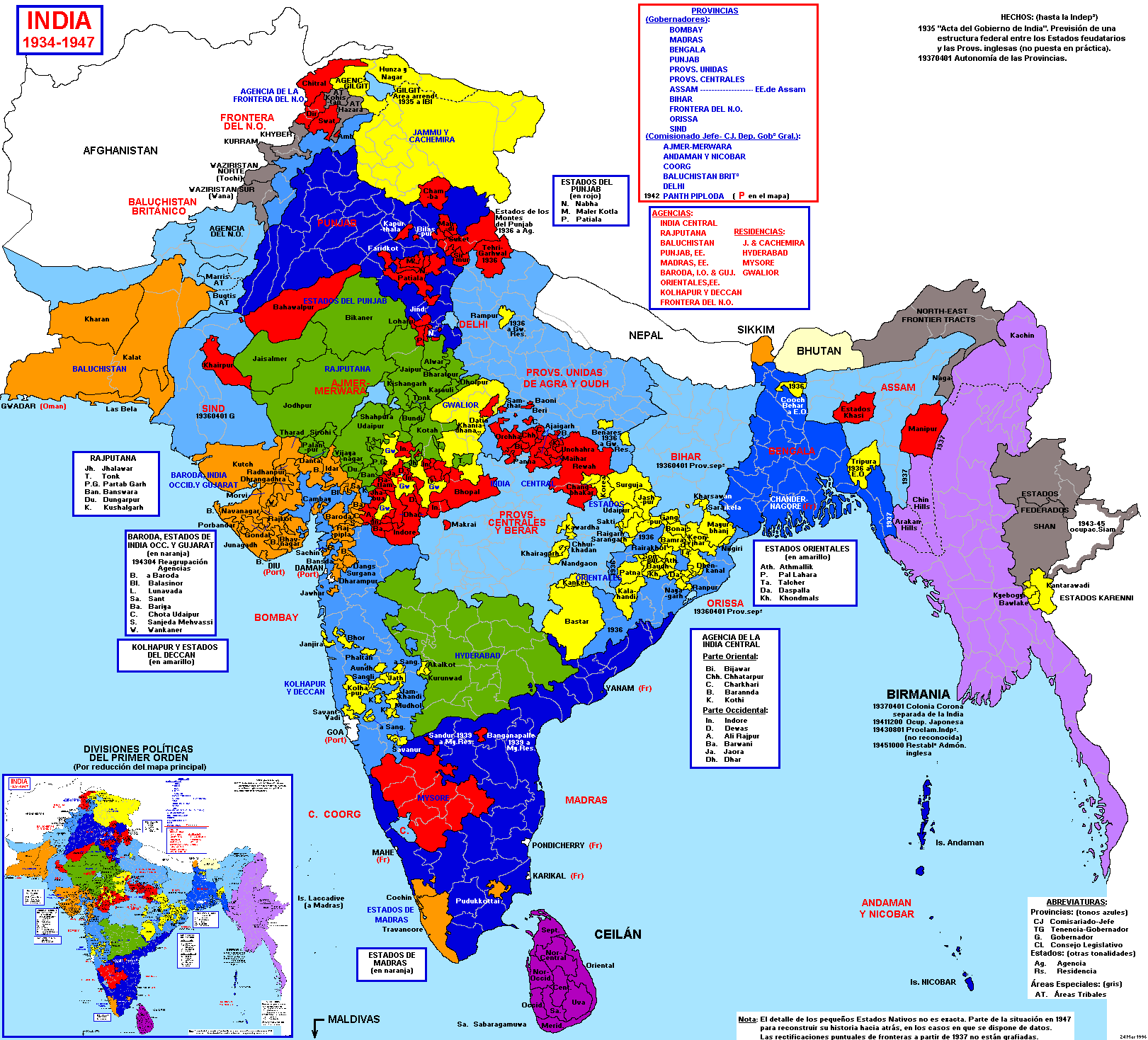
Right : Azamgarh Gazetteer
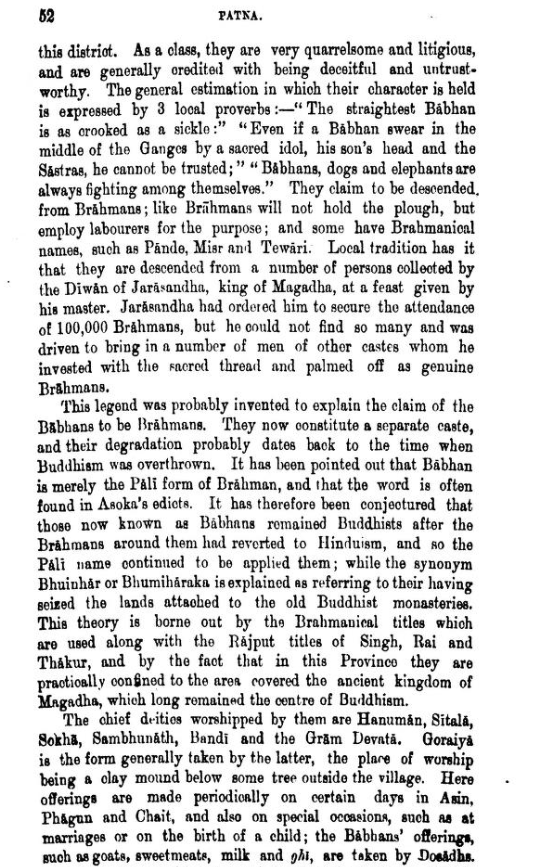
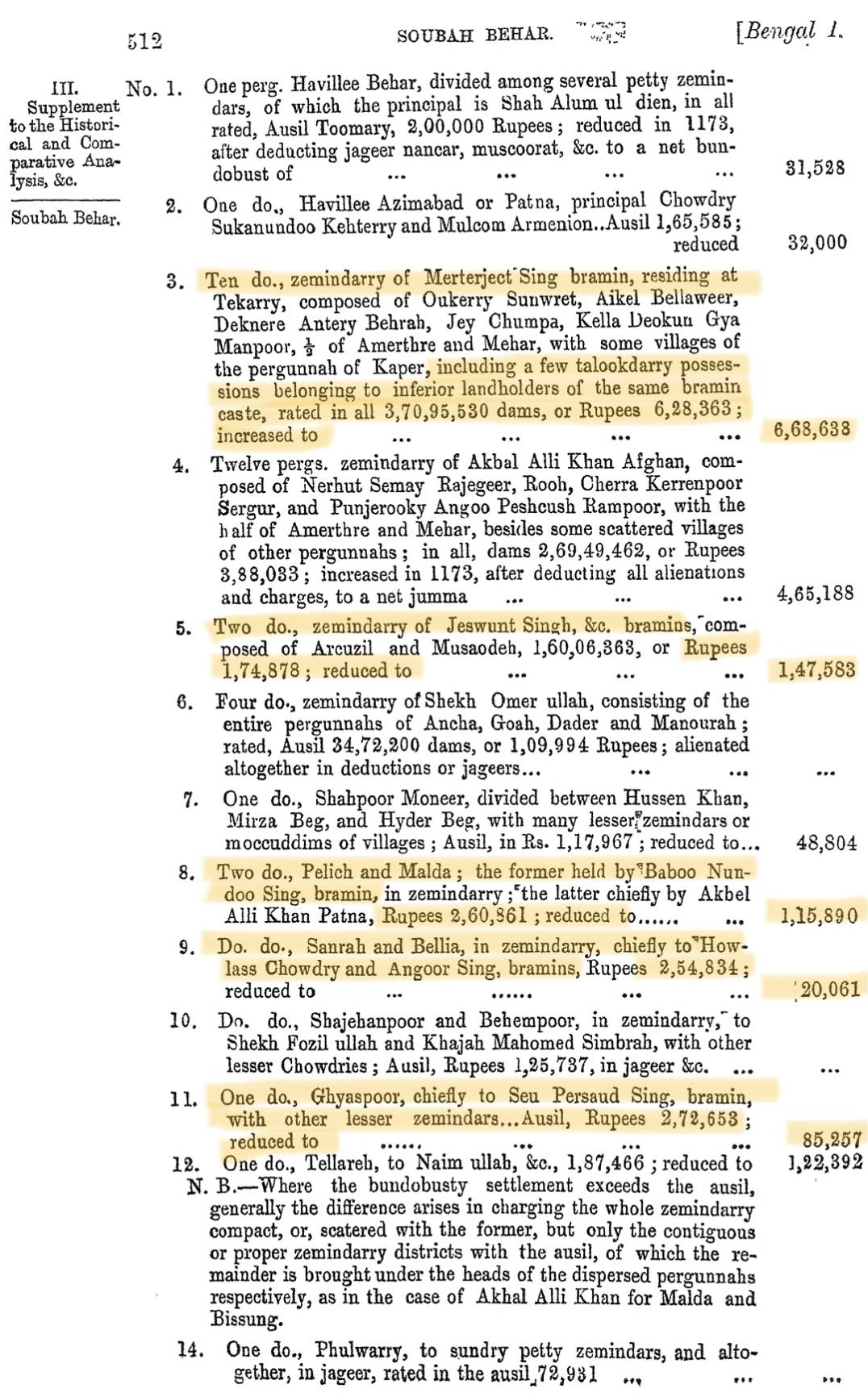
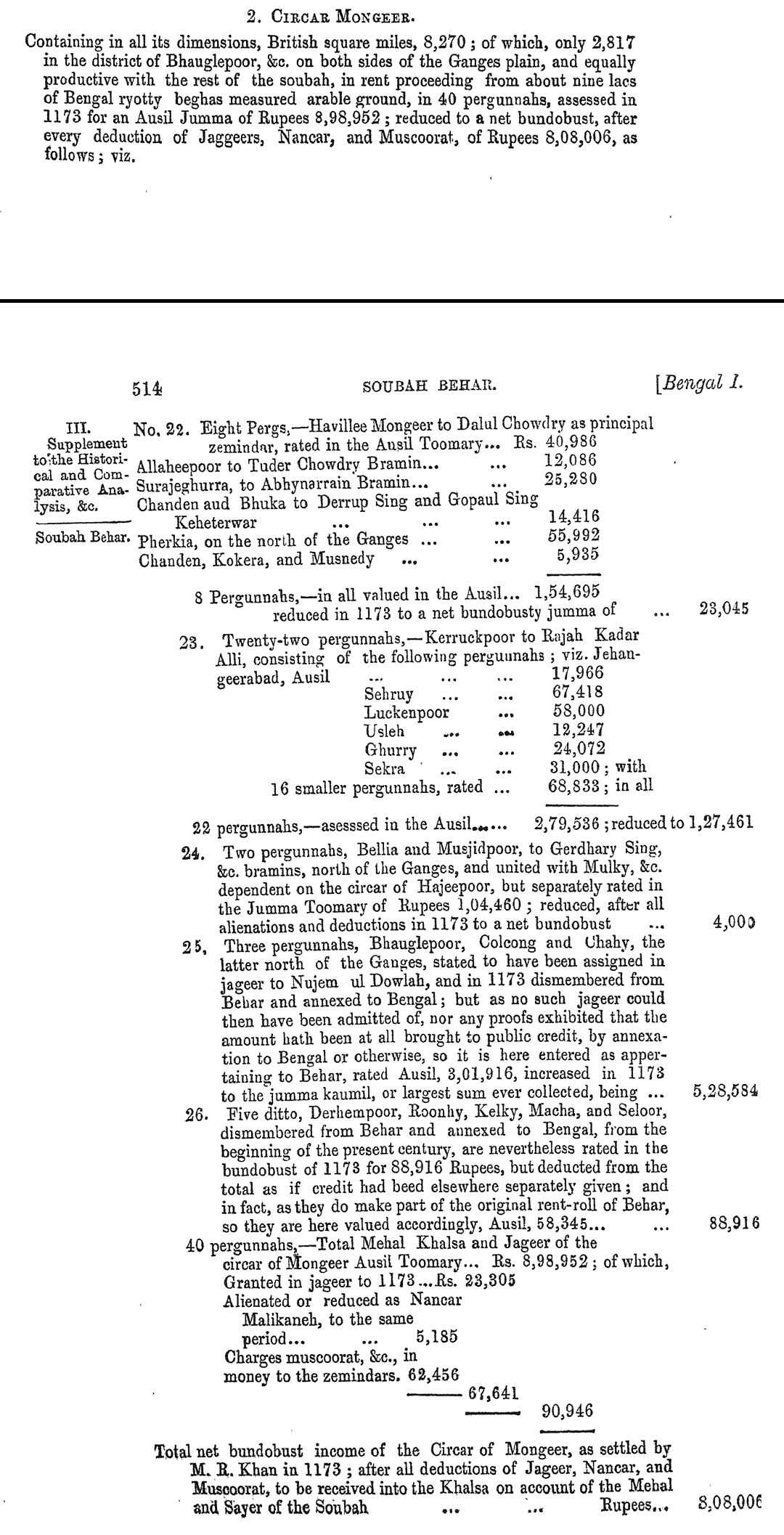
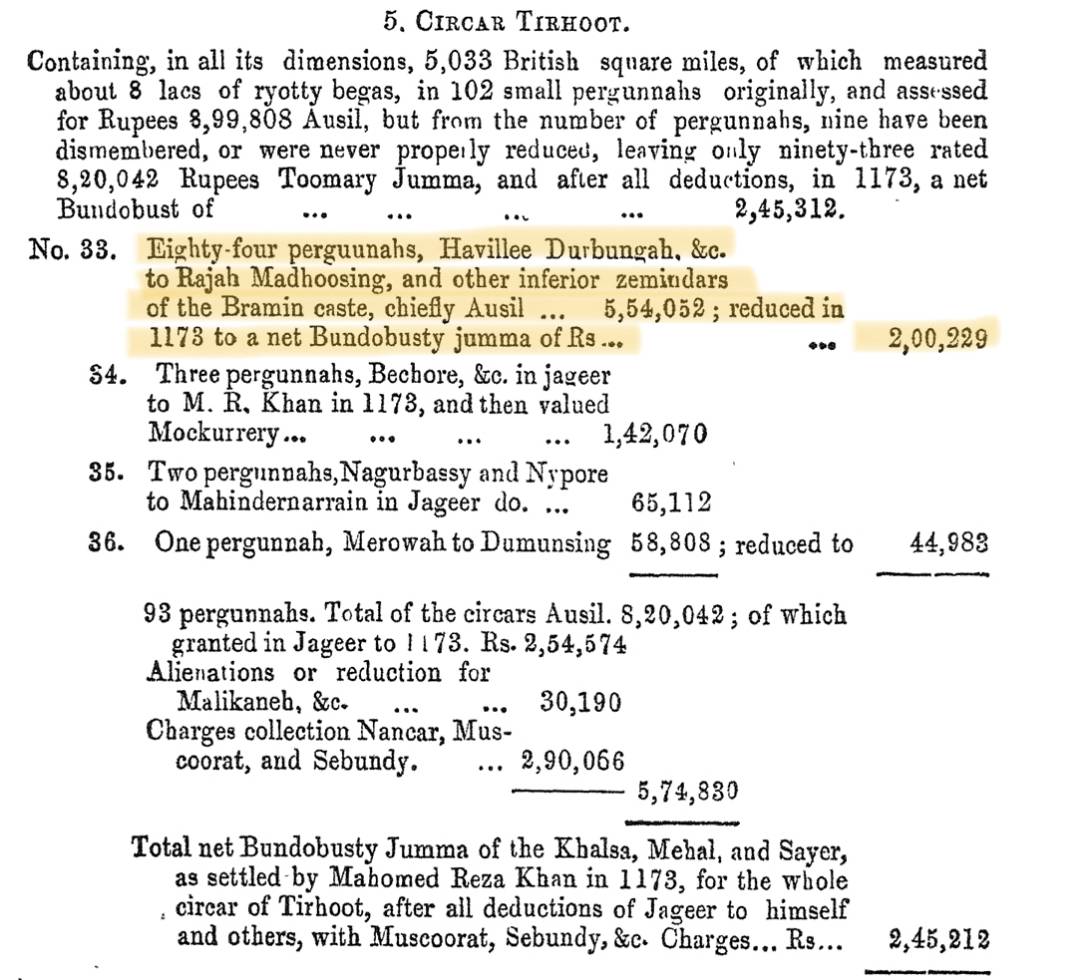
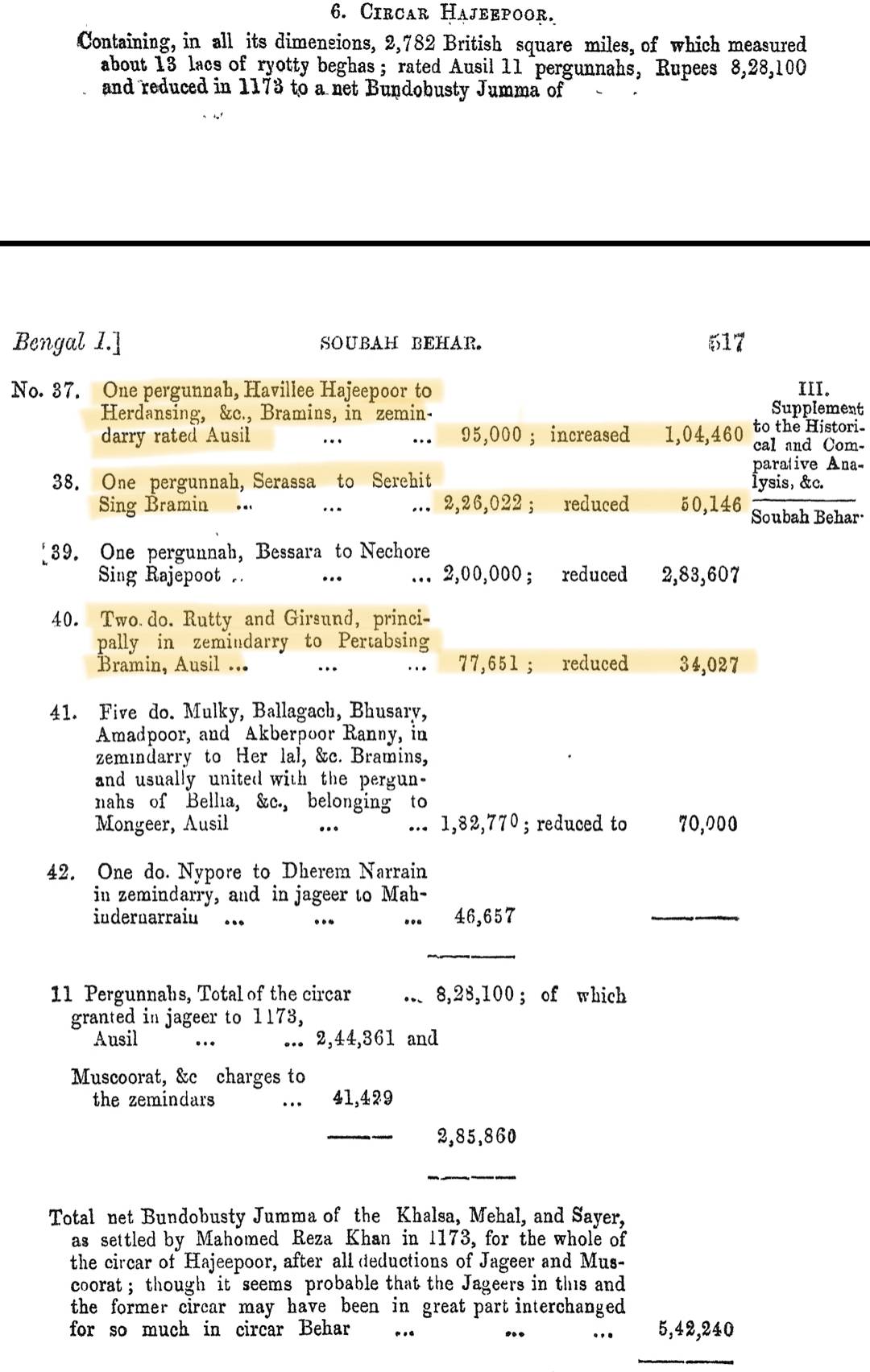
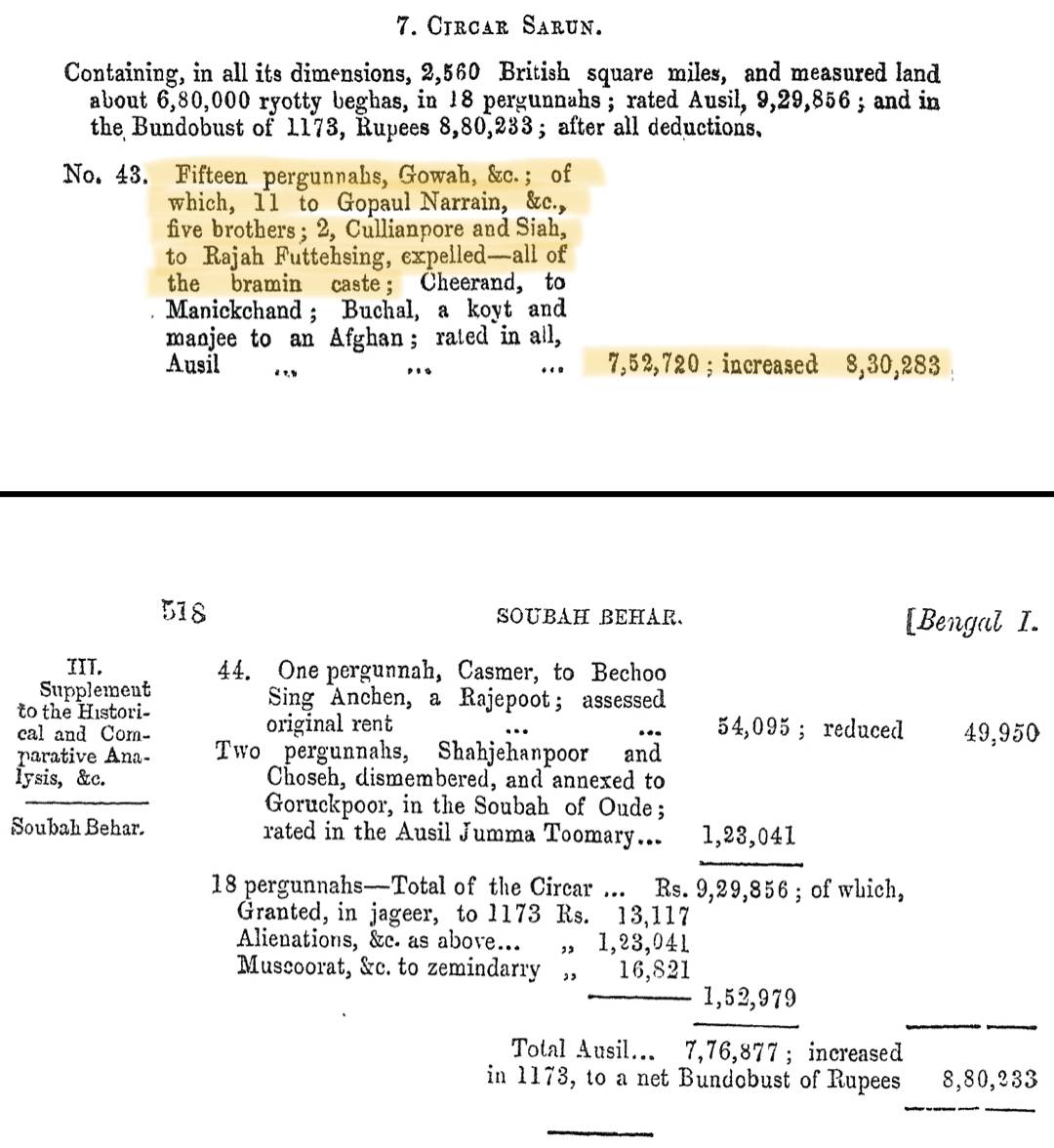
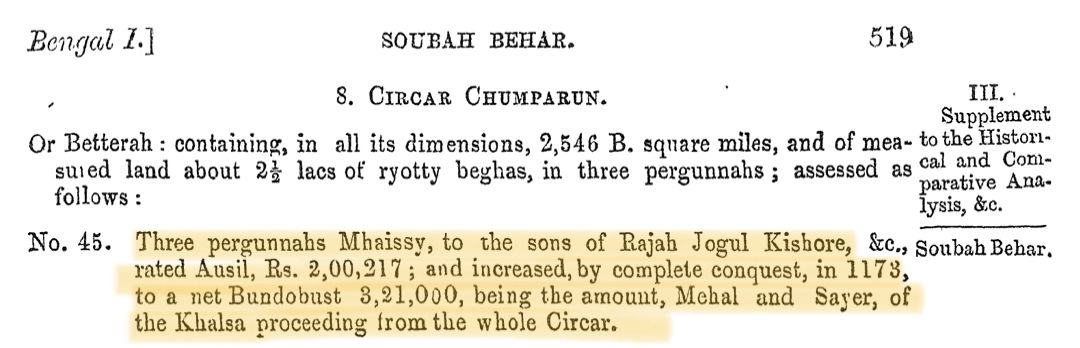
43) Patna
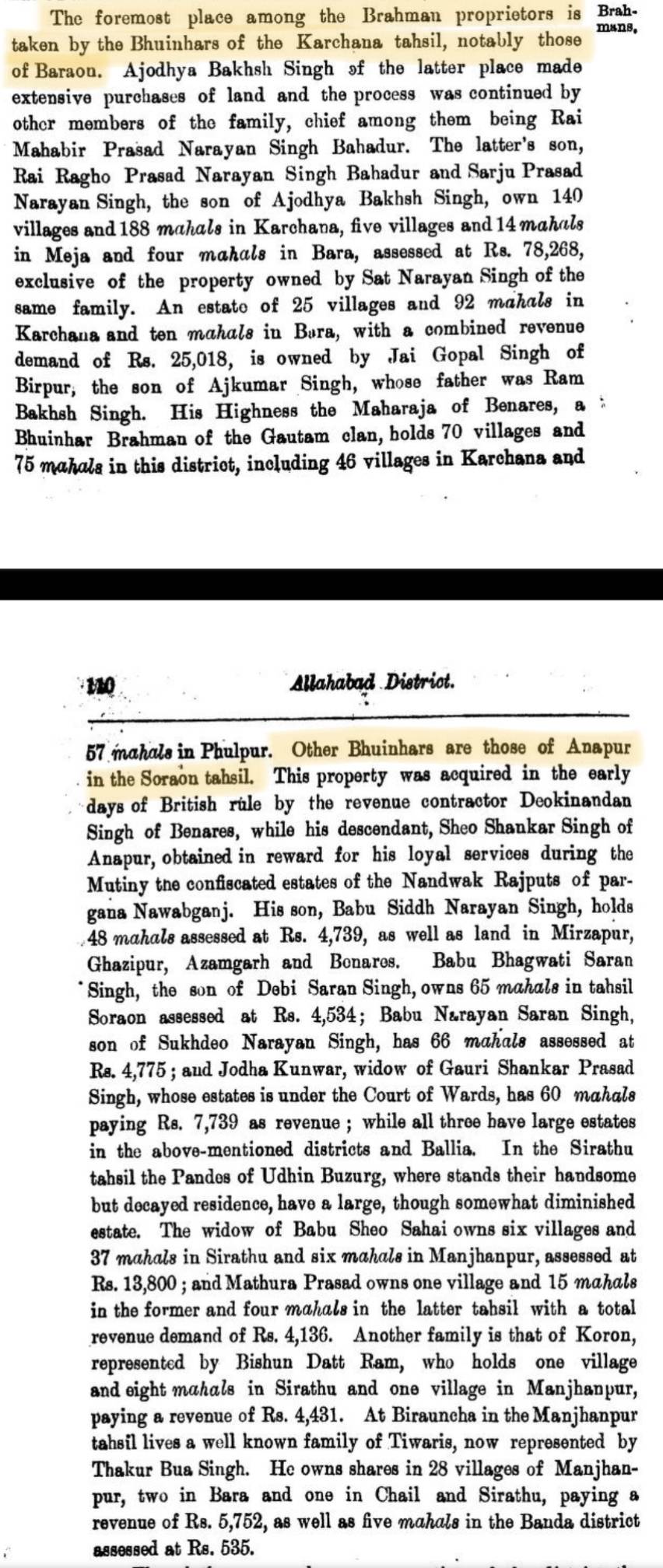
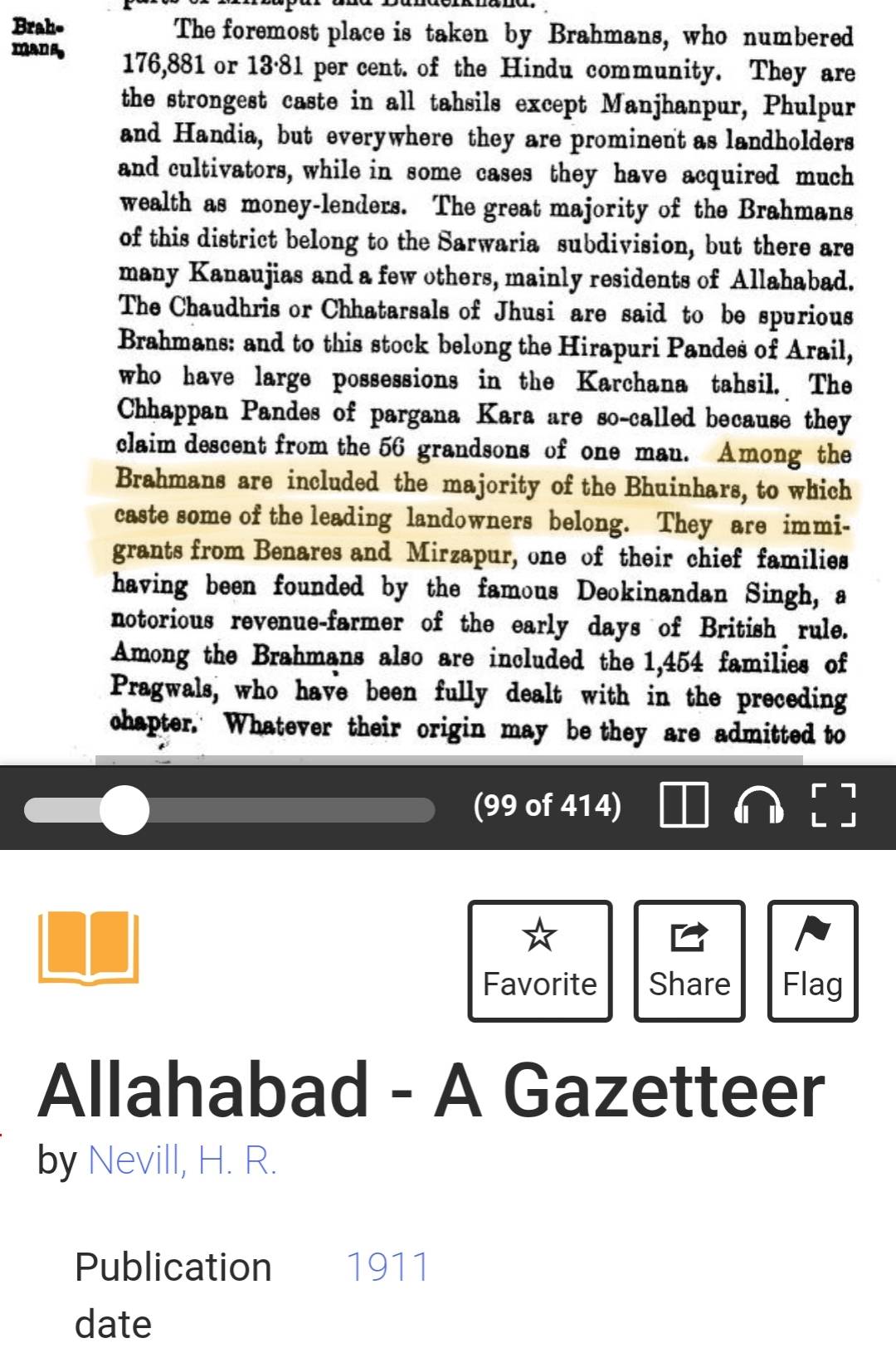
44)
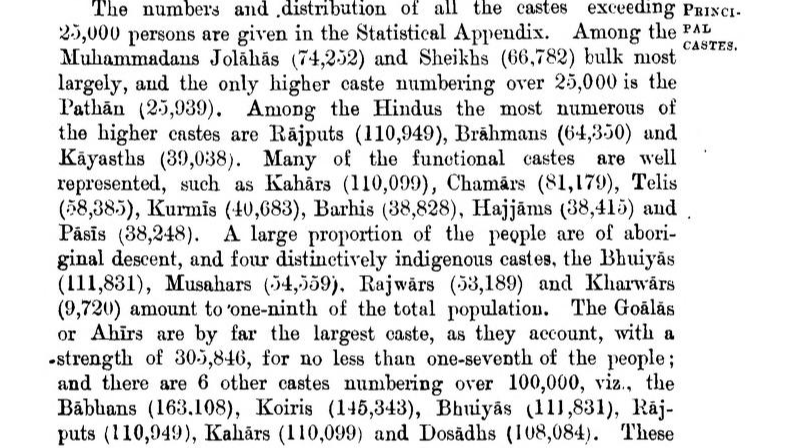
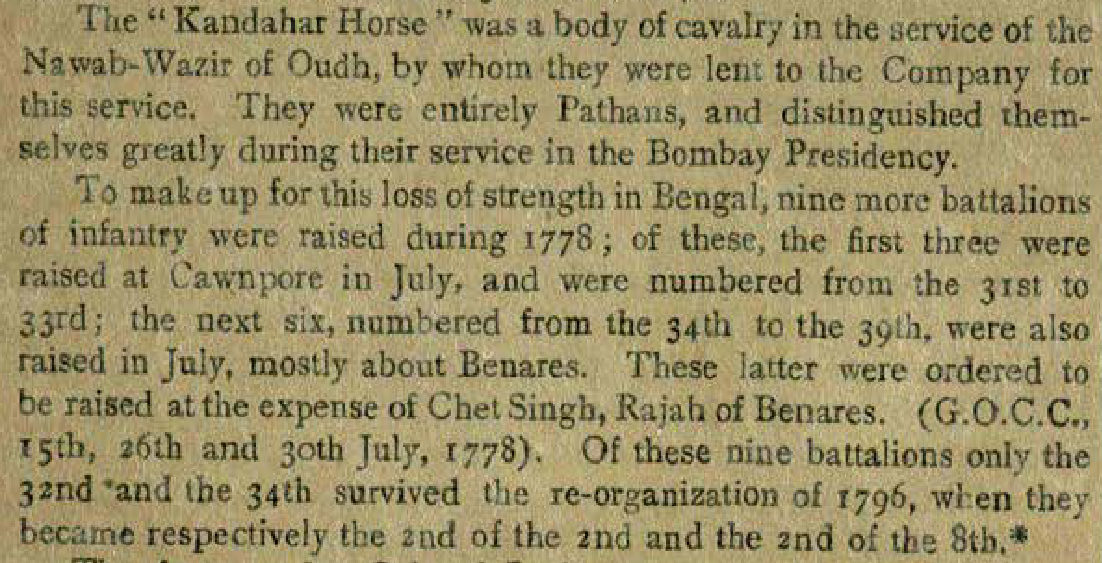
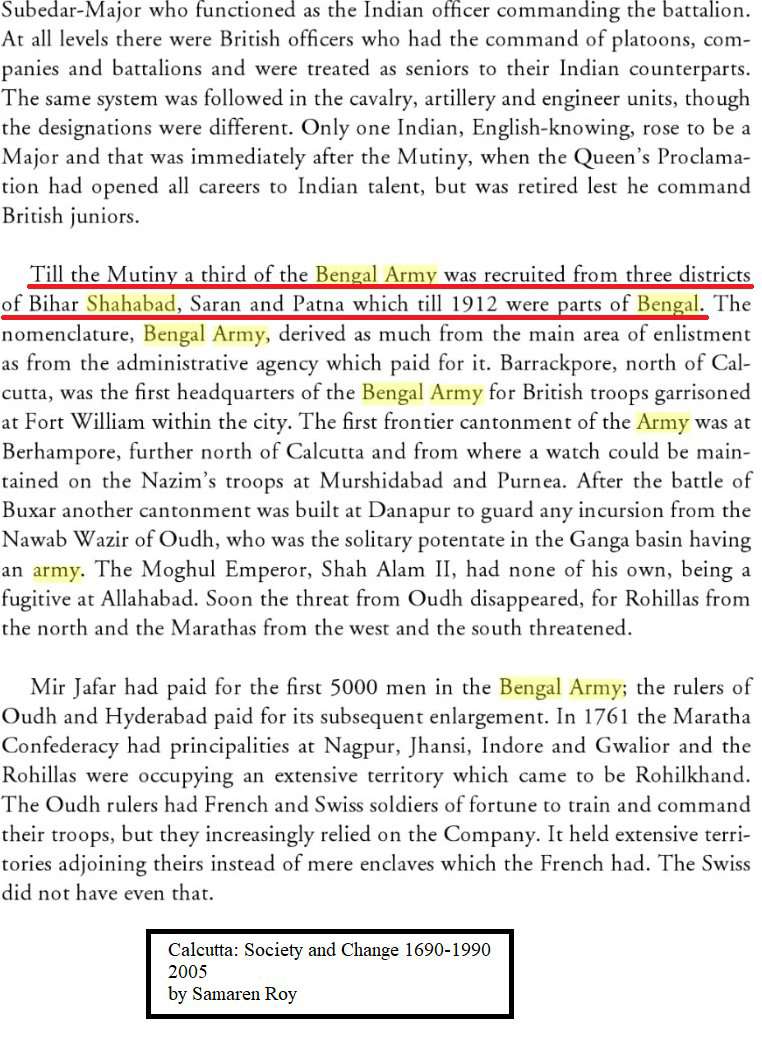
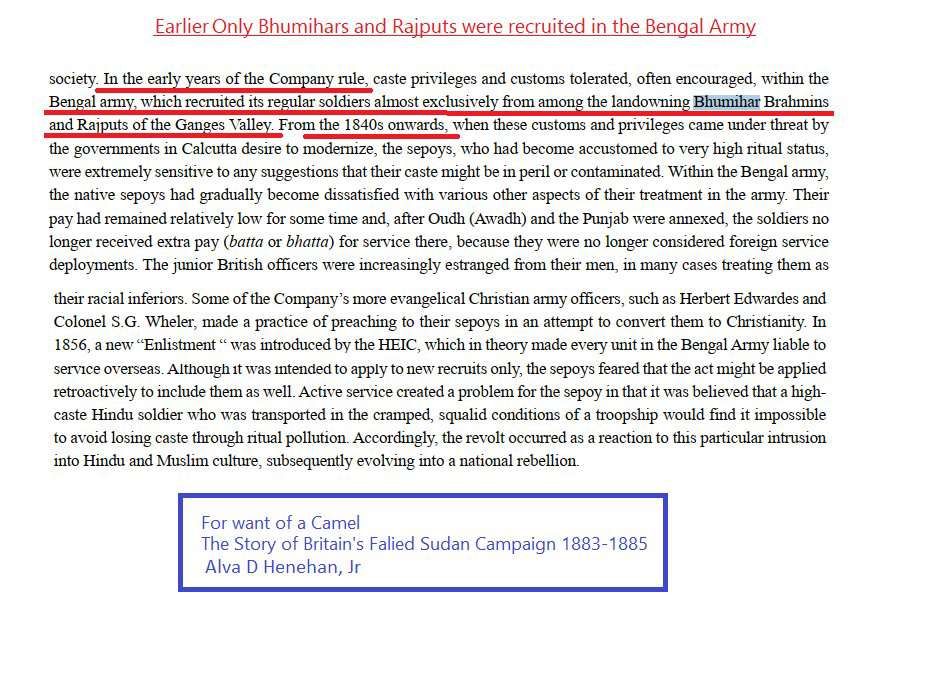
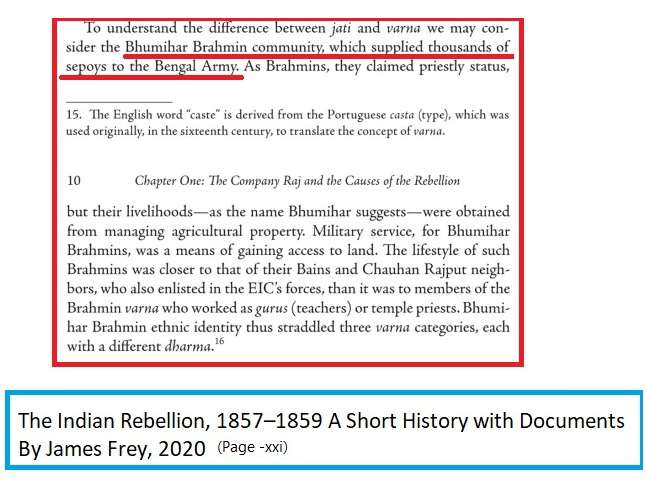
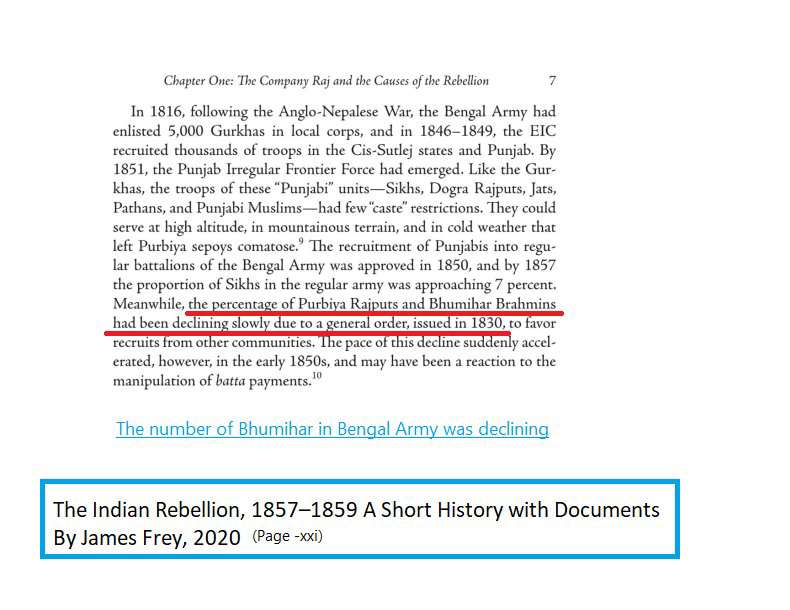
45) Gaya
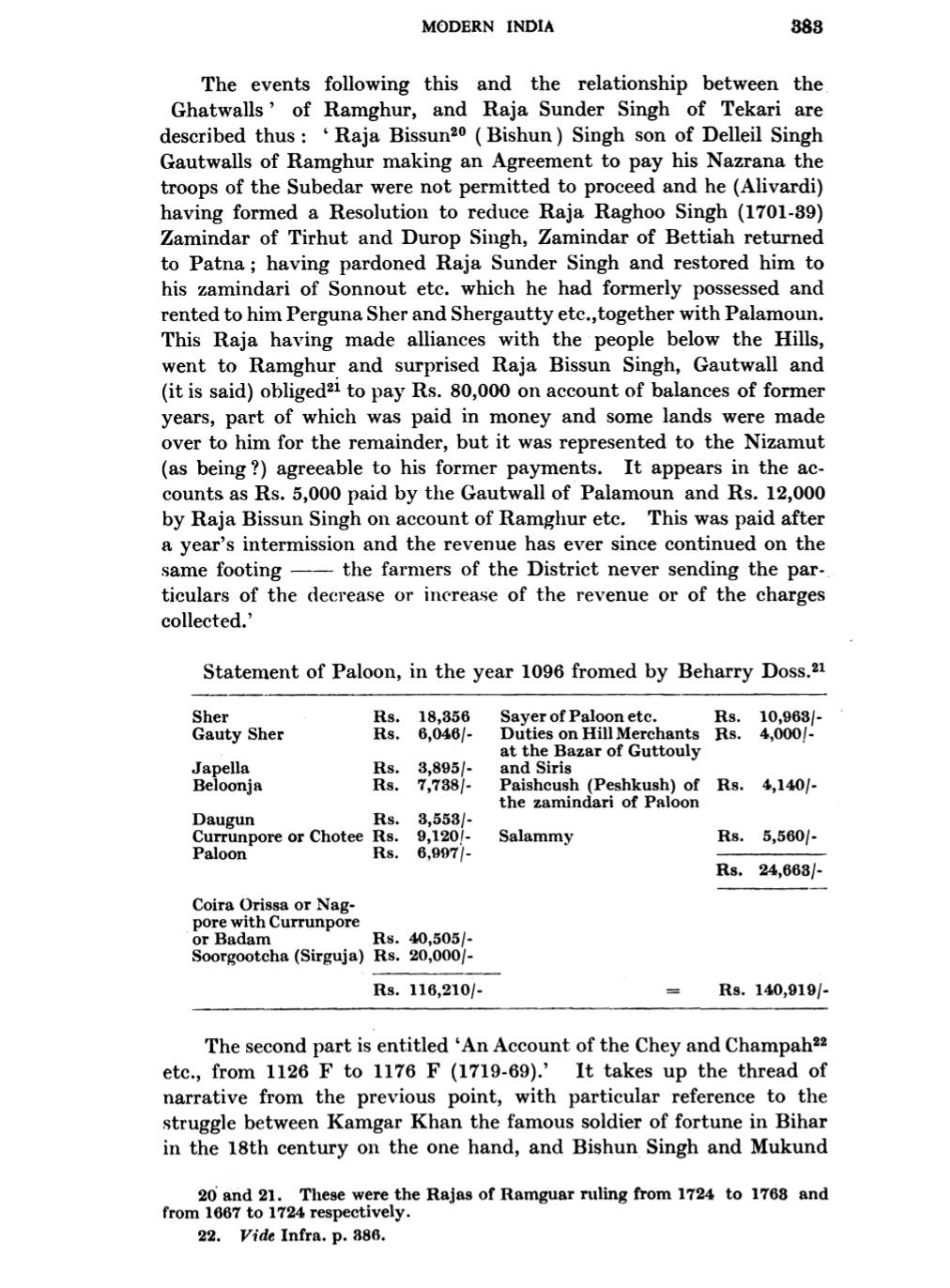
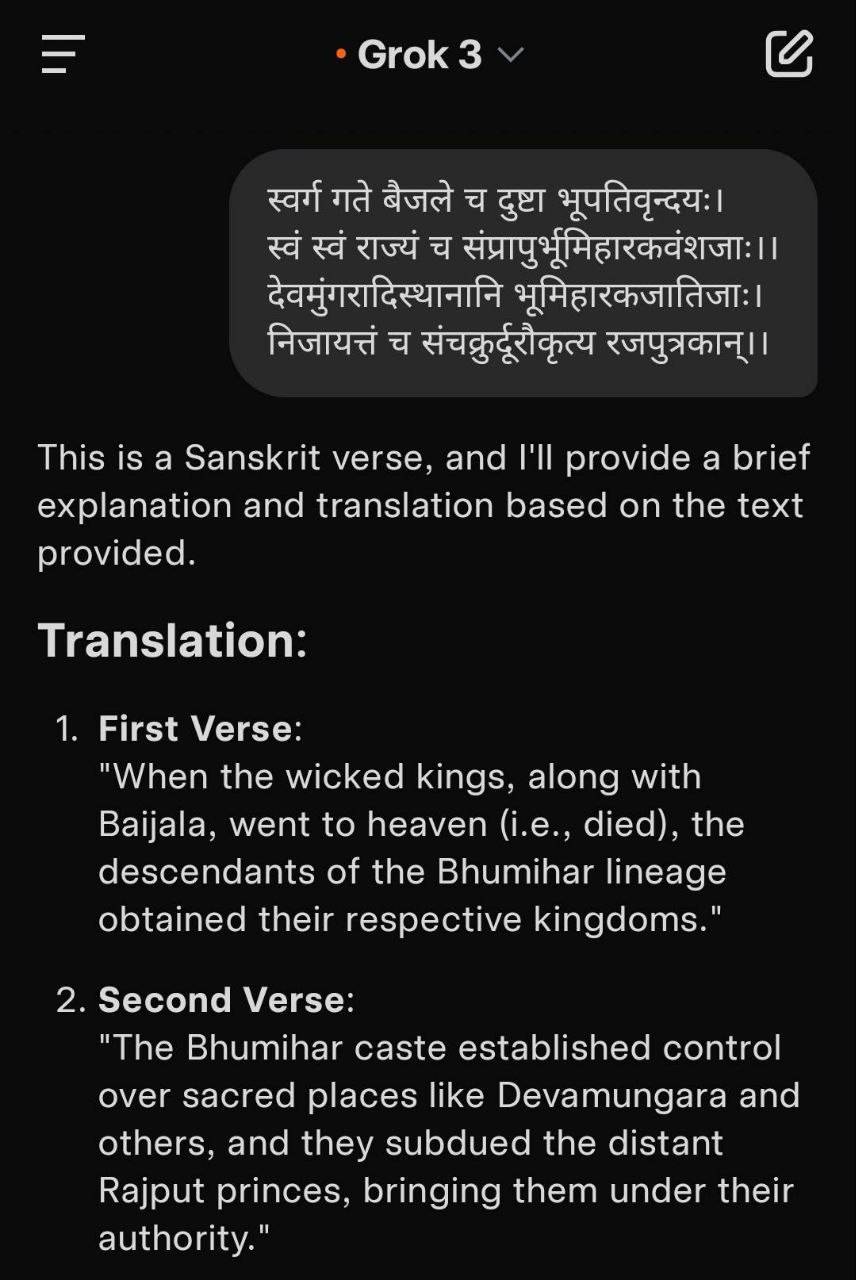
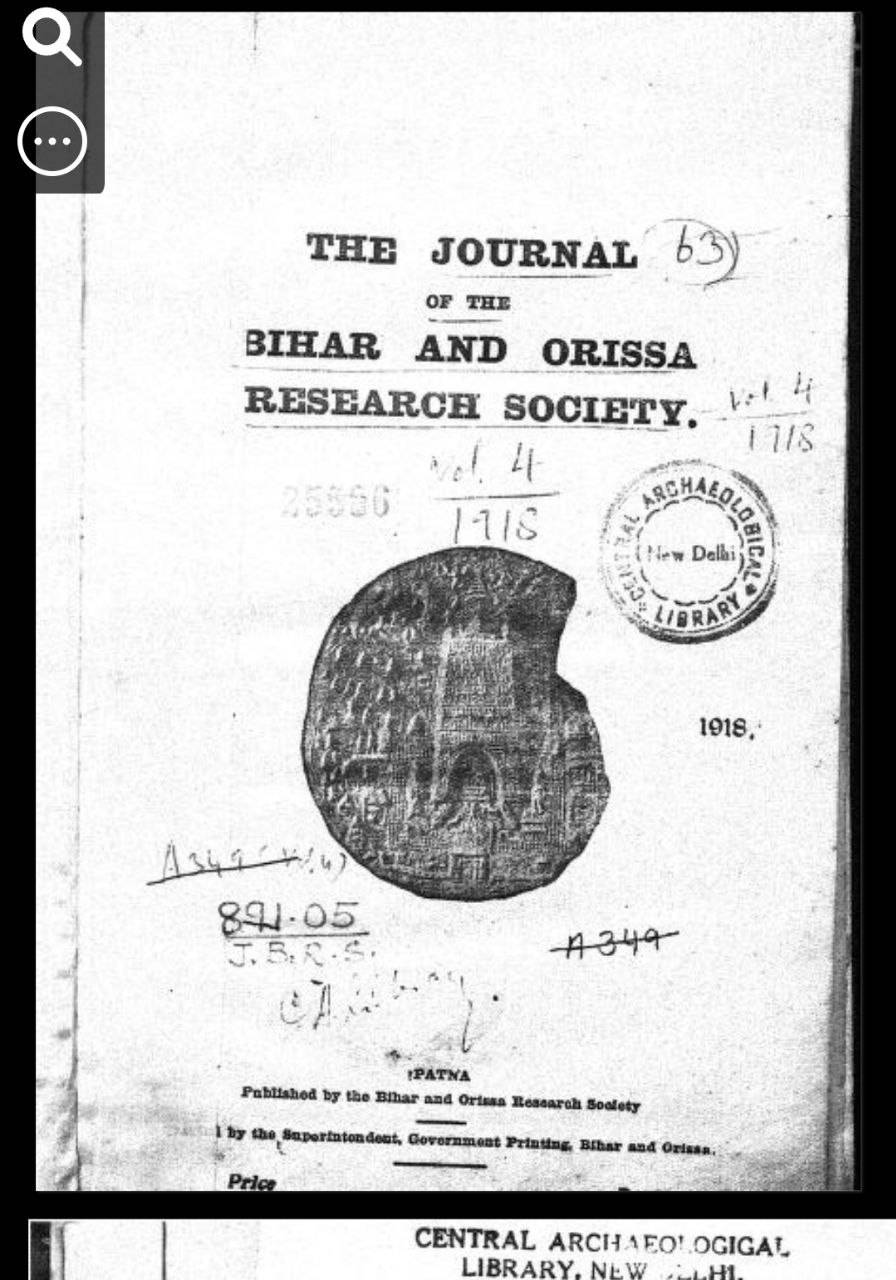
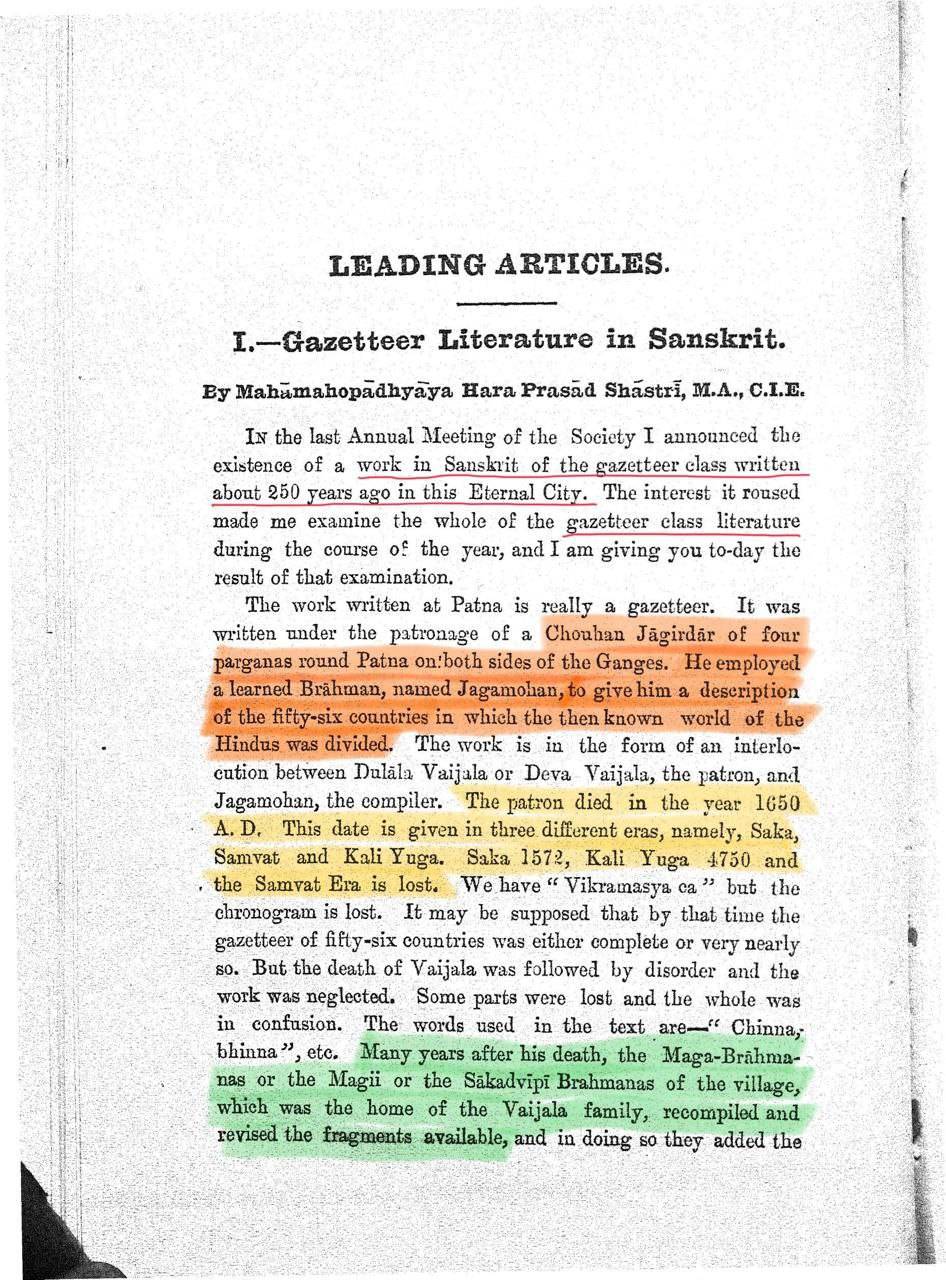
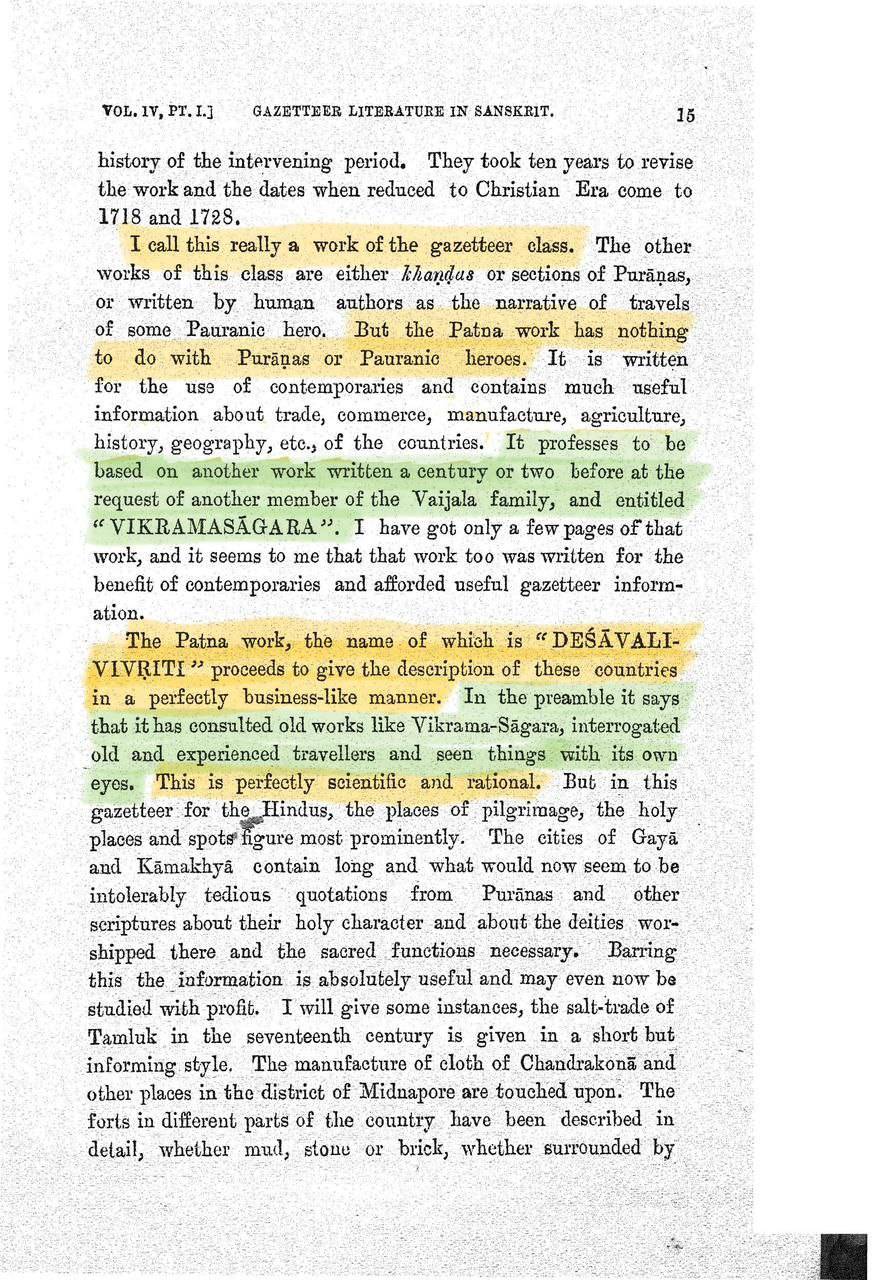
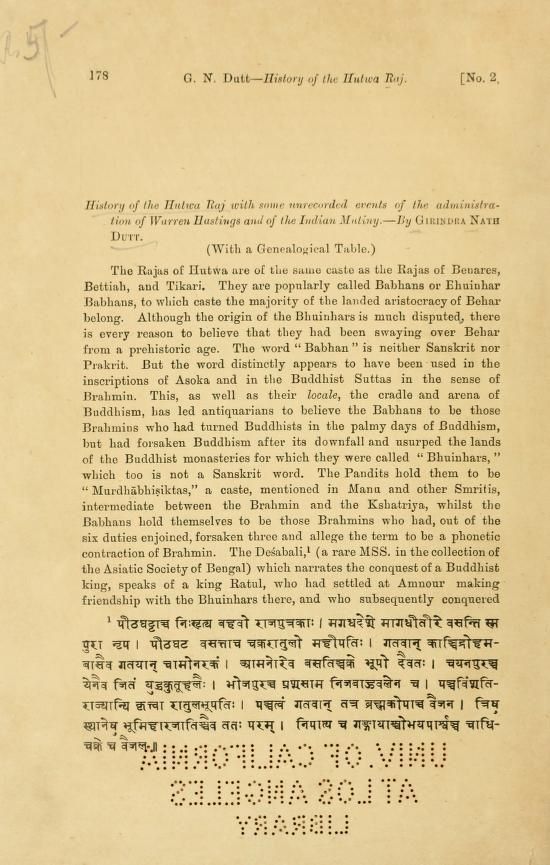
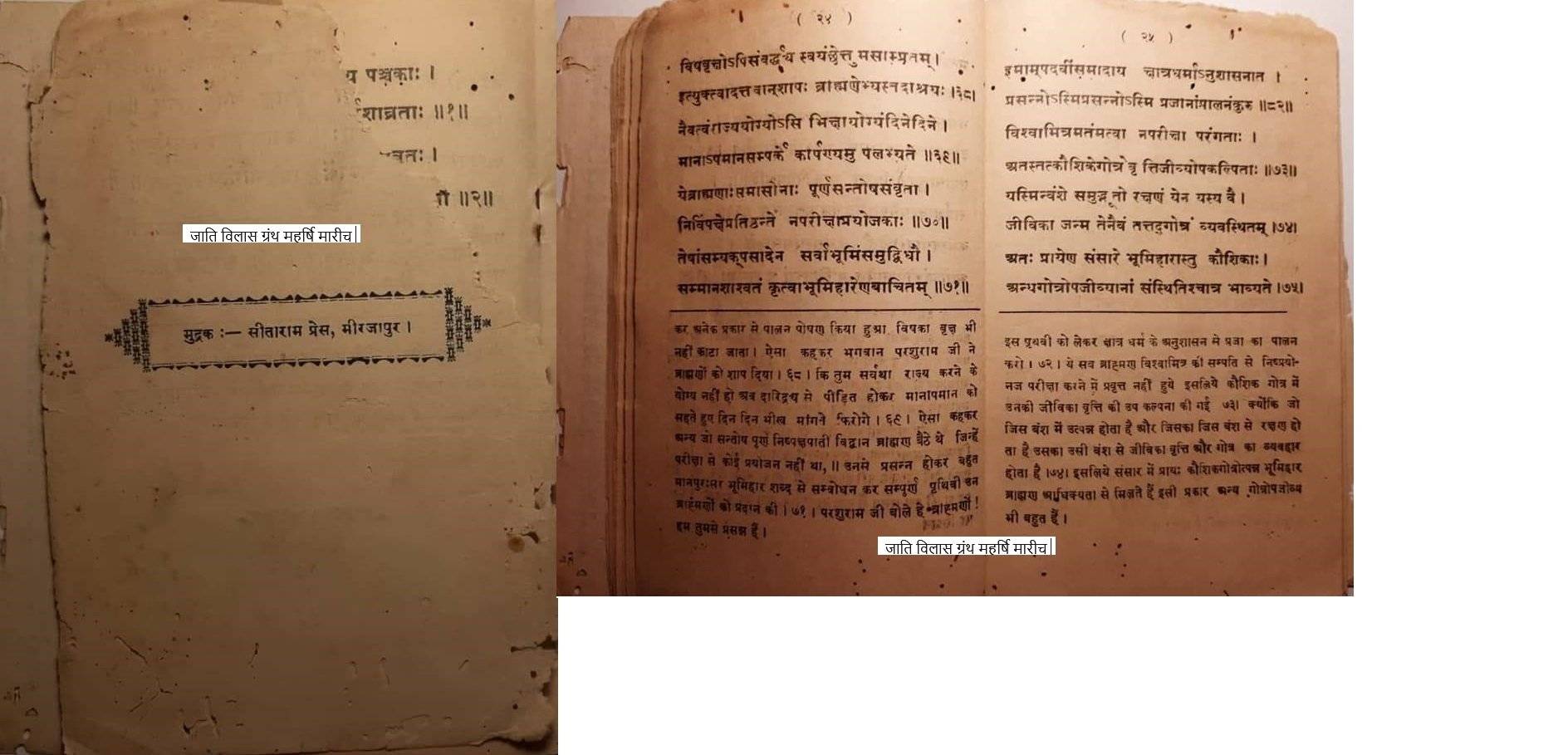
46)
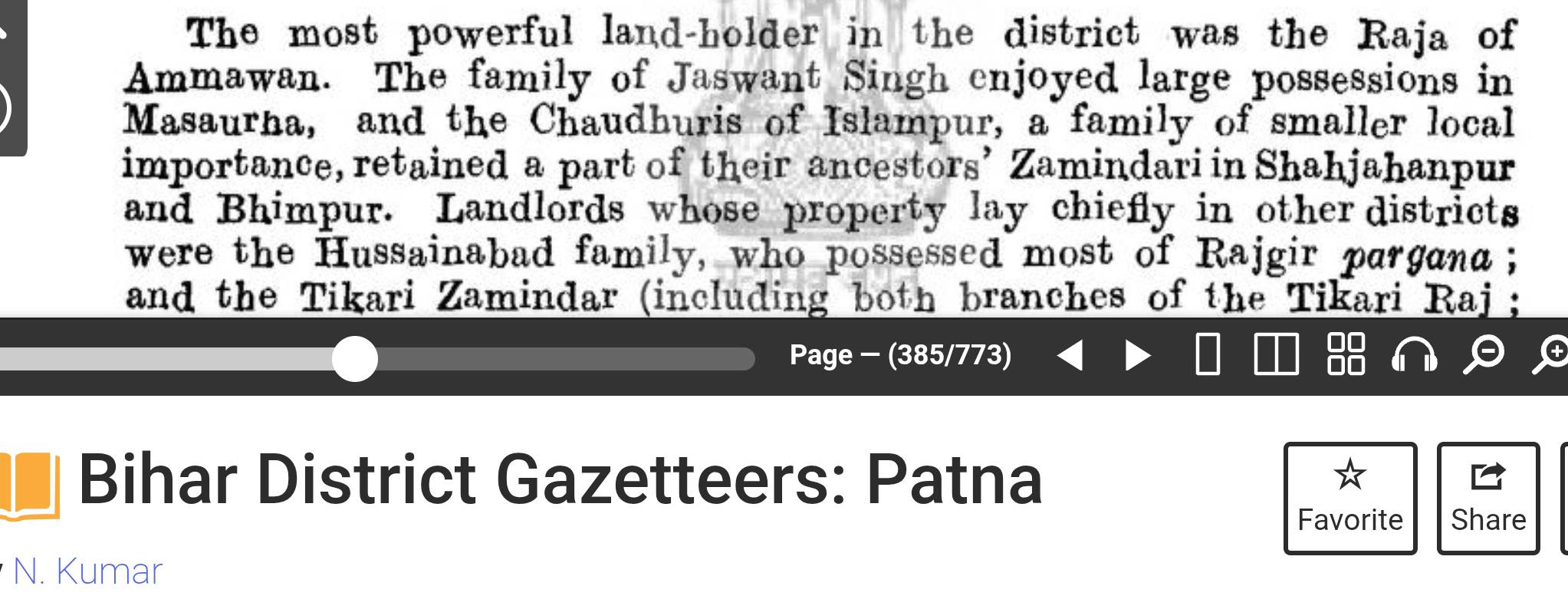
47)
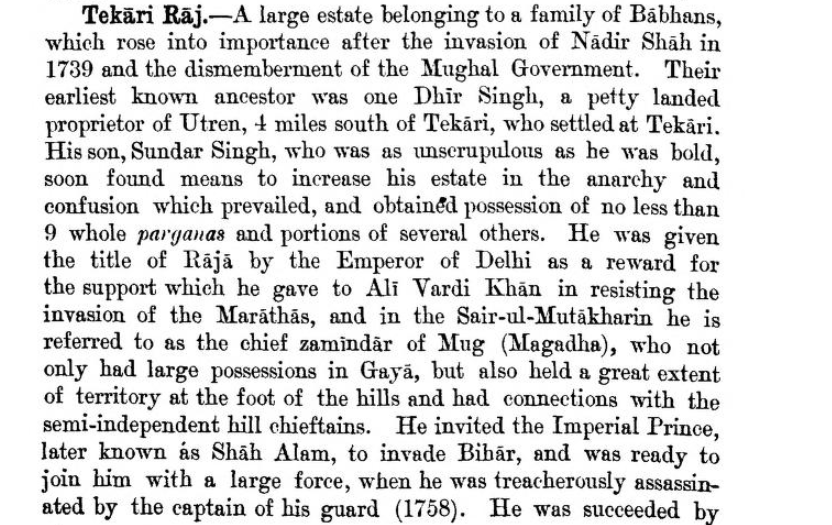
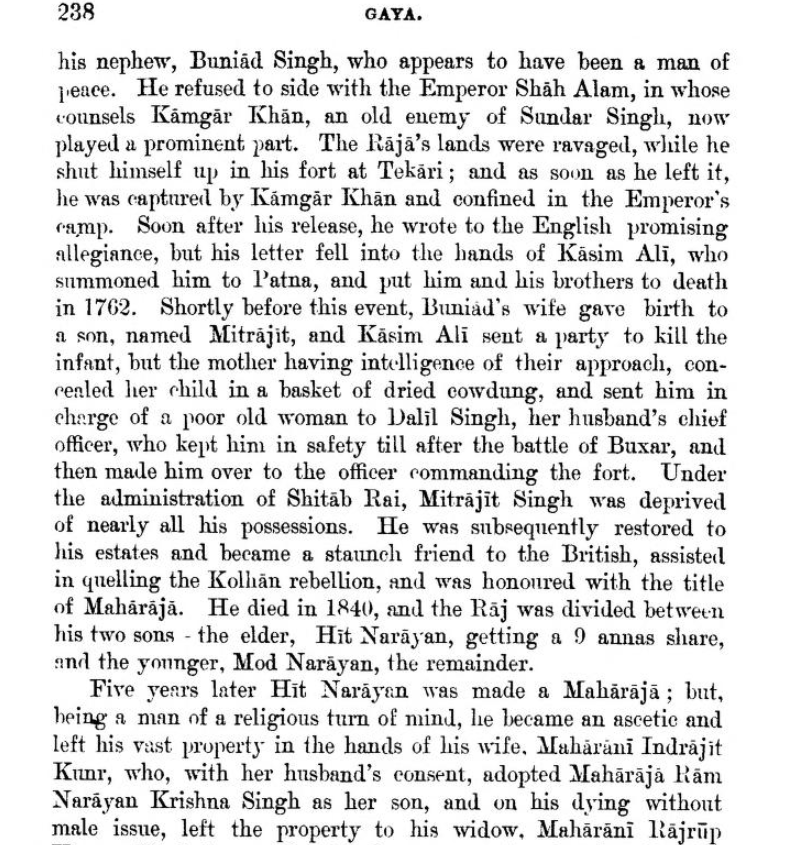
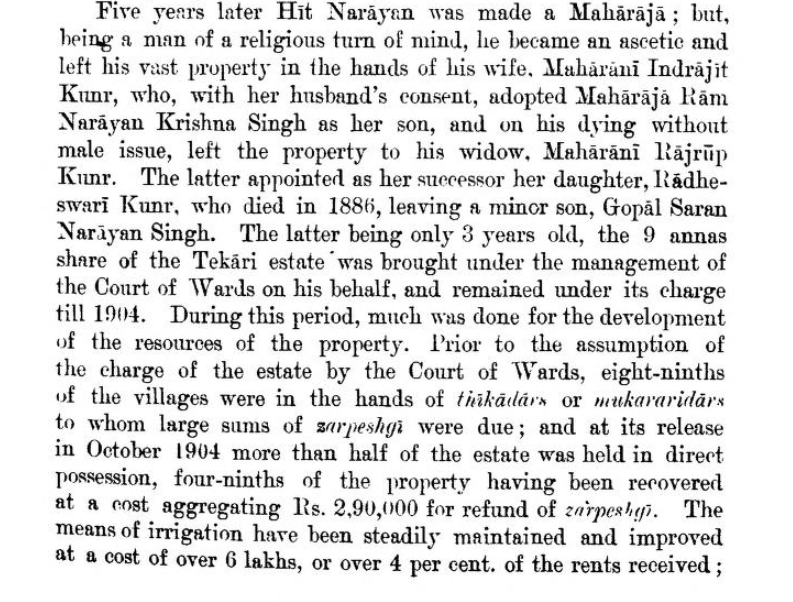
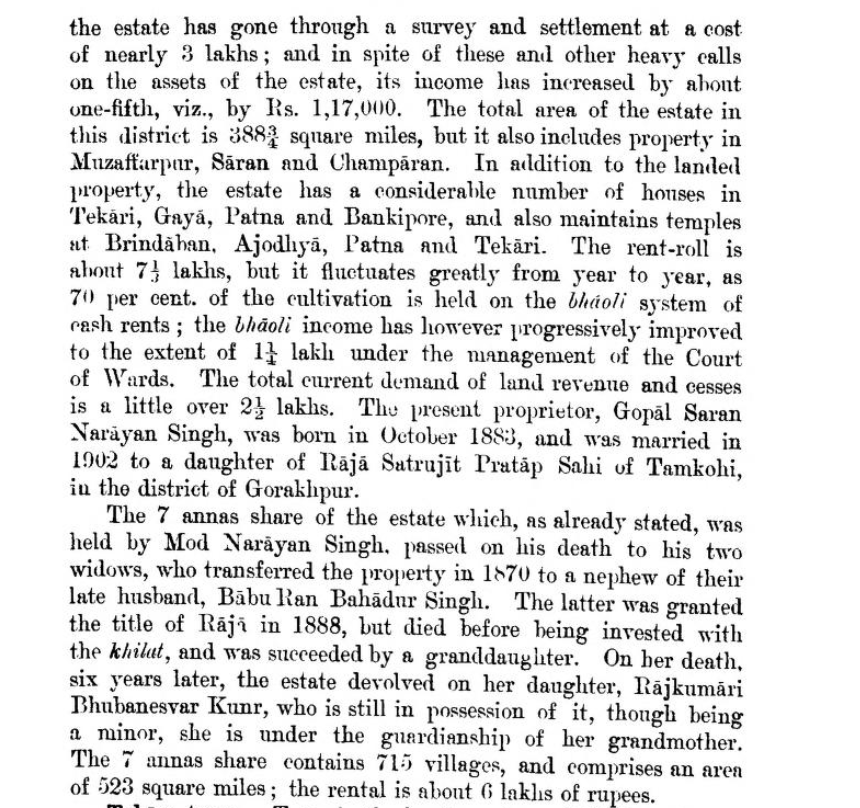
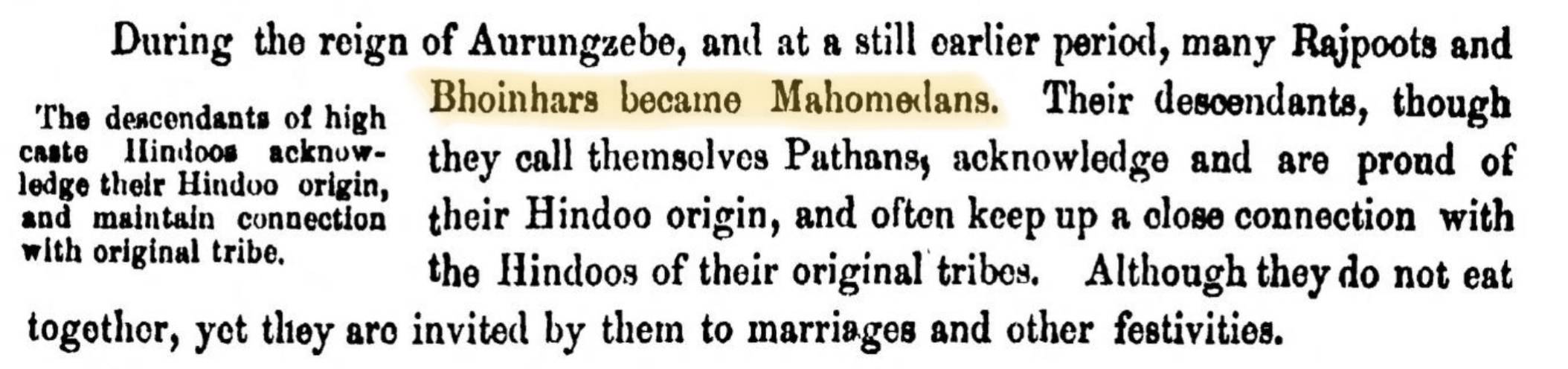
The British noted that Tekari Babhan Zamindar was called Magadh's chief Zamindar in
Muslim Historical
48)
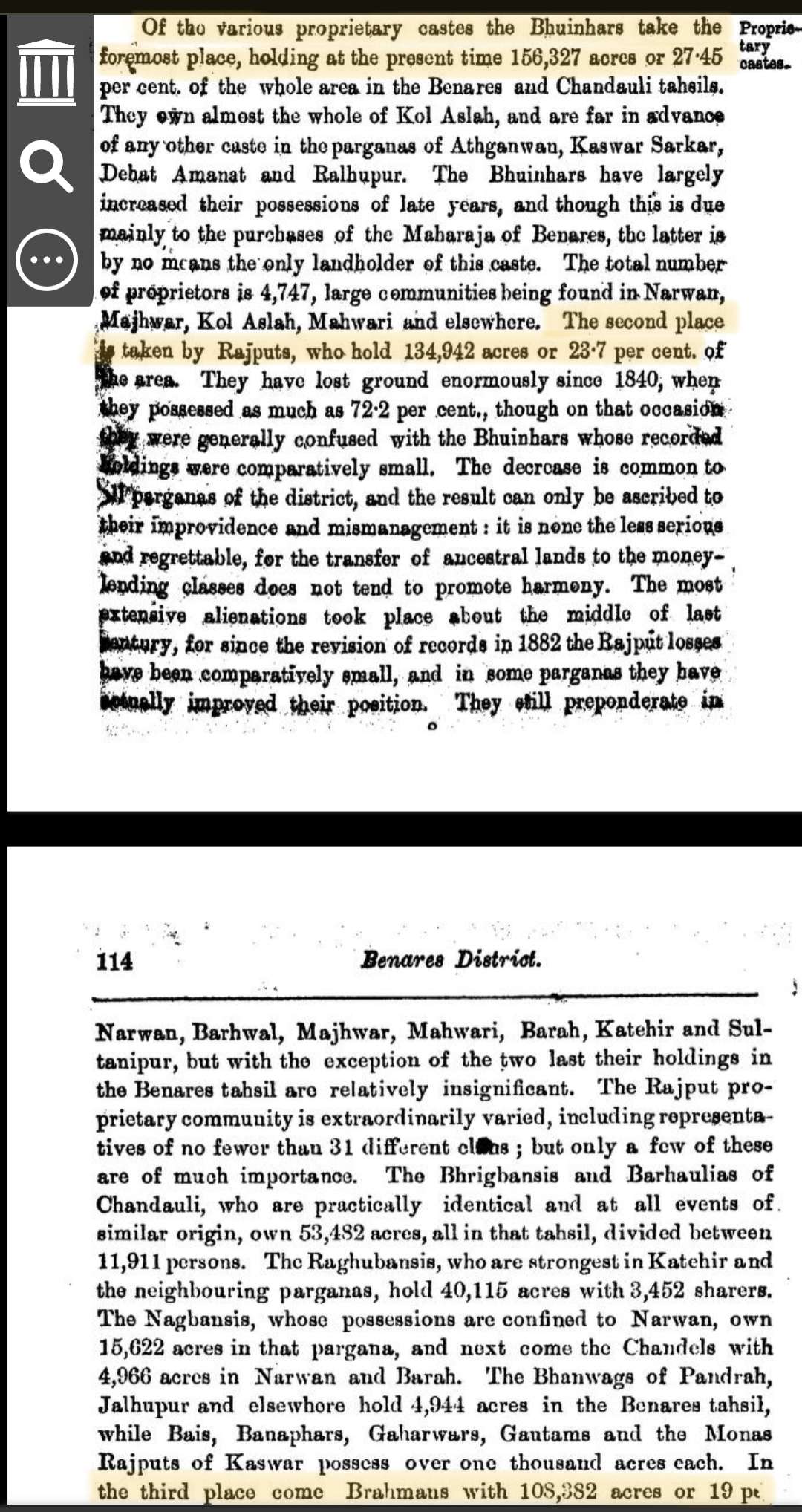
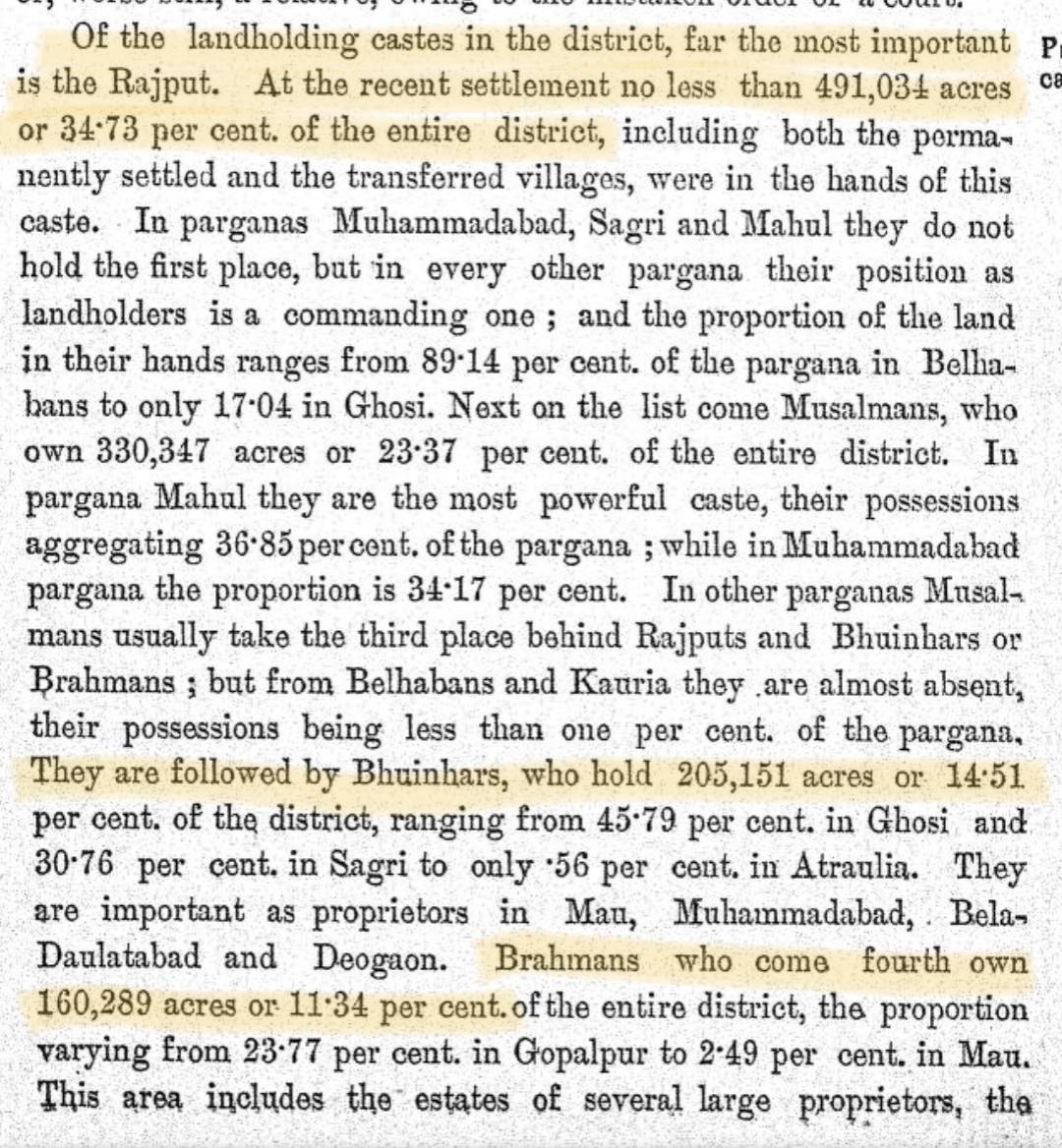
49)
50)
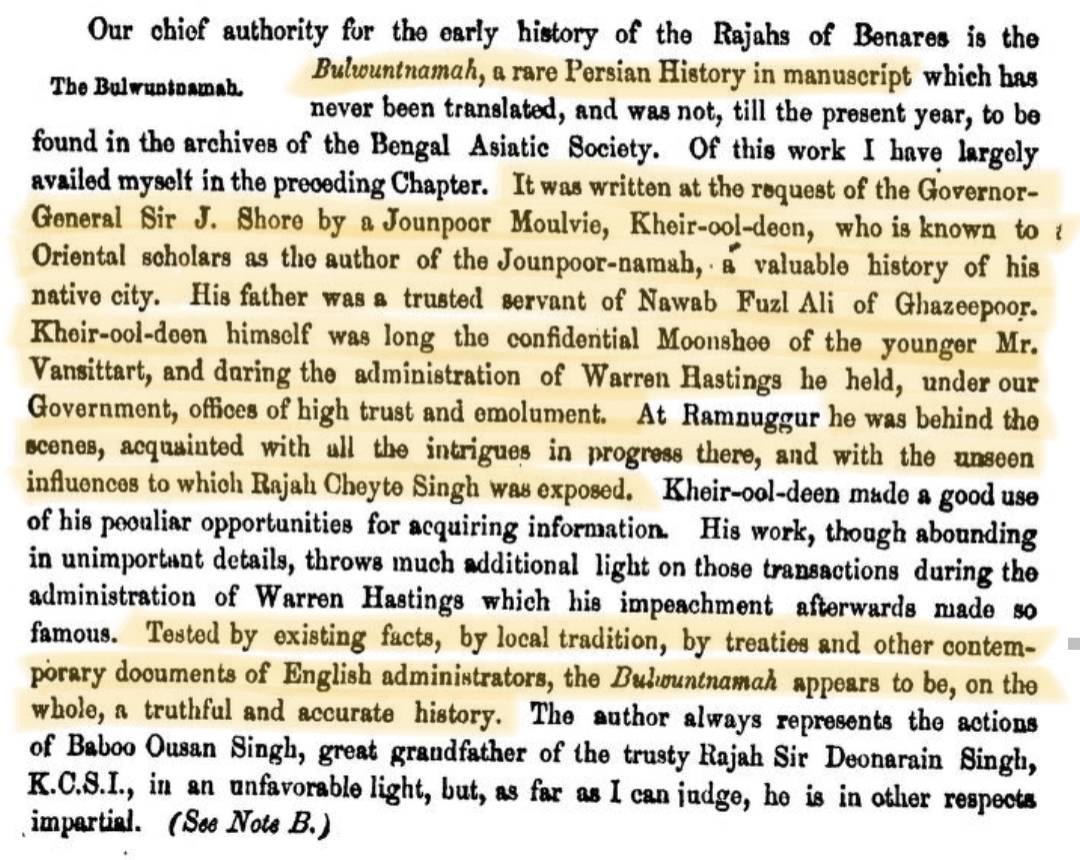
51)
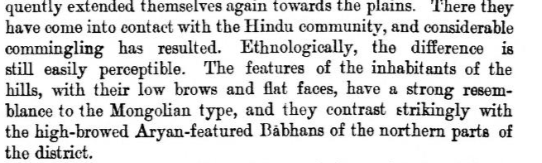
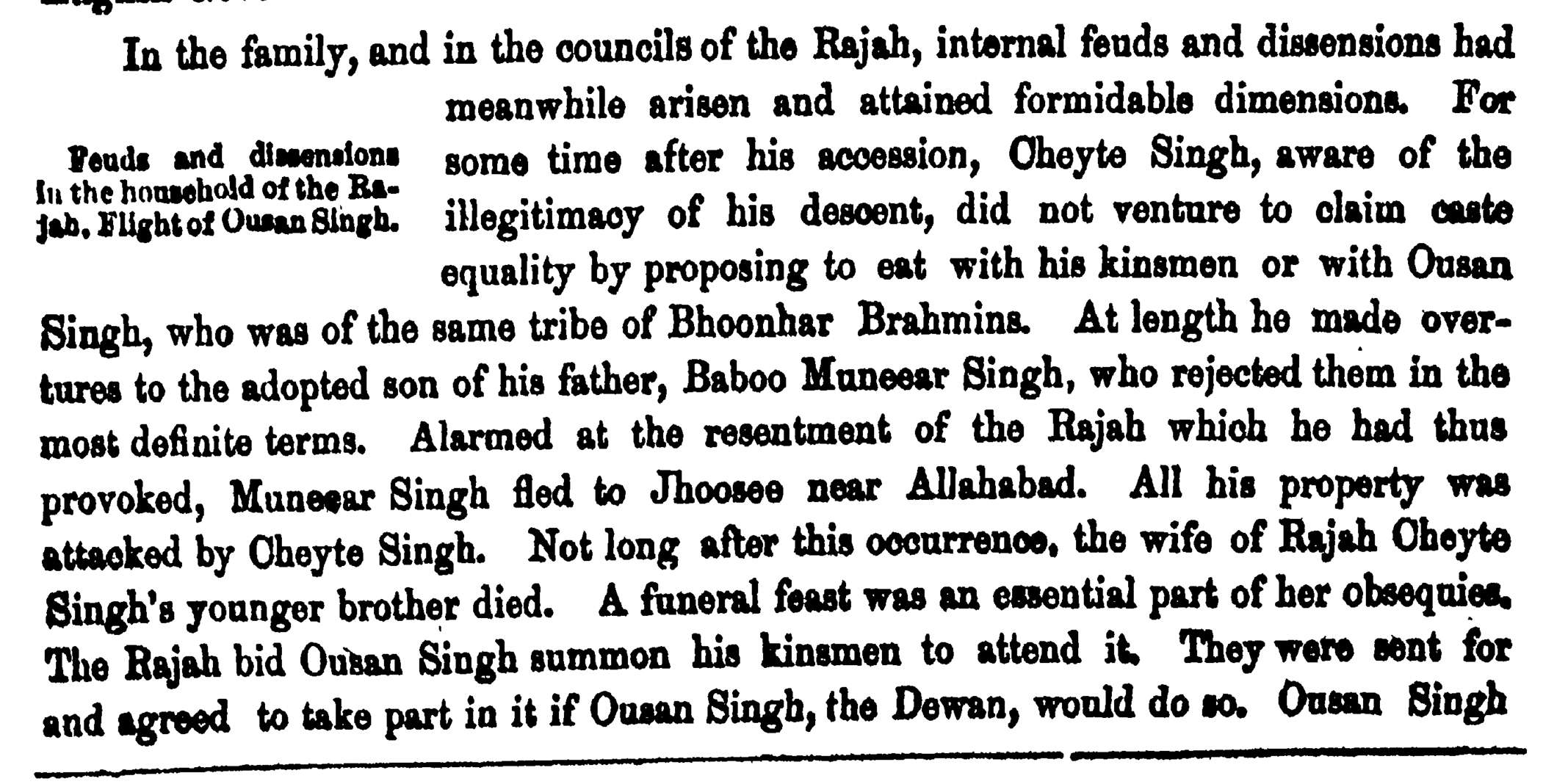
Brits contrasting the Mongolian featured local aborigines of Monghyr division with
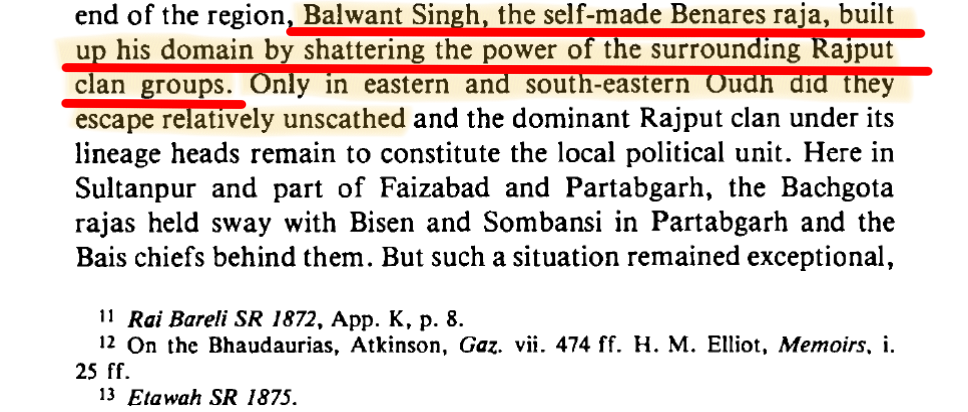
the
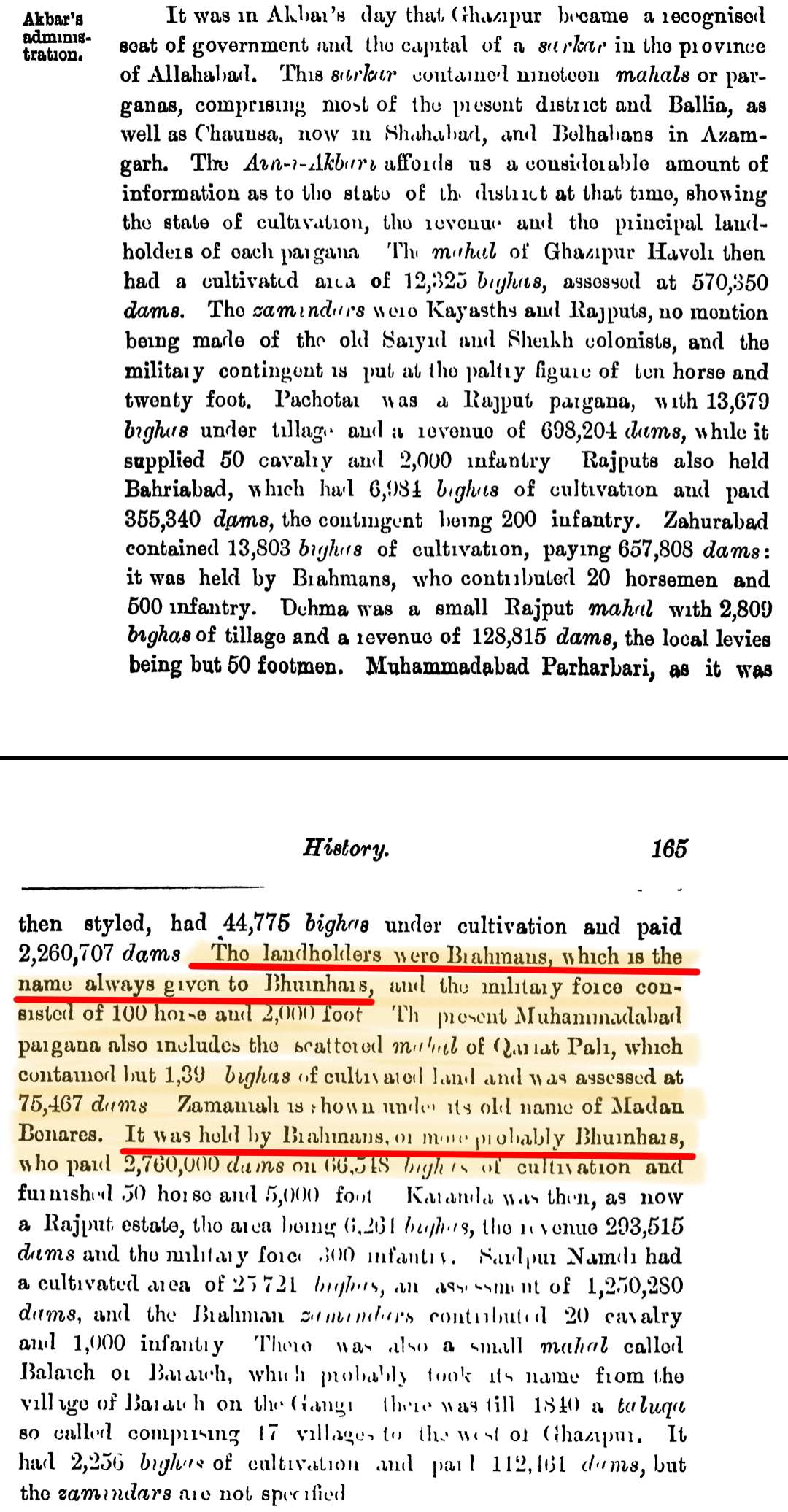
high-browed Aryan-featured Babhans
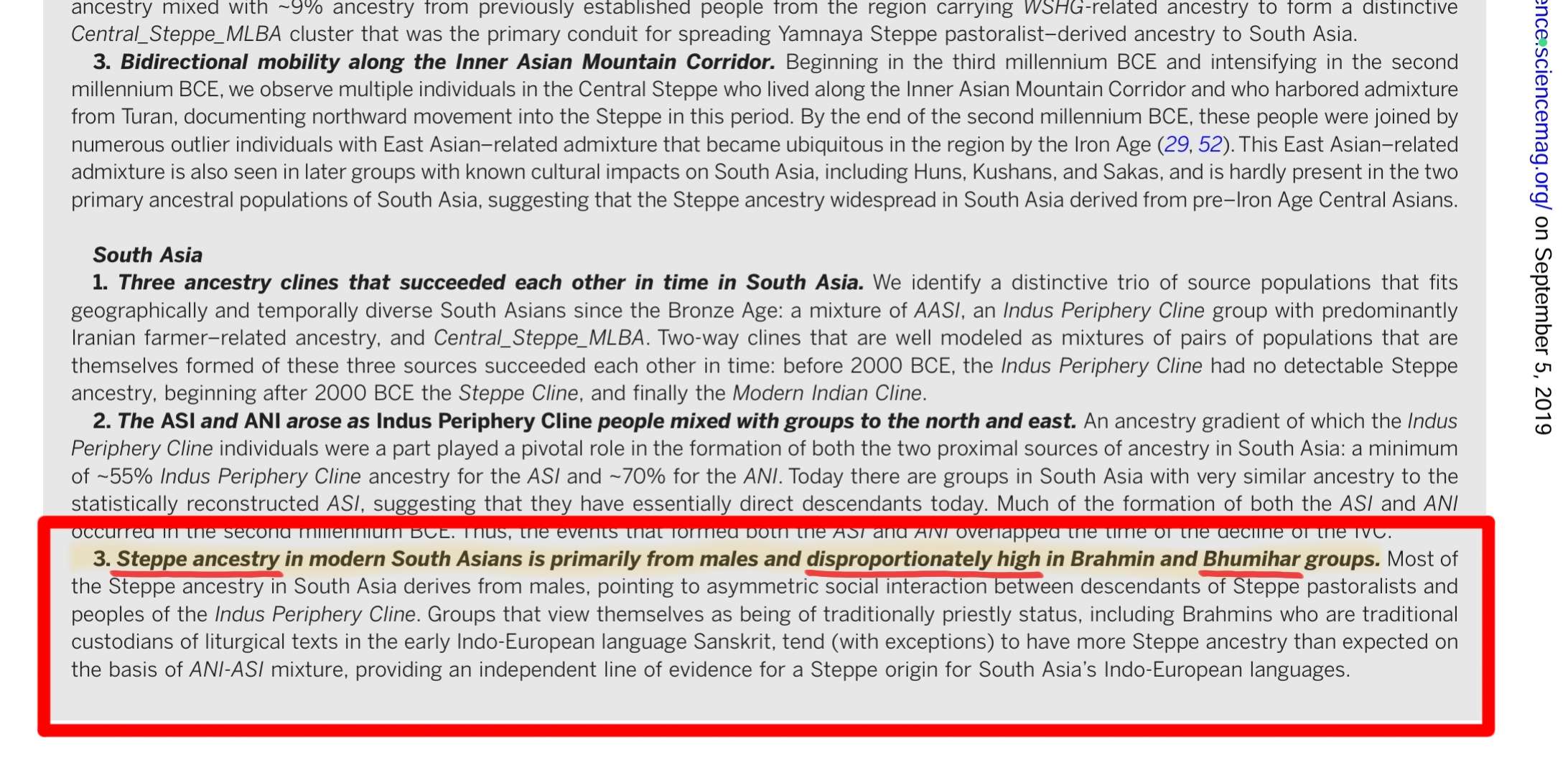
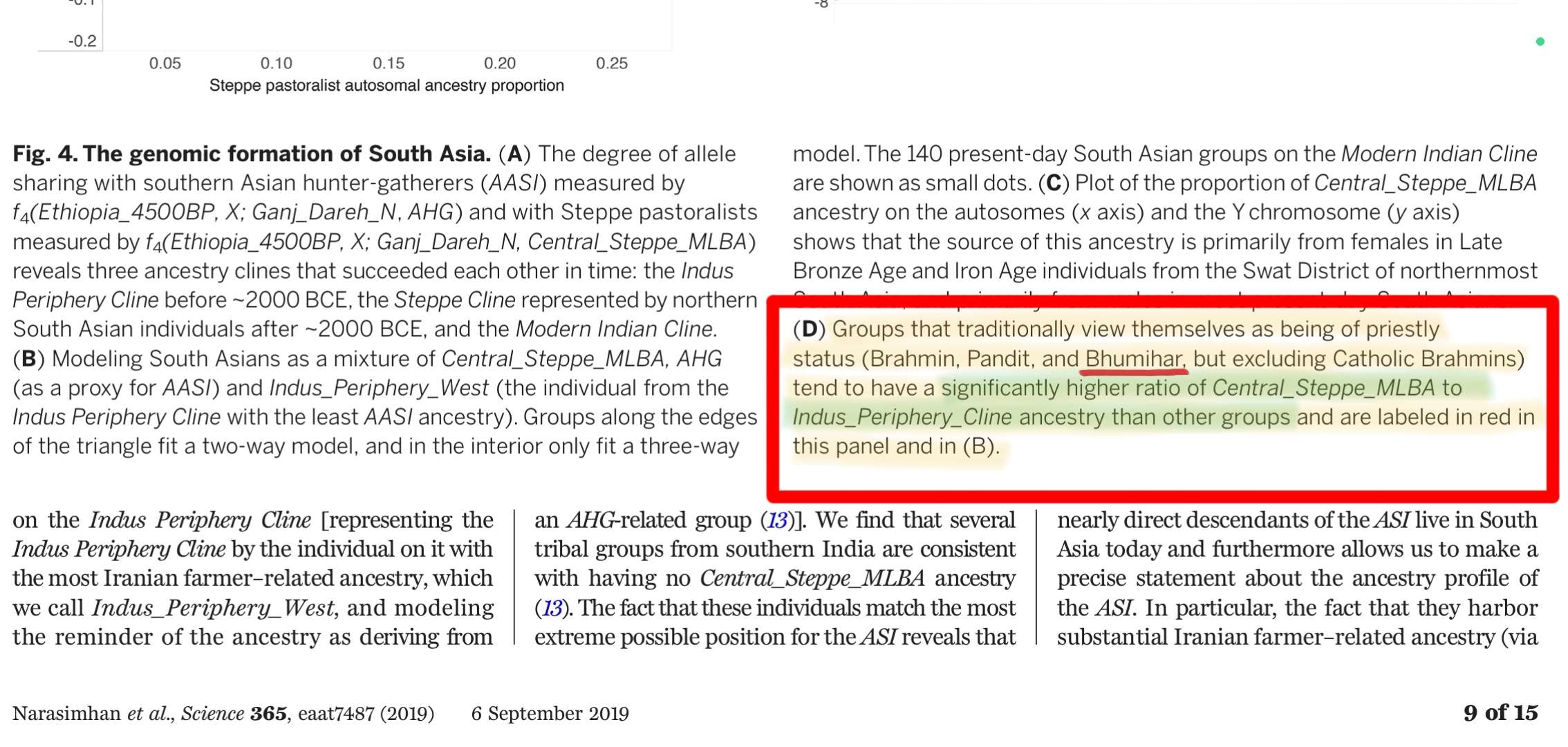
[7]
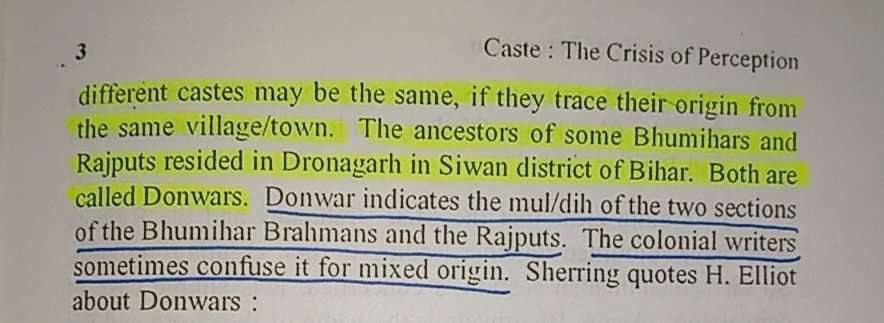
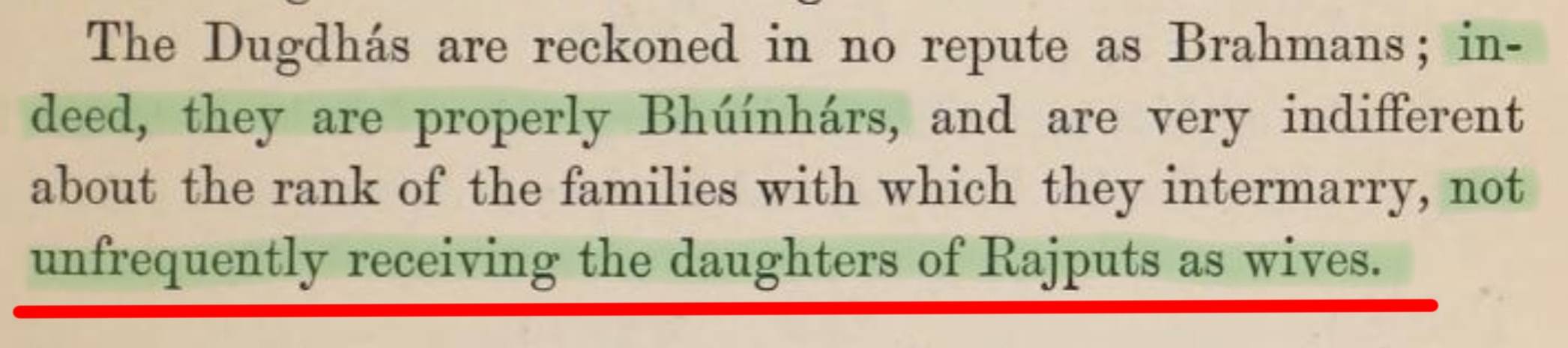
Monghyr Gazetteer
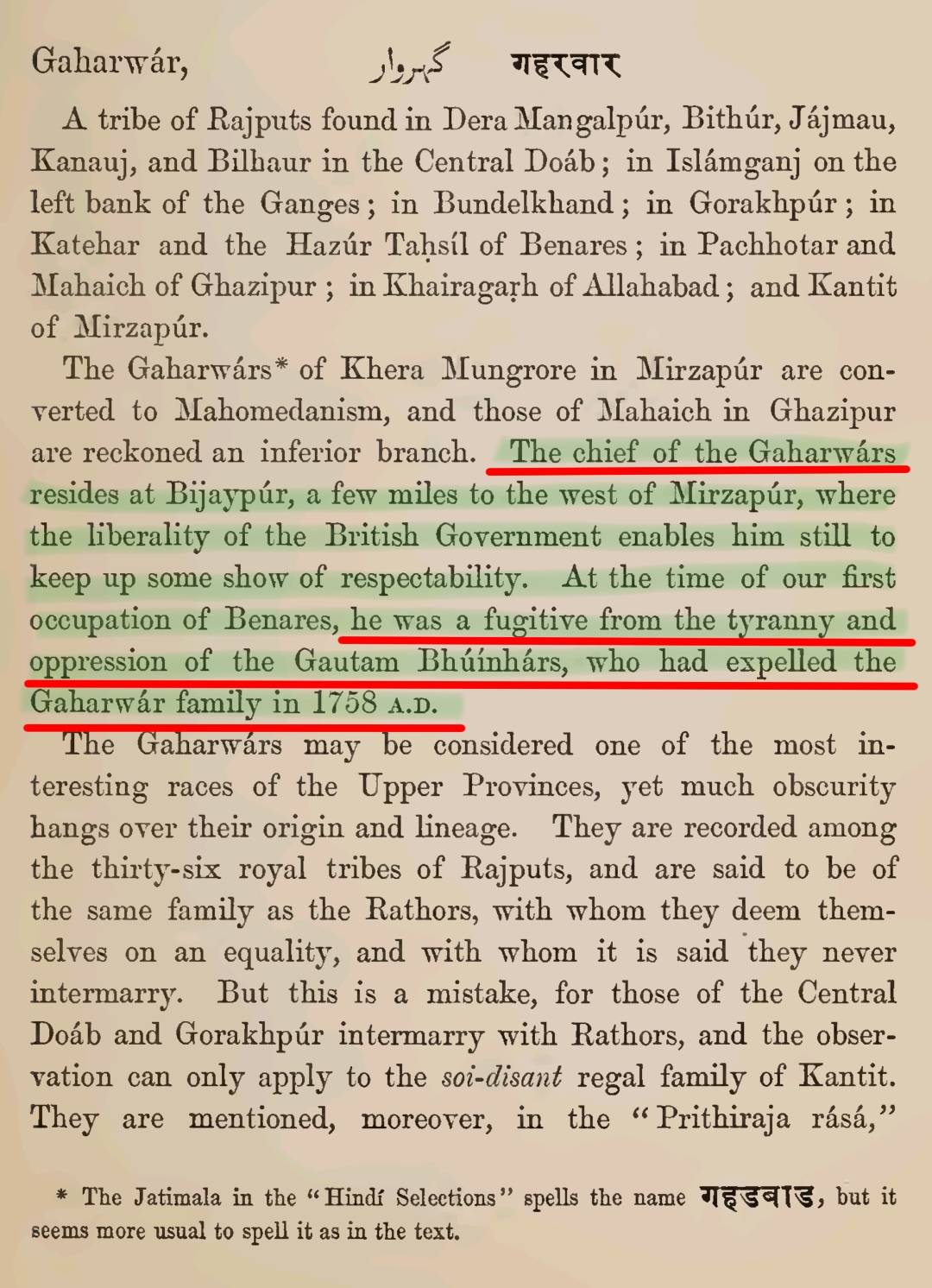
Go to References
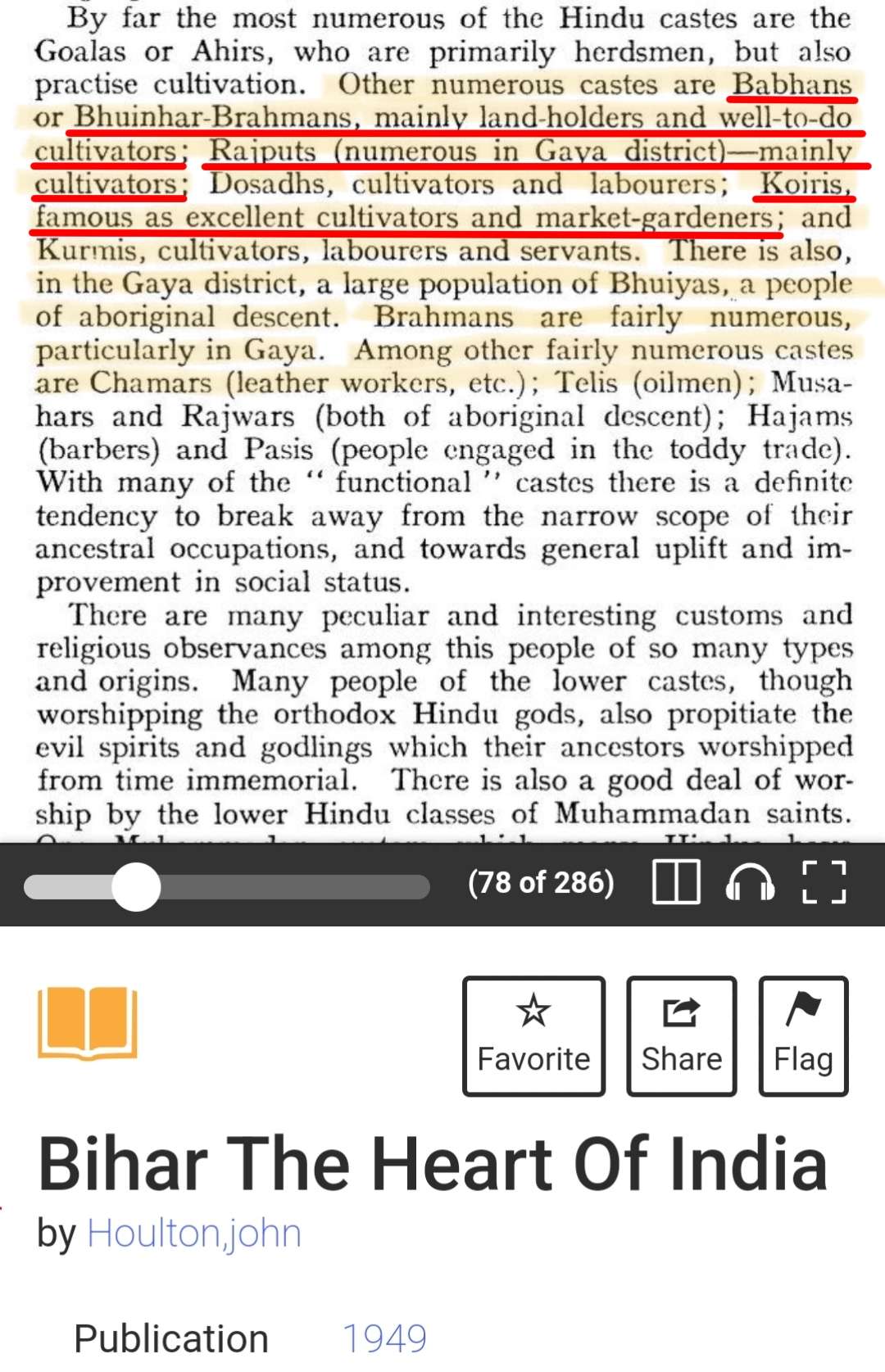
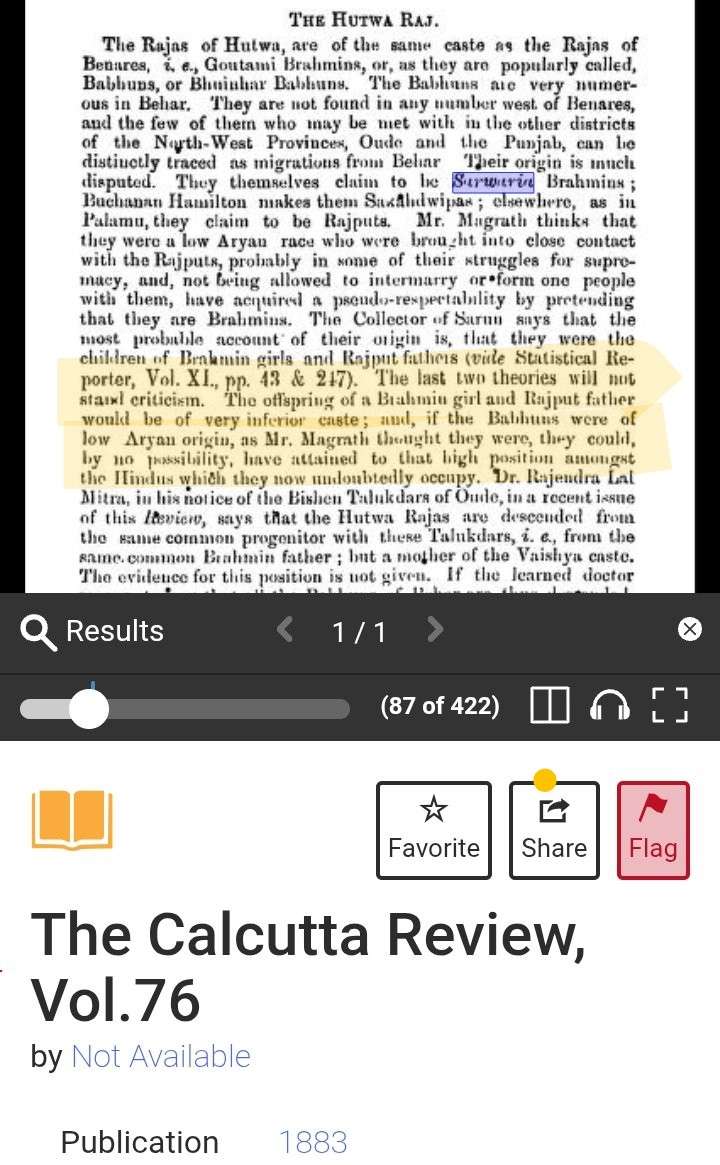
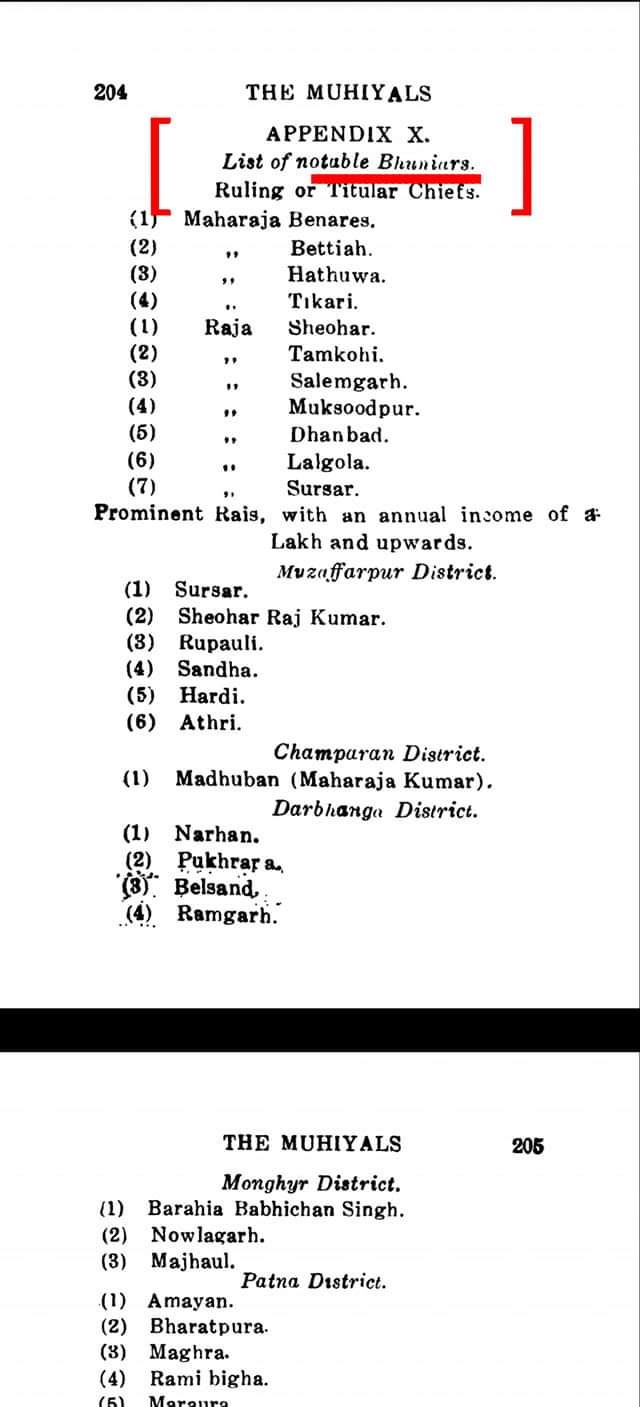
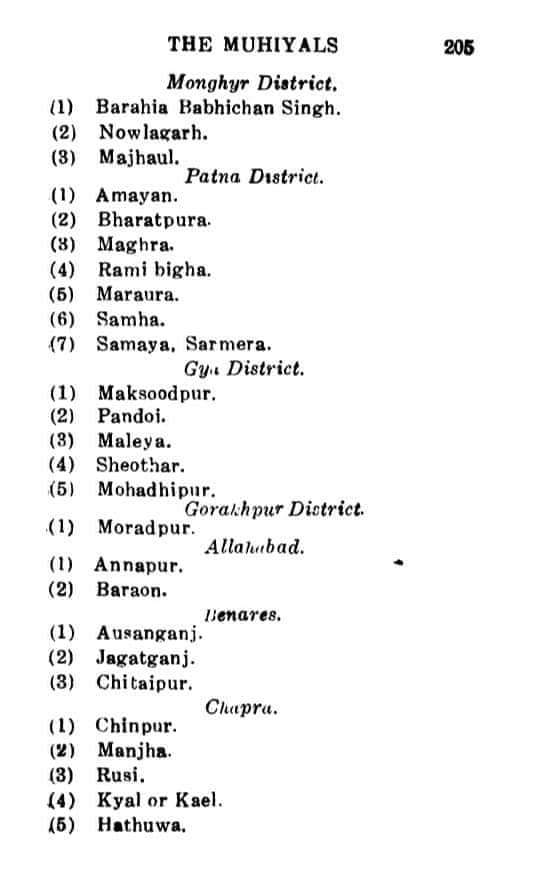
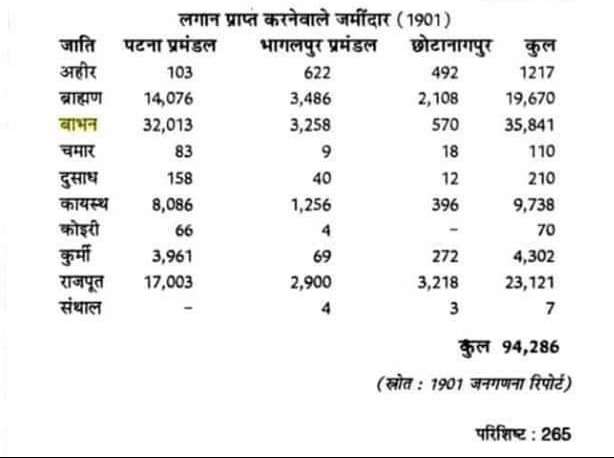
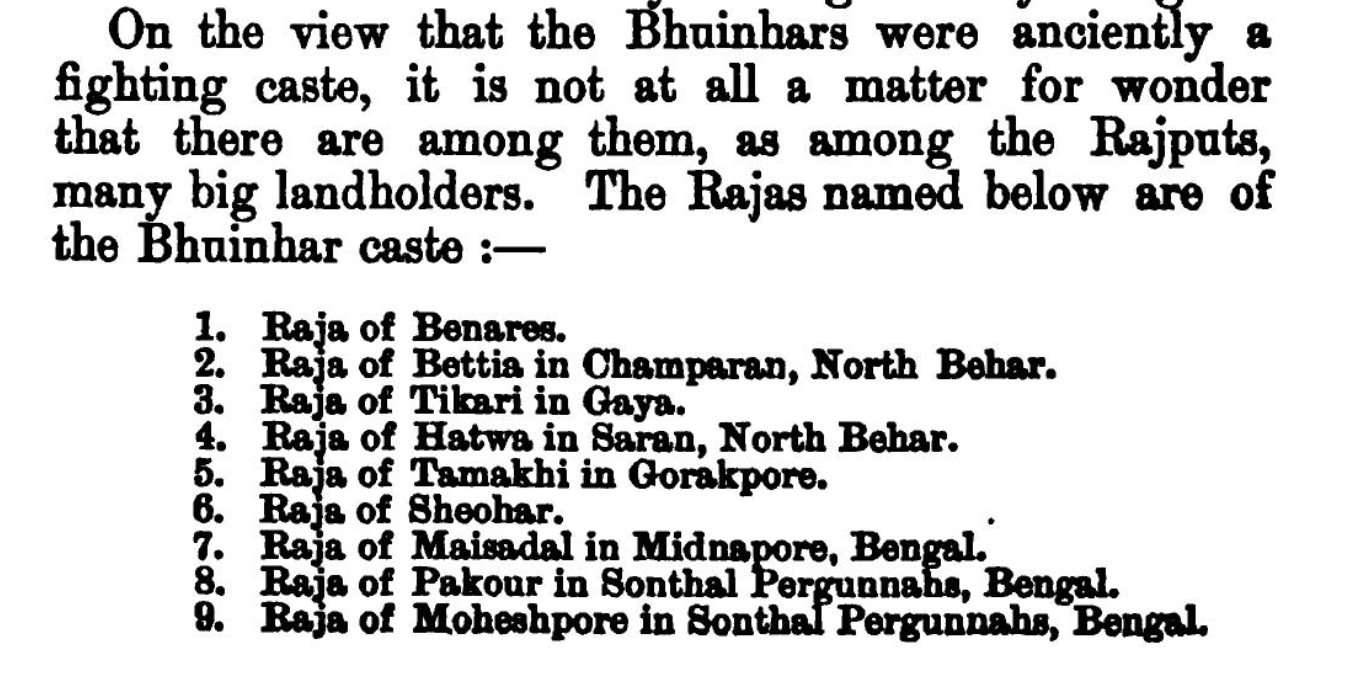
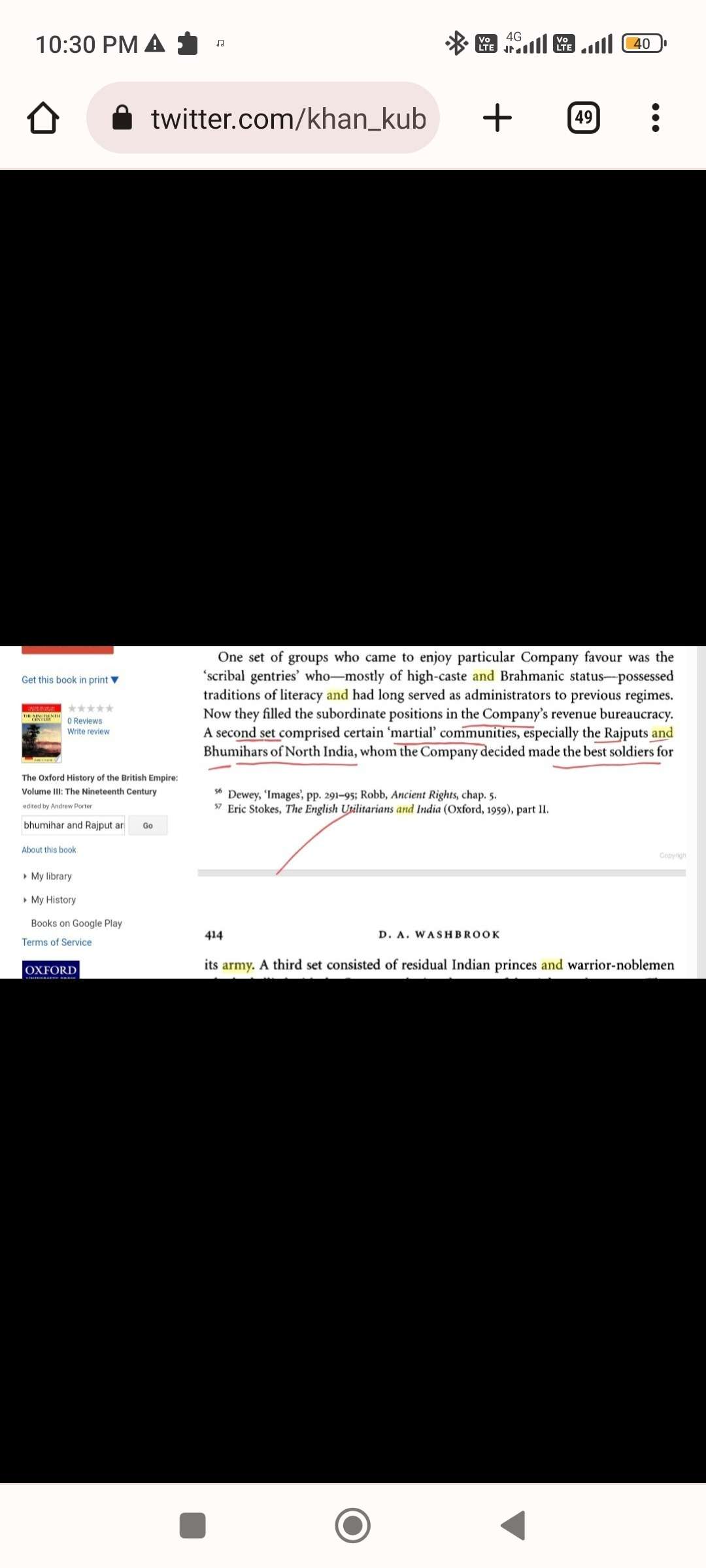
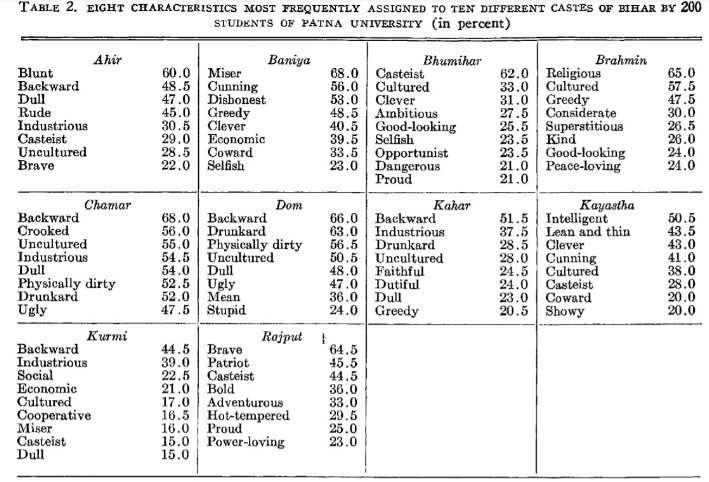
52)
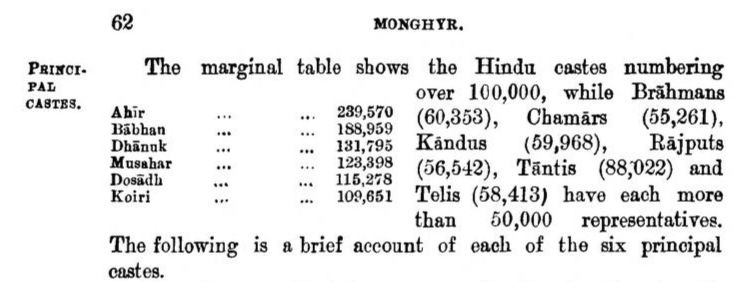
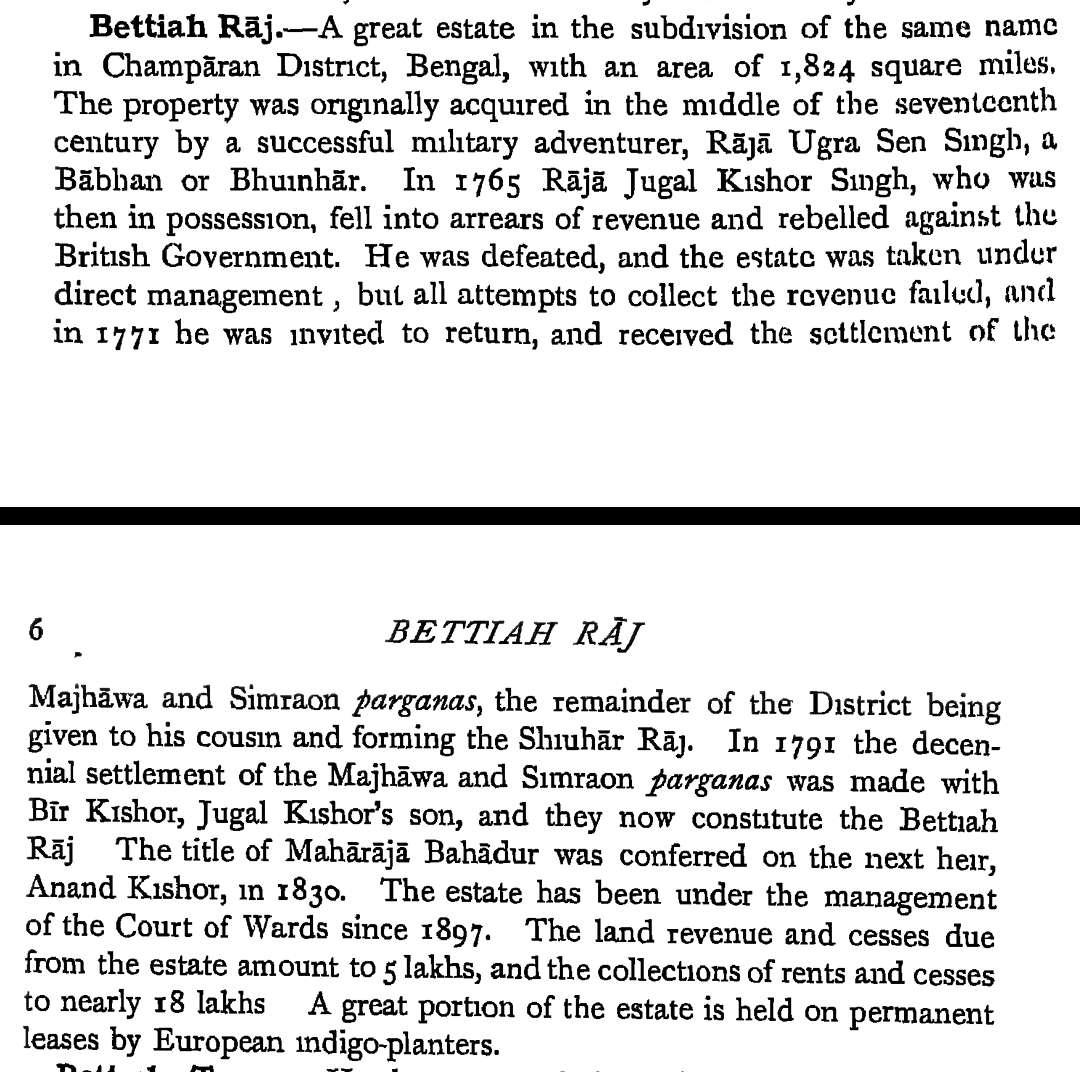
Babhan is used to address Bhumihars and Brahman is used separately for addressing
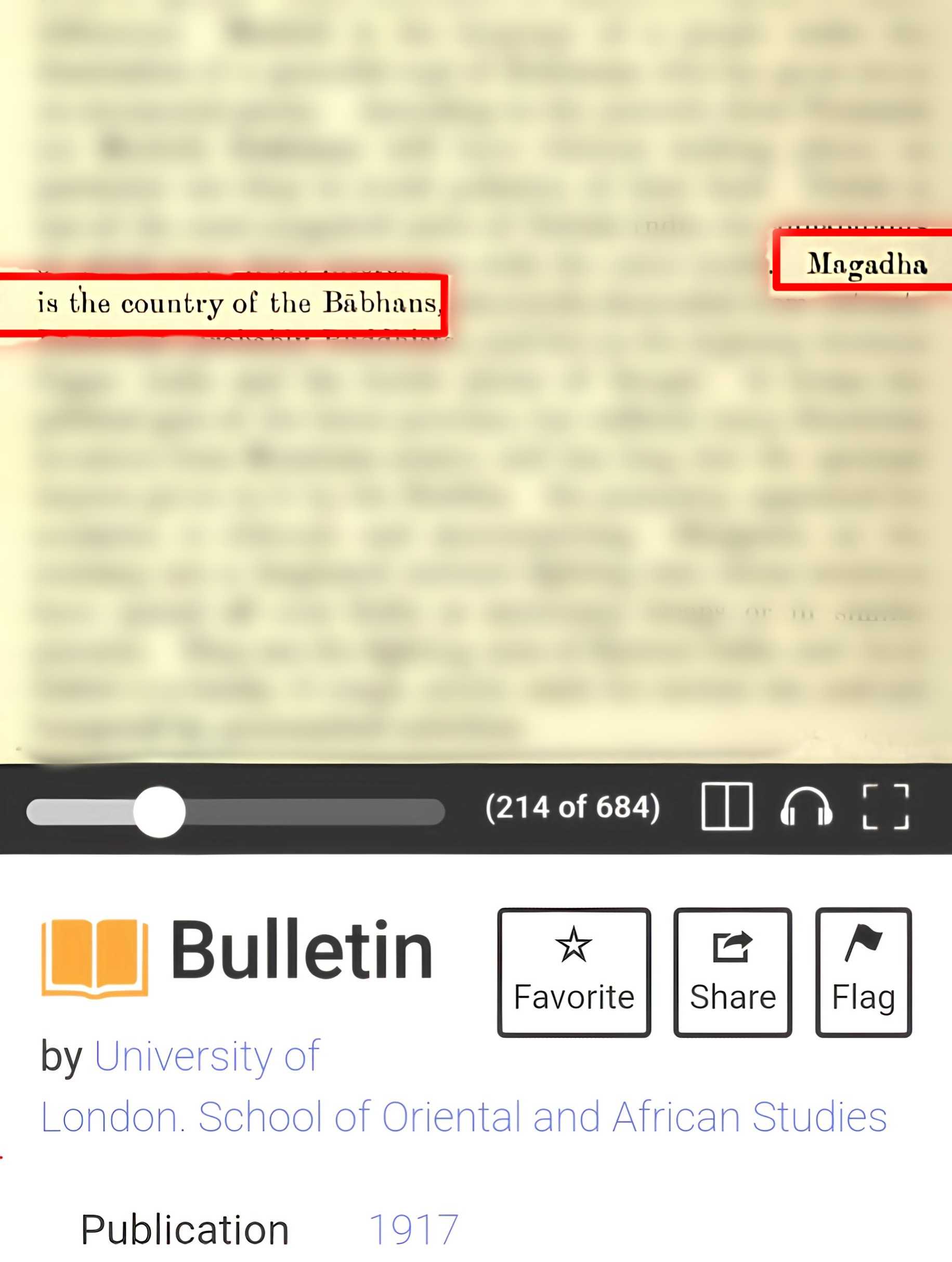
Brahmans. Babhan numbered 188959 in Monghy while Brahmans, 60353, both are clearly
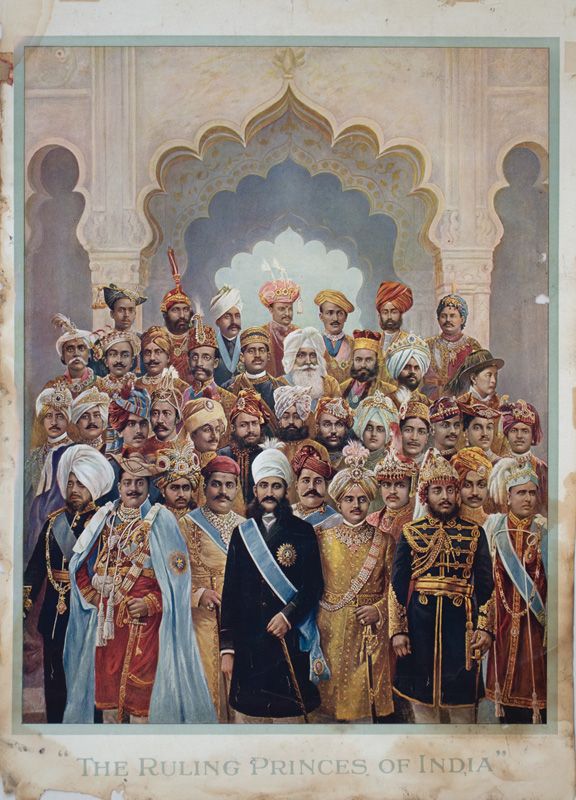
classified separately.
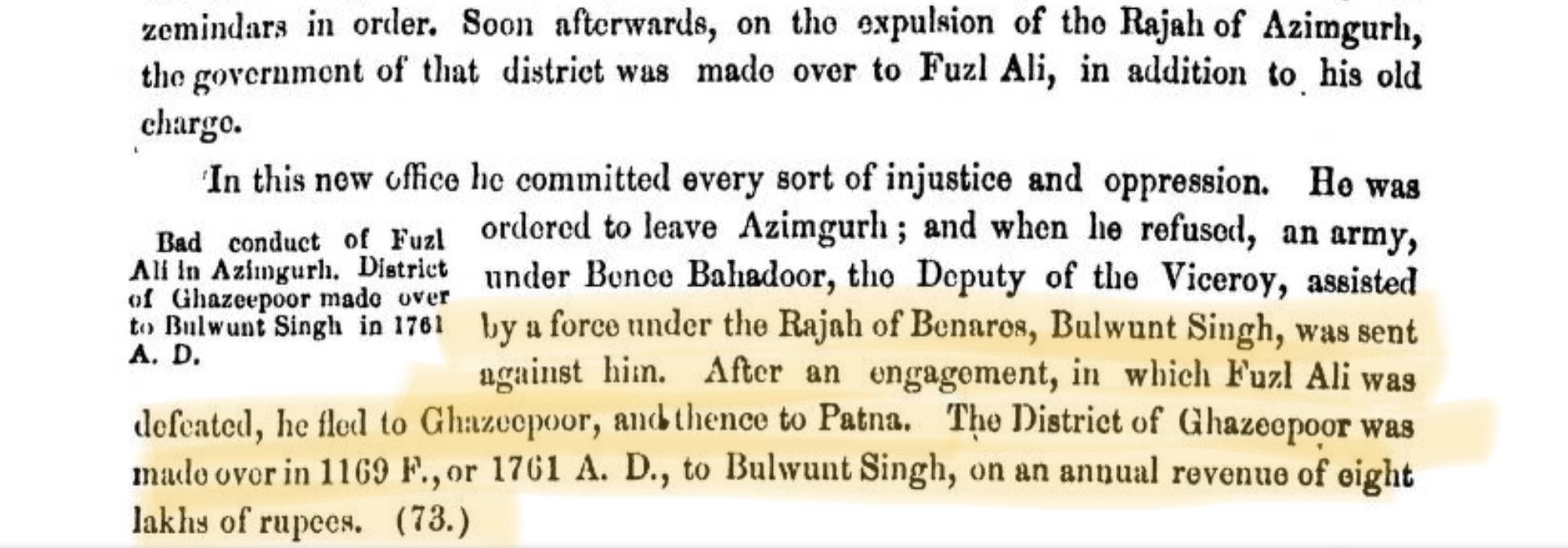
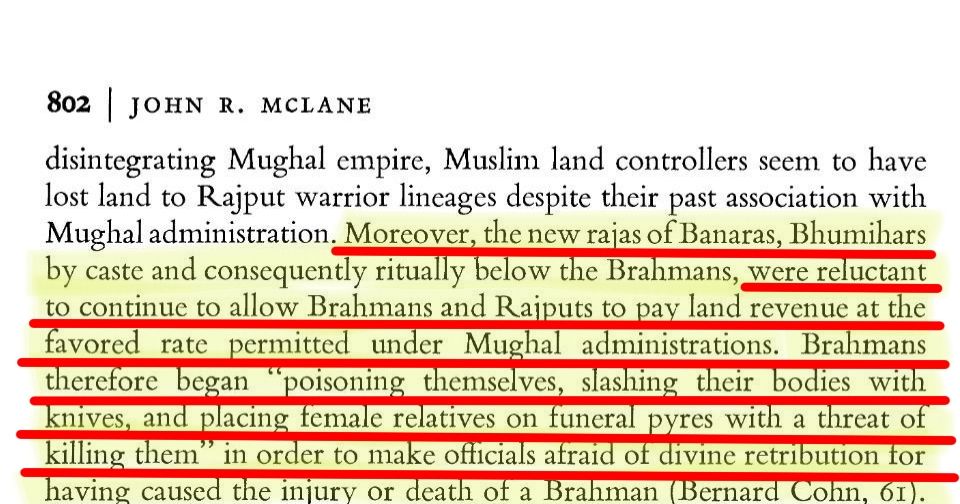
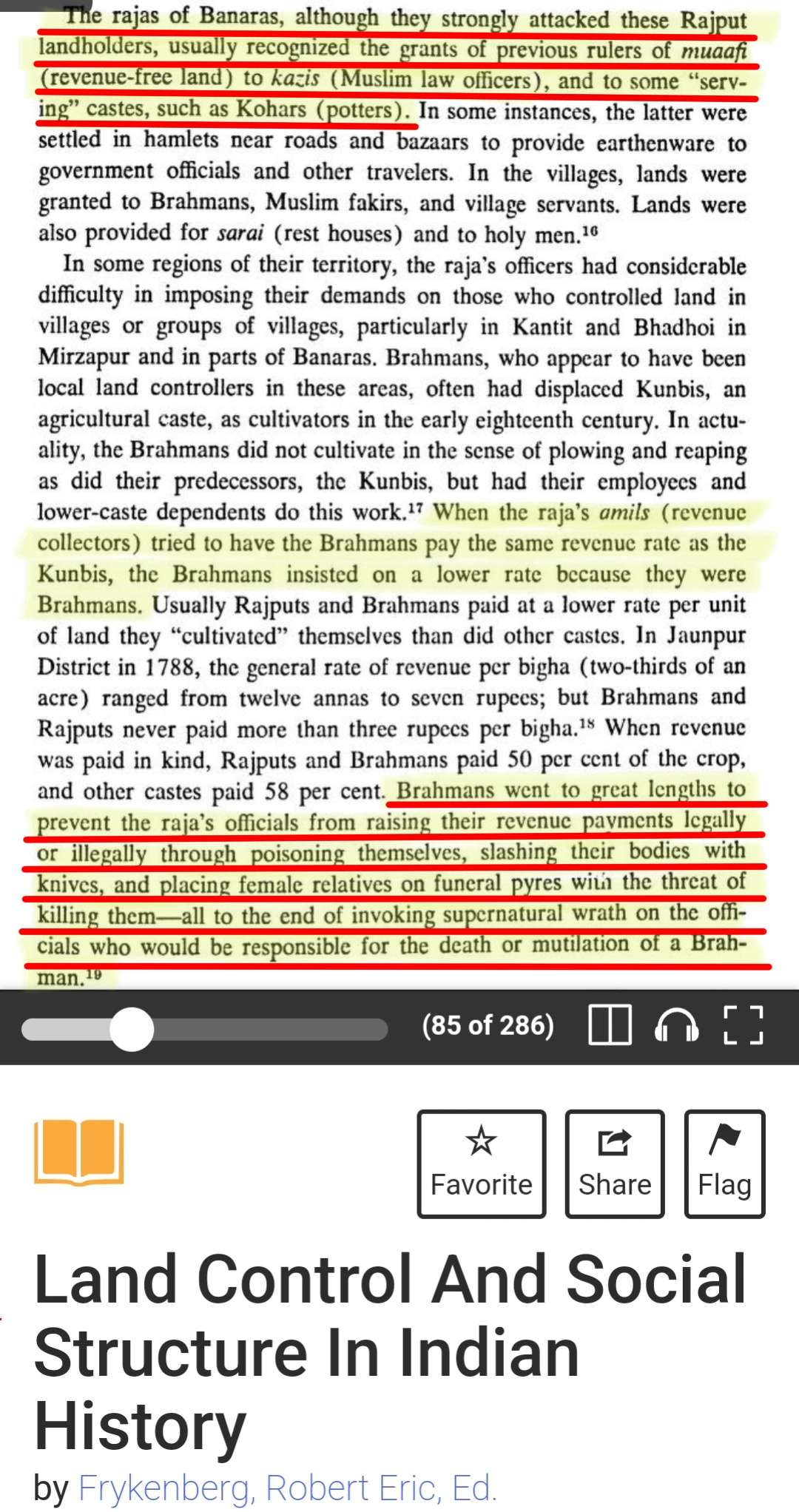
[7]
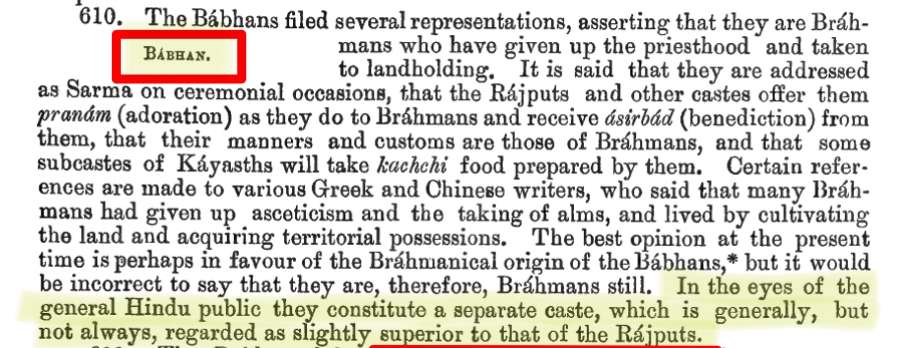
Monghyr Gazetteer
Go to References
53)
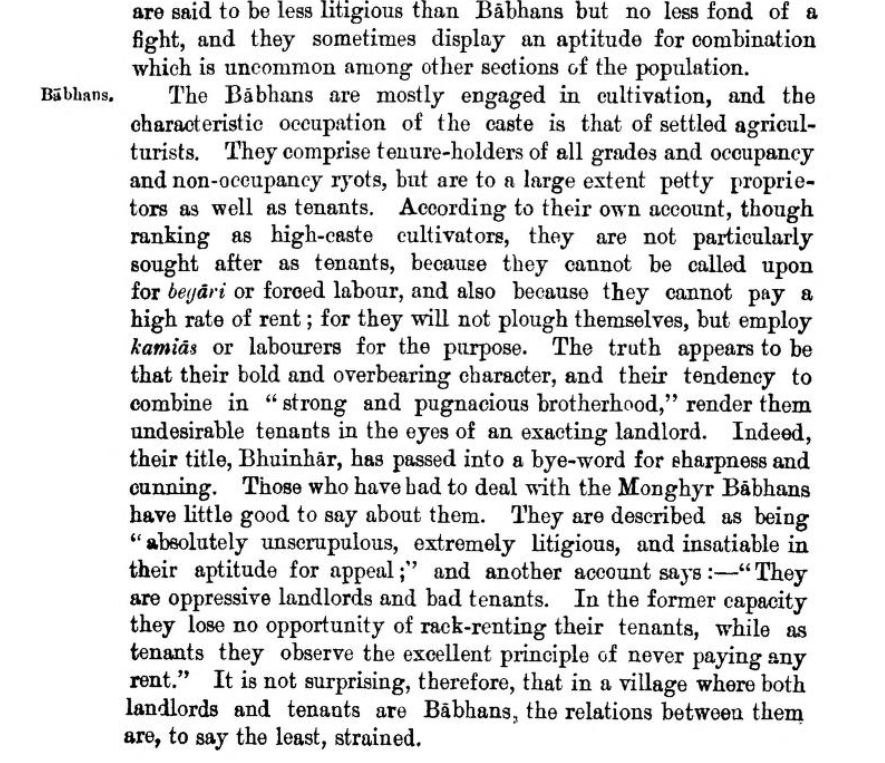
Babhans of Monghyr are described by the British as "Bold and having an overhearing
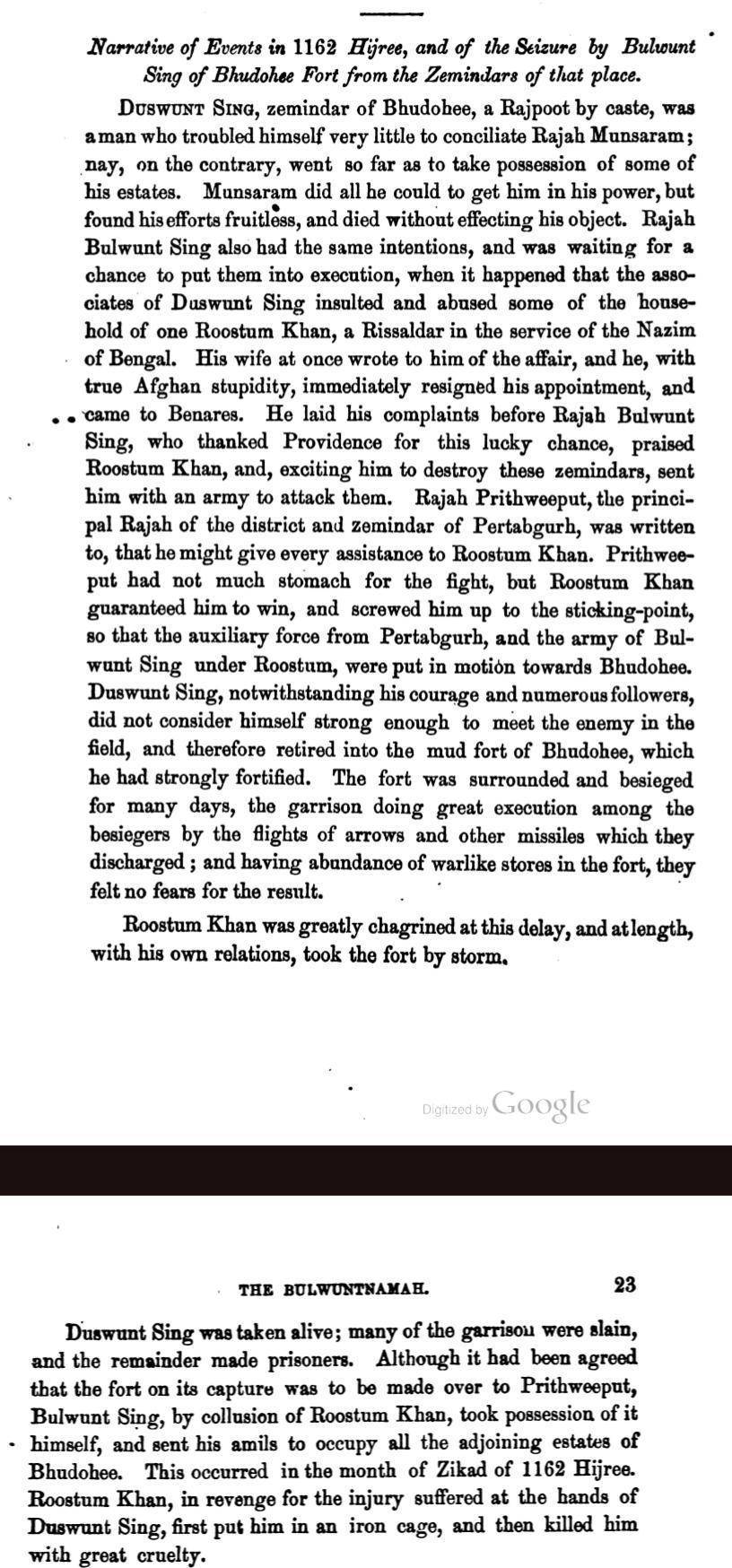
character", and they had a tendency to quickly mobilise for a cause, forming a
brotherhood in no time, to combat any adversity.
The British described this characteristic trait to be found in Bhumihars of Ghazipur
as
well.
Also, the British remarked that Bhumihar was the title of Babhans, signifying its
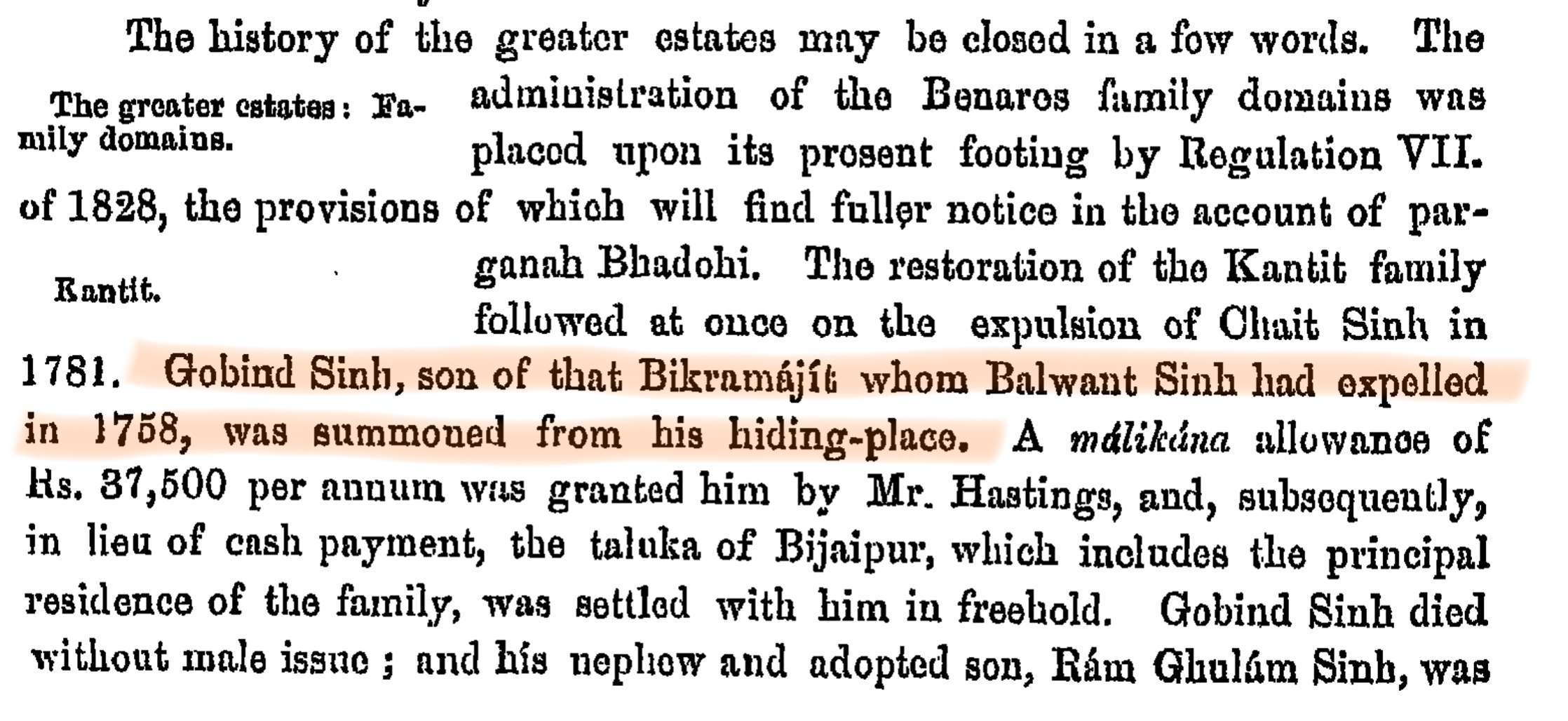
usage
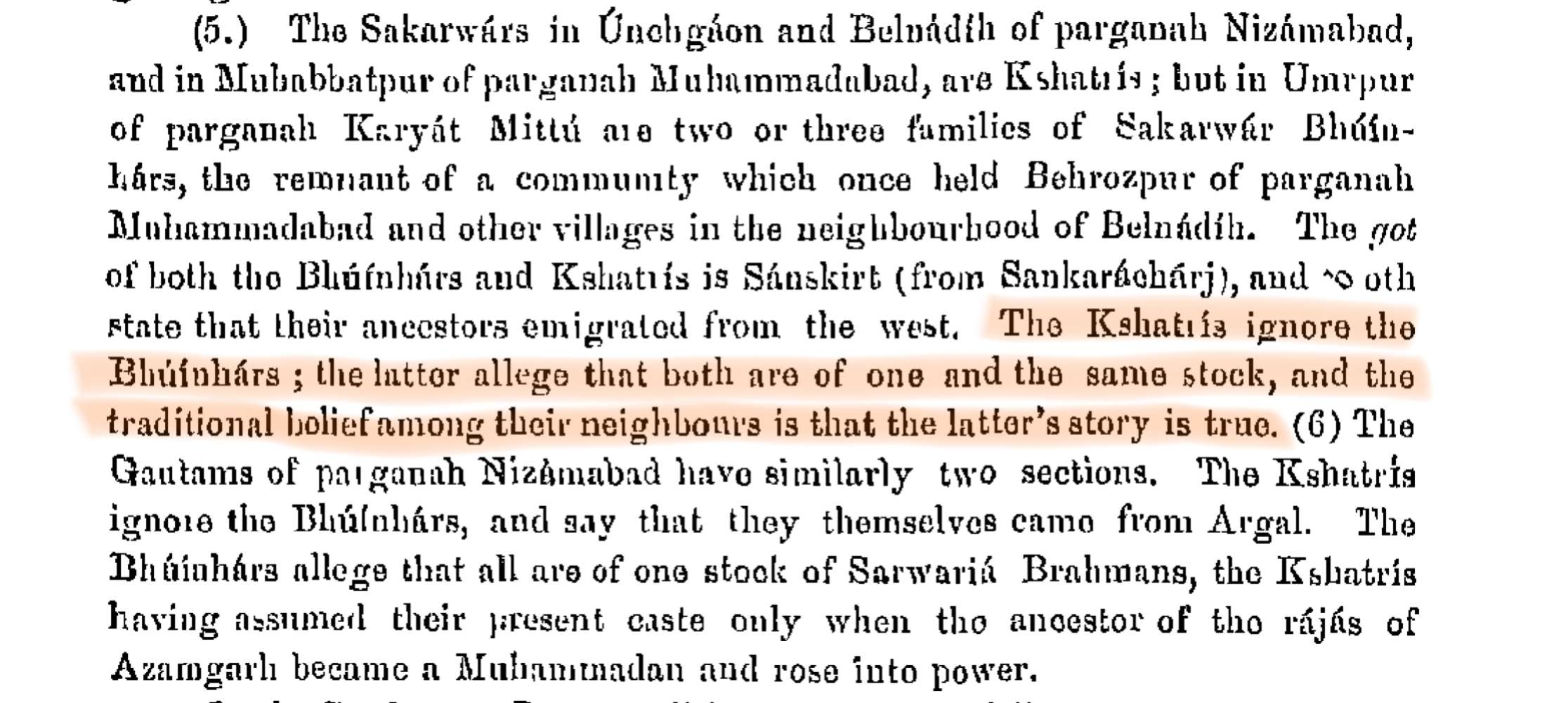
since early times as a caste designation that served as a title to highlight their
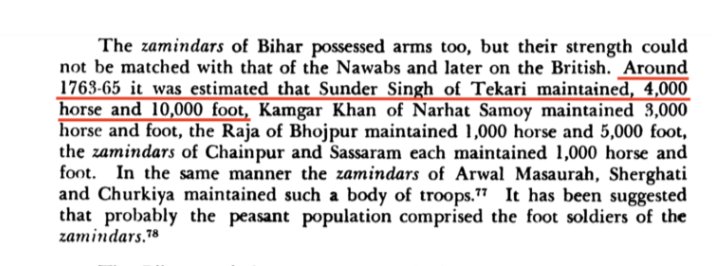
landlord status
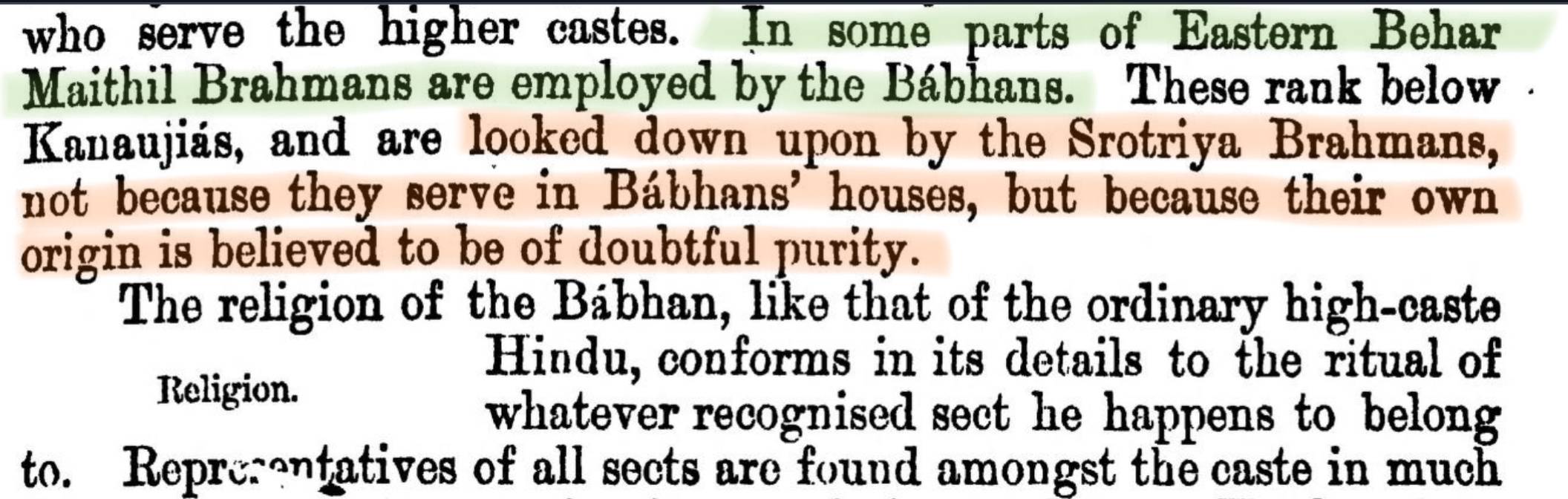
[7]
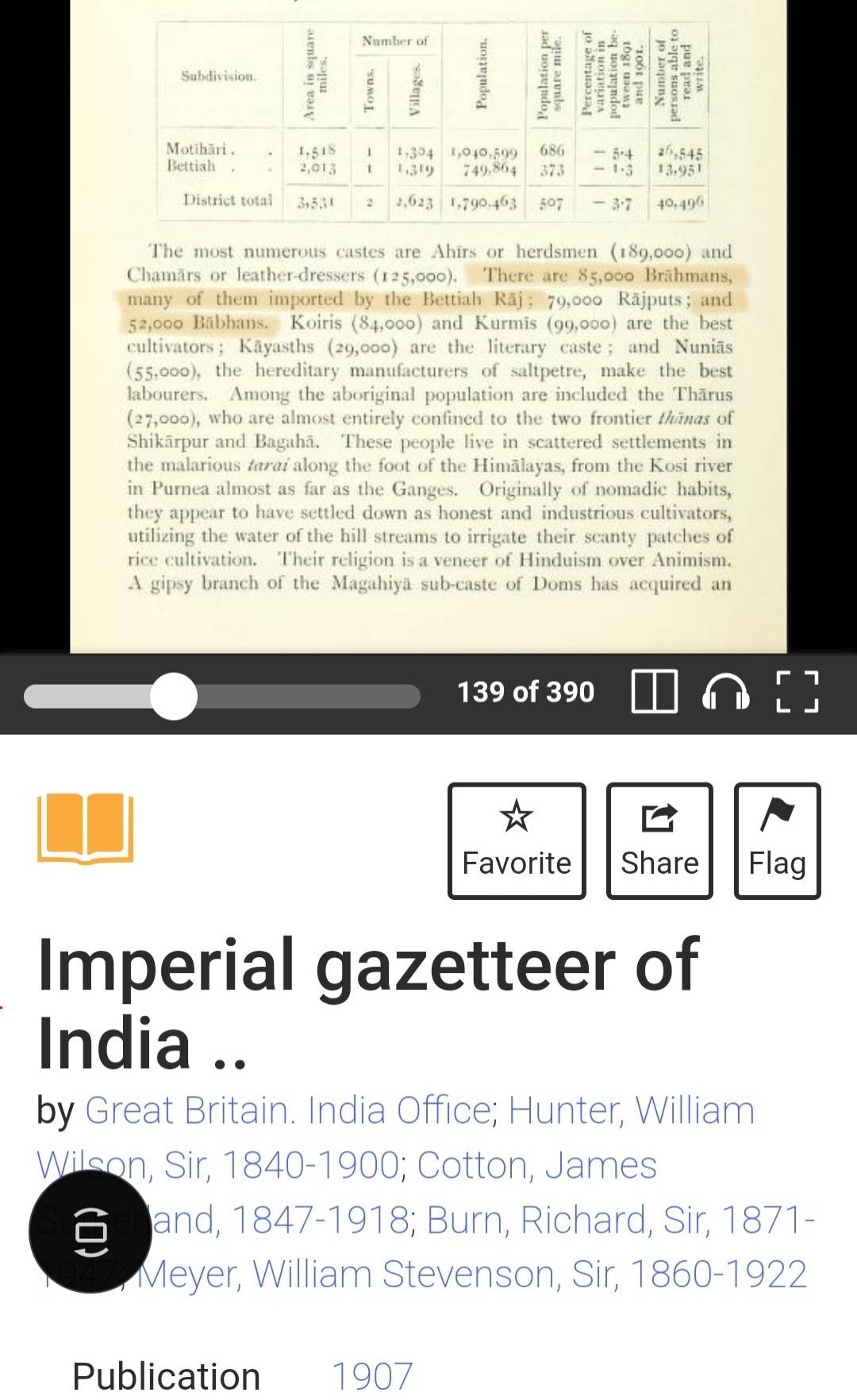
Monghyr Gazetteer
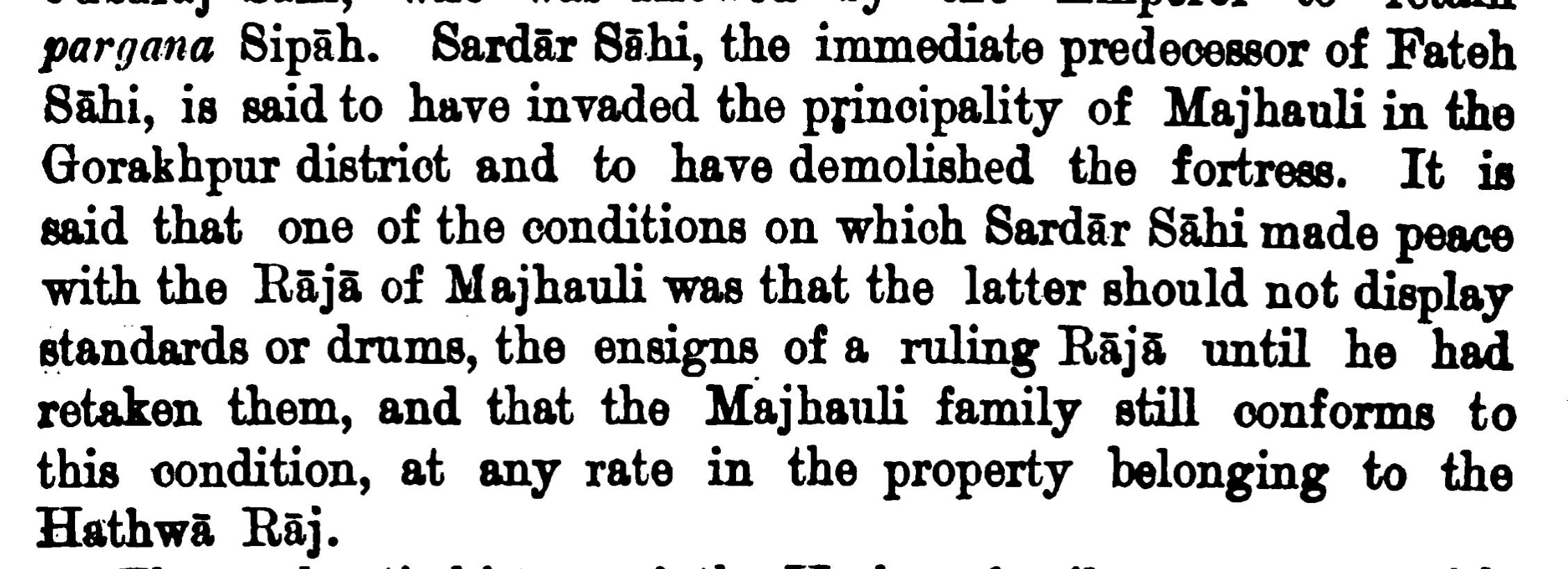
Go to References
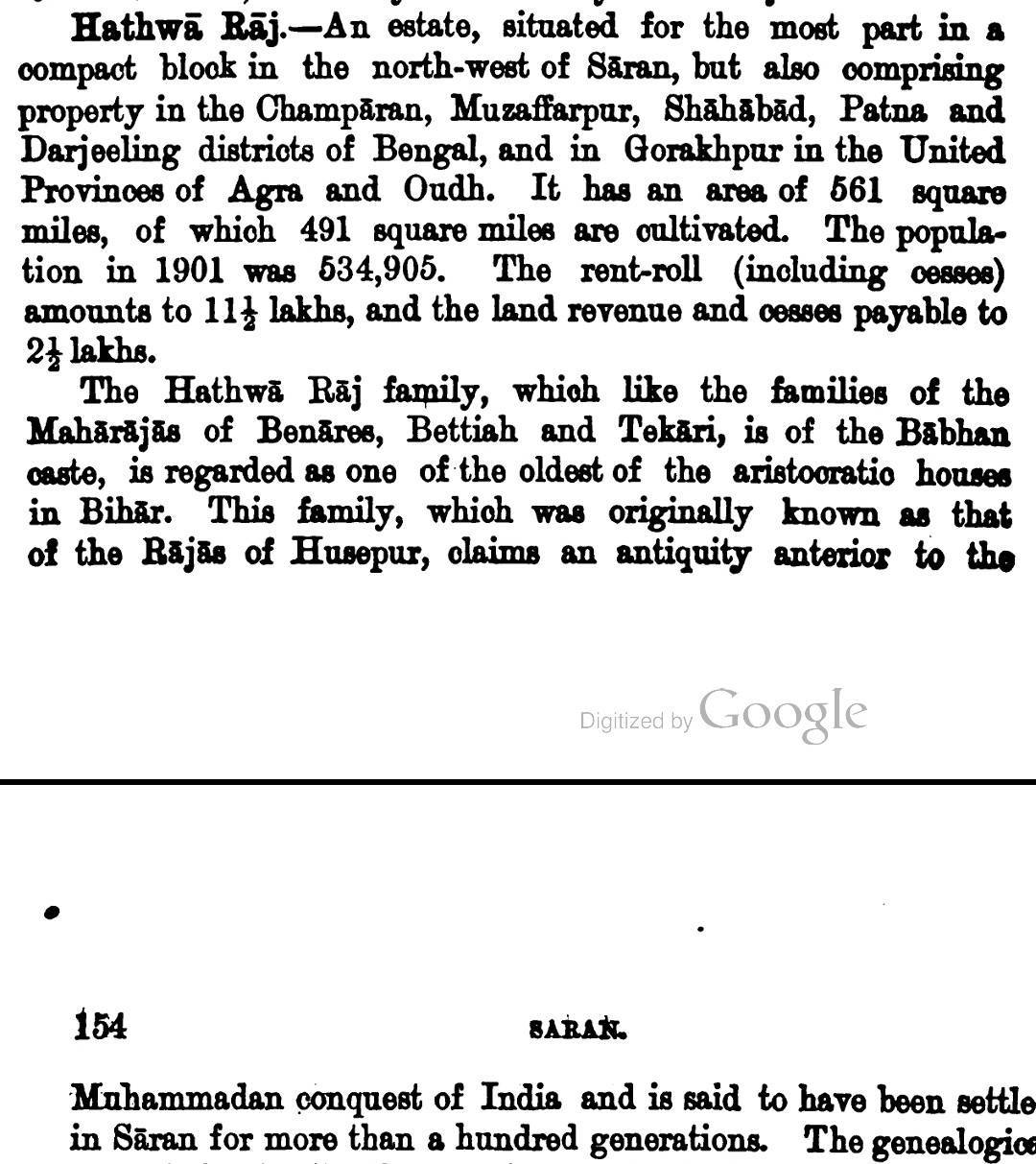
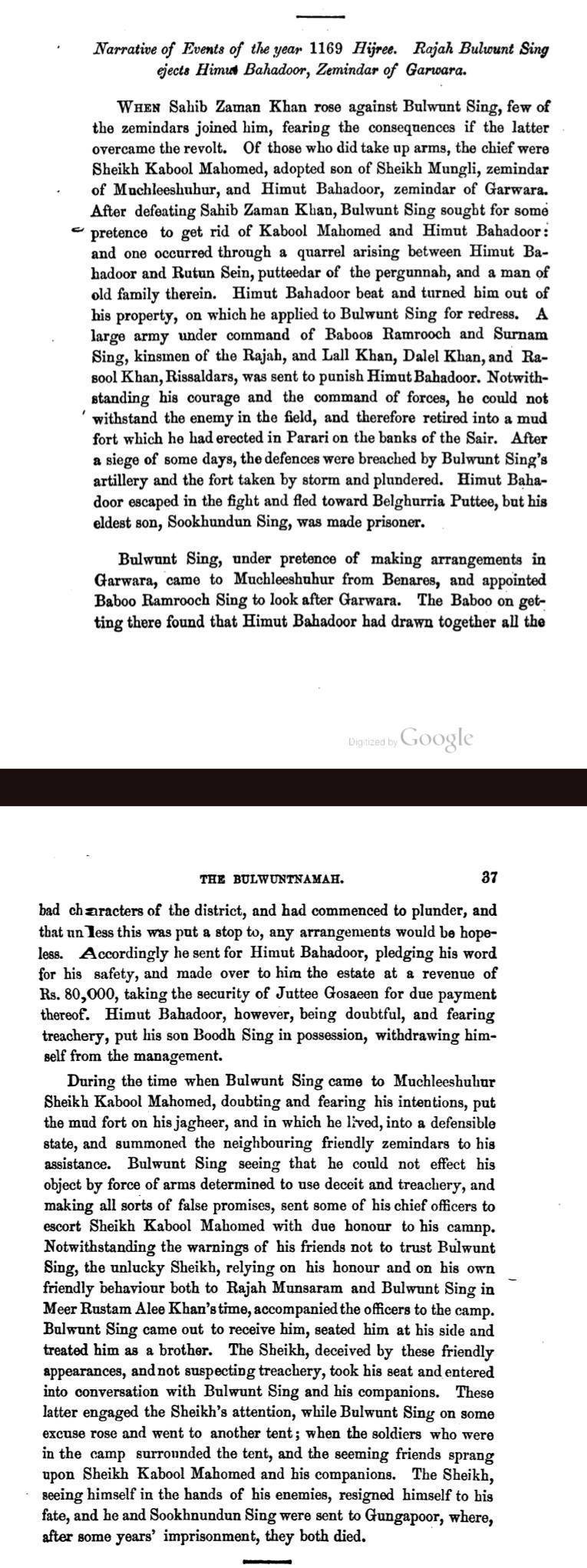
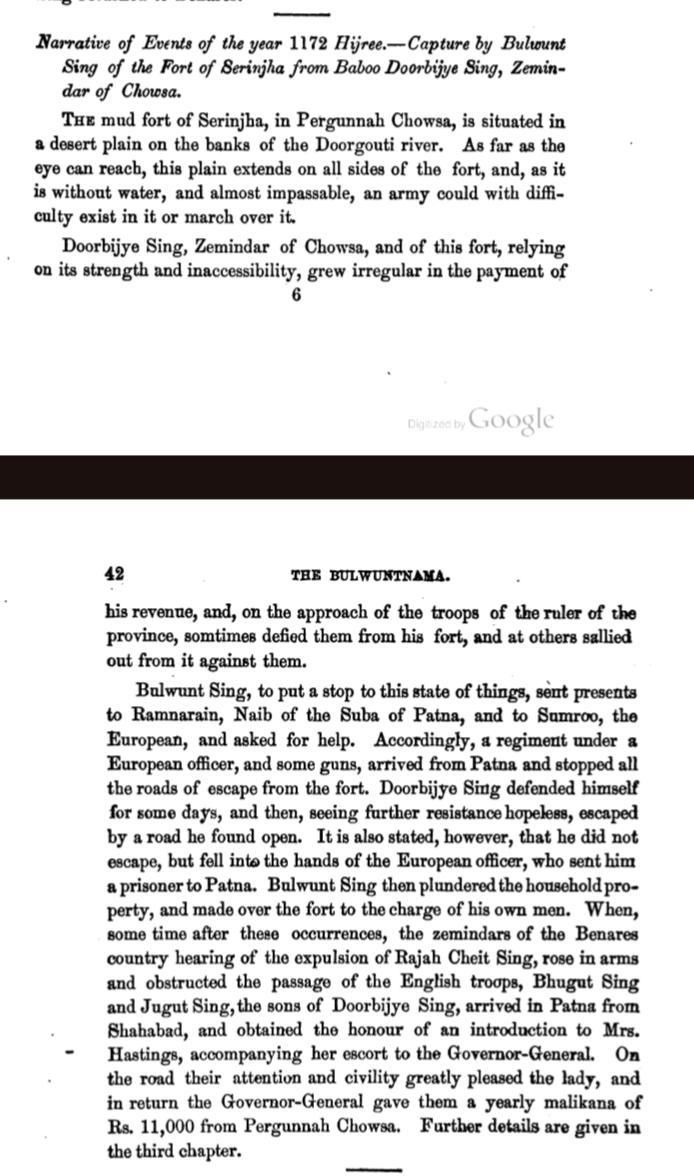
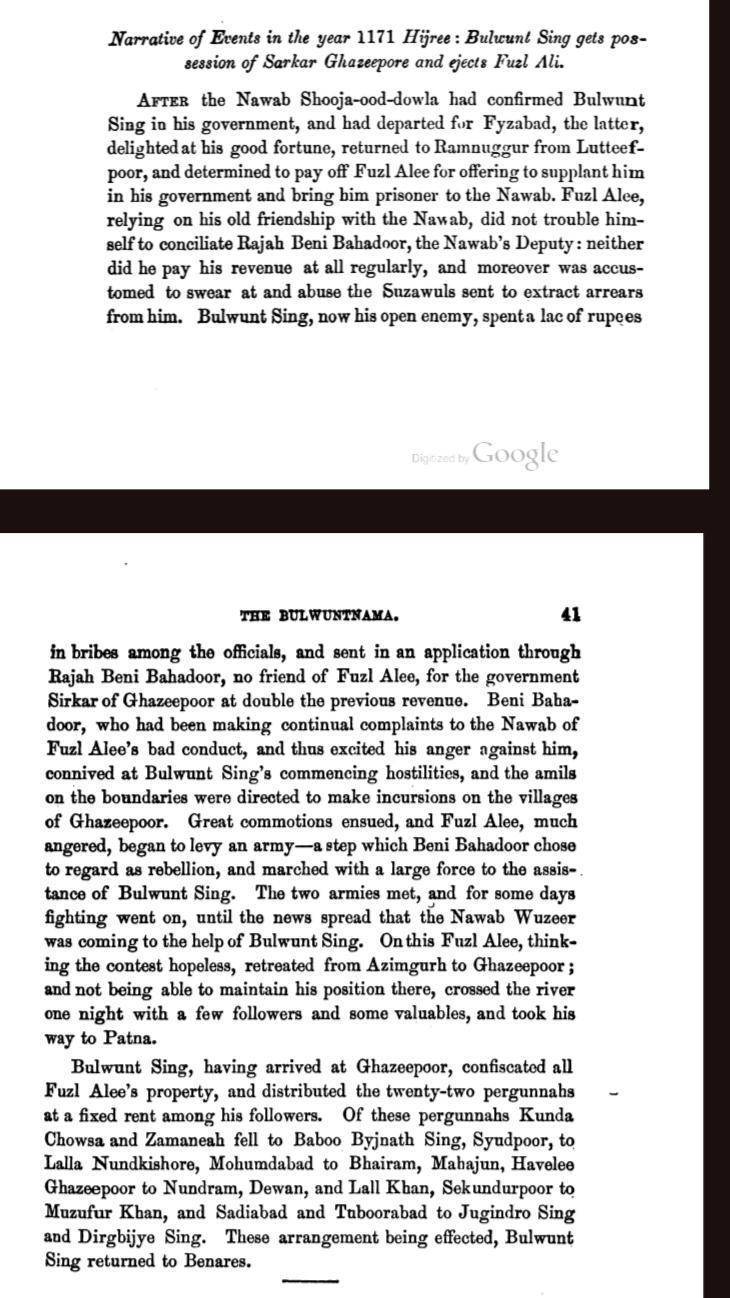
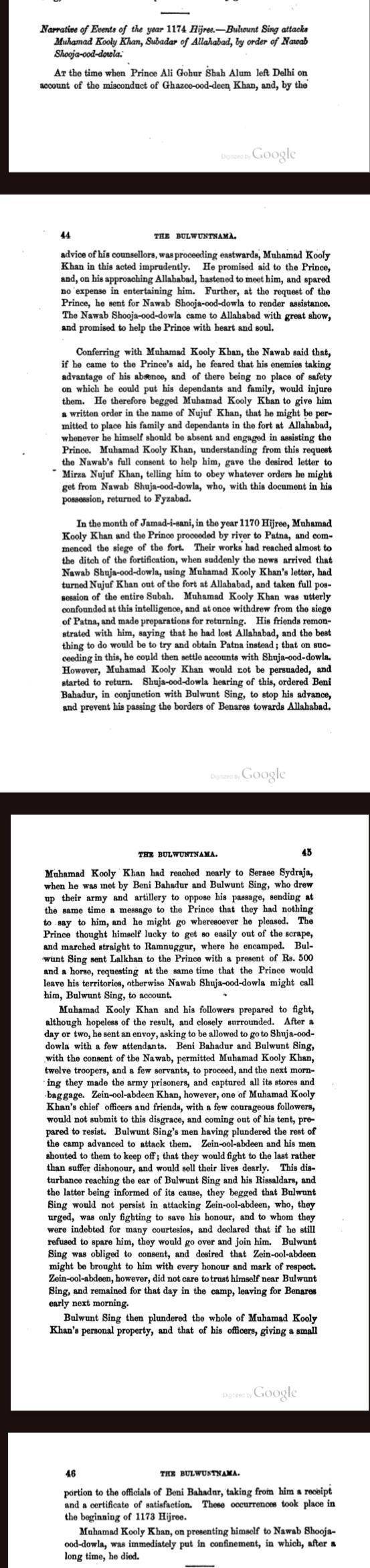
54)
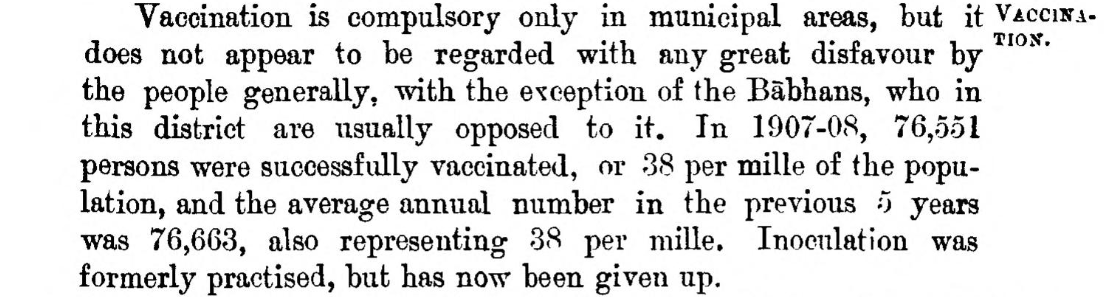
Brits noted that, of all the castes in Monghyr Division, only Babhans were opposed
to
Vaccination, indicating a very rebellious and conservative character of Bhumihars of
the
region.
[7]
Monghyr Gazetteer
Go to References
55)
Brits establishing the Buddhist credentials of Bhumihars.
Bhumihars certainly practiced a form of Buddhism in the past, before their
conversion to
Hinduism.
[8]
Muzaffarpur Gazetteer
Go to References
56)
Babhan was almost exclusively applied to Bhumihars of Magadha, Vajji Pradesh and
Anga
Pradesh. In every table enumerating castes based on different traits, Babhan
appeared
separately from Brahman, with Bhuinhar in brackets beside it.
[9]
HH Risley tribes and castes of Bengal, Vol-1,
Pg-105
Go to References

57)
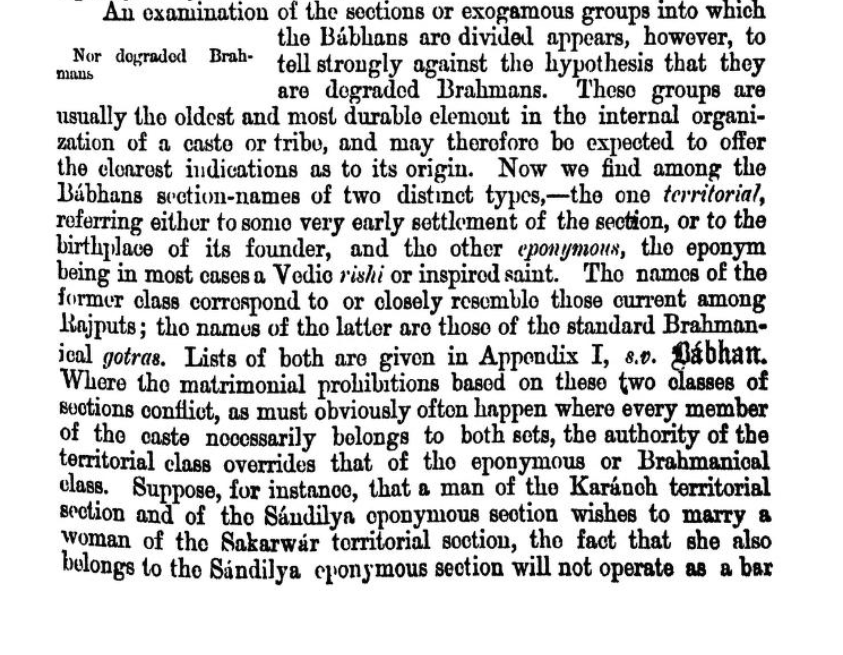
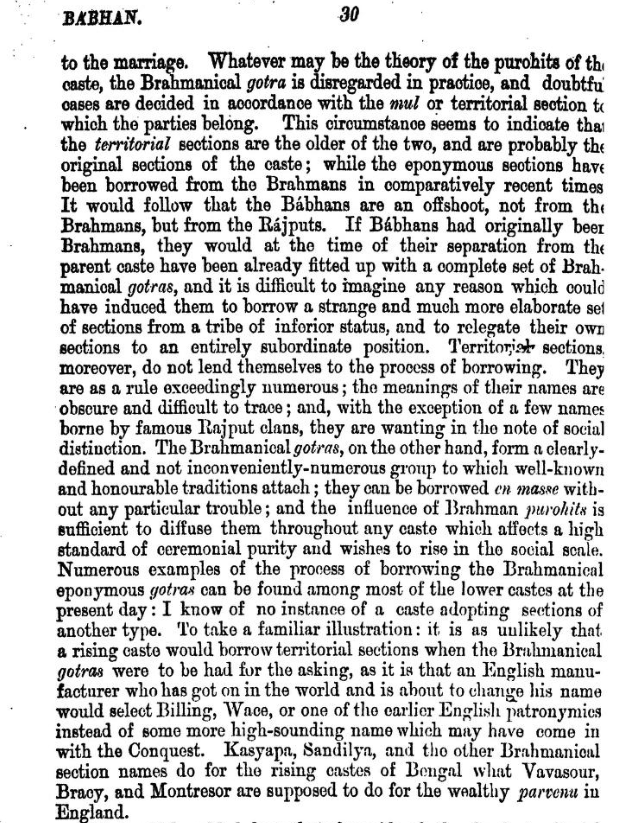
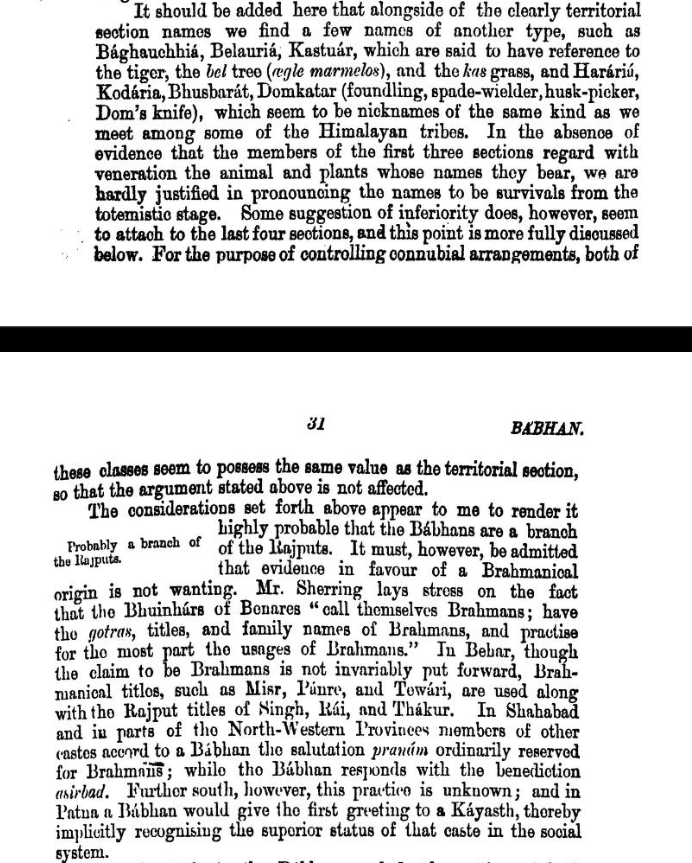
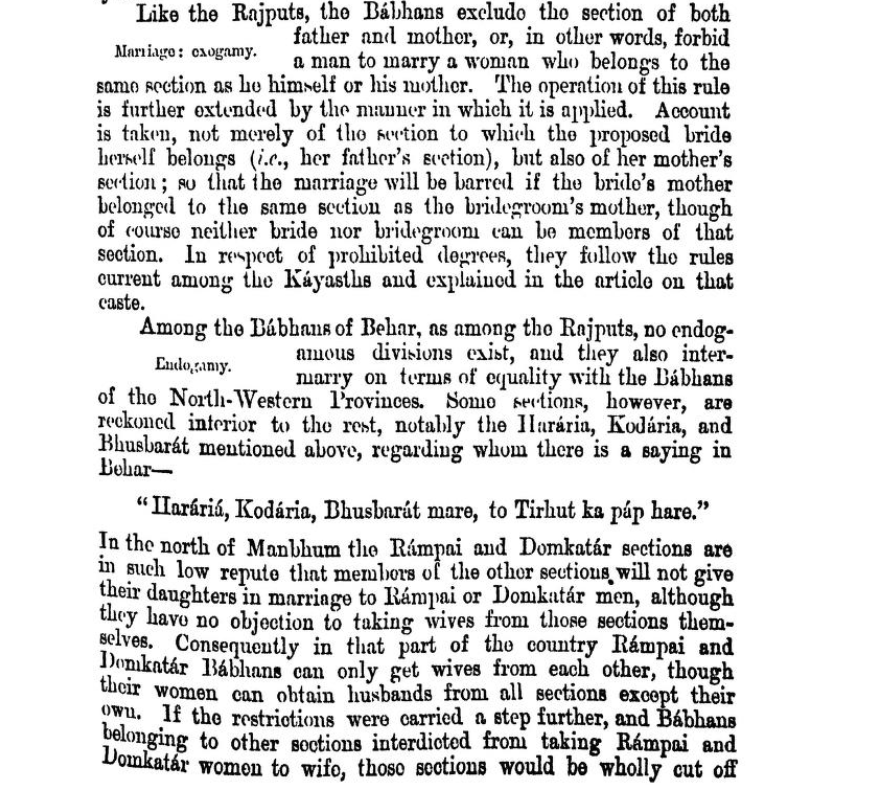
58) British refutes some allegations, by Mr.
Beames
59)
60)
61)
62)
63)
64)
65)
66)
67)
68)
69)
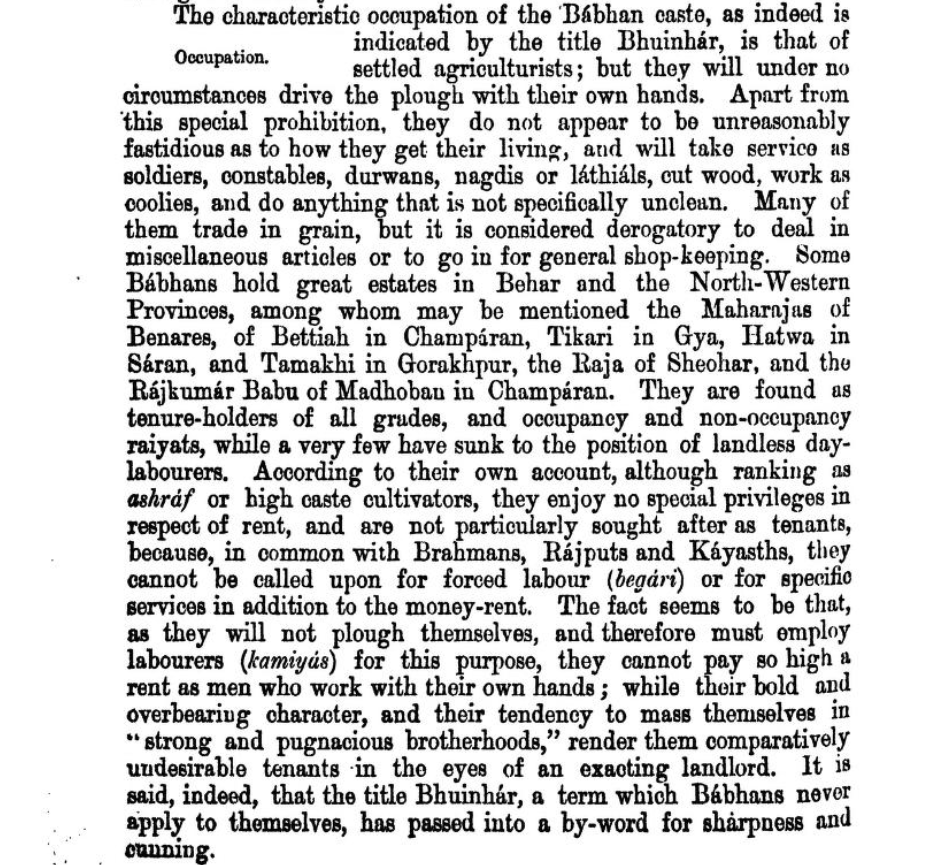
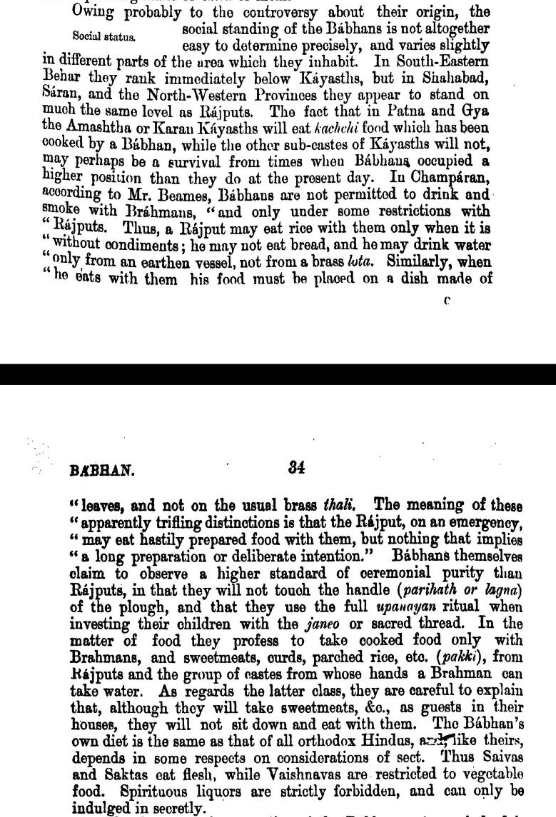
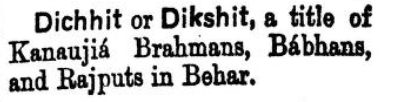
70) Bhumihar has always been a title, not the
name of the tribe. Babhan is the real name.
[10]
Census Of India 1901 Vol.1 (india )
(ethnographic Appendices)
Go to References

71)
72)
73) British Ethnologists highlighted that
Bhuinyar, Bhuinya are a different people with a similar sounding name.
HH Risley tribes and castes of Bengal- Ends
74)
75) Lorem Ipsum
[11]
The tribes and castes of Bengal vol 1,
Anthropometric Data (Nasal index)
Go to References
76)
77) Cephalic Index, 2 page continuous
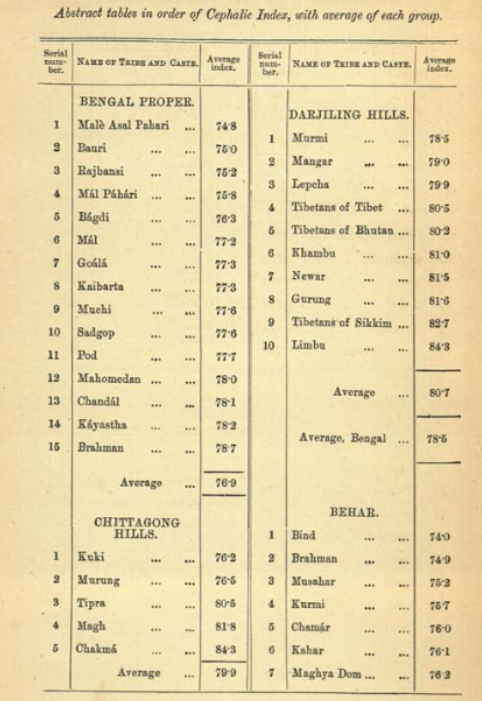
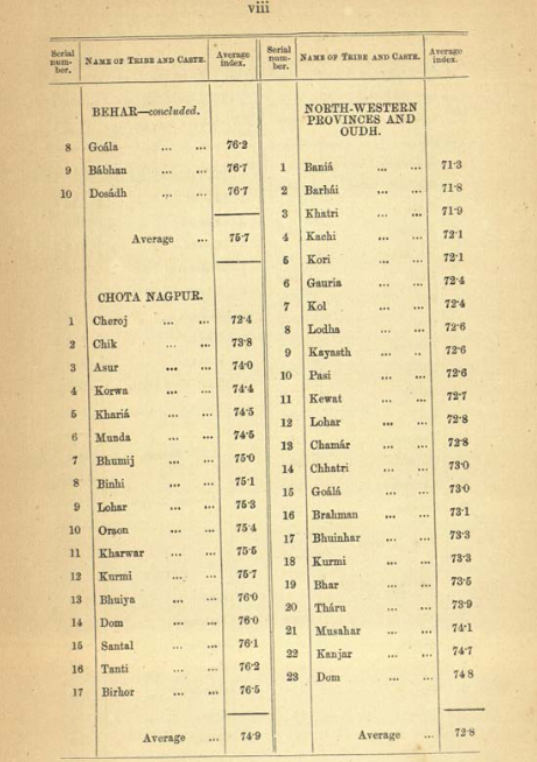
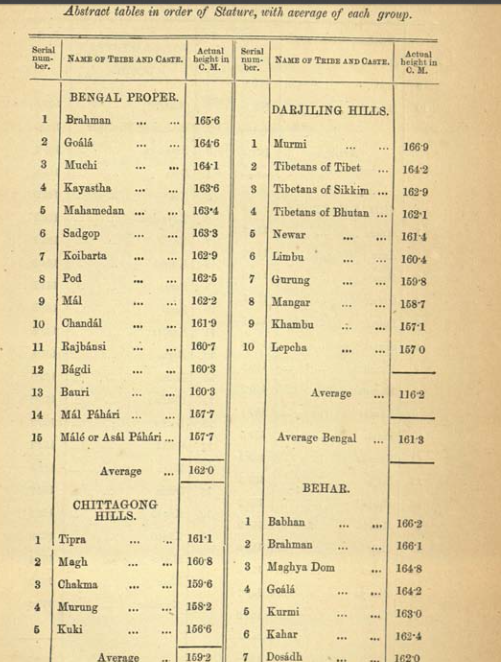
78) Height, Bihar
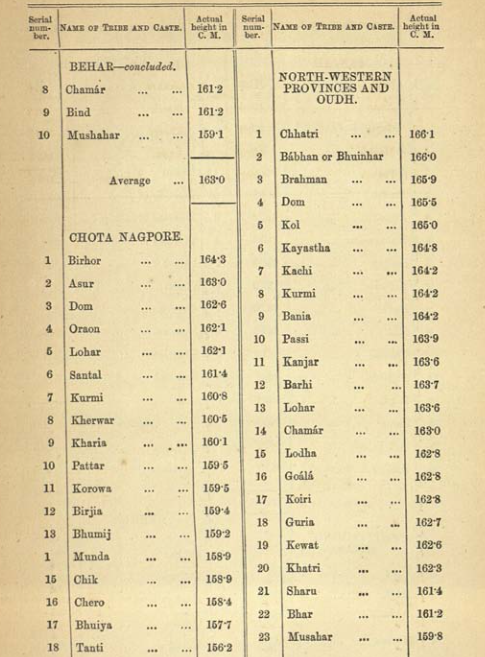
79) Height, Oudh and North Western Provinces
80) Lorem Ipsum
[12]
Go to References
81)
82) British debunking the fake theories
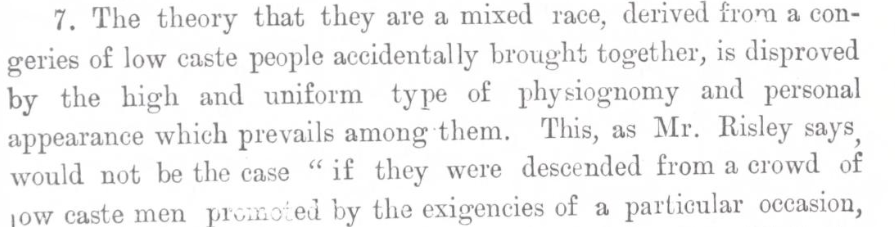
surrounding Bhumihars.
[13]
The Tribes and Castes of the North-Western
Provinces and Oudh, Vol. 2
Go to References
83)
84) Cheyte Singh delivers punishment to
Brahmans
who were reluctant to pay rent and taxes and regularly harmed their bodies to
repulse
the Raja's representatives due the fear of divine retribution.
Bhumihar Raja then entrusted a Muslim Amil to punish them because a Muslim wouldn't
be
fearful of Hindu mythical penal laws.
[14]
Historical and statistical memoir of the
Ghazeepoor district
Go to References
85)
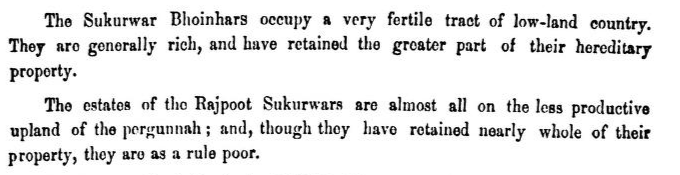
Bhumihar Sakarwars were richer, occupied the more fertile lands while the Rajput
Sakarwars occupied the less productive lands of pergunnah, and are as a rule, poor.
Left: MA Sherring
Right: Memoir Of The Ghazeepoor District Pt.1
by Oldham, Wilton

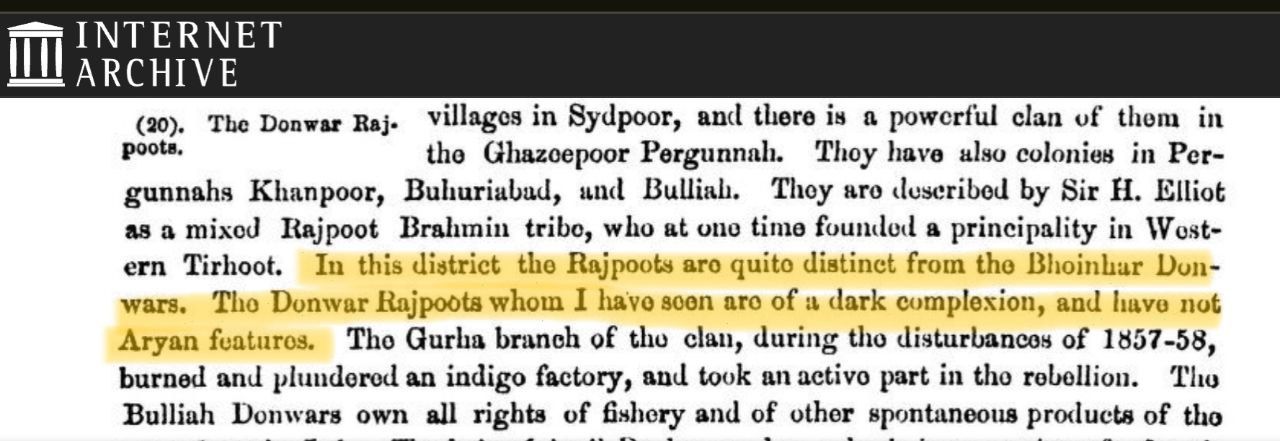
86) The British observed that Donwar
Bhumihars
were more Aryan looking and had lighter skin complexion than Rajputs Donwars.

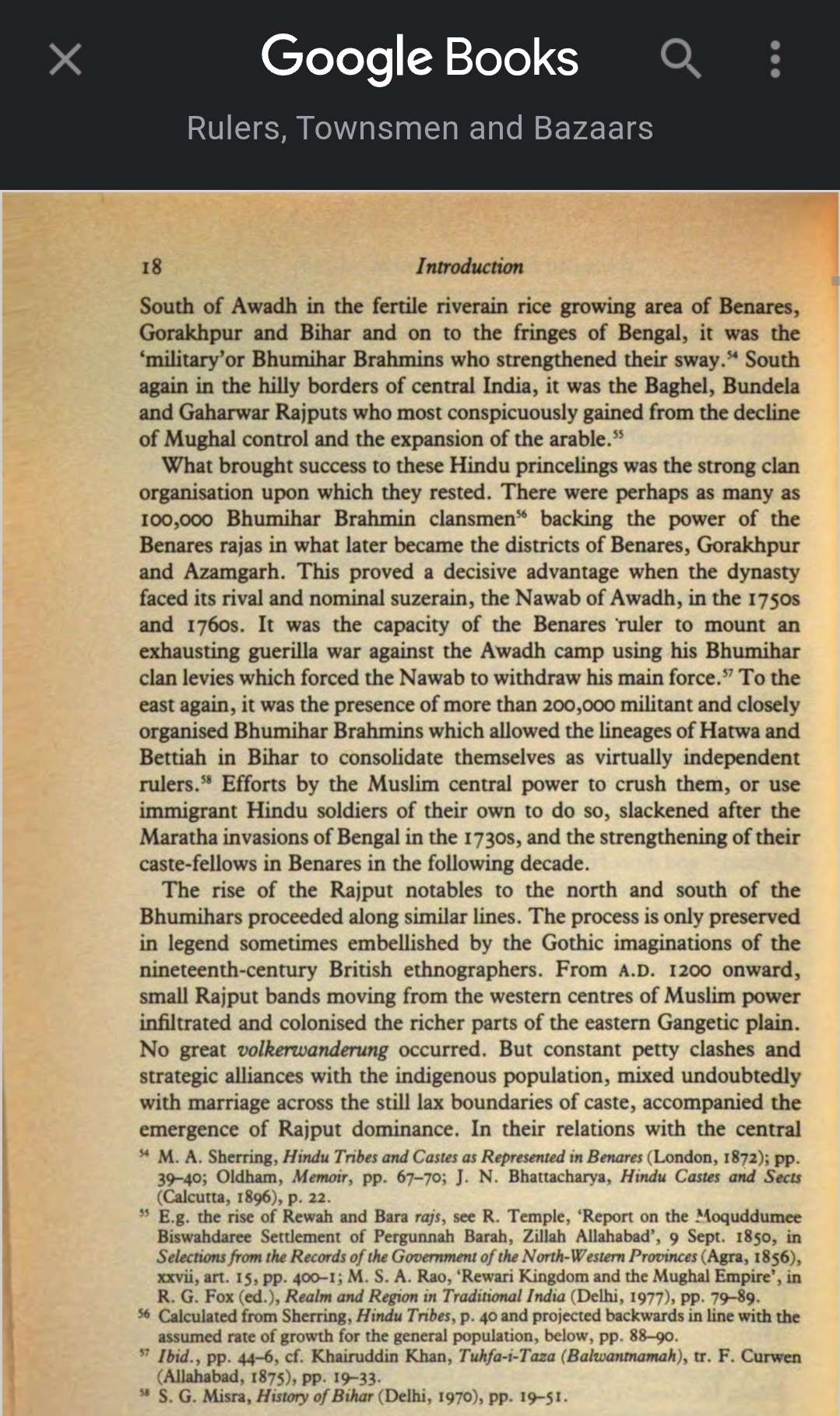
87) 100000 Bhumihars directly backed the
Bhumihar
Rajas and enabled their rule.
The Nawab of Awadh was just a nominal suzerain.
[15]
Rulers, Townsmen and Bazars
Go to References
88)
89) Bhumihar Raja takes a Rajput girl as his
slave and later sells her to a British Officer, who bore him six children.
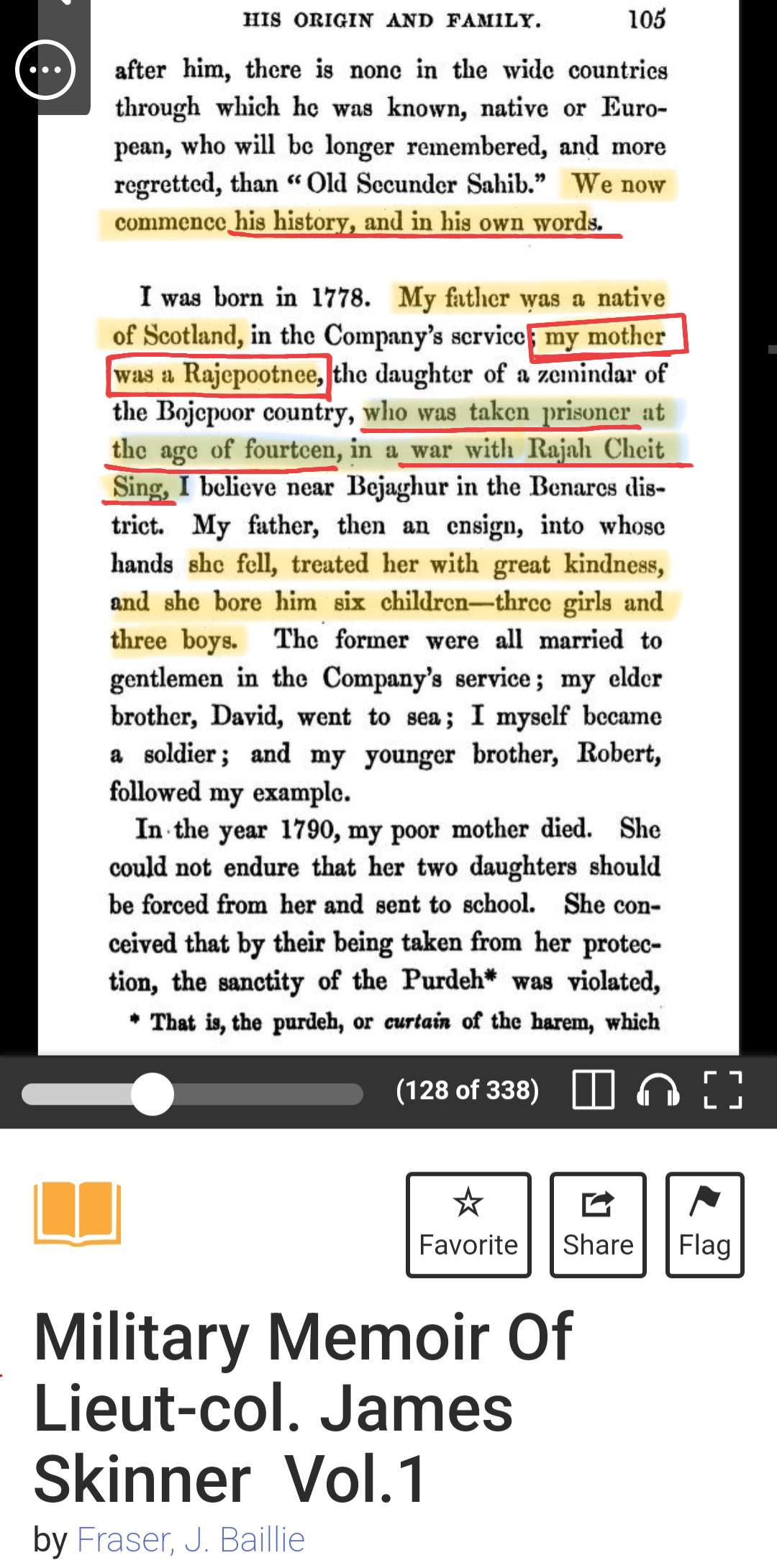
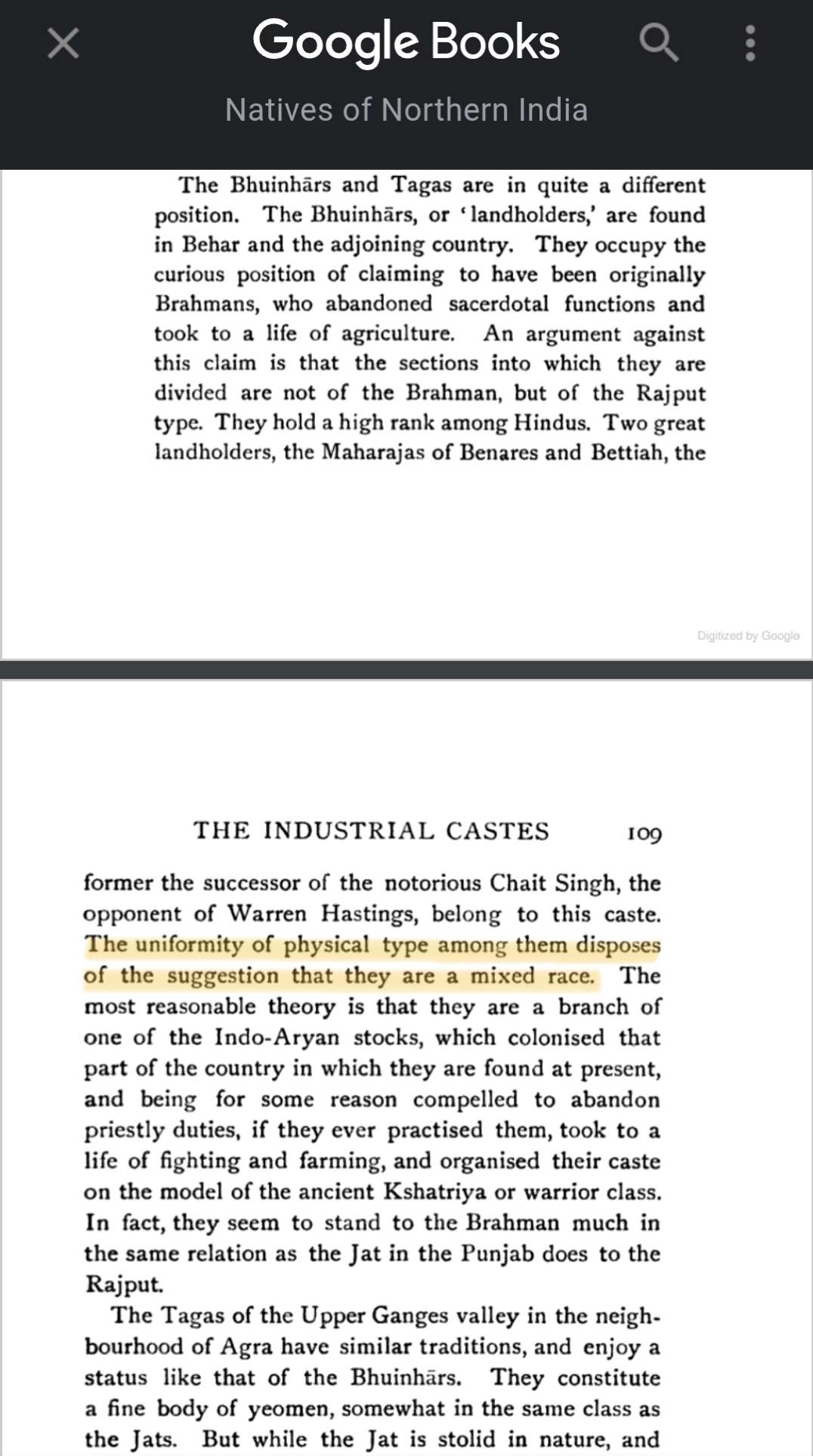
90) British, again debunks the mixed race
theory
perpetuated against Bhumihars by the Hindus.
[16]
Natives Of Northern India
Go to References
91)

92)
93)
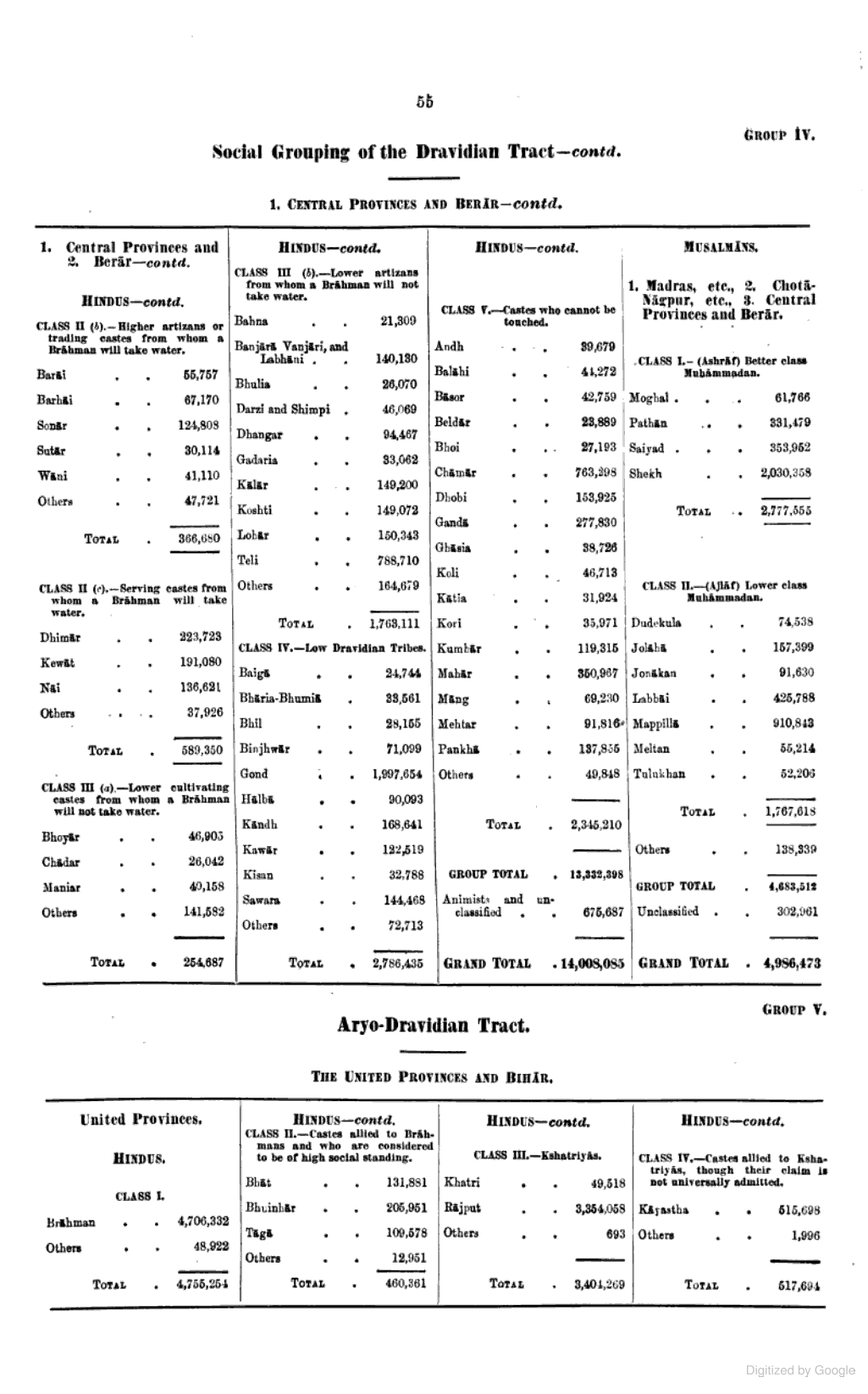
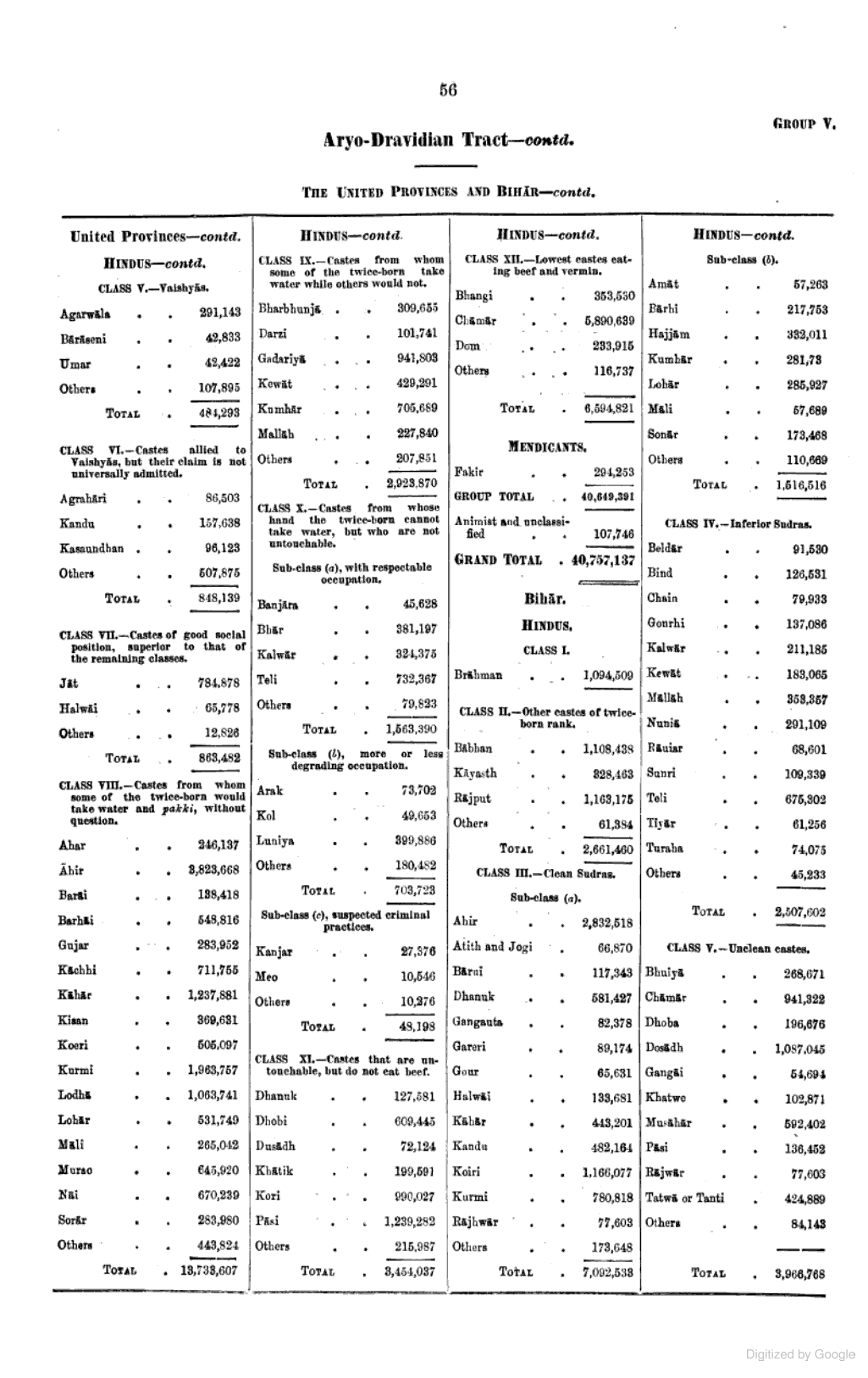
94)Lorem Ipsum
[17]
The North-Western Provinces and Oudh, Report
and Provincial tables, Part I, Vol-XVI, India - Census 1891
Go to References
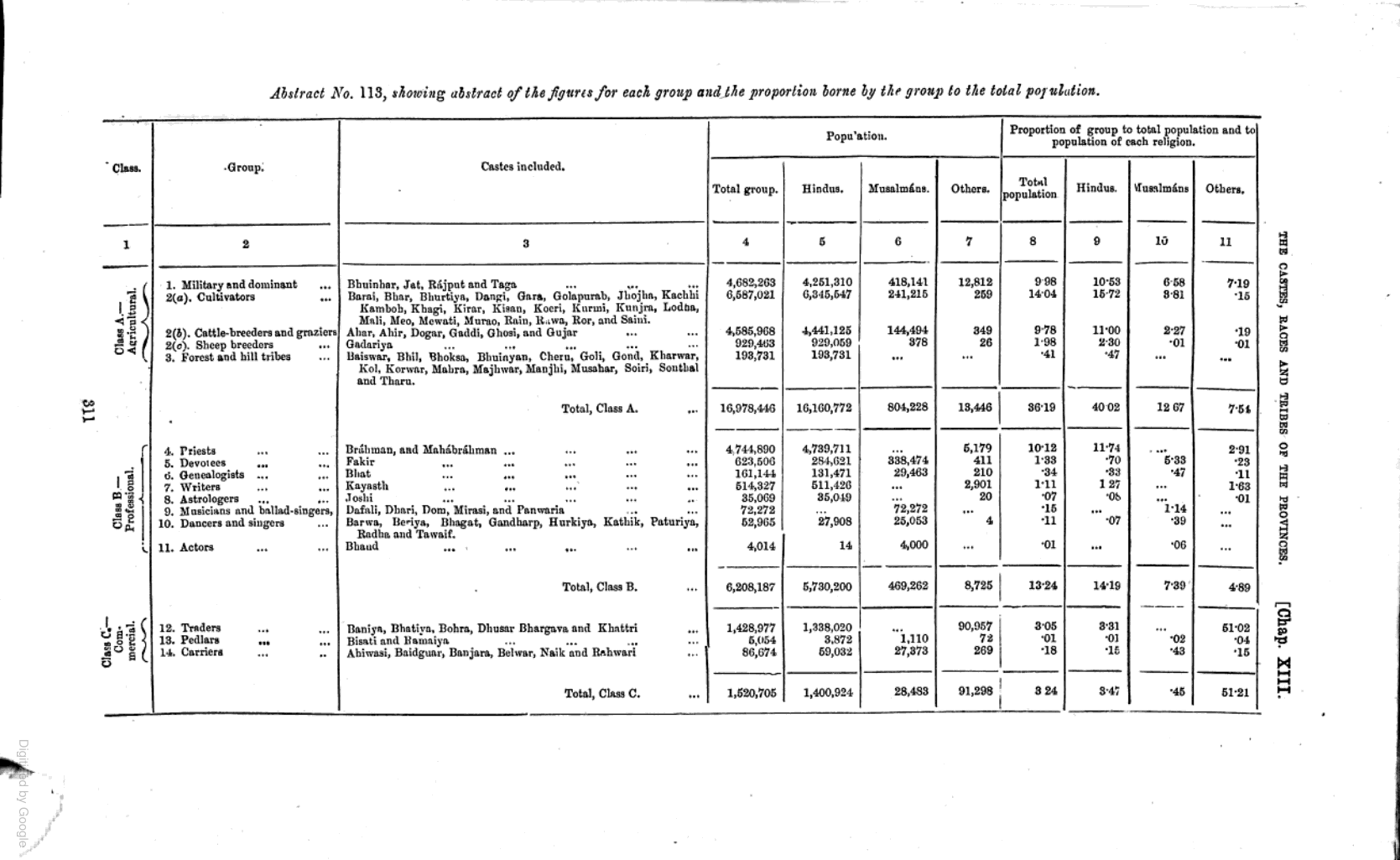
95)
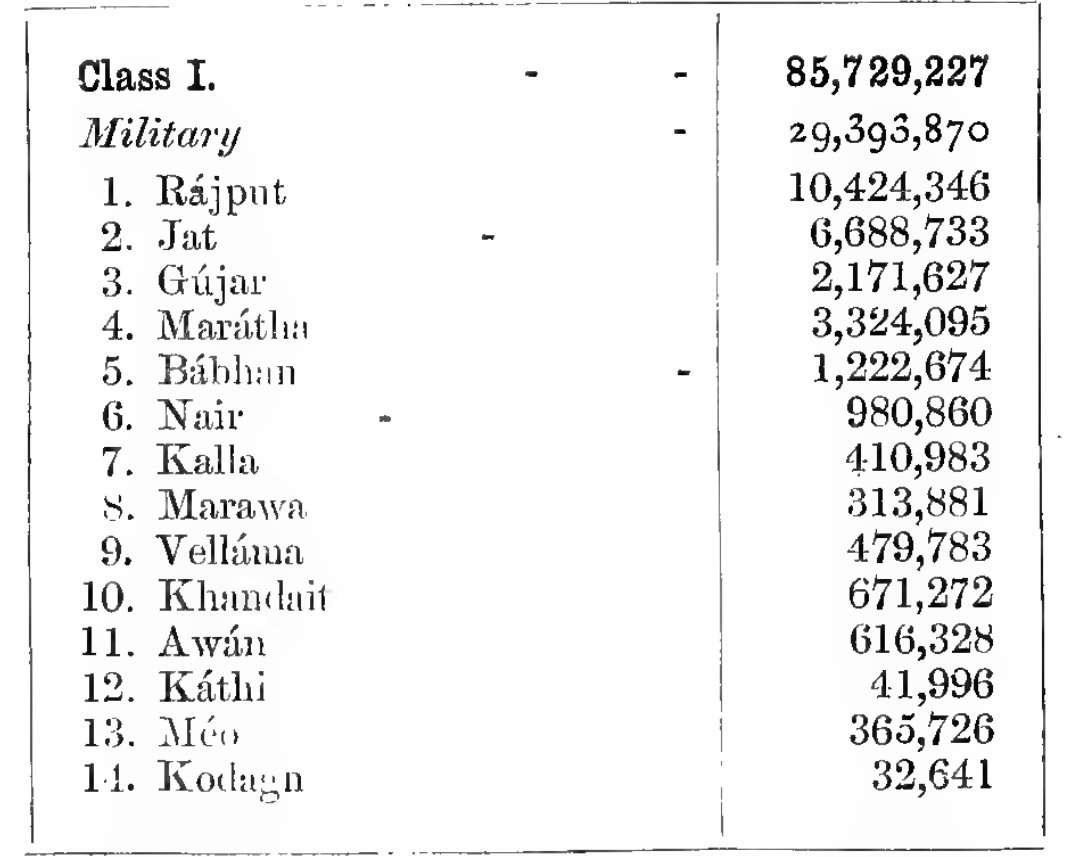
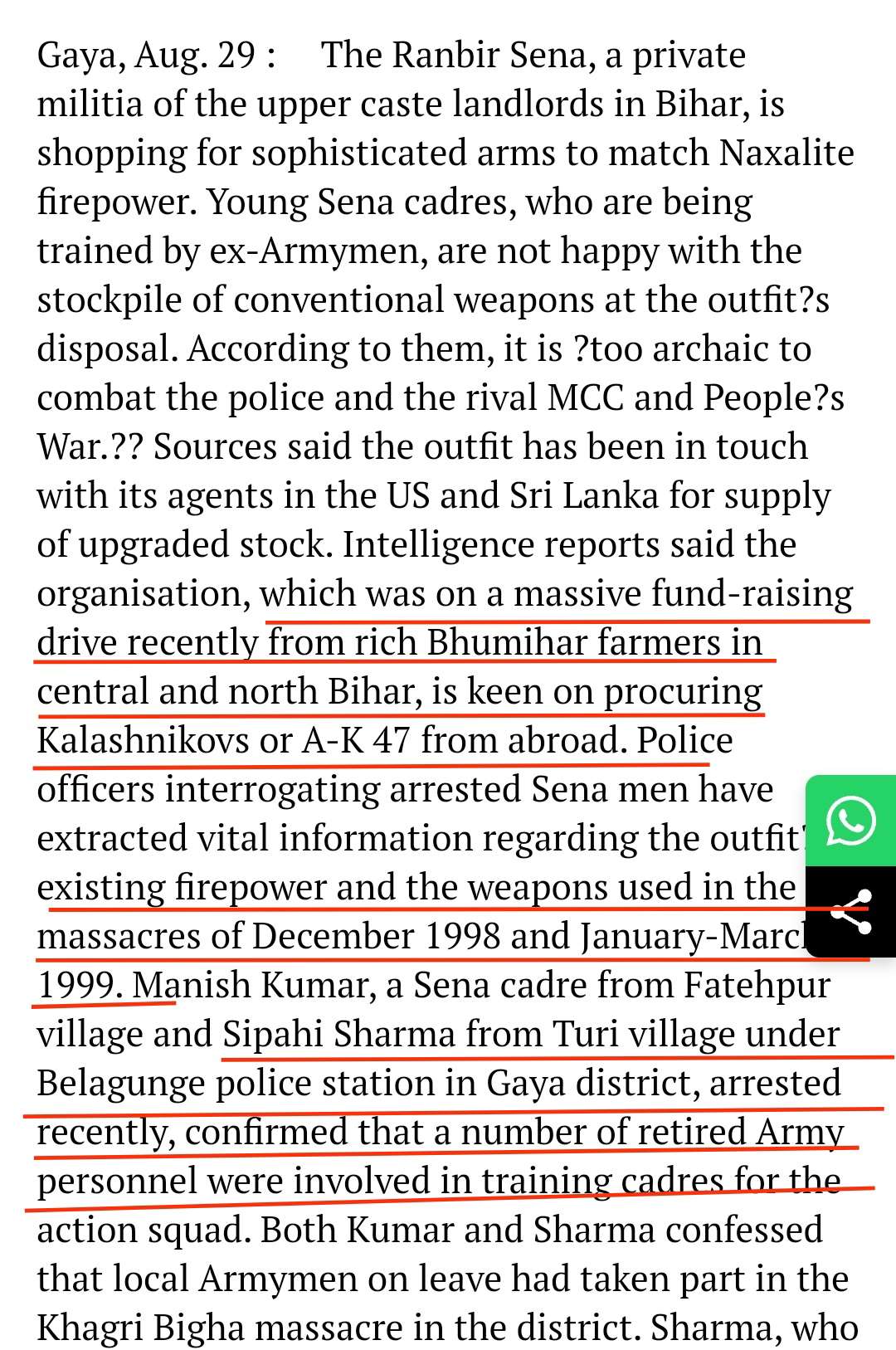
96) How Ranvir Sena procured arms for their
offensive.
[18]
The Telegraph, Article - "How Ranvir Sena Shops
For Arms". Link : https://www.telegraphindia.com/india/ranbir-sena-shops-for-arms/cid/915851
Go to References
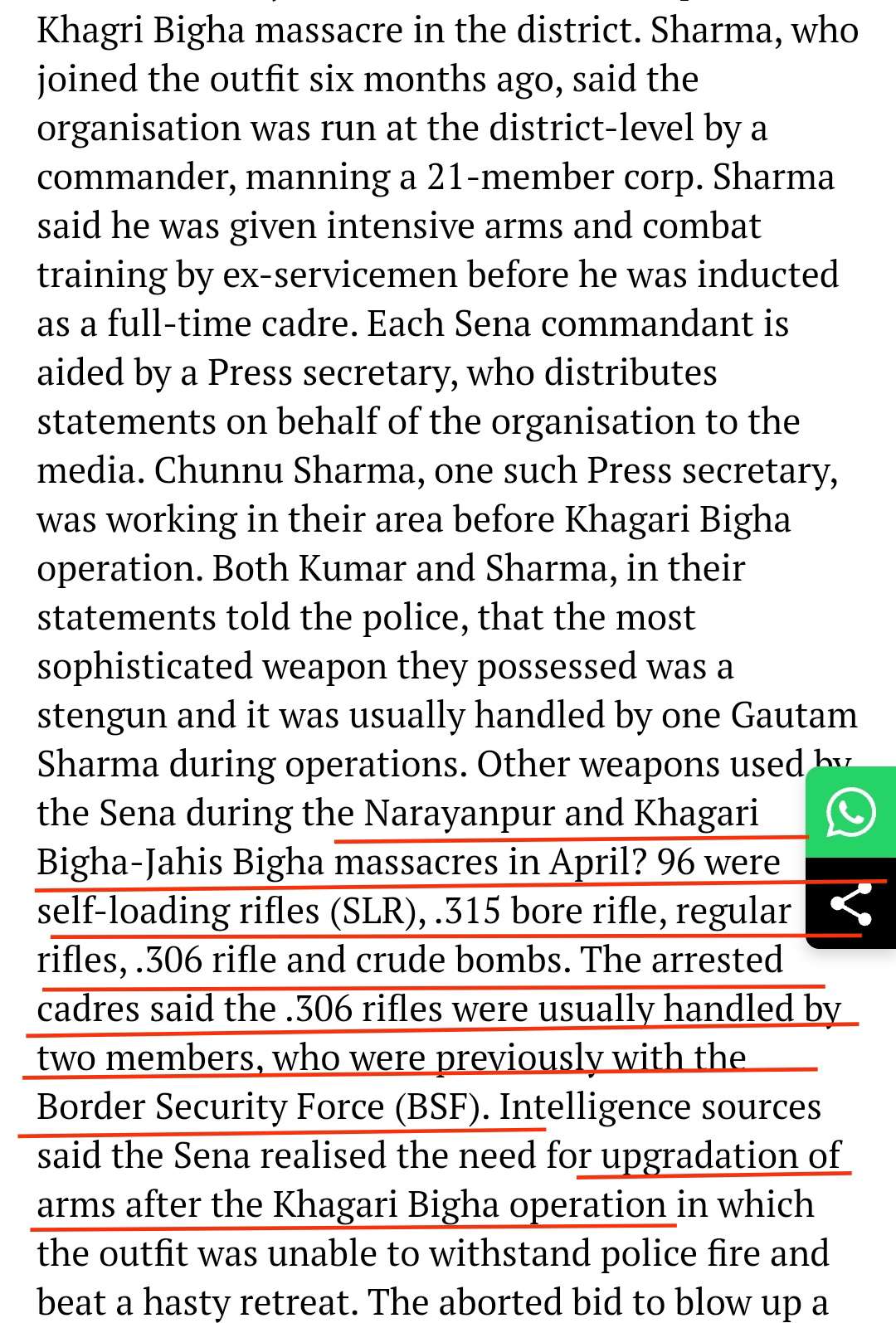
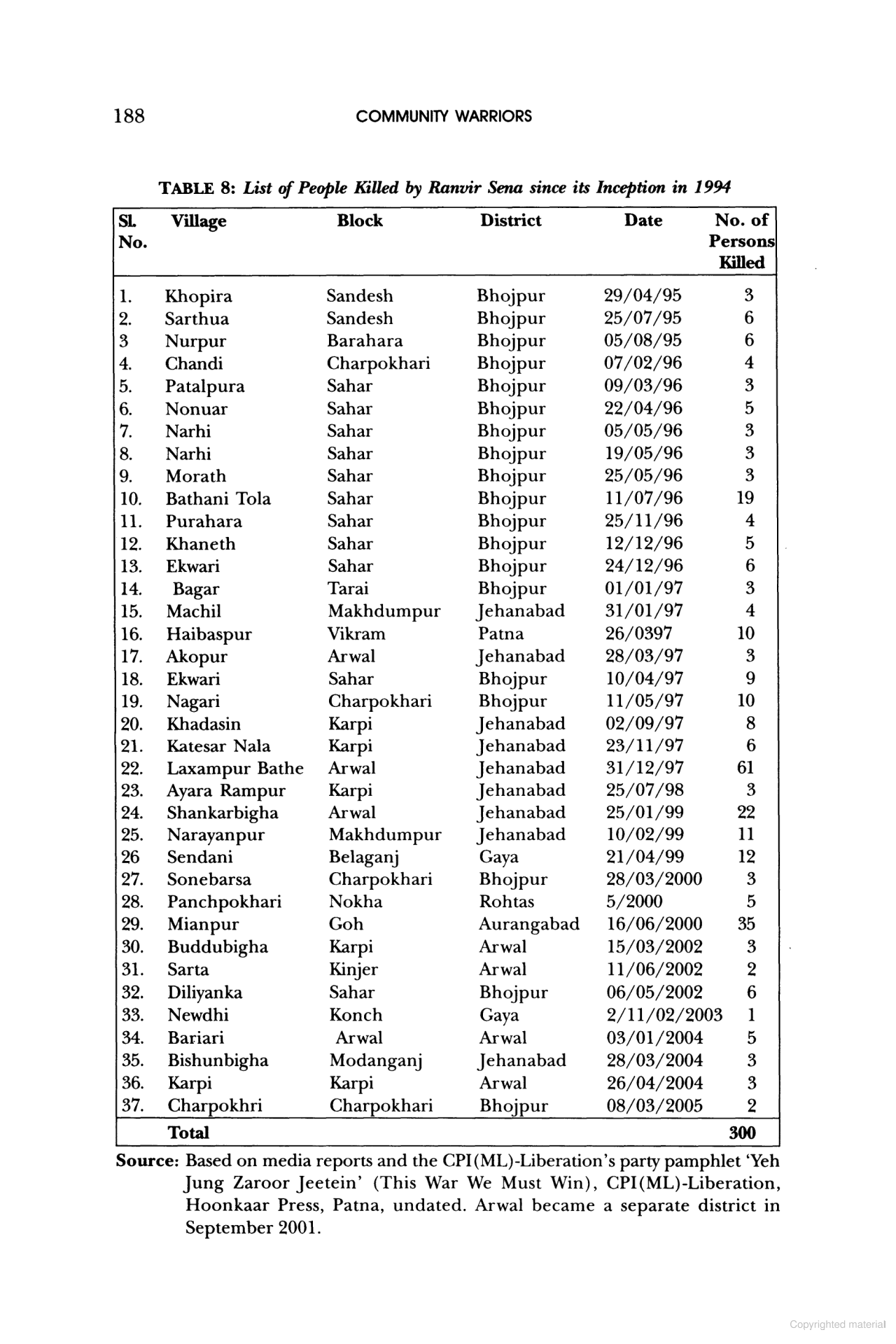
97) Total killings by Ranvir Sena
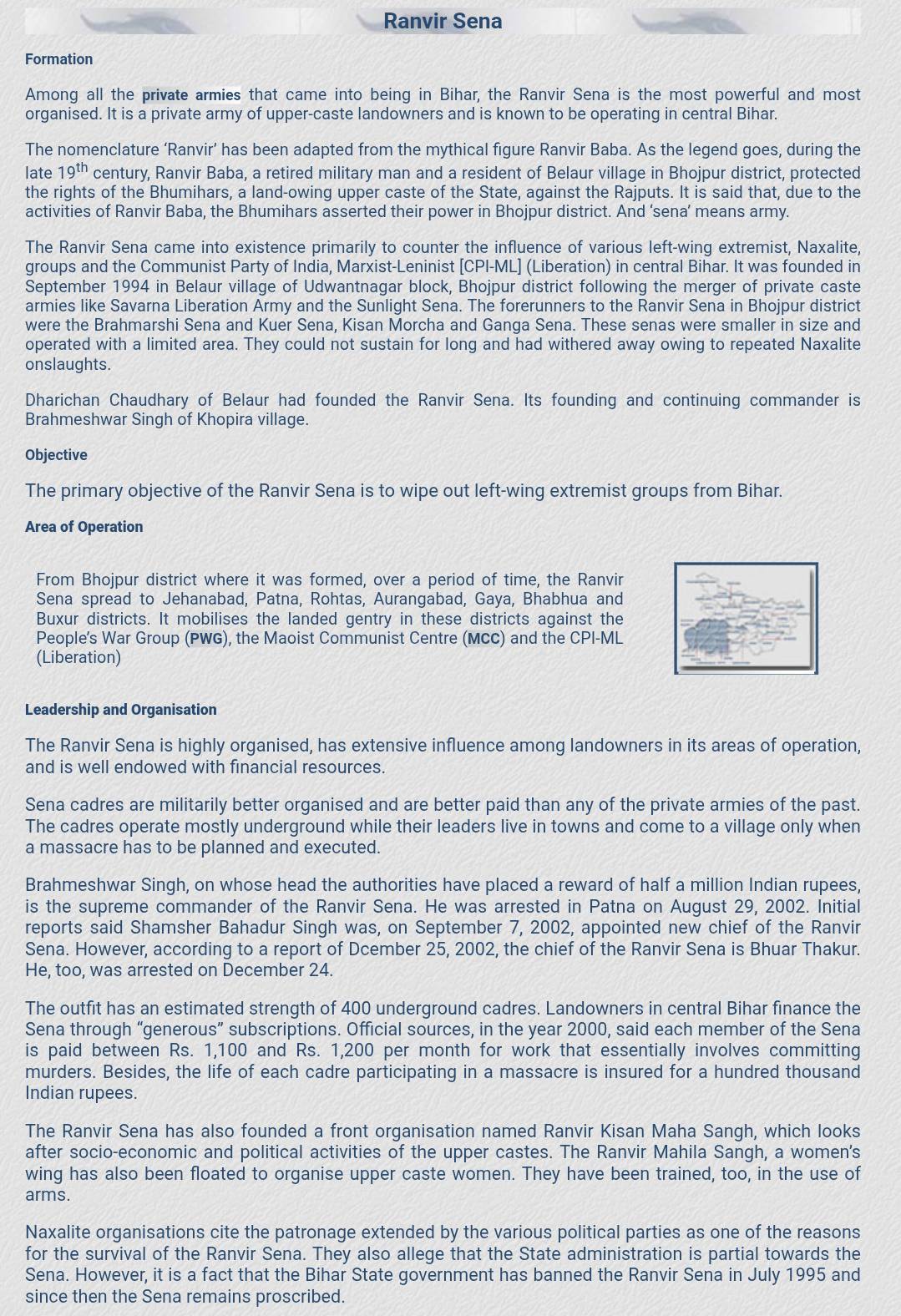
98) Ranvir Sena of Bhumihars was the biggest,
most feared and most organised Caste militia of Bihar far exceeding in brutality
than
its predecessors.
[19]
South Asia Terrorism Portal
Go to References
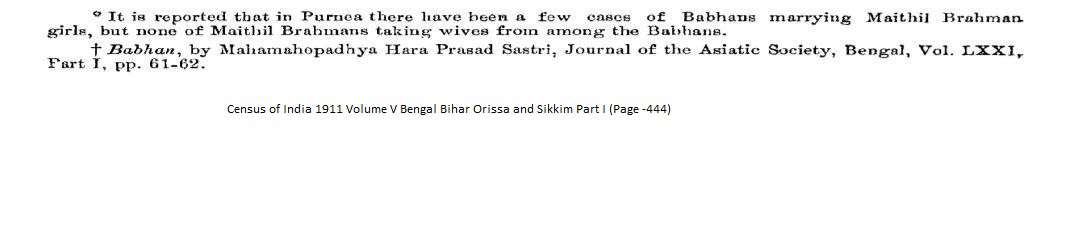
99) Bhumihars took Maithil wives
100)Lorem Ipsum
[20]
Hindi Sadakhaggu Unknown Book
Go to References
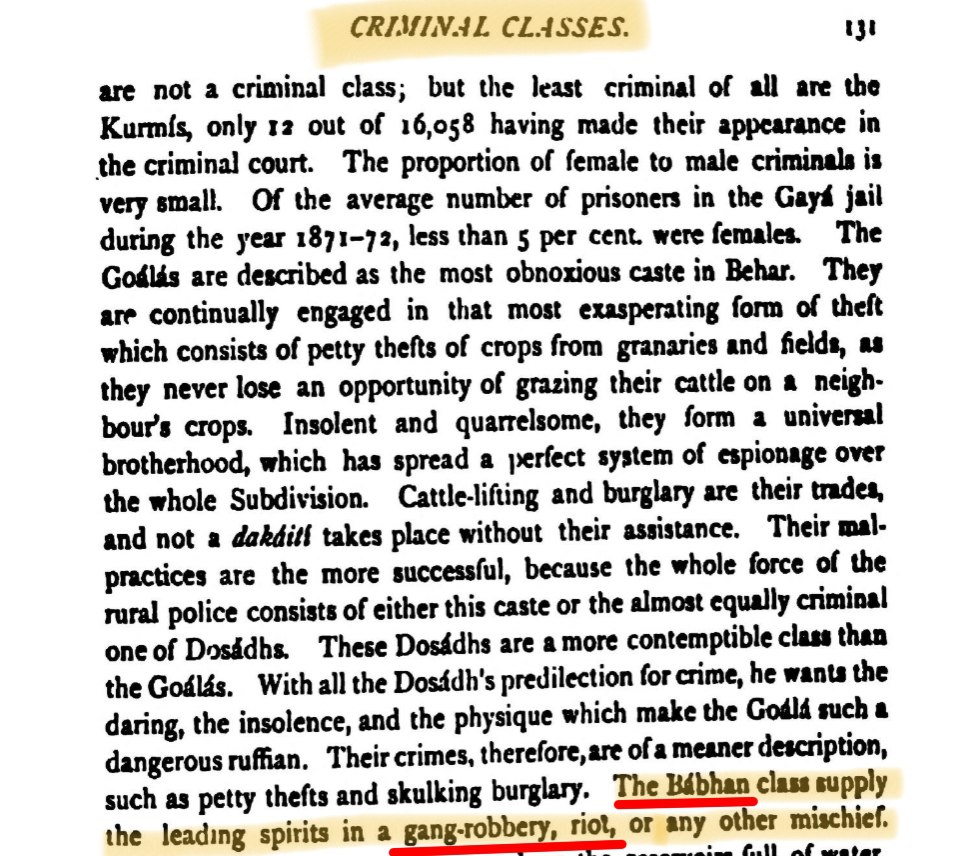
101) Bhumihars made good Gang Robbers.
[21]
A Statistical Account Of Bengal Vol.12
Go to References
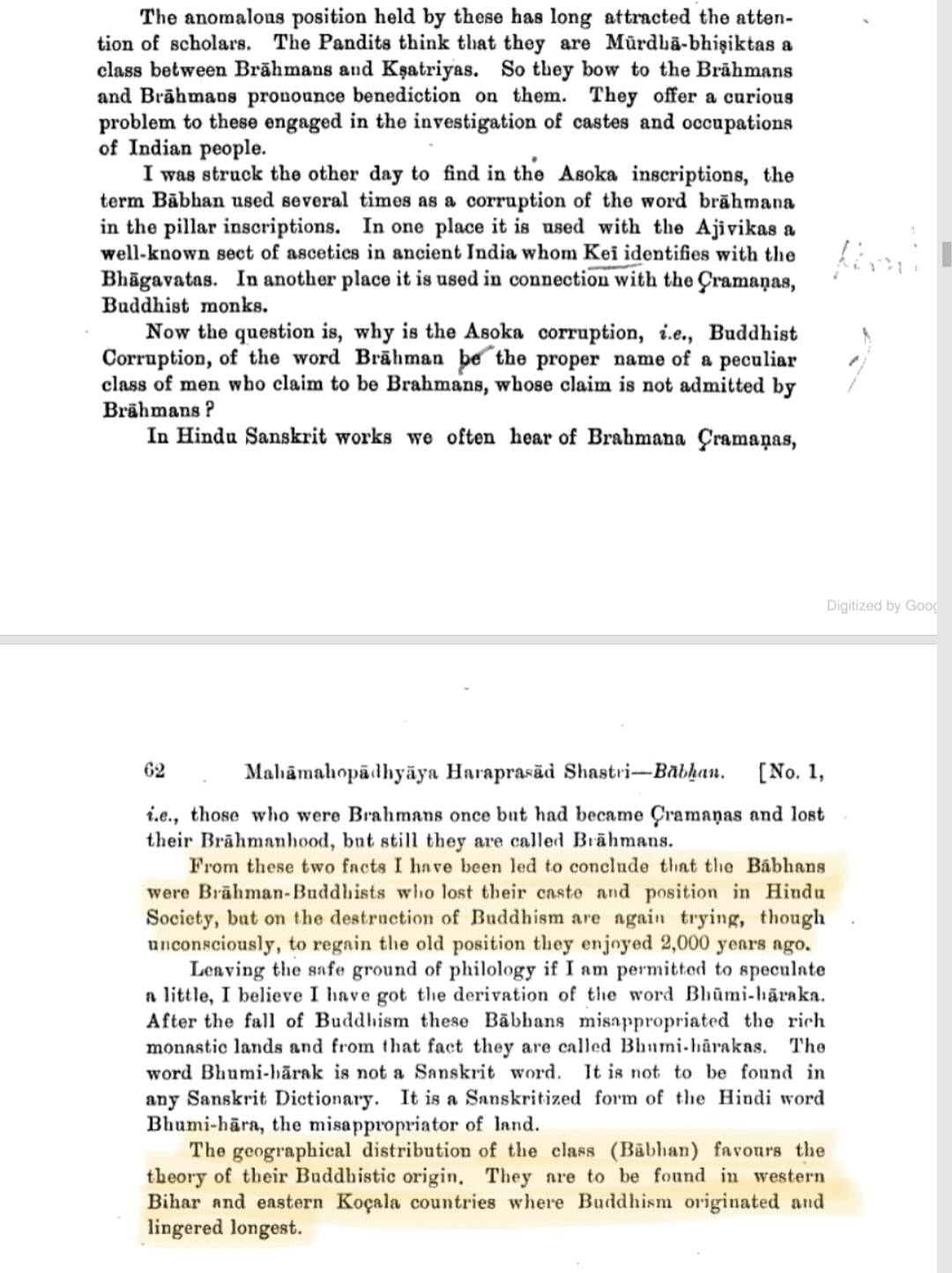
102) Bhumihars are almost certainly former
Buddhists, as corroborated by yet another Historian of great repute. Haraprasad
Shastri.
He introduced a new proof/argument that Bhumihar habitations totally coincide with
Buddhist strongholds.
[22]
Journal of the Asiatic Society of Bengal,
Volume 71, Part 1, Page 61-62
Go to References
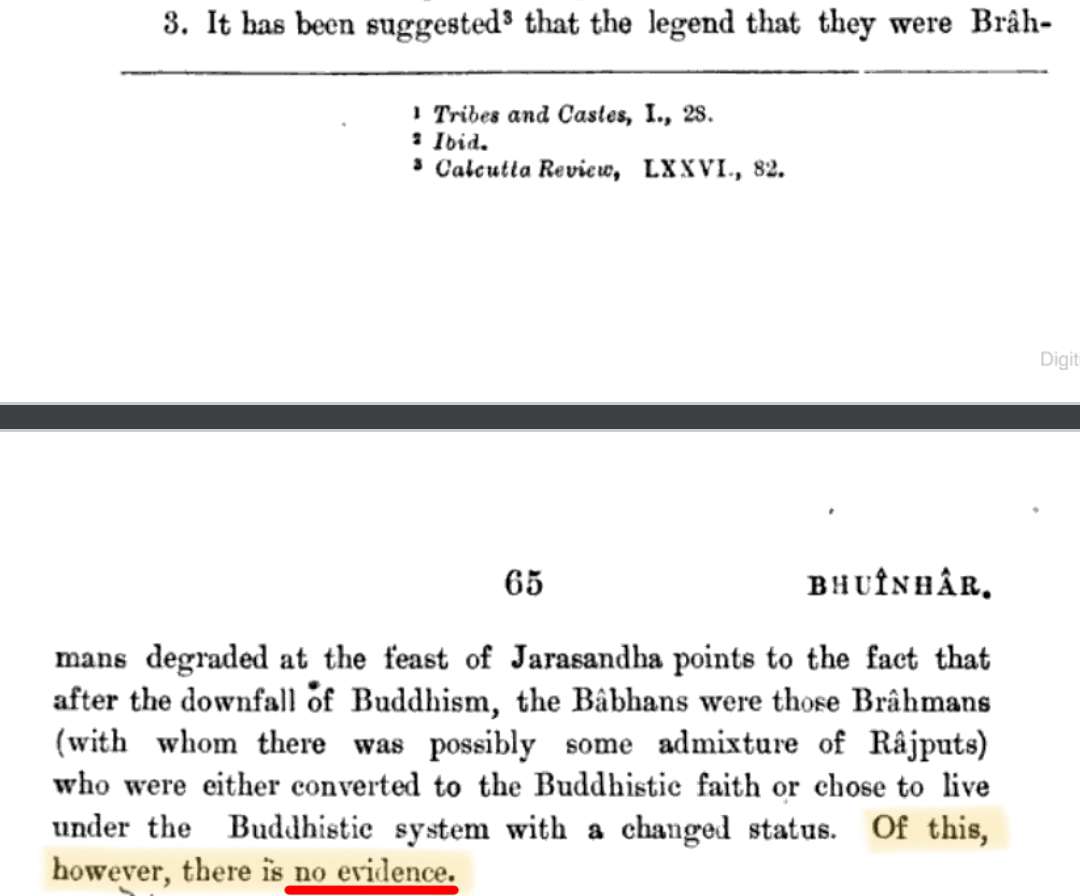
103) British Debunks another slanderous
Jarasandha theory propagated against us by the neighbouring Hindus.
[23]
The Tribes and Castes of North-Western
Provinces and Oudh Volume 2
Go to References
104) It's highlighted again in yet another
British
[24]
, that there's a distinct tribal Dravidian
group called Bhuinhar and Bhuinyar who bear a name that sound same as
ours but they're a completely different community.
Go to References
105)
106)
107)
108)
109)
110)
111)
112)
113) The Tribes and Castes of North-Western
Provinces and Oudh Volume 2 - Ends
114) British yet again reinforce that Babhan
is
synonymous with Bhumihar and invoke an observation that Nasal Index (lower index
means
narrower nose and higher means wider) corresponds substantially to social standing.
Bhumihars have the narrowest noses in eastern India.
[25]
The People of India
Go to References
115)Lorem Ipsum
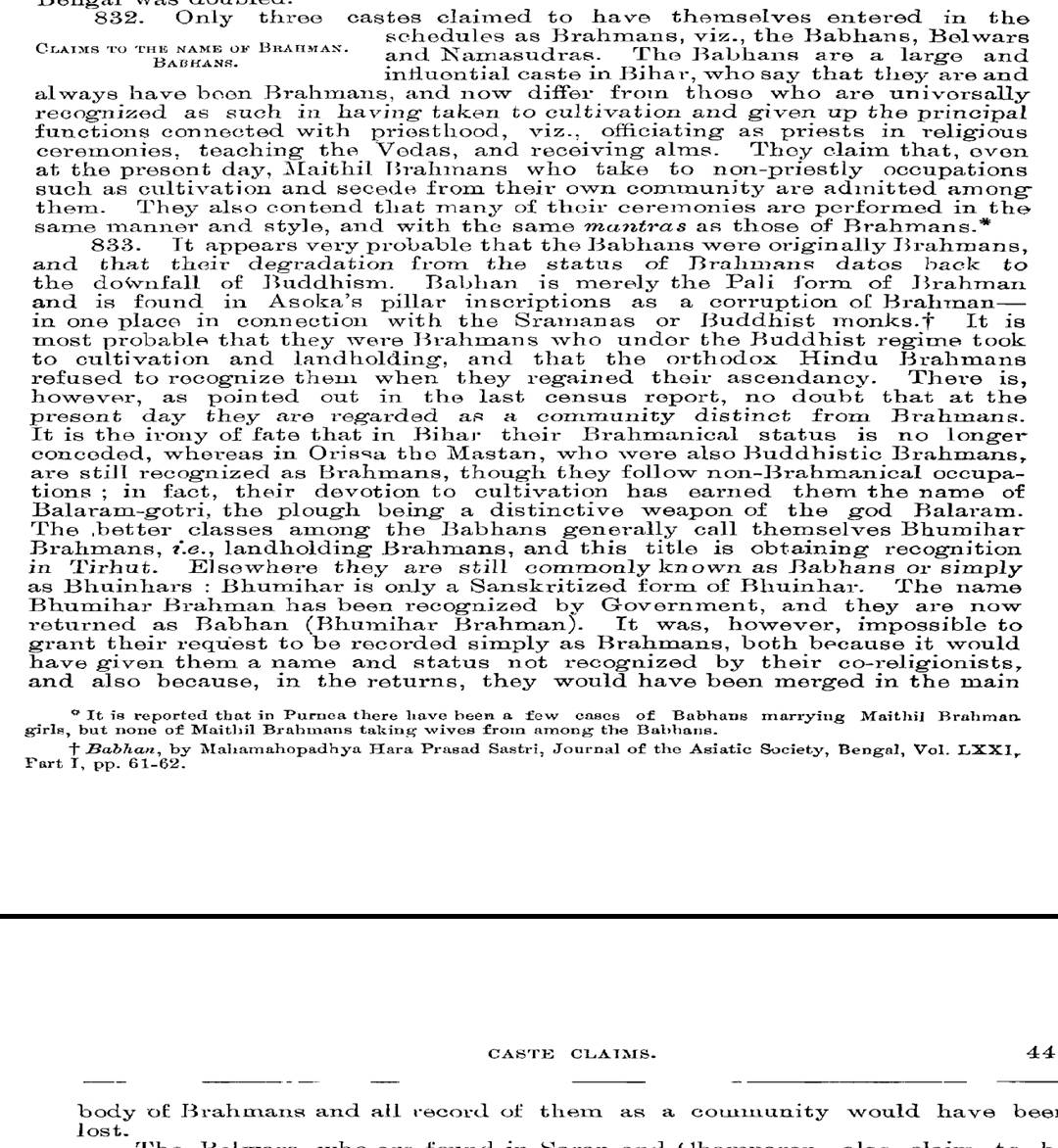
[26]
CENSUS OF INDIA, 1911. VOLUME V BENGAL, BIHAR
AND - ORISSA AND SIKKIM, Part 1, REPORT.
Go to References
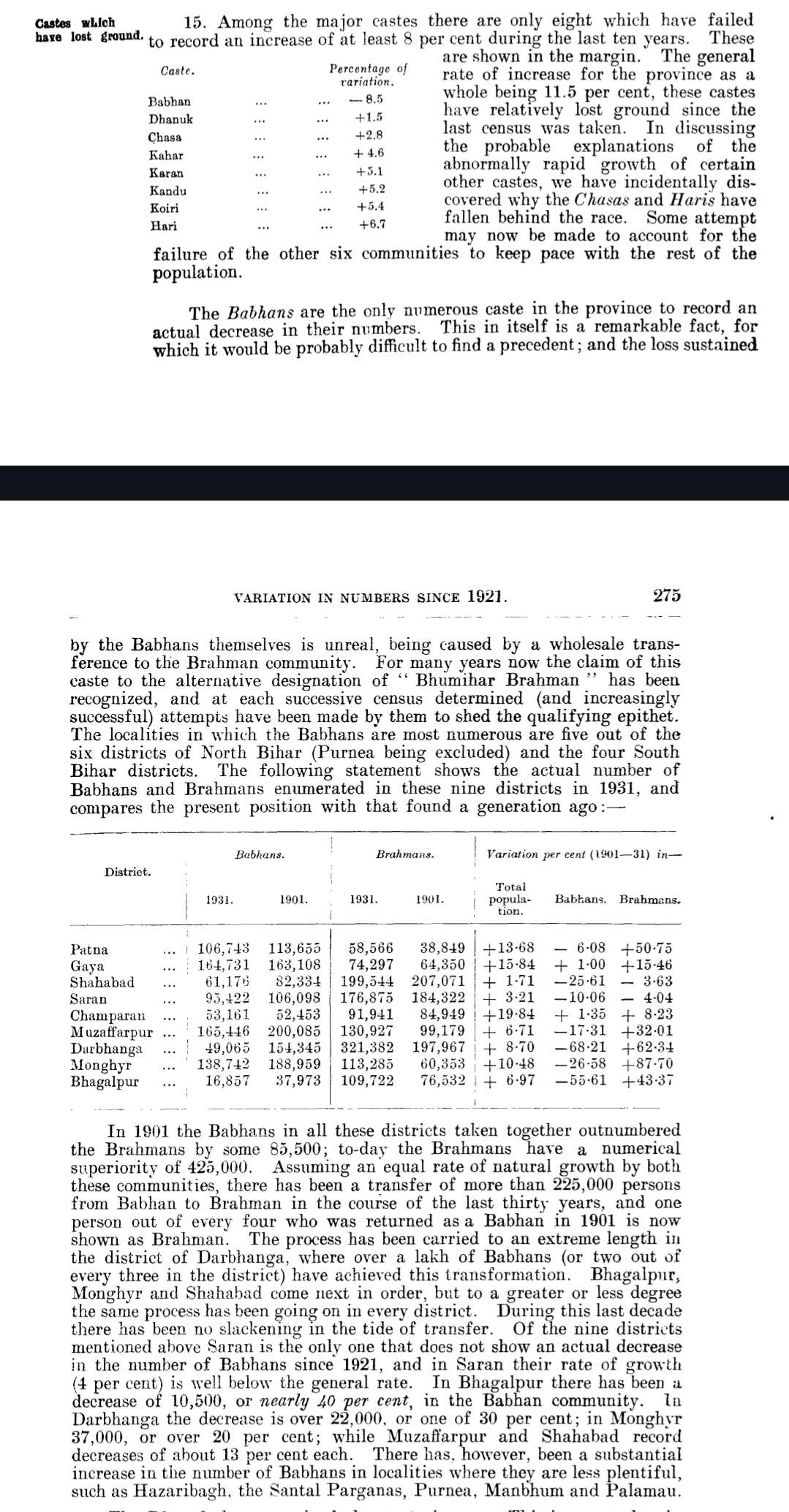
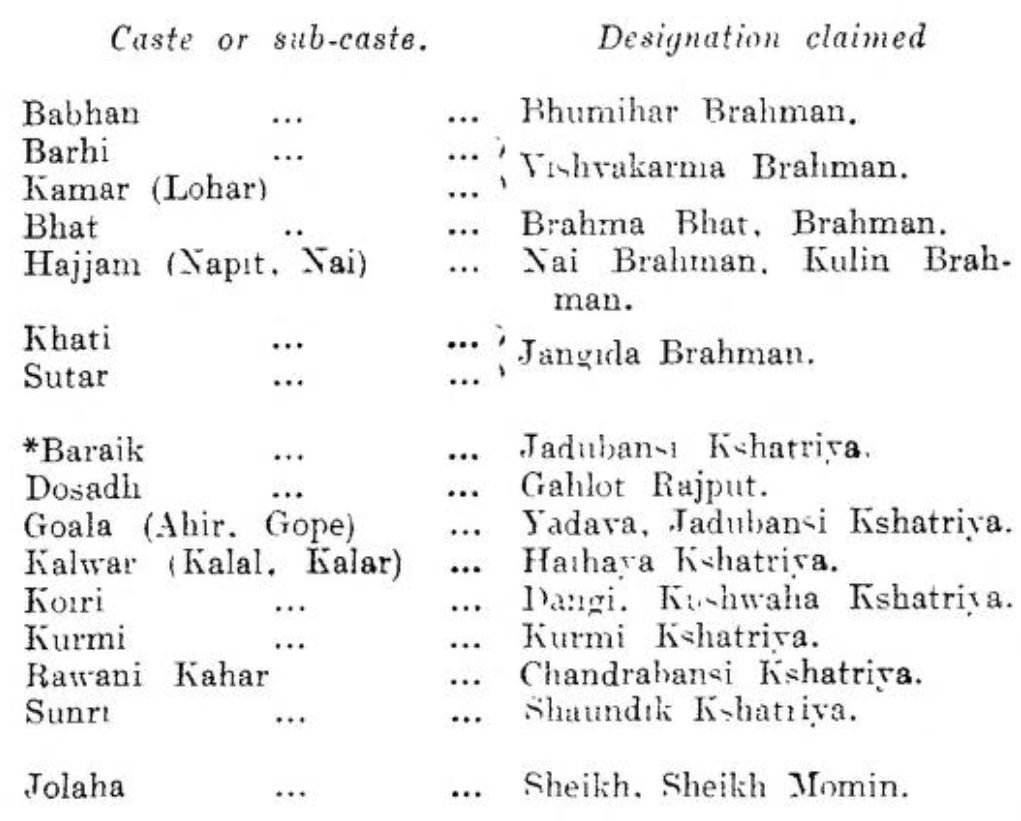
116)Lorem Ipsum
[27]
Census Of India 1931 Vol.7 Bihar And Orissa
Pt.1 Report
Go to References
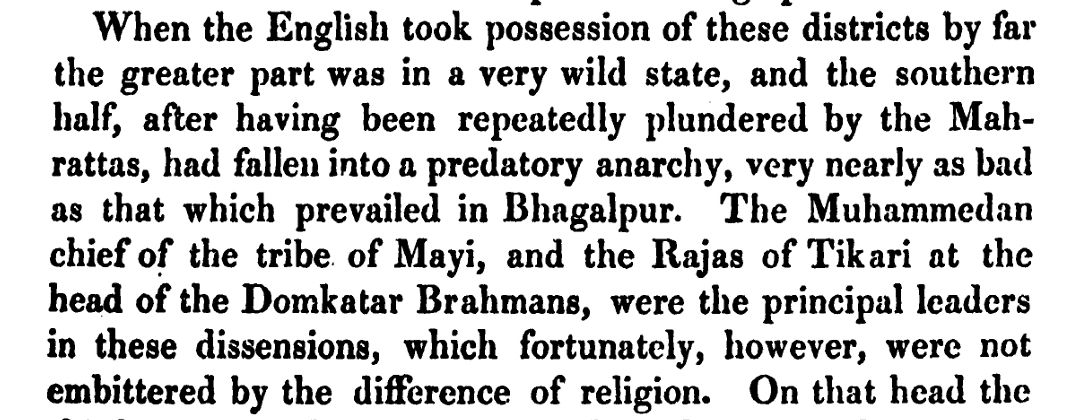
117) Bhumihar Raja of Tikari misclassified as
Domkatar Brahman instead of the correct tribal designation of Domkatar
Bhumihar.
[28]
Historical Documents Of Eastern India
Vol.1
Go to References

118) Raja of Tikari as Domkatar Brahman
[28]
Historical Documents Of Eastern India
Vol.1
Go to References
119) Introduction of the Bhumihars in Magadh
and
Anga Pradesh
[28]
Historical Documents Of Eastern India
Vol.1
Go to References
120) Bhumihar Raja of Tikari, Mitrajit Singh
had
a Muslim wife who bore him a son who was raised practising Islam.
[28]
Historical Documents Of Eastern India
Vol.1
Go to References
121) This is the oldest DETAILED description
of
Bhumihars of Magadh and Anga Pradesh, in the British texts
122)Lorem Ipsum
[29]
An Account Of The District Of Bhagalpur In
1810-11
Go to References
123) Oldest British account of Bhumihar
Mools
[29]
An Account Of The District Of Bhagalpur In
1810-11
Go to References
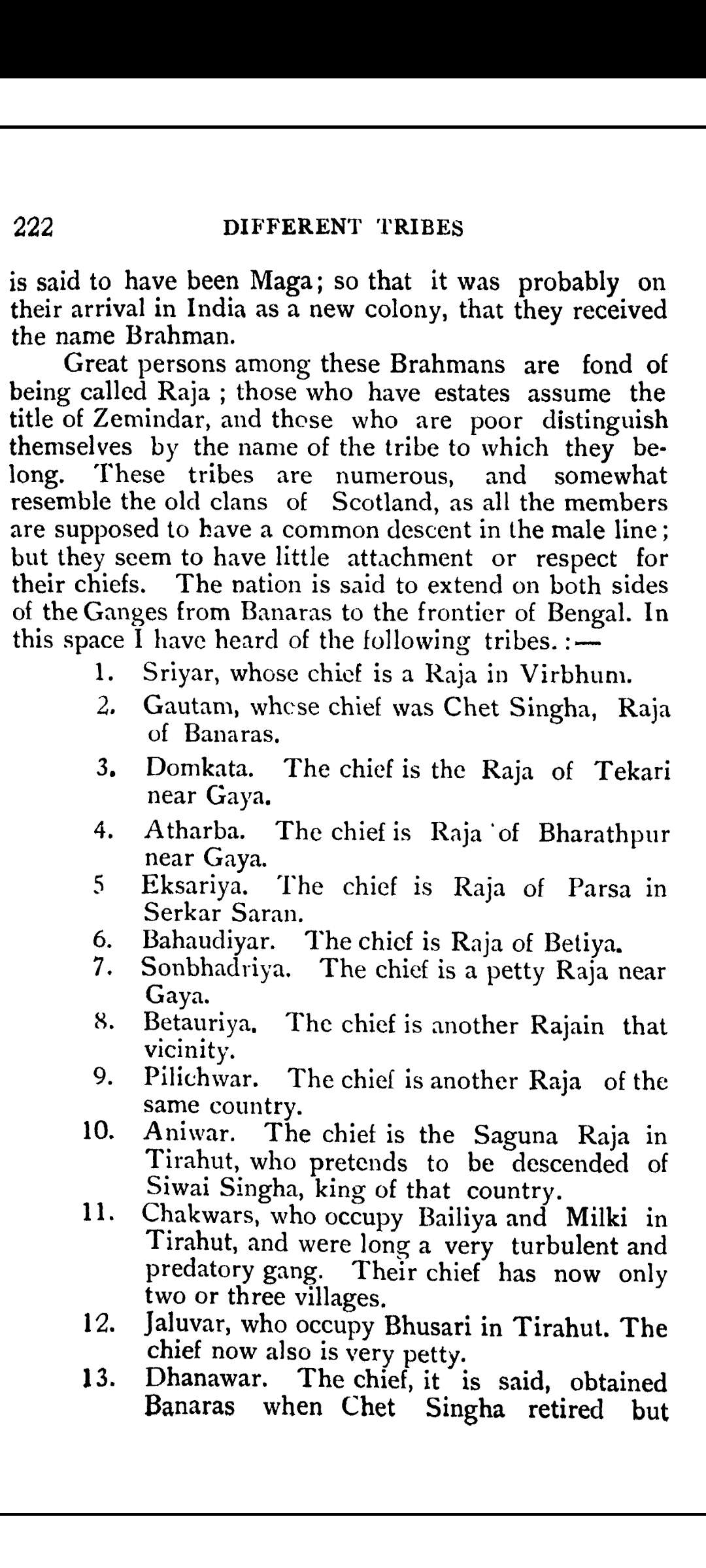
124)Lorem Ipsum
[30]
An Account Of The District Of Bhagalpur In
1810-11
Go to References
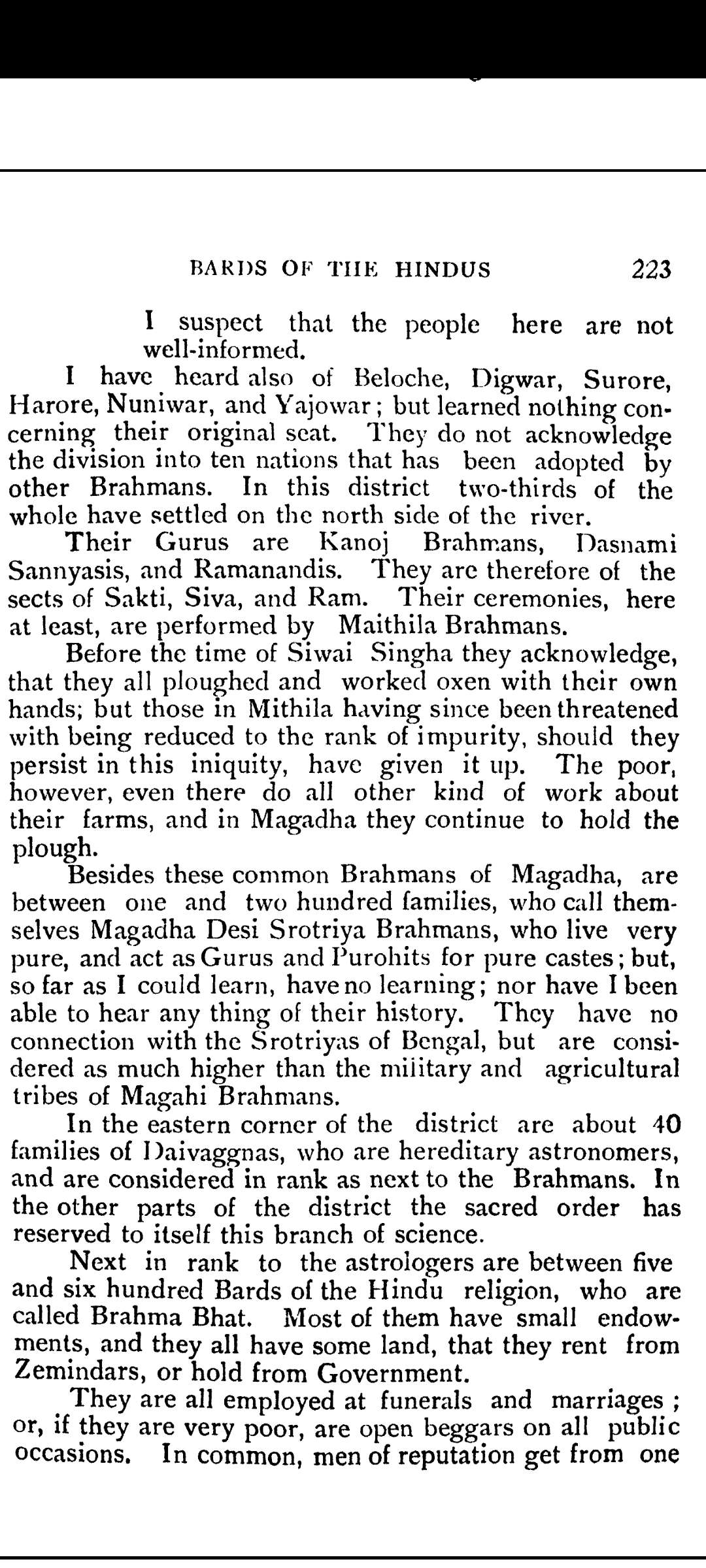
125)Lorem Ipsum
[31]
An Account Of The Districts Of Bihar And Patna
1811-1812
Go to References
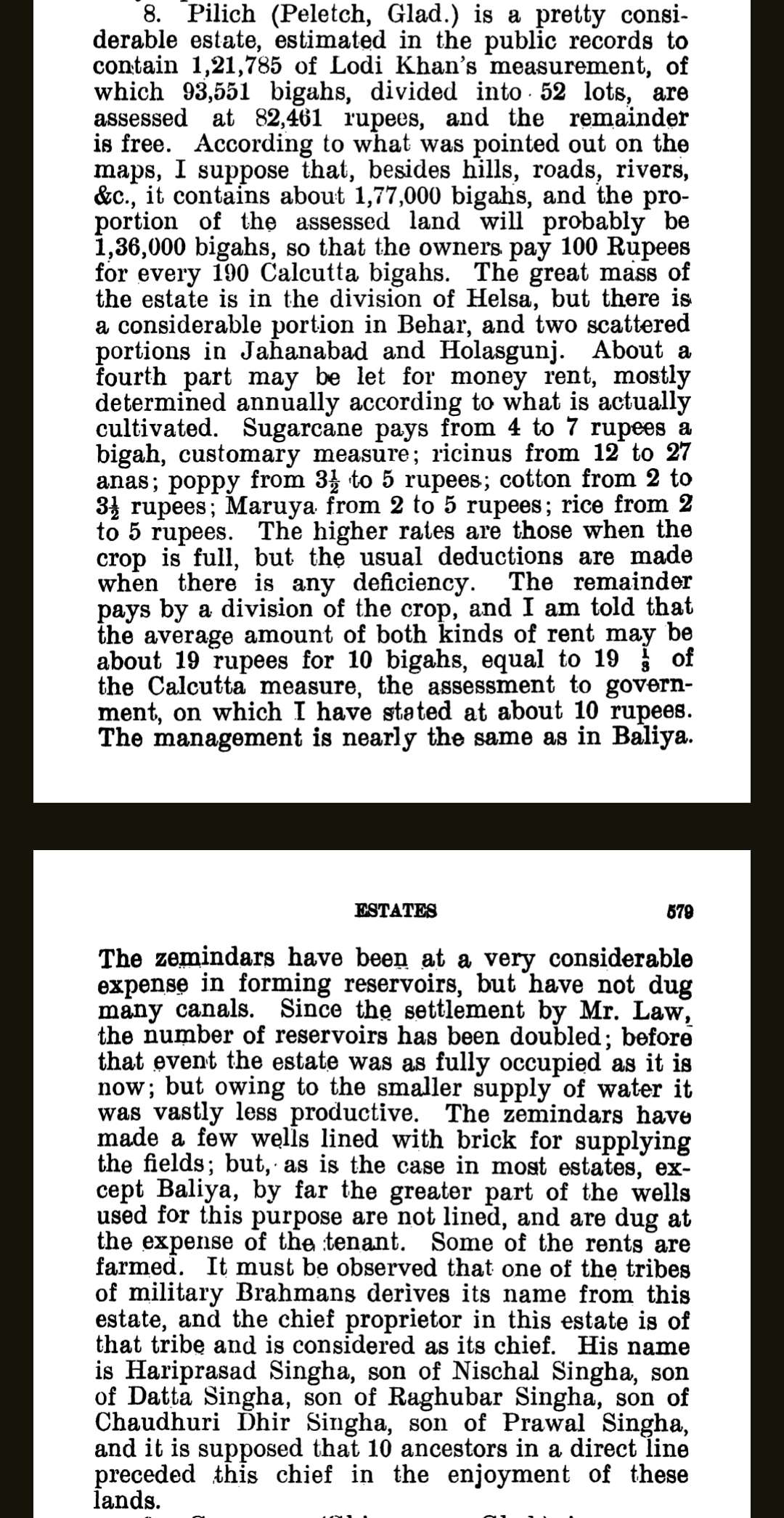
126)Lorem Ipsum
[31]
An Account Of The Districts Of Bihar And Patna
1811-1812
Go to References
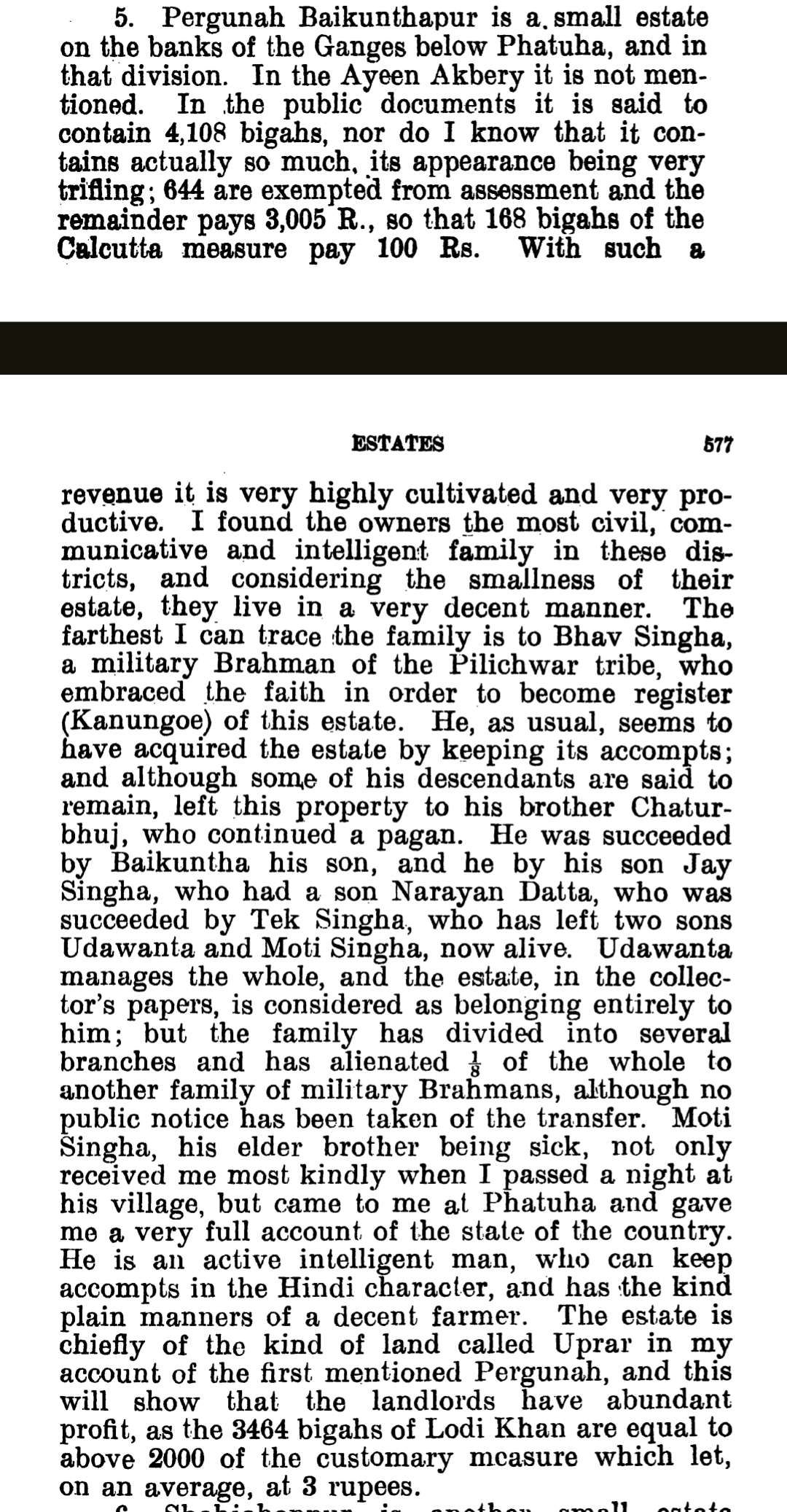
127)Lorem Ipsum
[31]
An Account Of The Districts Of Bihar And Patna
1811-1812
Go to References
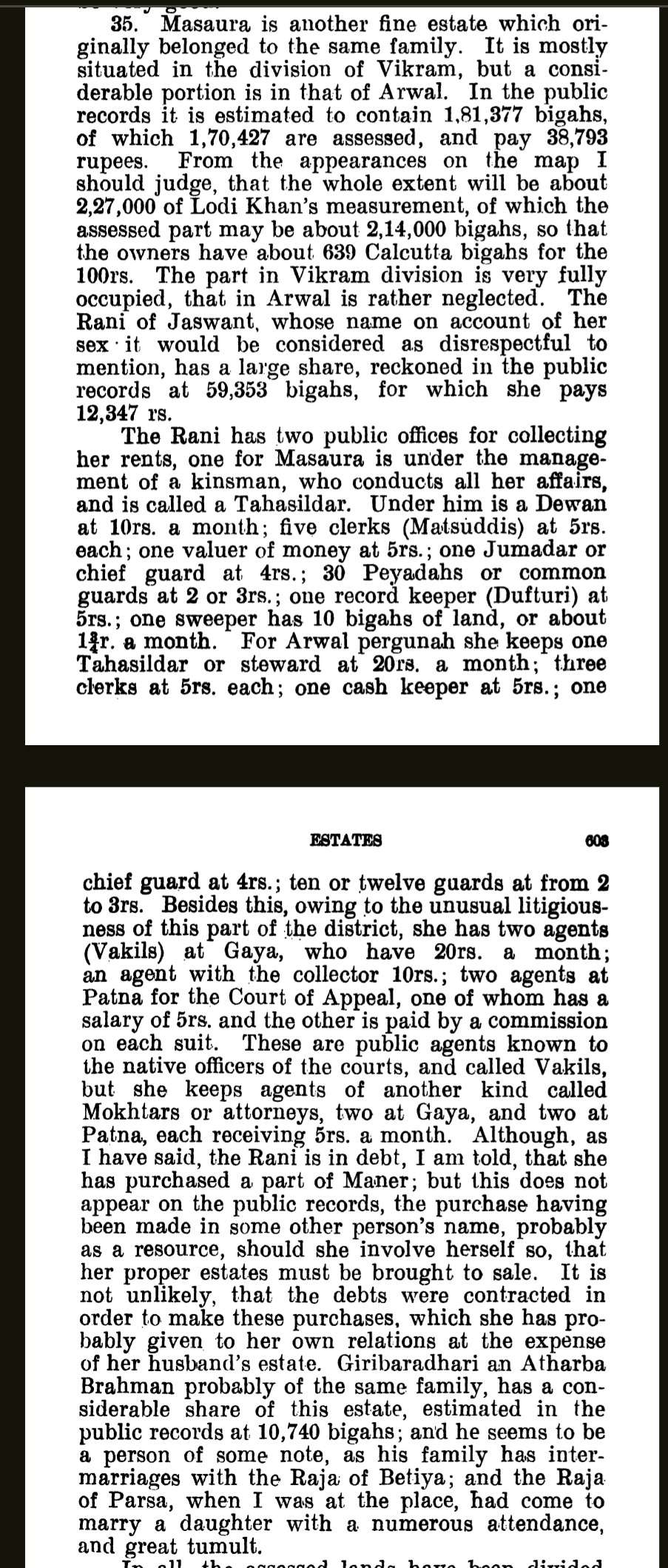
128)Lorem Ipsum
[31]
An Account Of The Districts Of Bihar And Patna
1811-1812
Go to References
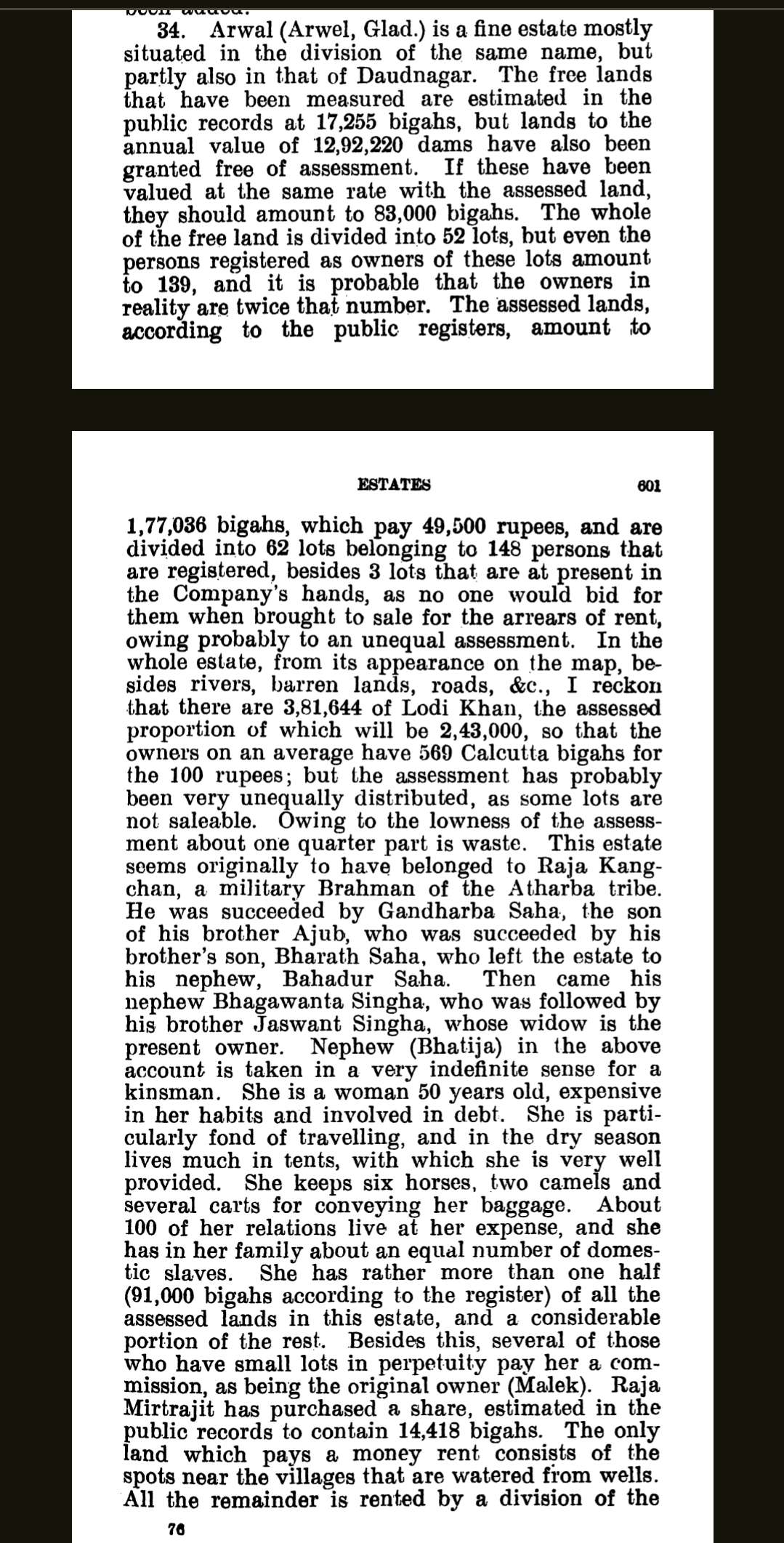
129)Lorem Ipsum
[31]
An Account Of The Districts Of Bihar And Patna
1811-1812
Go to References
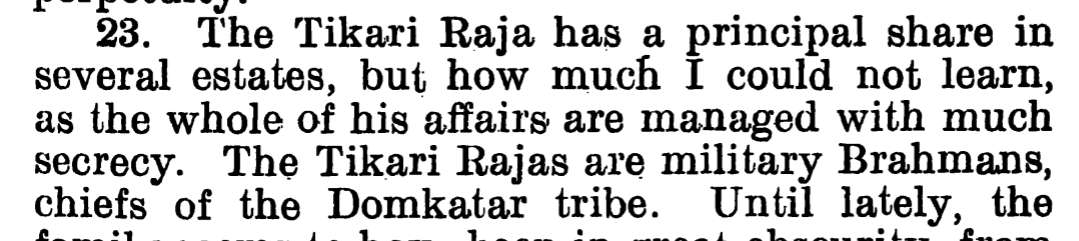
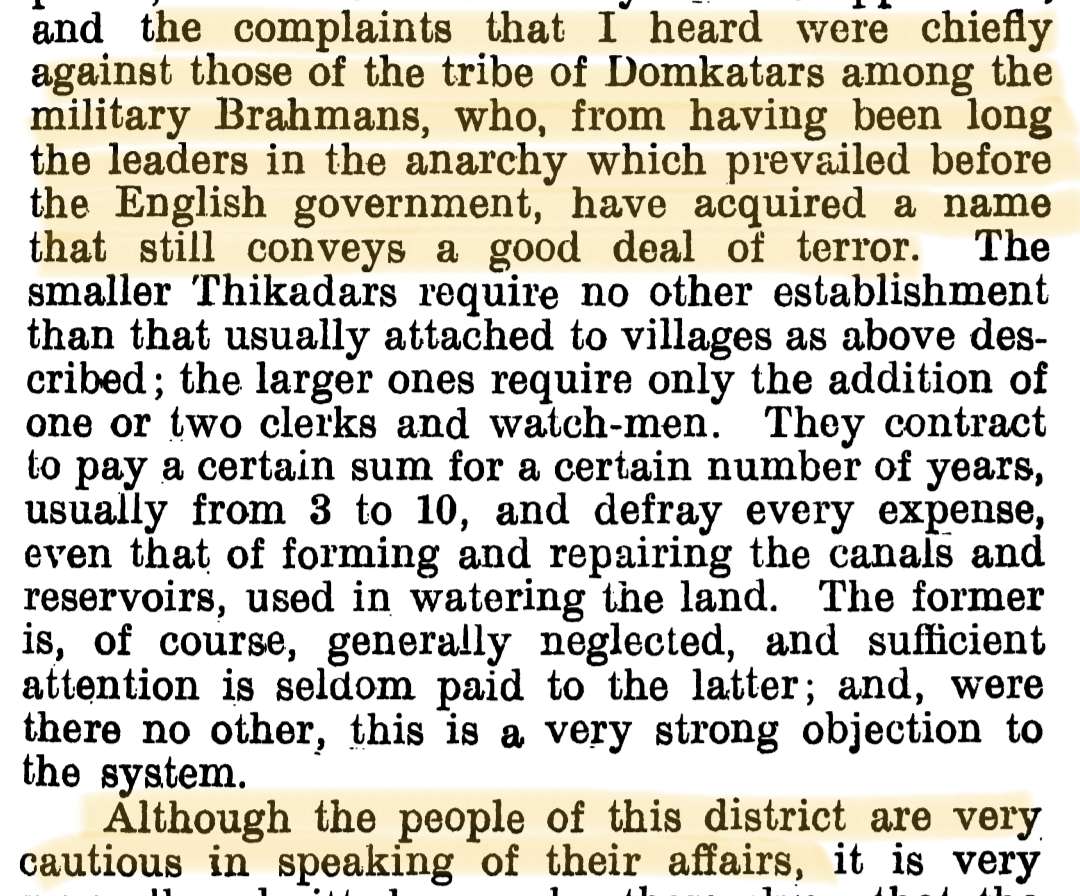
130) The British have reported that the
terror of
Domkatar Bhumihars of Magadh was so severe that they were considered the leaders of
anarchy and general public was so fearful that they were cautious of even talking
about
them
[32]
An Account Of The Districts Of Bihar And Patna
1811-1812
Go to References
131)Lorem Ipsum
[33]
Journal of Francis Buchanan (afterwards
Hamilton) kept during the survey of the districts of Patna and Gaya in
1811-1812
Go to References
132) Bhumihars constructed a temple dedicated
to
Sun worshipping in Village Akbarpur, 9 miles near Hilsa.
[33]
Journal of Francis Buchanan (afterwards
Hamilton) kept during the survey of the districts of Patna and Gaya in
1811-1812
Go to References
133)Lorem Ipsum
[10]
Census Of India 1901 Vol.1 (india )
(ethnographic Appendices)
Go to References
134) Debunk by the British
135) Debunk by the British
136)
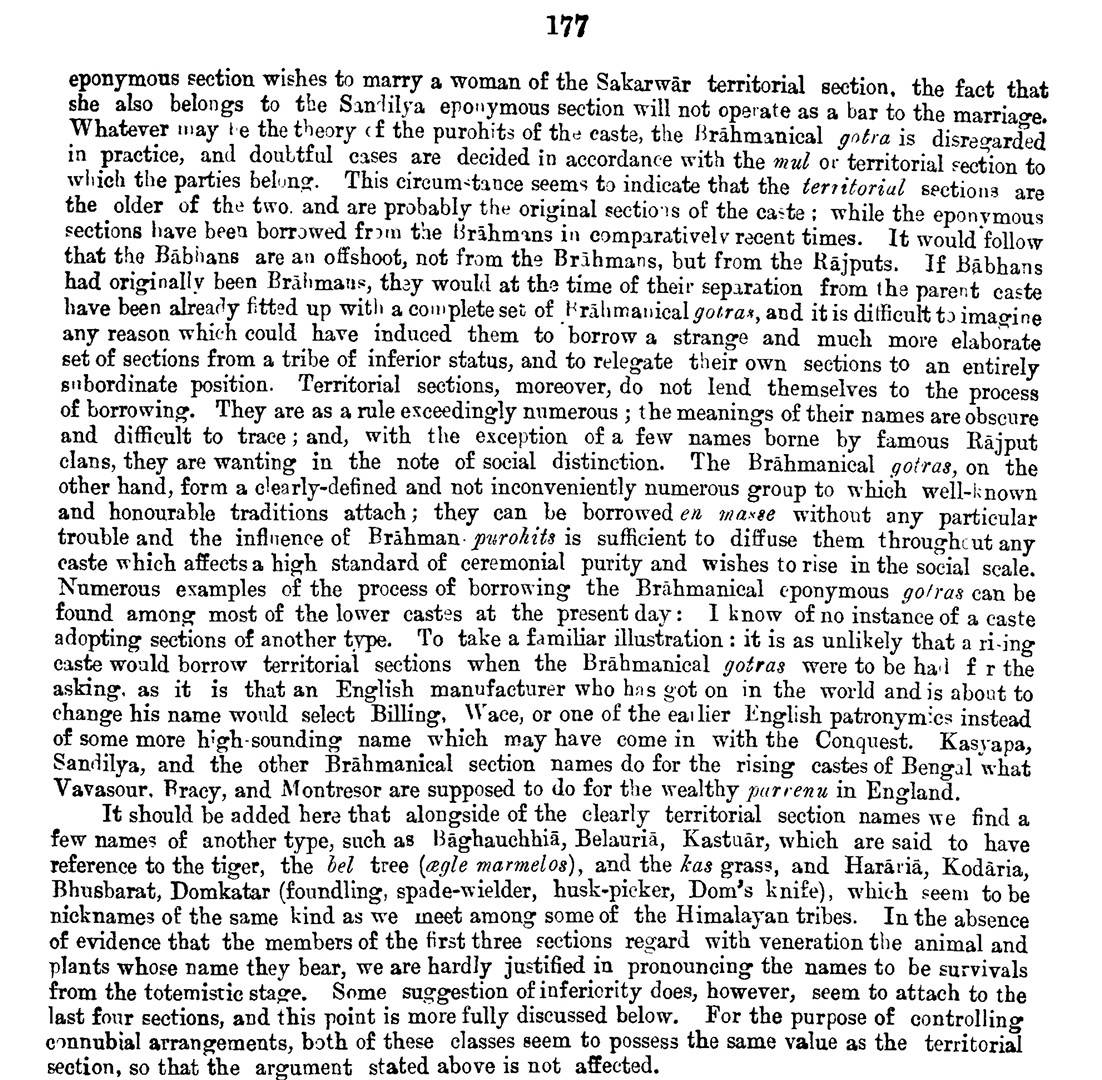
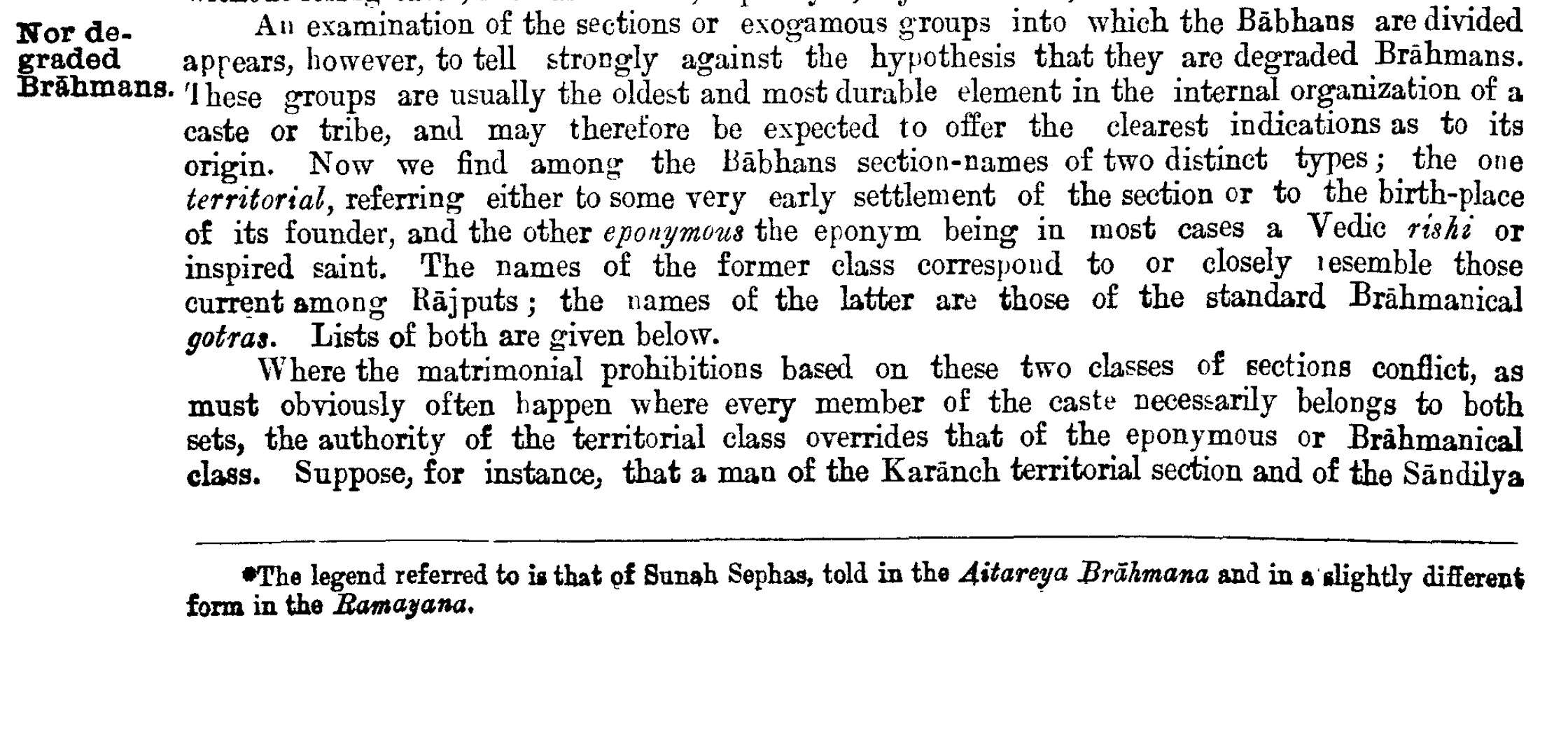
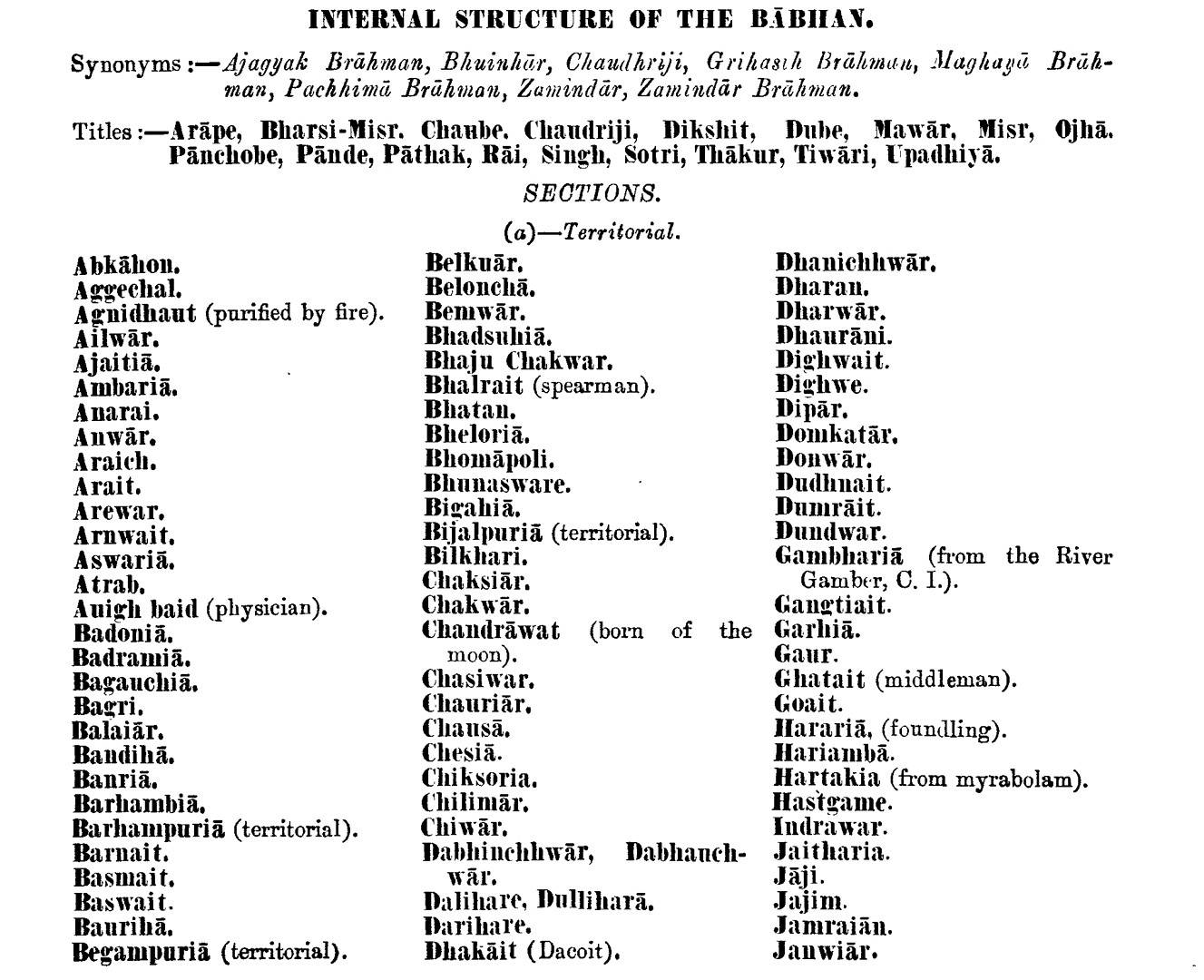
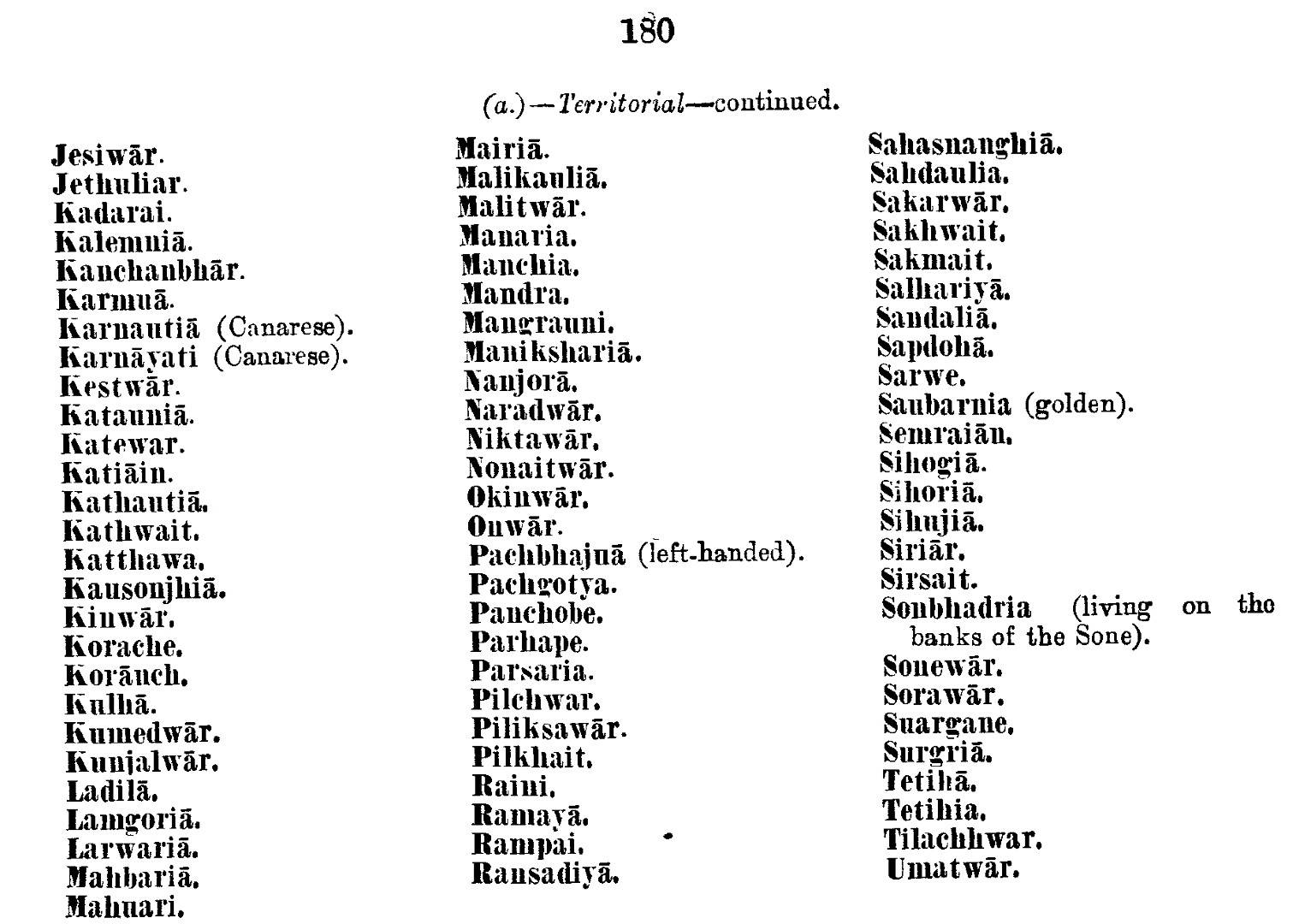
137) Internal Mool system of Bhumihars,
Territorial, Functional/Personal and Brahminical sections
138) Social Position ascribed to Bhumihars by
the
Brits in the 1911 Census.
[34]
Census of India, 1911 - Volume 6, Part 1
Go to References
139) A mud fort built by the Donwar
Bhumihars,
who came to rule the region after deposing Domkatar Bhumihars (Both are referred as
Brahman by Francis Buchanan, a recurring mistake seen throughout his works), was
reported by a Shakdwipi Brahman to be a religious building instead whose origin goes
back to Tretayuga.
[33]
Journal of Francis Buchanan (afterwards
Hamilton) kept during the survey of the districts of Patna and Gaya in
1811-1812
Go to References
140) In the division of Shahabad, a Pandit
prepared a list to be given to the survey carried out by Francis Buchanan, in the
given
list, the Brahman population was divided into two groups, one which is said to be
belonging to the "Sacred Order" and the other half belonging to the "Military
Tribe".
Francis Buchanan then contrasts the behaviour of the "Military Tribe" of Brahmans
with
Brahmans of the "Sacred Order" who, many a times, also take to arms, implying that
"Sacred Order" Brahmans are different from the Military Brahmans and merely being
inclined to arms didn't make you a "Military Tribe" Brahman.
In the same book, the aforementioned "Military Brahman" is called 'Bhumihar' in the
page
185.
It should be emphasized and noted that Francis Buchanan counted Bhumihars with the
Brahmans and considered them to be their "Military Tribe", only owing to the fact
that
Bhumihars were referred to as "Military Brahman" in the list prepared by the Pandit
and
not by Buchanan himself or a result of his independent observation.
Francis Buchanan also remarks that the rank of a caste he assigns to them, is
totally
based on what that neighbours not belonging to that caste consider them to be.
[35]
An Account Of The District Of Shahabad in
1812-13
Go to References
141) A Bhumihar pleaded the British to not
hang
him on the account of him being a Brahman, to which the European judges were
unyielding
but the Brahmans interfered and affirmed the Bhumihar's doubtful claim and reported
to
the British than 'Bamhan' is a mere corruption of the worh 'Brahman' and he's indeed
a
Brahman on equal terms, thus saving him from execution and his sentence changed to
banishment
Also, it should be noted that Bhumihars of Purvanchal too, referred to themselves as
'Bamhan'/'Babhan' but later their title became the primary name of the tribe
[35]
An Account Of The District Of Shahabad in
1812-13
Go to References
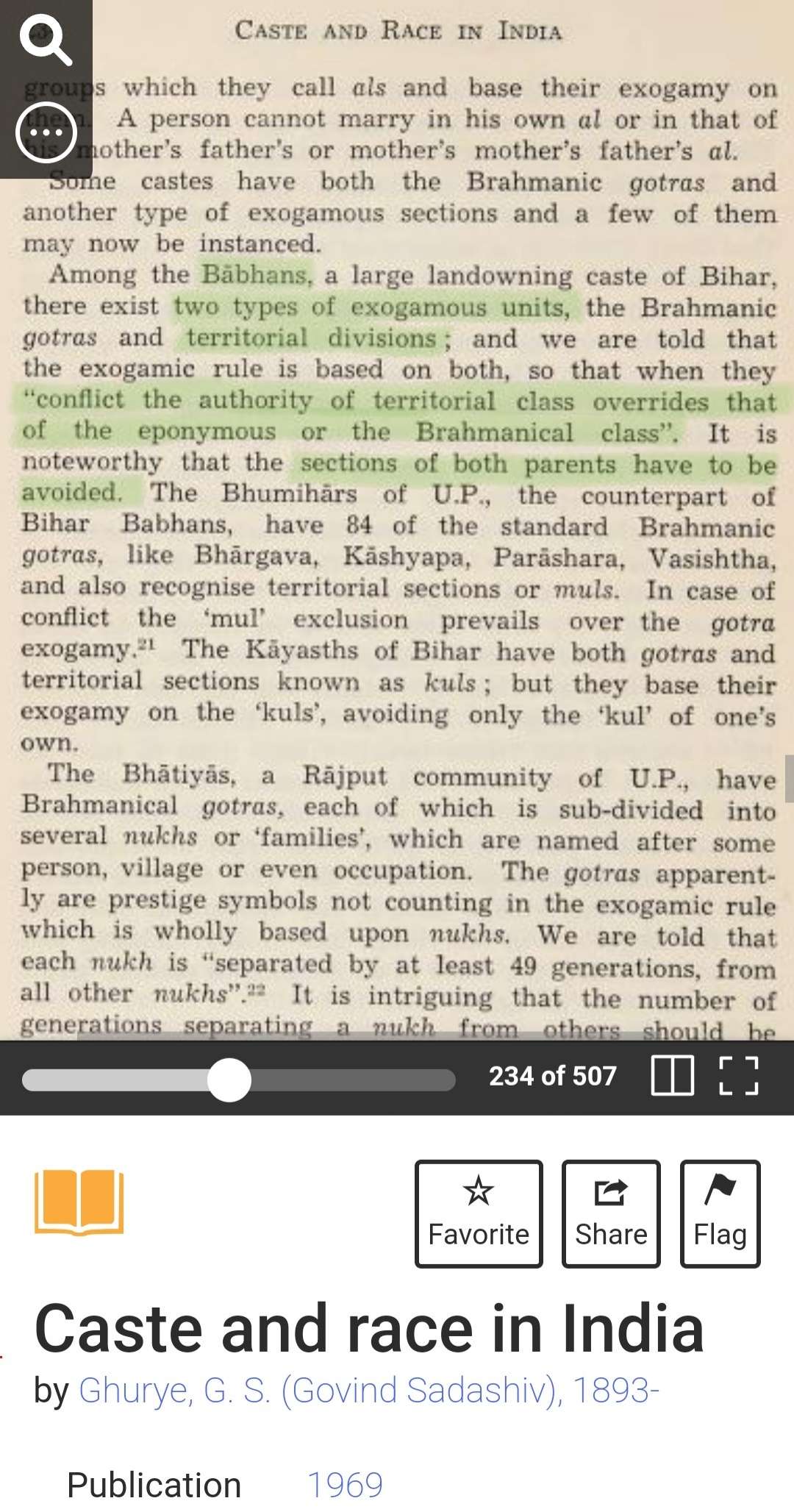
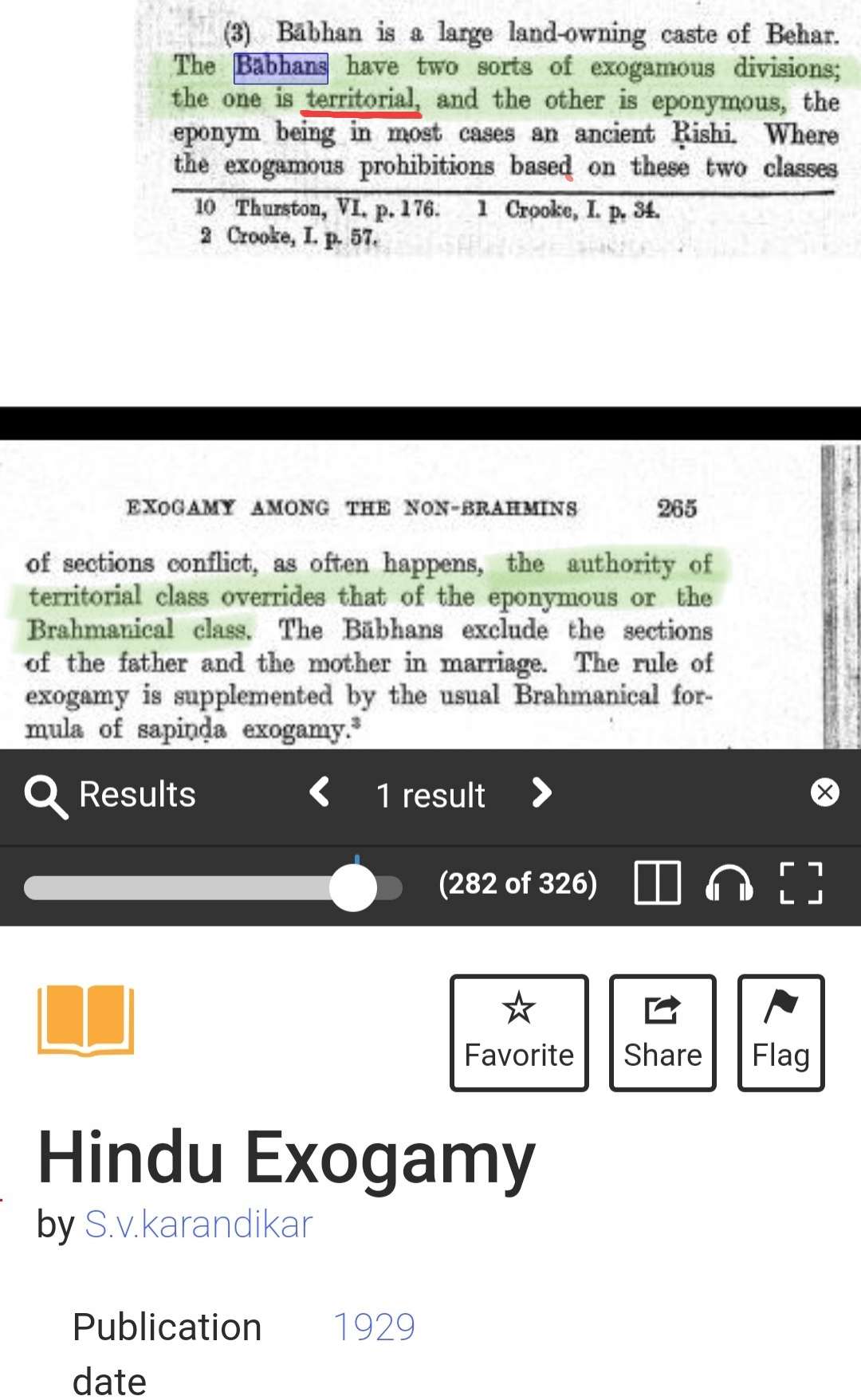
142) Territorial Sections, i.e., Mools, took
precedence over Gotra in terms of marriage.
Same Gotra marriages were allowed in Bhumihars as long as the territorial sections
differed.
[10]
Census Of India 1901 Vol.1 (india )
(ethnographic Appendices)
Go to References
143) The habitation of Bhumihars in the
villages
of Ghosrawan and Titrawan where lies the remains of ancient Buddhist monasteries,
attests the remark of Historian Haraprasad Shastri (read point number 102) that
Bhumihar
Settlements mostly coincides with what's known to be Buddhist strongholds and where
Buddhism originated
[36]
Journal of the Asiatic Society of Bengal -
Volume 41, Part 1 - Page 266
Go to References
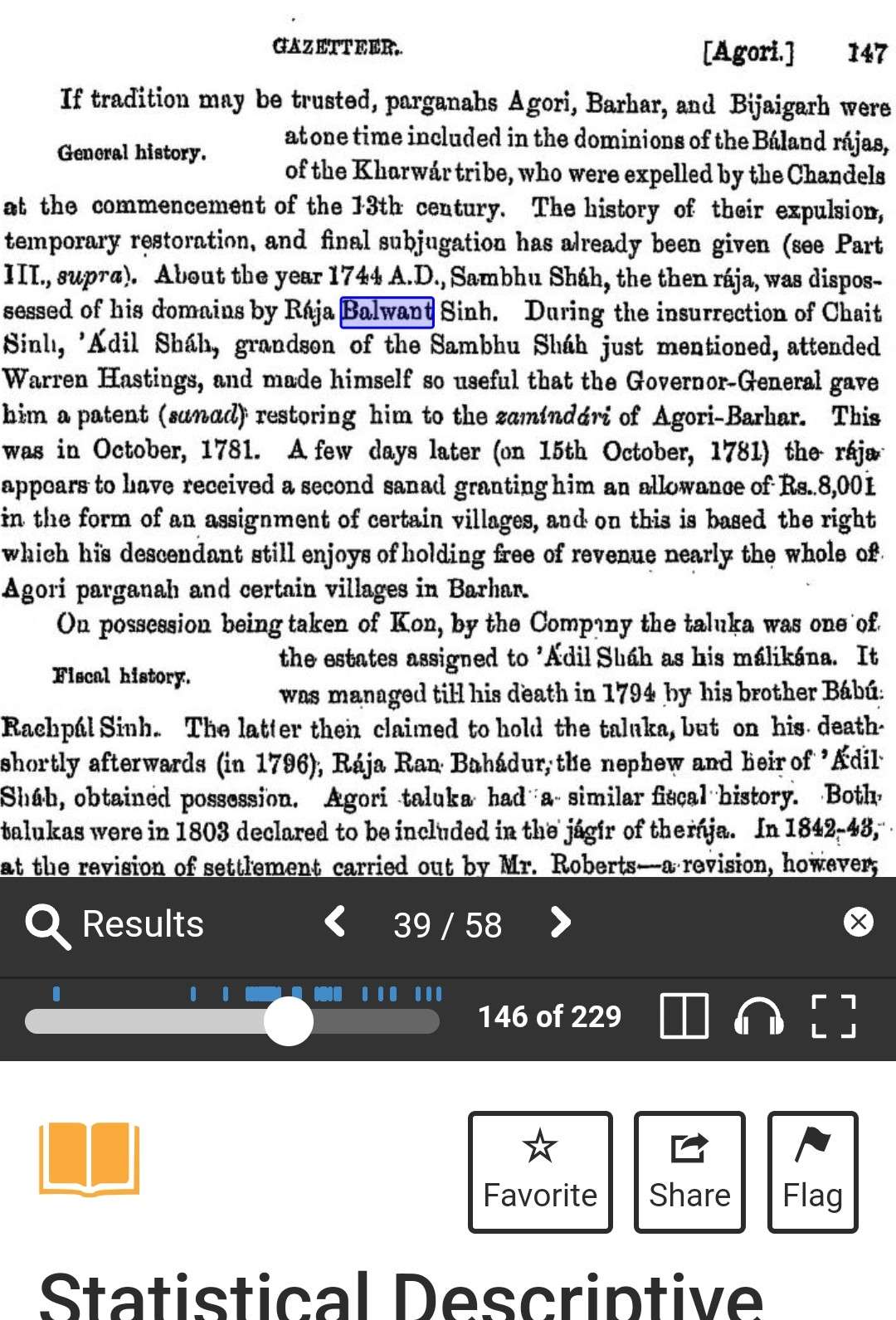
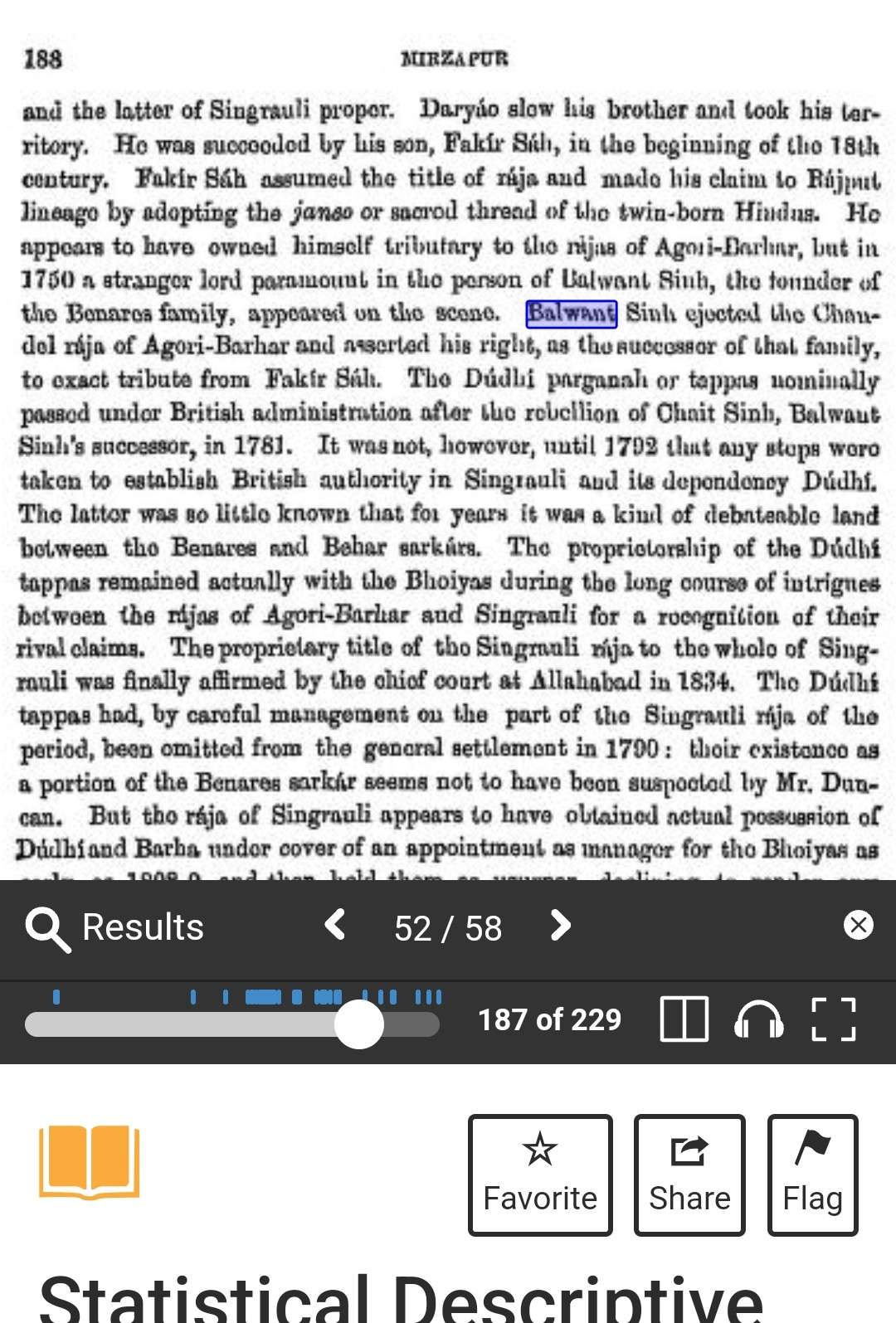
144) Bhumihar Raja Bullwant Singh forcefully
took
the daughter (Panna Kunwar) of a Rajput Zamindar as a concubine and she bore him a son, Cheyt
Singh
(Who also went on to capture a Rajput girl, took her as a slave and later sold her
to a
Scottish officer employed by the British, read point number 89). Balwant Singh and
his
Rajput concubine's union led to a lot of unrest in his family who scoffed at his
affair
with a woman of a caste they considered inferior.
This fact was testified by Khair Ud Din Khan and Col Harper
145) Bhumihars were clubbed with Jats and
Tyagis,
both agriculture centric communities.
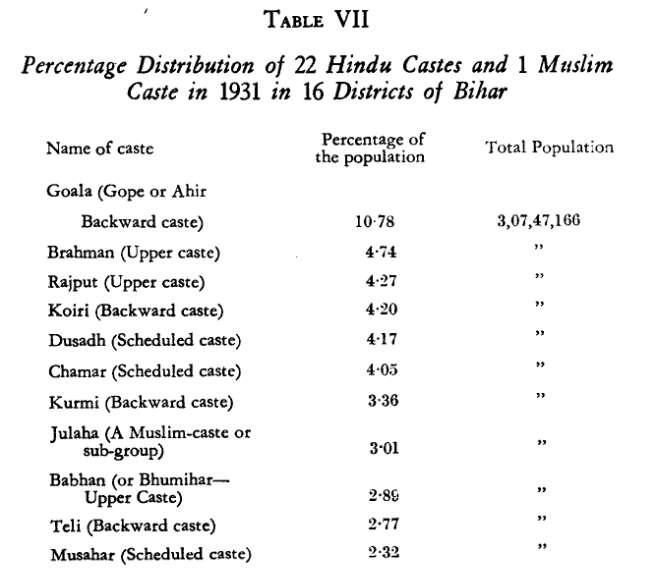
146) Population of Babhans in Bihar according
to
the 1931 Census.
147) British observed that many Brahmans are
descended from Bhumihars, might be those who took up priestly work and
assimilated
[2]
Brief View of the Caste System of the
North-Western Provinces and Oudh
Go to References

148) Bhumihar Raja also used to confer
princely
titles to Rajputs.
[37]
The golden book of India, a genealogical and
biographical dictionary of the ruling princes, chiefs, nobles, and other
personages, titled or decorated, of the Indian empire
Go to References
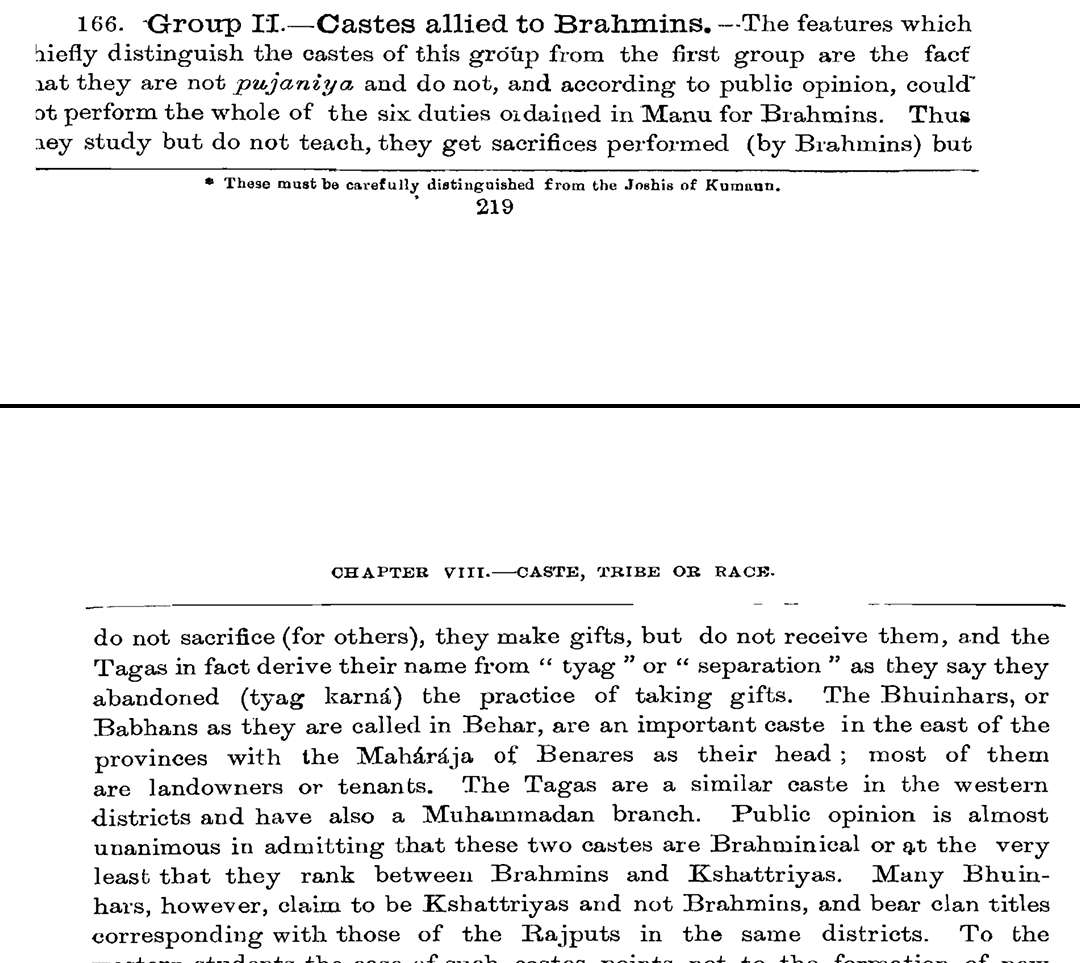
149) Description of Bhumihars by the British
in
the census of 1901. Not classified as Shudras.
[38]
CENSUS OF INDIA, 1901, VOLUME XVI. N W
PROVINCES AND OUDH. PART I. REPORT
Go to References
Go to References
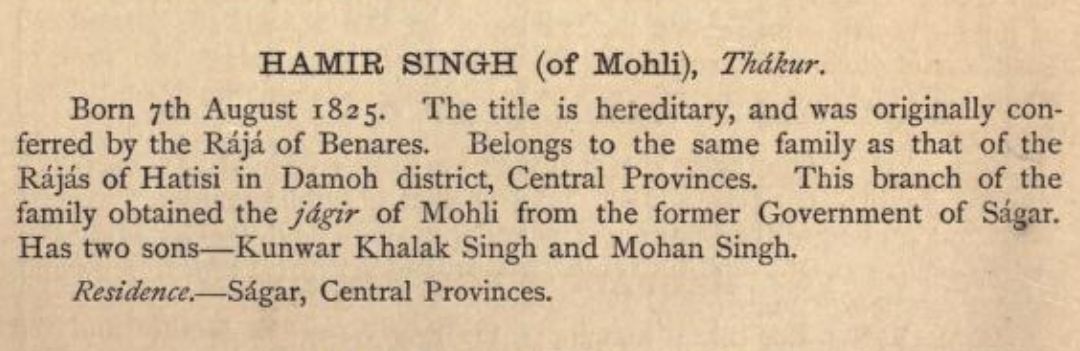
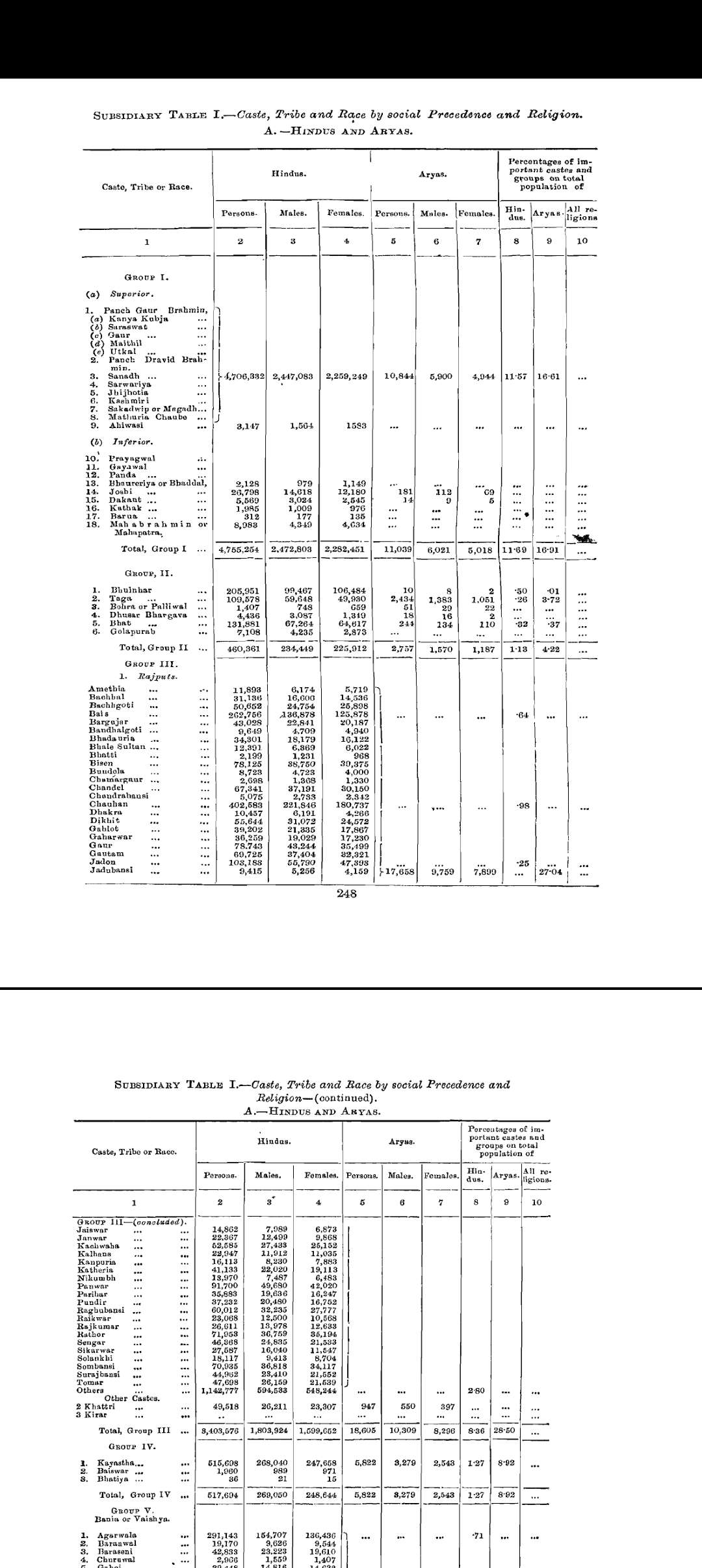
150) In the census of 1901, Bhumihars were
placed
above Rajputs, Kayasthas and Vaishyas. Clearly, not classified as Shudras.
The serial order denotes the social ranking ascertained by the British, as evident
from
the title
"Caste, Tribe and Race by Social Precedence".
They are placed in Group II, before Rajputs in group III, and Kayasthas in Group IV
and
in the next page, Baniyas in group V.
[39]
CENSUS OF INDIA, 1901, VOLUME XVI. N W
PROVINCES AND OUDH. PART I. REPORT
Go to References
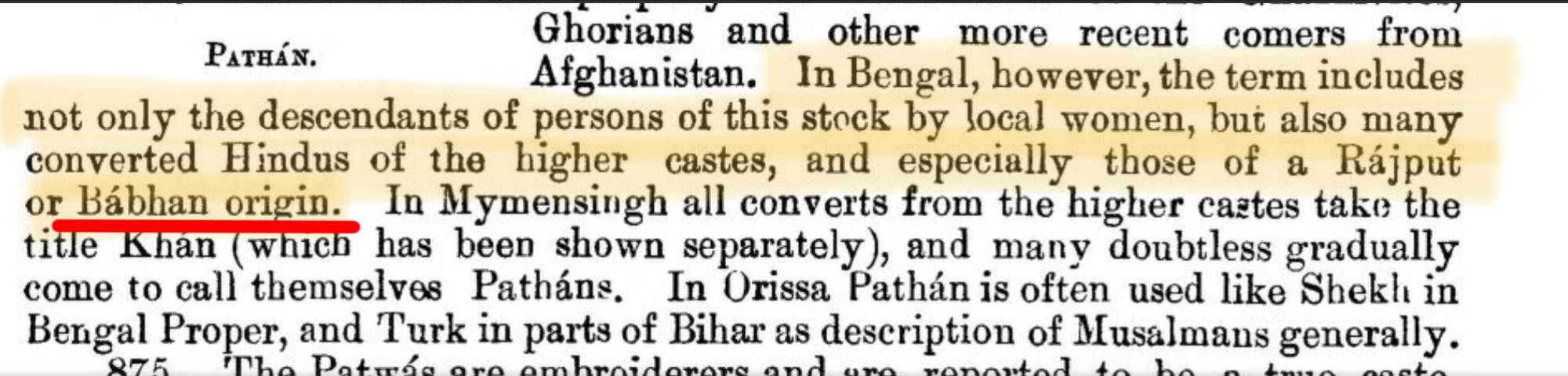
151) Many Muslim converts from the Hindus who
got
admitted to the Pathan order were Babhans (Bhumihars). Islamic connection
[40]
Census Of India 1901 Vol.6 (lower Provinces Of
Bengal And Their Leudatoties) Pt.1 (reports)
Go to References
152) The first British census nowhere
categorised
Bhumihars into the Shudra Varna.
[41]
Census of the N.W. Provinces, 1865, Volumes
1-4
Go to References
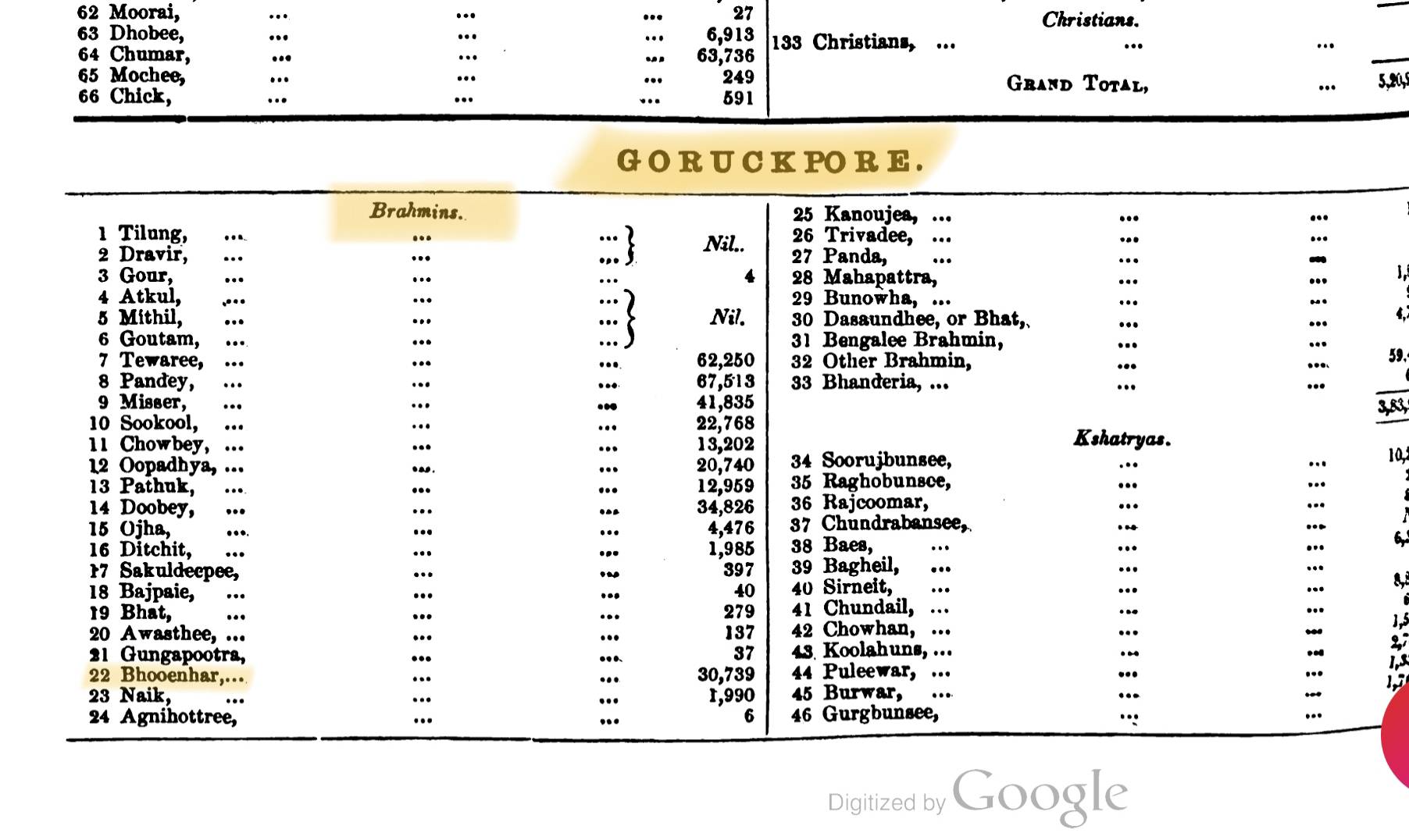
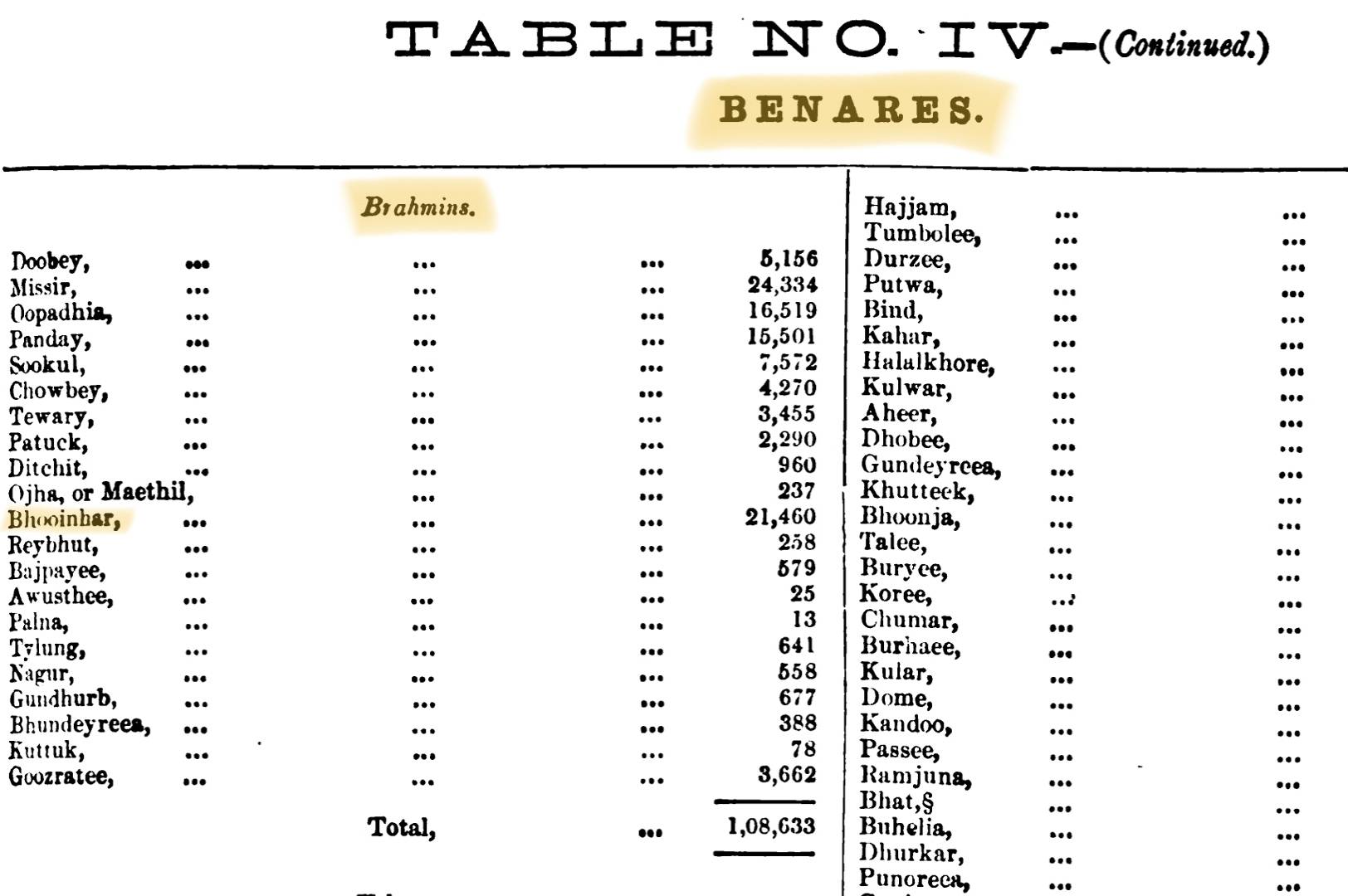
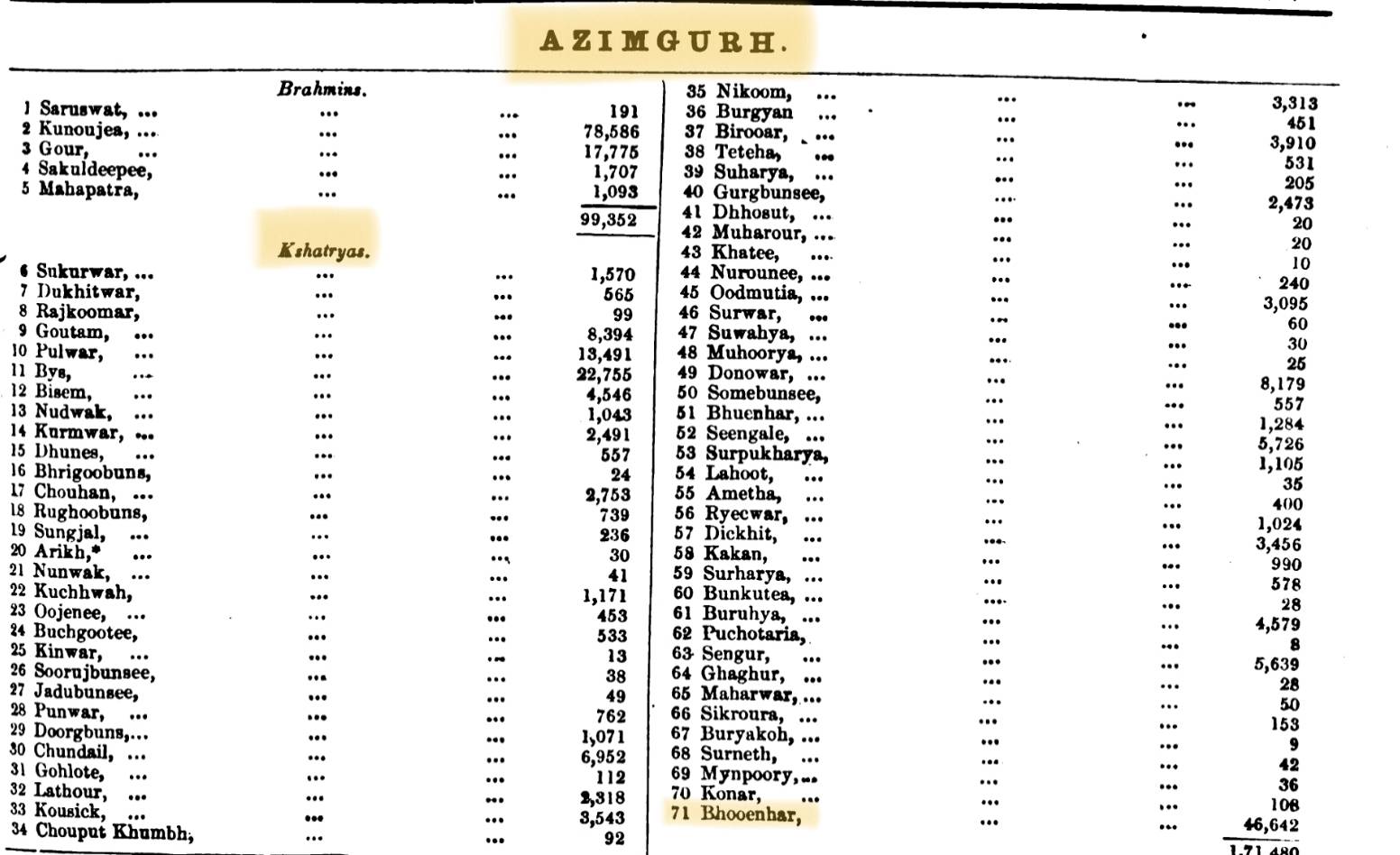
153) James Prinsep categorised Bhumihars and
Khatris both, alongside Rajputs into Kshatriyas in 1831
[42]
A Series of Drawings
Go to References
154)
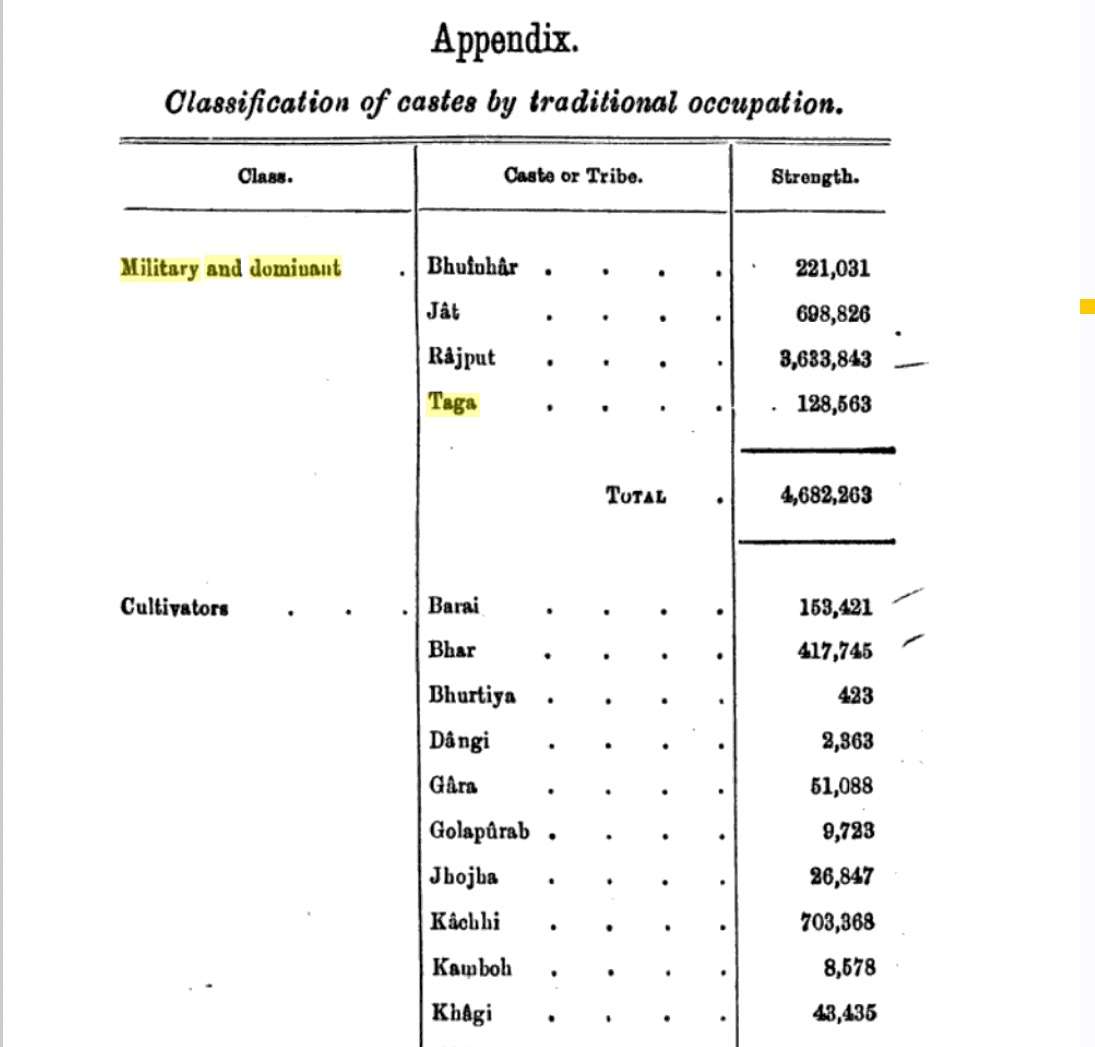
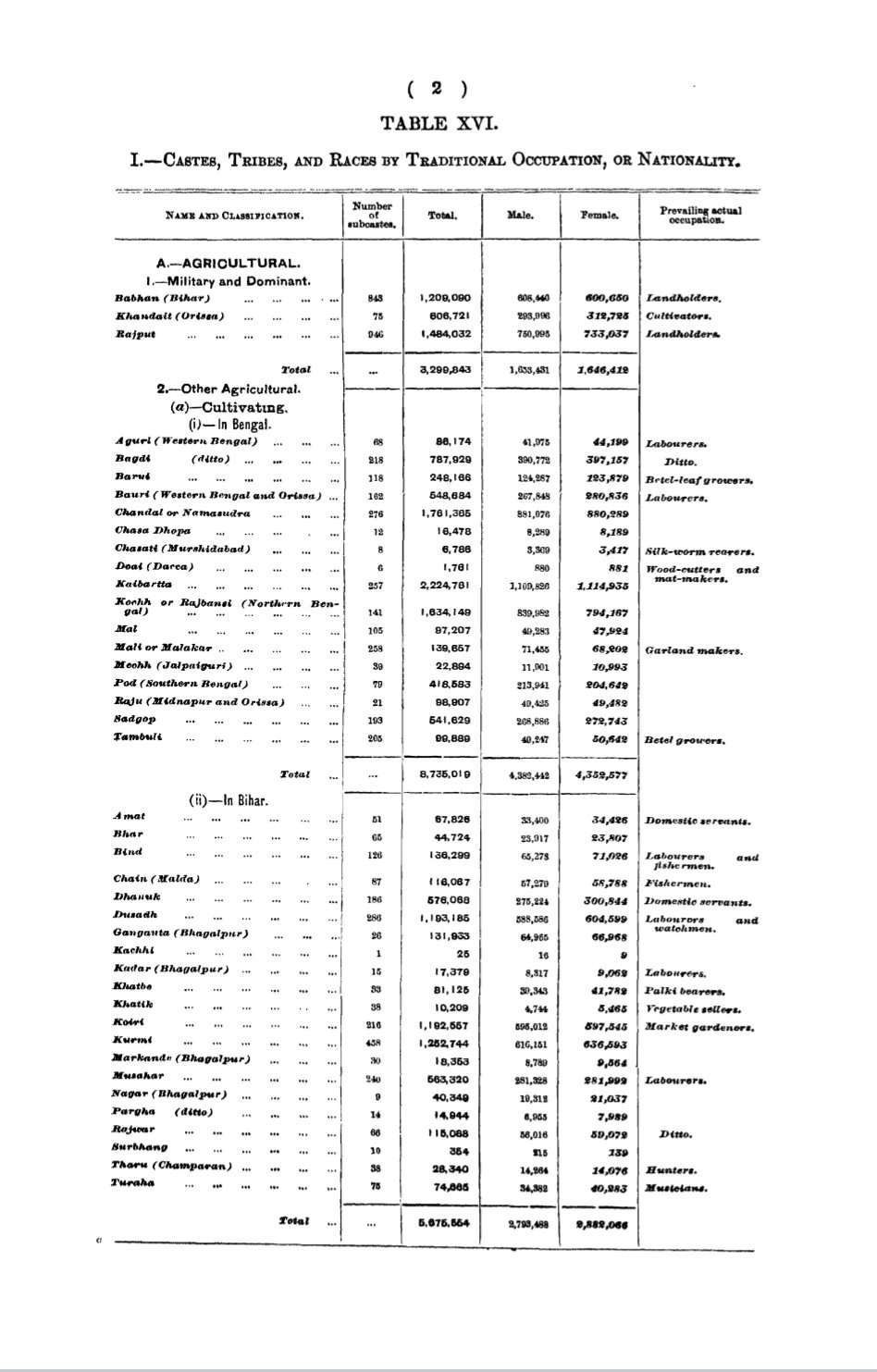
What occupation the Brits found the Bihari Bhumihars to be primarily associated
with, in
the census of 1891.
They're classed within the Agricultural label, and described as "Military and
Dominant",
And their prevailing actual occupation as 'Landholders'
155)
British affirming Haraprasad Shastri's assertion that Babhan is mere a Pali form of
the
word Brahman, and Bhumihars are Brahmans who became Buddhists and usurped properties
of
Buddhist centres, and now are a distinct community
[40]
Census Of India 1901 Vol.6 (lower Provinces Of
Bengal And Their Leudatoties) Pt.1 (reports)
Go to References

156)
In the 1921 Census, British themselves acknowledge the presence of a significant
undercount of Purvanchali Bhumihars in the wake of a lot of them mistakenly being
counted amongst the Brahmans in the preceding census of 1911. Apparently it was
possibly
fixed in the 1921 census as reported by the British
[43]
Census of India 1921 vol.16 United provinces of
Agra and Oudh; pt.1 (Report)
Go to References
157)
The British reported Purvanchali Bhumihar's primary occupation as 'Landowner' in the
census of 1921
[43]
Census of India 1921 vol.16 United provinces of
Agra and Oudh; pt.1 (Report)
Go to References
158)
The British noted in the census of 1921 that the upper castes had more widows owing
to
their strong disdain for widow remarriage and honor culture.
Despite being the least numerous amongst all the upper castes in that region,
Bhumihars
had the most number of widows amongst them
[43]
Census of India 1921 vol.16 United provinces of
Agra and Oudh; pt.1 (Report)
Go to References
159)
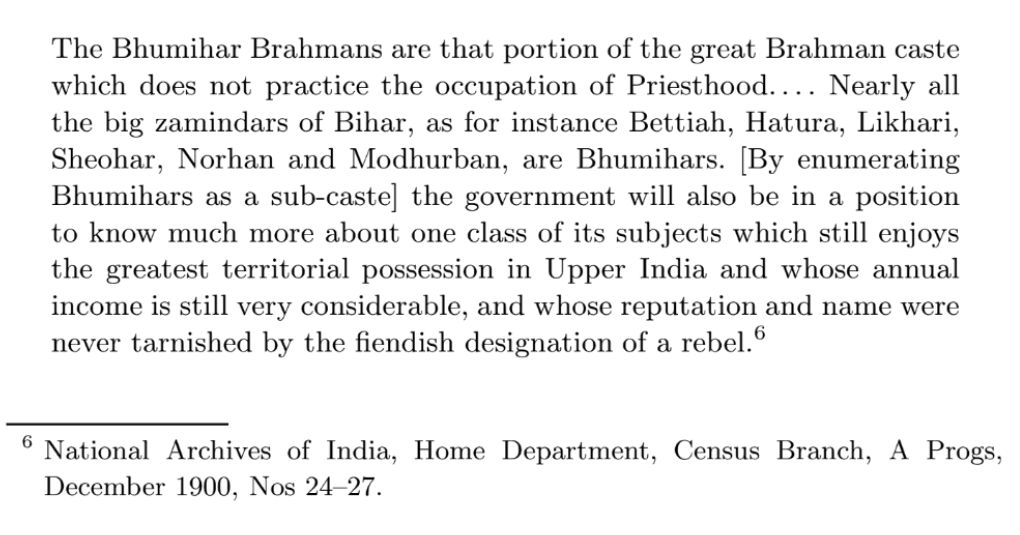
British acknowledging that nearly all the zamindars of Bihar were Bhumihars
160)Lorem Ipsum
[44]
Bengal District Gazetteers
Go to References
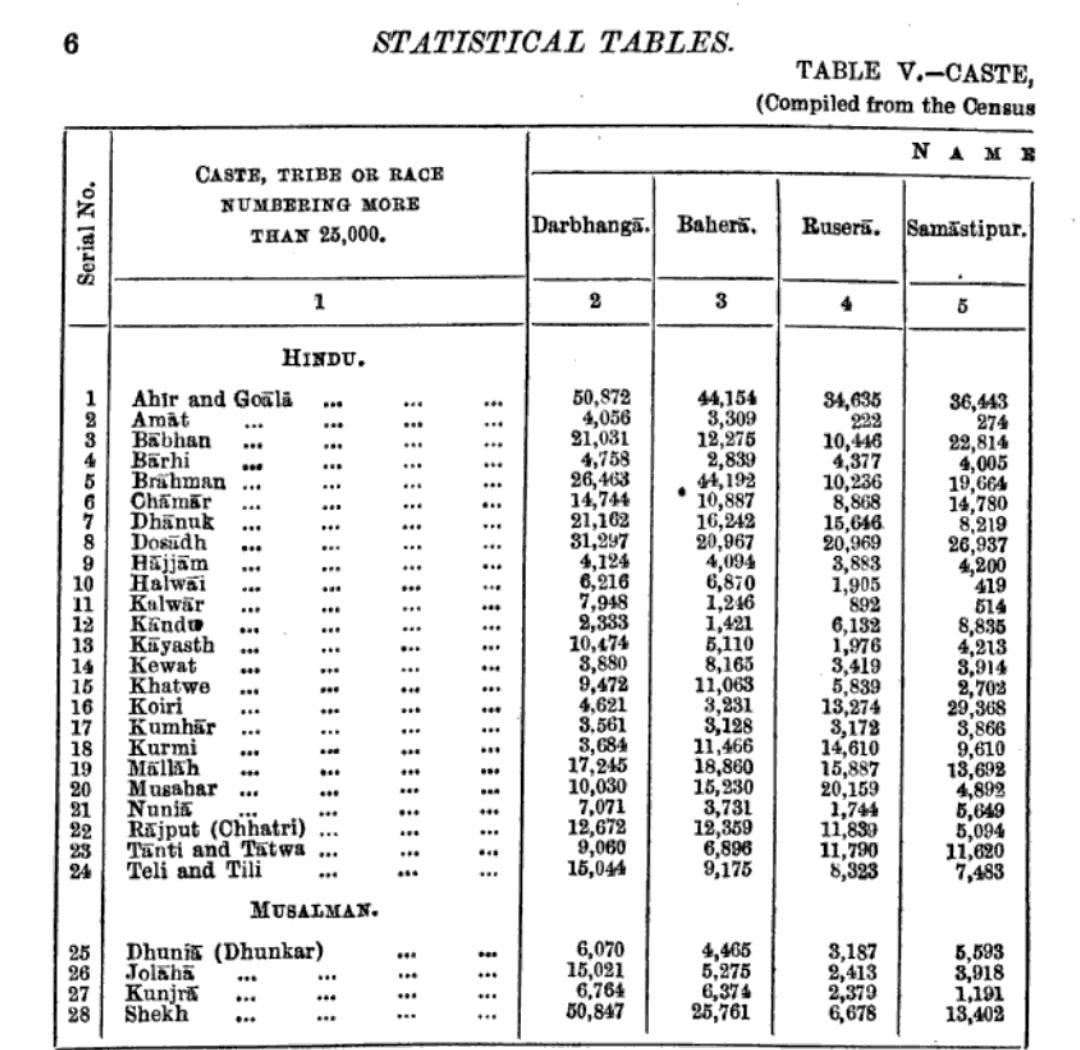
161) Bhumihars were placed 3rd, after
Brahmans
and Rajputs in this Census Report. They were placed within the intermediate
category,
again, not Shudra
[45]
Report on The Census of Bengal 1872,
Go to References
162) The British say the in the Monghyr
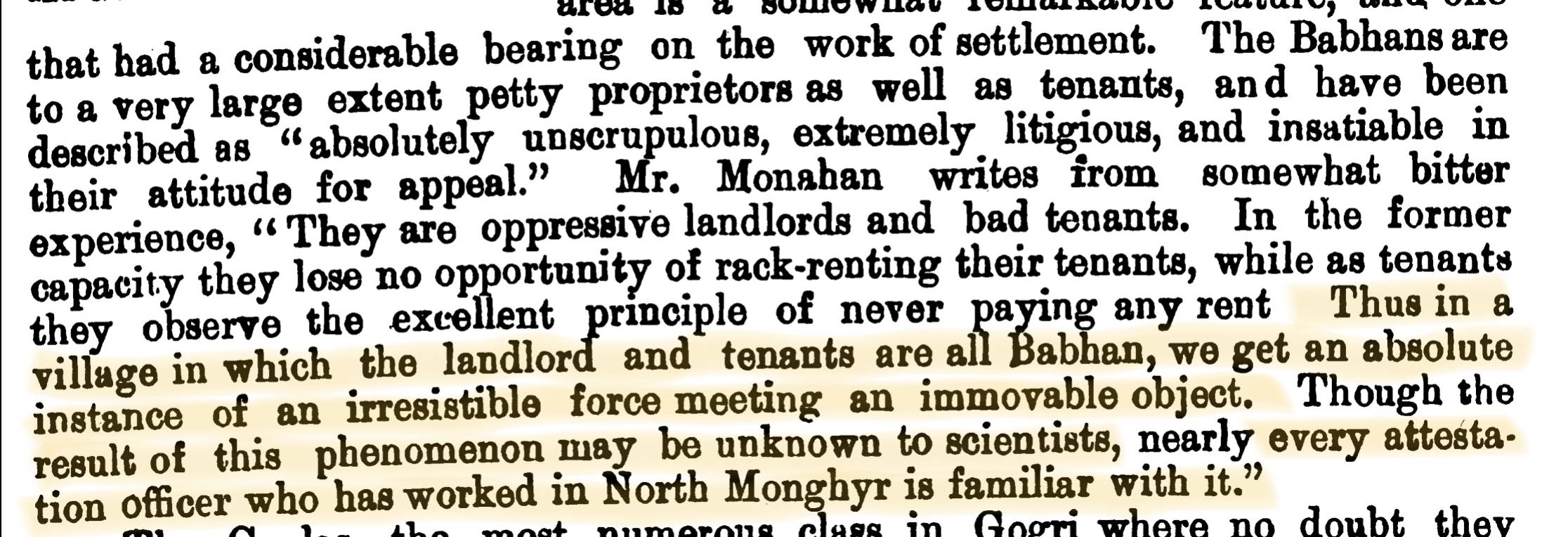
division,
Even scientists may be oblivious of the disastrous and destructive results when
Babhans
serve as both landlords and tenants in the same village.
They describe the situation as an instance of an irresistible force meeting an
immovable
object,
And every attestation officer who's served in Noth Monghyr is familiar with this
situation
[46]
Final Report on the Survey and Settlement
Operations in the District of Monghyr (north) 1905-1907
Go to References
163) Alexander Cunningham noted during his
travels that,
1. Clearly states that it's the ENEMIES of Babhans who propagated slanderous
theories
against Babhans
2. Their Babhan name suggested strongly about their Brahminical origins
3. Again, Bhumihars shouldn't be confused with Bhuinyas, who are an aboriginal tribe
4. Babhans are so notorious for their quarrelsome behaviour that a proverb became
famous
highlighting this
[47]
Report of a Tour in Bihar and Bengal in
1879-80. From Patna to Sunargaon Vol. 15
Go to References
164)
Another description of Bhumihars by a British Officer.
1) He highlights that in some censuses, Bhumihars were not placed amongst the
superior
castes, but the 1st amongst the intermediate castes. Again, not Shudras
2) He reports what Brahmans of Bhagalpur had to say about Bhumihars, this was also
reported by Francis Buchanan in his earliest report
3) He explains why Bhumihars affixed Singh after their names
[48]
A Statistical Account of Bengal 1877, Volume
14
Go to References
165)
Only Bhumihars have so far produced 2 Billionaires (in US Dollars) in Eastern UP +
Bihar.
which makes them the only upper caste from the entire Gangetic Plains to have
produced
not 1, but 2 Billionaires.
1. Mahendra Prasad
2. Singh Family, whose head Basdeo Singh also is a Billionaire with a networth of
2.4
Billion Dollars.
[49]
Forbes Billionaire List (World's most trusted
and reliable), every other source attests to this
Go to References

166)
Only Bhumihars, of all the Gangetic upper castes, have had a Princely State of their
own
with 13 national gun salutes and 15 local gun salutes.
The only Hindu princely state within the boundaries of present day UP + Bihar
belonged
to Bhumihars
[50]
List of princely states before the British left
India
Go to References
167) Bhumihar Zamindars, erroneously
identified
as Brahmans, had landholdings having the highest rental valuations in the entire
Soubah
Behar of Bengal Presidency. Their holdings were marked having the highest original
valuations
Ausil was the original valuation, and Bundobusty Jumma was what those Zamindaris
were
expected to collect and pay as rent
[51]
The Fifth Report From The Select Committee On
The Affairs Of The East India Company Vol-1, Year 1812
Go to References
168)
Migrant Bhumihars of Allahabad were reported to be the biggest and the foremost
Zamindars amongst the Brahmans of that district. However, their classification as
Brahmans is erroneous
There's a very stark contrast between the number of villages and revenue under
Bhumihar
Zamindars and the same under Brahman Zamindars.
Bhumihars held much more villages and controlled more Mahals (Revenue Estates) with
them
and their revenue was much higher than that of Brahman Zamindars, despite having a
miniscule population in Allahabad, as compared to other upper castes in the
district
[52]
Allahabad Gazetteer
Go to References
169)
Bhumihars tried to pass themselves as Rajputs only to gain admission into the armed
forces of the British, as the British had initially banned them from joining, owing
to
the rebellious, cunning and unruly disposition of the Bhumihars. Only the simple
desire
to bypass the ban and join these armies made them pull such deceptive tactics, other
primary
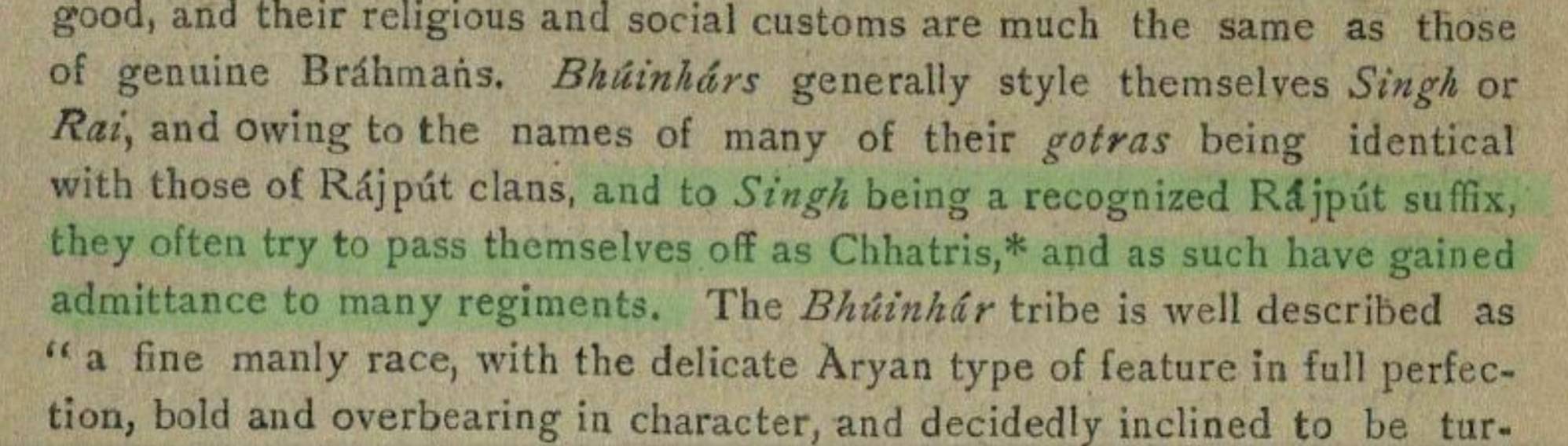
170)
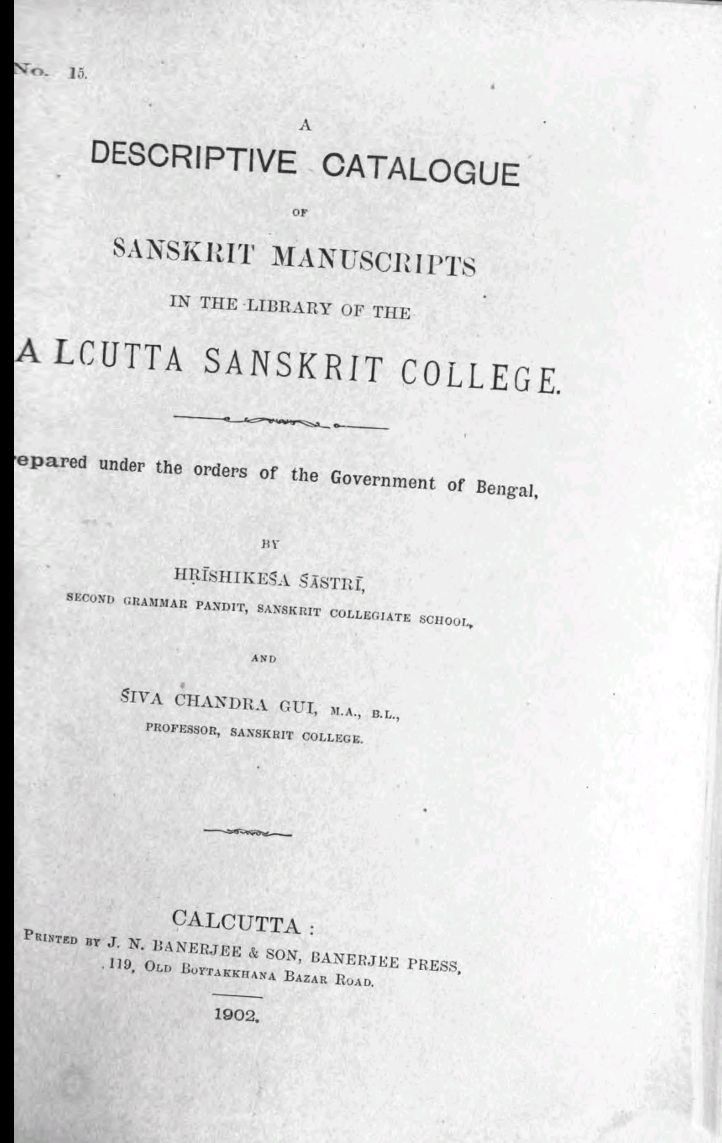
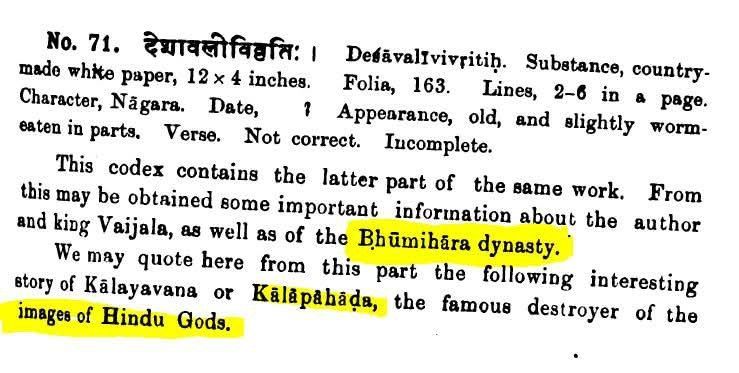
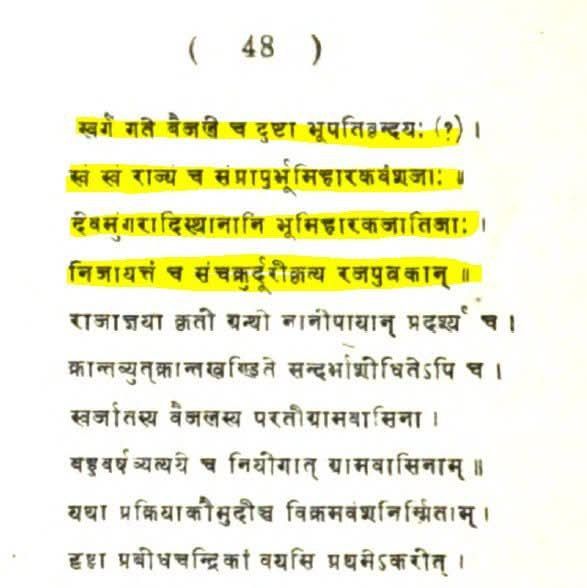
The oldest ever mention of Bhumihars is found in a Sanskrit Gazetteer class work
named "Deshāvali Vivṛiti", commissioned by a Chauhan Rajput Jagirdar of Patna,
composed
before 1650 by Jagamohan.
The specific Parts of Deshāvali Vivṛiti that particularly talk about Bhumihars is preserved as images of the shlokas in the book, commissioned by the British Government named "A Descriptive Catalogue of Sanskrit Manuscripts".
Information regarding the timeline, commission and composition of Deshāvali Vivṛiti is found in the British Raj Government commissioned book "The Journal of the Bihar and Orissa Research Society (1918, Vol. 4)".
The specific Parts of Deshāvali Vivṛiti that particularly talk about Bhumihars is preserved as images of the shlokas in the book, commissioned by the British Government named "A Descriptive Catalogue of Sanskrit Manuscripts".
Information regarding the timeline, commission and composition of Deshāvali Vivṛiti is found in the British Raj Government commissioned book "The Journal of the Bihar and Orissa Research Society (1918, Vol. 4)".
171) Patna District's most prominent and
powerful
landlord was the Bhumihar Raja of Ammawan
[53]
Patna Gazetteer
Go to References
172)
The British have again warned not to confuse some hill tract aboriginal tribes who
called themselves Bhumihars, with the original Bhumihars
[1]
Memoirs Of The Ghazeepoor District
Go to References

173) A lot of Bhumihars converted to Islam in
Ghazipur who acknowledged their Bhumihar past and showed up at each other's
festivities
and celebrations
[1]
Memoirs Of The Ghazeepoor District
Go to References
174)
Azamgarh Division of British Raj (Present day Azamgarh+Mau)
Population.
Rajput: 99000
Bhumihar: 55000
Brahman: 108000
Landholding.
Rajput: 34%
Bhumihar: 14%
Brahman: 11%
[54]
Azamgarh Gazetteer
Go to References
175)
Population.
Rajput - 53000
Brahman - 97000
Bhumihar - 17000
Landholdings.
Rajput - 23%
Brahman - 19%
Bhumihar - 27 %
Bhumihars owned the most land in Benares Division (Benares+Chandauli) and had the
lowest
population amongst upper castes around that region.
[55]
Benares
Gazetteer
Go to References
Go to References












176)
Bhumihar Rajas destroyed the former predominance of Rajputs in Benares Division (
Present day Benares + Chandauli )
[56]
Benares Gazetteer
Go to References

177)
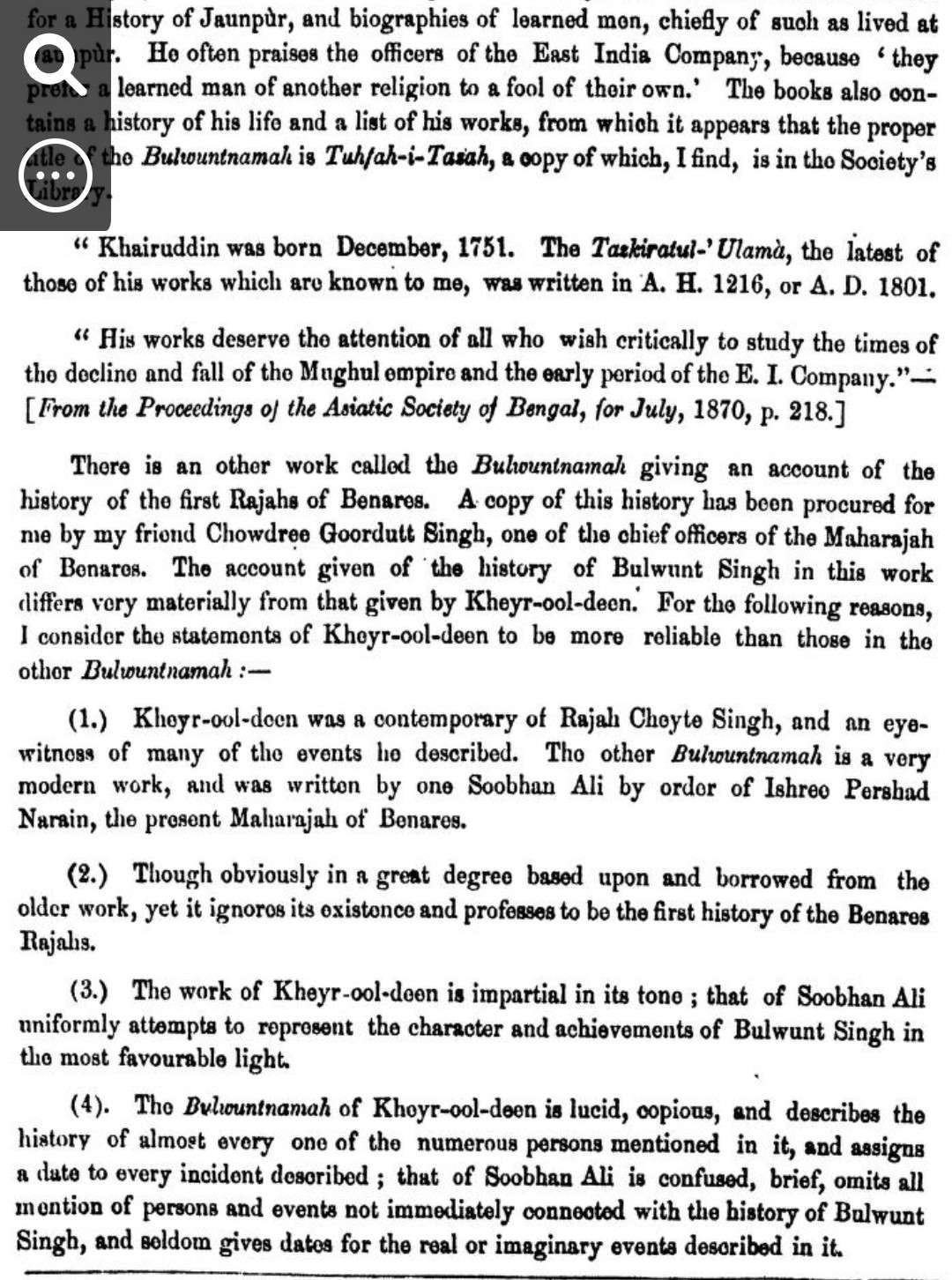
The British considered Bulwuntnameh a very reliable
178)
Cheyte Singh was well aware of his illegitimate status due to him being born of a
Rajput
concubine Panna Kunwar of Balwant Singh (refer point 144) for this.
It's reported that his Rajpoot ancestry on his mother's side affected his entire
career
by depriving him of respect from other Bhumihars.
He didn't dare eat with other full blooded Bhumihars
[1]
Memoirs Of The Ghazeepoor District
Go to References
179)
Bhumihars Rajas built up their domain and established their rule by deposing Rajputs
and
shattering their power
[57]
The Peasant Armed, Indian Revolt Of
1857,
Go to References
180)
The British considered the Brahmans of Ghazipur who are mentioned in Ain-I-Akbari as
Zamindars, to be in fact Bhumihars.
[5]
Ghazeepoor Gazetteer
Go to References
181)
A Harvard research paper on the genetics of Indian castes and tribes, authored by
more
than 114 leading scientists in the field of Genetics from across the globe,
published in
the world's highest rated journal, very clearly states that,
Bhumihars have disproportionately high Steppe ancestry, relative to other social groups in India.
[58] The formation of human populations in South and Central Asia, Narsimhan et al.
Link: https://www.science.org/doi/10.1126/science.aat7487 Go to References
Bhumihars have disproportionately high Steppe ancestry, relative to other social groups in India.
[58] The formation of human populations in South and Central Asia, Narsimhan et al.
Link: https://www.science.org/doi/10.1126/science.aat7487 Go to References
182)
There was a Bhumihar settlement near Allahabad where they married Rajput women
frequently.
[59]
SUPPLEMENTAL GLOSSARY OF THE TERMS USED IN THE
NORTH WESTERN PROVINCES
Go to References
183)
Bhumihars deposed the chief of Gaharwar Rajputs and made him and family run for
their
life, in 1758. The little dignity that remained with the Gaharwar Chief, was due to
the
generosity of the British.
[59]
SUPPLEMENTAL GLOSSARY OF THE TERMS USED IN THE
NORTH WESTERN PROVINCES
Go to References
184)
Bhumihar Babhans of Gaya are described as "Mainly Landholders" and "Well To Do
Cultivators", while Rajputs are described as merely "Mainly Cultivators" and Koiris
as
"Market-Gardeners"
185)
In the Bettiah Raj, the collections of rents and cesses amounted to nearly 18
lakhs
[60]
The Imperial Gazetteer Of india Vol-Viii,
1908
Go to References
186)
"Magadha is the country of the Babhans"
187)
Bhumihar Raja of the lone Princely State of Bihar Purvanchal, Prabhu Narayan Singh
(2nd
row, 2nd from left), was counted amongst the foremost and the most prominent Princes
of
India, acknowledged by the British.
The only King from Bihar Purvanchal to have been considered relevant enough.
Painting Name: Princes of India
Description: Senior princes who attended the Delhi Durbar in 1911, also known as
Imperial Durbar. It was held three times, in 1877, 1903 and 1911, at the height of
British empire.
Chromolithograph printed in halftone by A. Vivian Mansell & Co., London, after a
painting by an Indian artist
Date of printing – 1911
https://theindianportrait.com/artwork/ruling-princes-of-india/
188)
Before Bhumihar Raja Balwant Singh came to power, the Mughals used to levy less tax
on
the Rajputs and Brahmins of Purvanchal,
but as soon as Balwant Singh came to power, he began charging Rajputs and Brahmans
more
than what Mughals used to,
so the Brahmins started setting themselves on fire, cutting themselves, and hanging
themselves, so that Balwant Singh, out of fear of incurring the sin of Brahmahatya
(killing a Brahmin), would refrain collecting tax. This indicates Balwant Singh's
brutal
nature.
[61]
Land Control and Social Structure in Indian
History
Go to References
189)
The general public viewed Bhumihars as superior to Rajputs.
[62]
Census of India, 1911 Volume 6, Part 1
Go to References
190)
Bhumihar Raja Balwant Singh's rule attracted many Rajputs to settle in Pergunnah
Bhadohi who sought Maharaja's attention and association, and also to live with other
already present Rajputs in the Pergunnah.
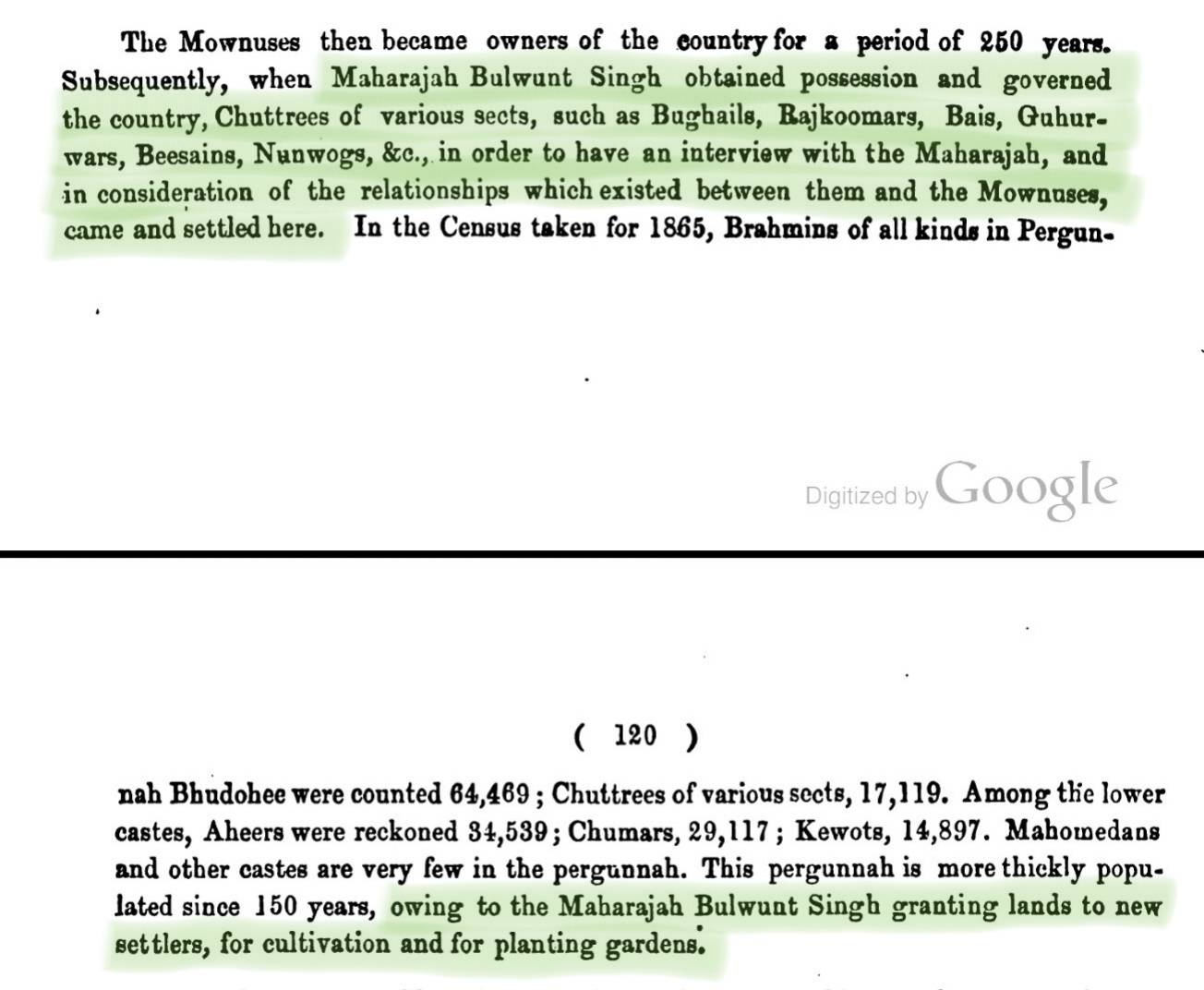
Pergunnah Bhadohi became thickly populated only because of all the people settling on the land grants given by the Bhumihar Raja to them. [41] Census of the N.W. Provinces, 1865, Volumes 1-4 Go to References
Pergunnah Bhadohi became thickly populated only because of all the people settling on the land grants given by the Bhumihar Raja to them. [41] Census of the N.W. Provinces, 1865, Volumes 1-4 Go to References
191)
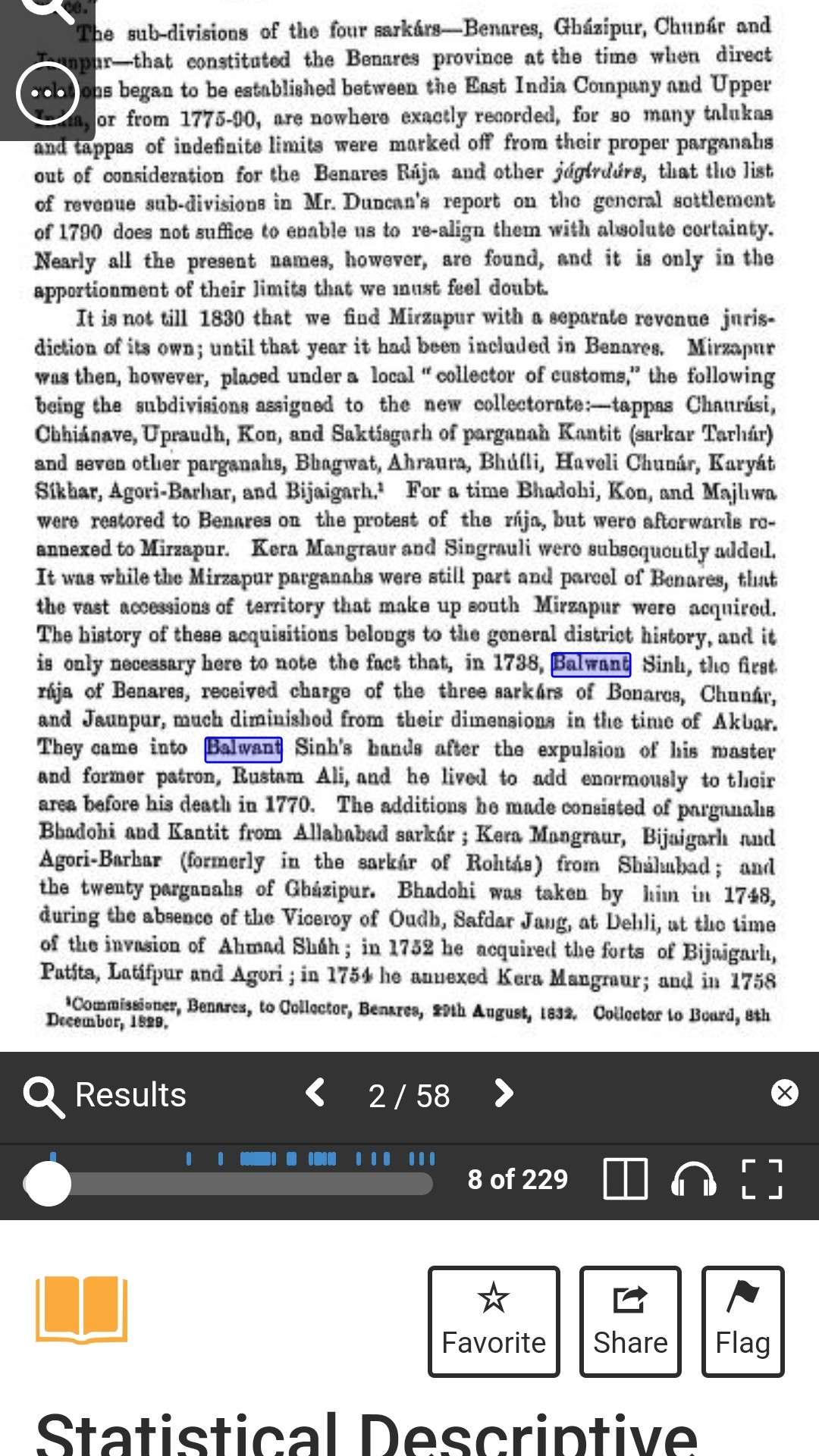
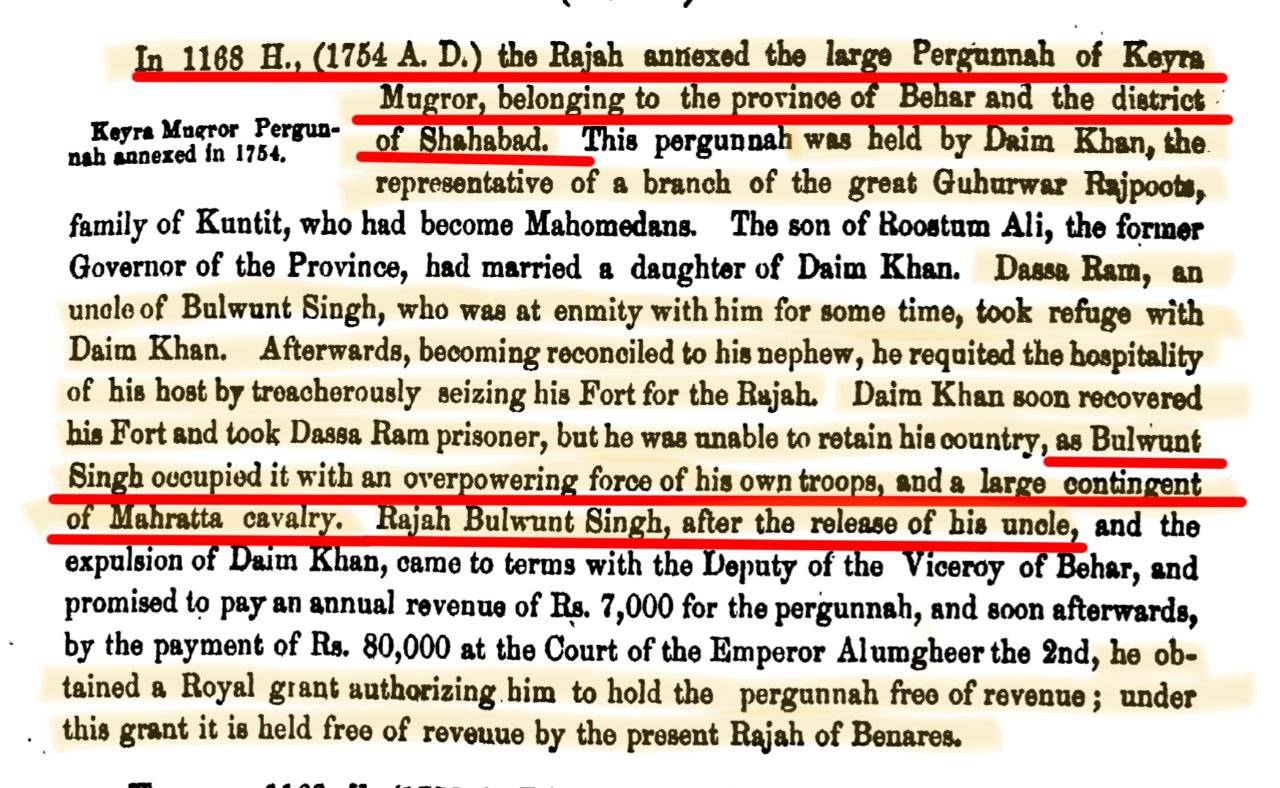
Bhumihar Raja Balwant Singh captured Keyra Mugror of Shahabad, Bihar, from a
Hindu
Gaharwar Rajput convert to Islam, Daim Khan, related to the great Hindu Gaharwar
Family
of Kuntit. Daim Khan had sold his daughter to the son of Behar Province's former
Governor, Rustom Ali.
Balwant Singh released his uncle from Daim Khan, with an overpowering force of his own, and a large contingent of MARATHA cavalry, and eventually expelled the Gaharwar Rajput convert Daim Khan. [63] Memoir Of The Ghazeepoor District Pt.1 Go to References
Balwant Singh released his uncle from Daim Khan, with an overpowering force of his own, and a large contingent of MARATHA cavalry, and eventually expelled the Gaharwar Rajput convert Daim Khan. [63] Memoir Of The Ghazeepoor District Pt.1 Go to References
192)
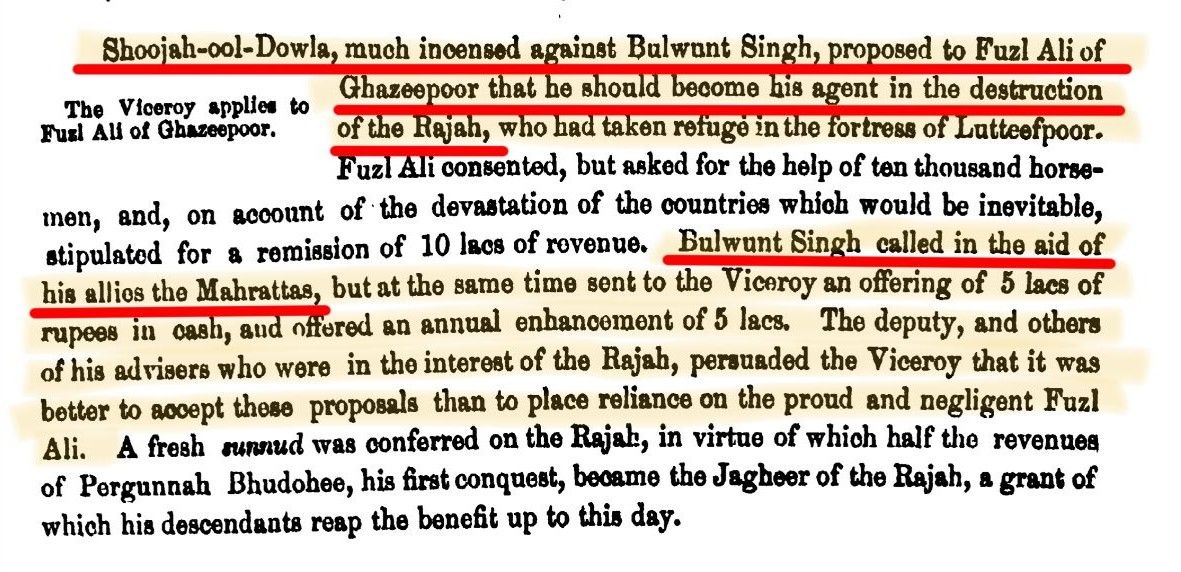
Shuja Ud Dawlah, fed up with Bhumihar Raja Balwant Singh, asked Fazal Ali of
Ghazipur to
help him oust him, but Balwant Singh called the aid of MARATHAS and proposed a sum
to
the Muslim Viceroy to make truce, then Shuja Ud Dawlah's deputy and advisors who
were on
the side of Balwant Singh's interests, persuaded Shuja Ud Dawlah to agree to Balwant
Singh's terms.
[63]
Memoir Of The Ghazeepoor District Pt.1
Go to References
193)
Bhumihar Raja Balwant Singh attacked and plundered the Zamindari of Monus Rajputs
in
Bhadohi Pergunnah.
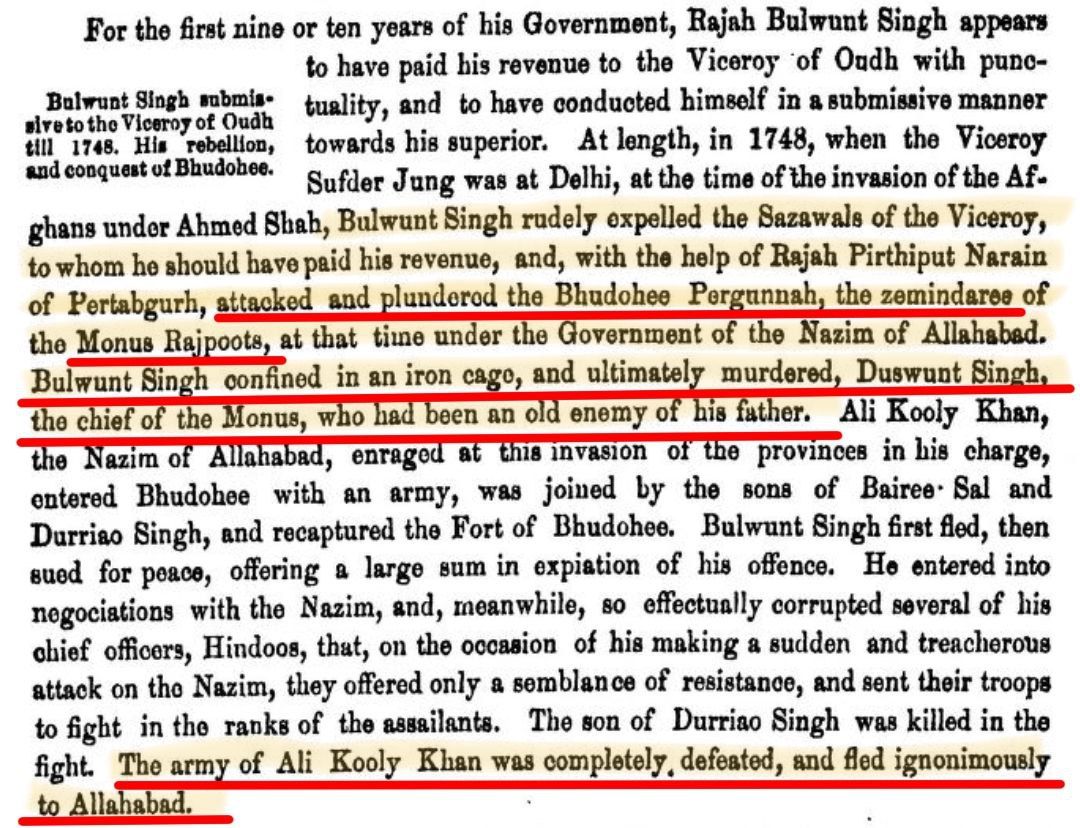
Bhumihar Raja Balwant Singh captured the chief of Monus Rajputs, Duswunt Singh, who was an old enemy of his father Mansa Ram. He confined the chief of Monus Rajputs, Duswunt Singh in a cage, like an animal, and murdered him mercilessly. [63] Memoir Of The Ghazeepoor District Pt.1 Go to References
Bhumihar Raja Balwant Singh captured the chief of Monus Rajputs, Duswunt Singh, who was an old enemy of his father Mansa Ram. He confined the chief of Monus Rajputs, Duswunt Singh in a cage, like an animal, and murdered him mercilessly. [63] Memoir Of The Ghazeepoor District Pt.1 Go to References
194)
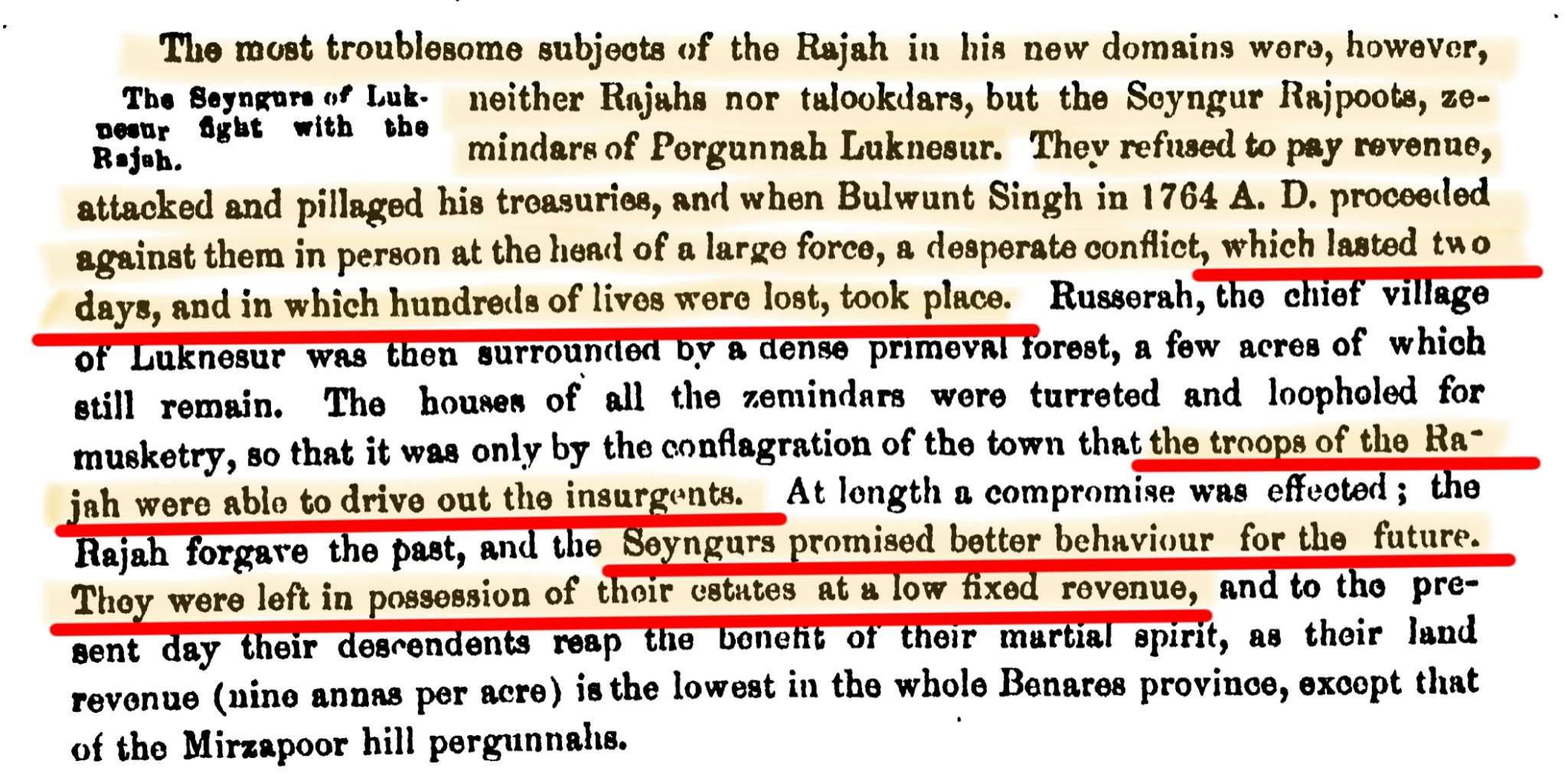
Sengar Rajputs of Lakhnesar, Ballia, repeatedly refused to pay revenue to Bhumihar
Raja
Balwant Singh, until he eventually marched against them IN PERSON, heading a large
force, eventually culminating in a war that lasted two days that took hundreds of
lives.
Result of the war included,
1. Total cleansing of Sengar Rajput insurgents.
2. Sengars promising "Better Behaviour" in the future.
3. Sengars retaining their estates in exchange for finally agreeing to pay revenue (which they weren't paying earlier), although at a lower fixed rate. [63] Memoir Of The Ghazeepoor District Pt.1 Go to References
1. Total cleansing of Sengar Rajput insurgents.
2. Sengars promising "Better Behaviour" in the future.
3. Sengars retaining their estates in exchange for finally agreeing to pay revenue (which they weren't paying earlier), although at a lower fixed rate. [63] Memoir Of The Ghazeepoor District Pt.1 Go to References
195)
Bhumihar Raja Balwant Singh attacked and captured an old fortress of Chandel
Rajputs,
called the fort of Agoree, situated on a rock above the Son river.
[63]
Memoir Of The Ghazeepoor District Pt.1
Go to References

196)
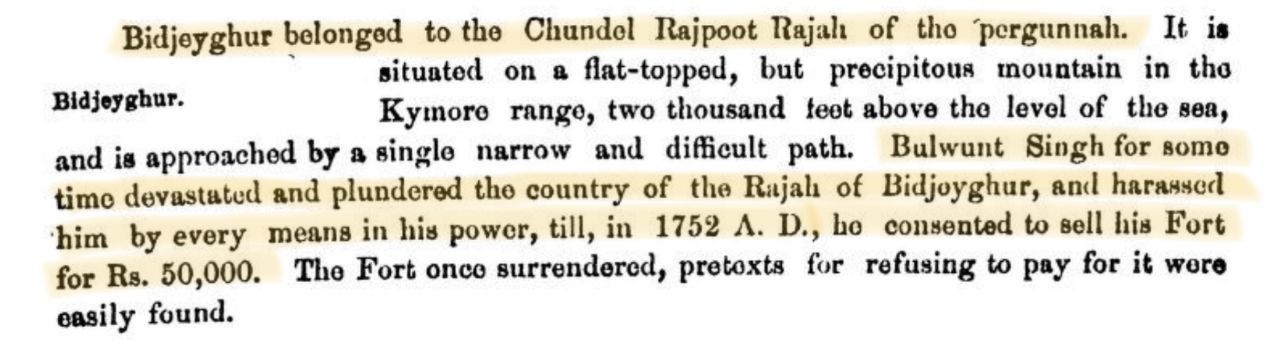
Bhumihar Raja Balwant Singh attacked and plundered the Chandel Rajput Zamindari of
Bijeygurh.
He continuously plundered and harassed the Hindu Chandel Rajput Raja until he
consented
to sell his fort to Balwant Singh for 50,000 Rupees in 1752.
[63]
Memoir Of The Ghazeepoor District Pt.1
Go to References
197)
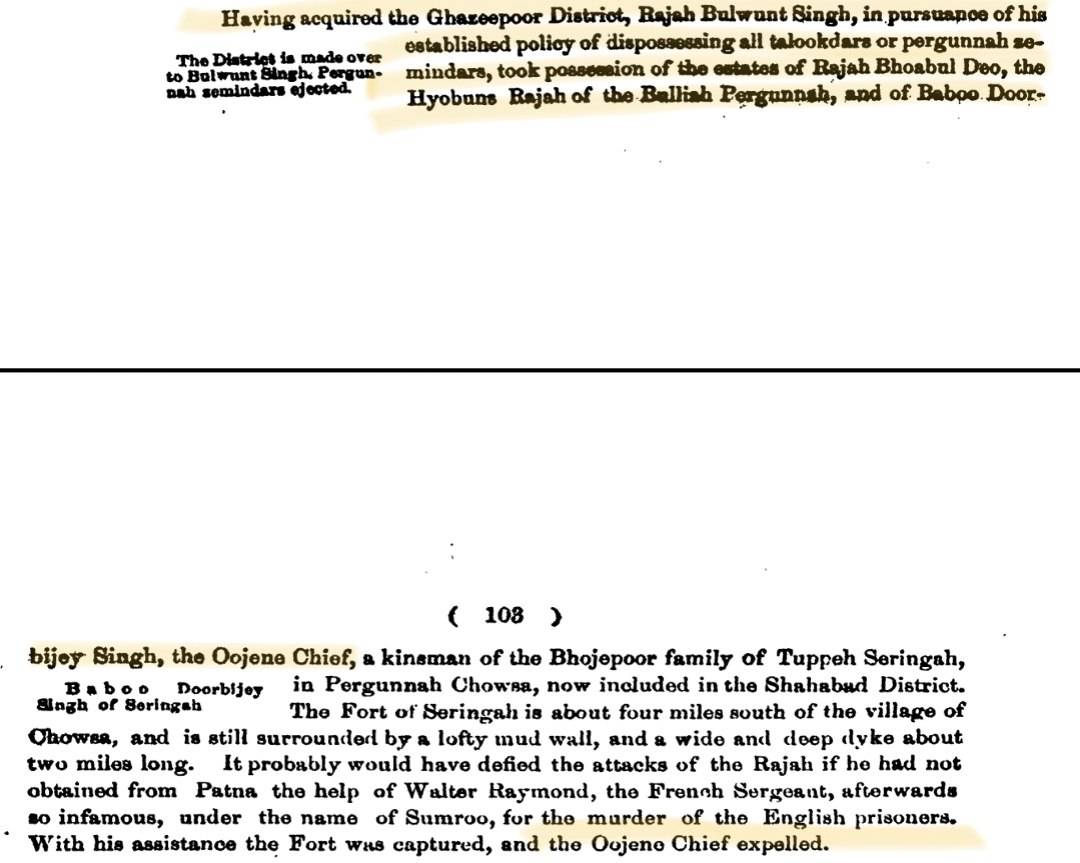
Bhumihar Raja Balwant Singh, after acquiring Ghazipur, started dispossessing all the
Rajput Zamindars.
Most notabe being, the Hyovansh Rajput Raja Bhoabul Deo, of Ballia Pergunnah and
Baboo
Durvijay Singh, an Ujjainia Chief, who was expelled by the Bhumihar Raja and his
Seringah fort captured
[63]
Memoir Of The Ghazeepoor District Pt.1
Go to References
198)
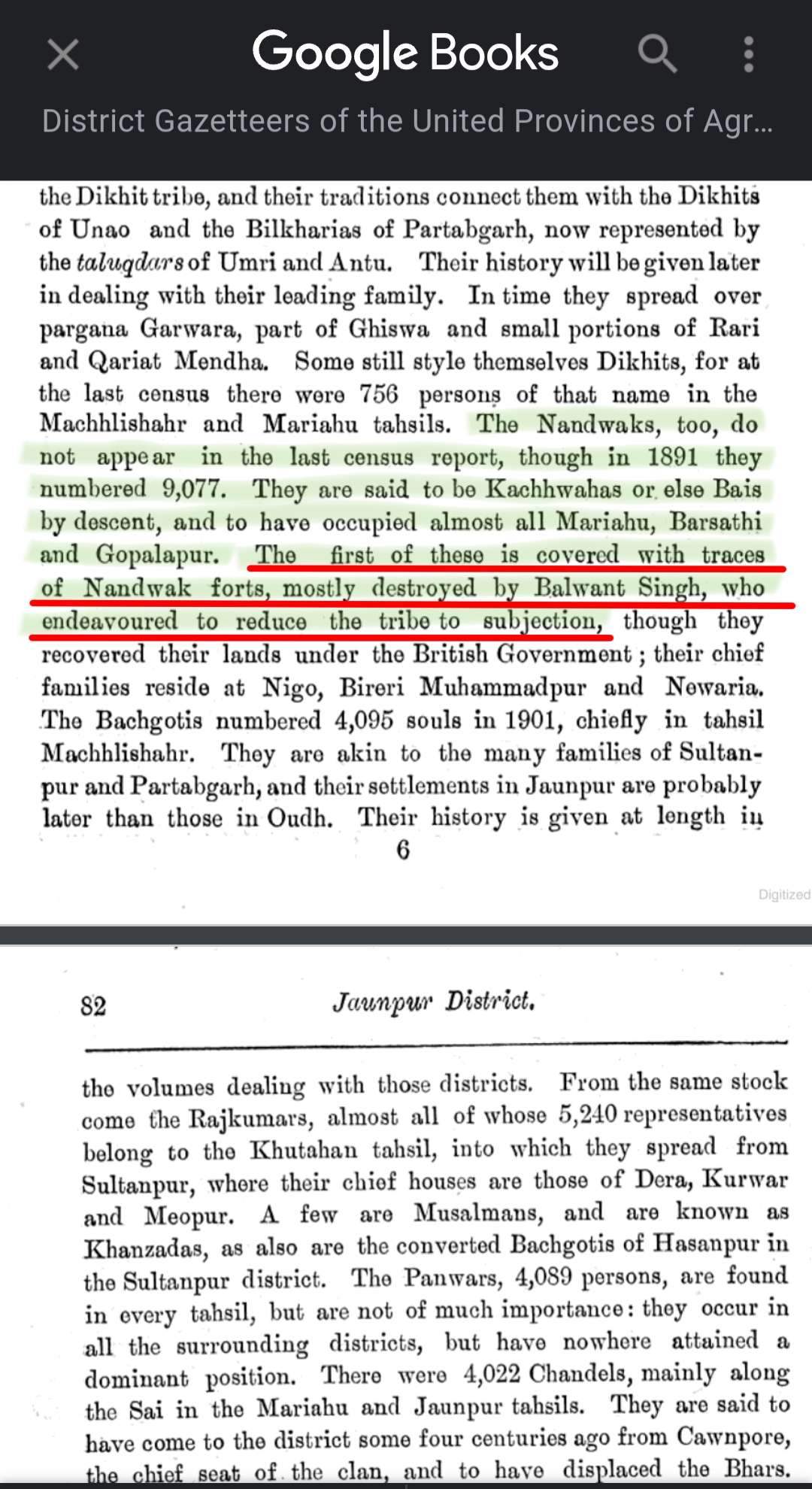
Nandwak Rajput forts, were mostly destroyed by Balwant Singh, who endeavoured to
reduce
the Rajput tribe to subjugation.
[64]
District Gazetteers of the United Provinces of
Agra and Oudh Volume 28
Go to References
199)
Bhumihar Raja Balwant Singh deposed and expelled the Gaharwar Chief from Kantit,
along
with his family in 1758. More details in point 183
[65]
Statistical Descriptive and Historical Account
Of The North Western Provinces Of India Mirzapur Division Vol Xiv
Go to References
200)
Bhumihars claimed that Rajput Sakarwars are the same as them and they both belong to
the
same stock, which Rajputs seemingly denied, but the most important part highlighted
by
the British in their document is that the traditional belief among the neighbours of
Rajputs and Bhumihars considered the Bhumihar's version of the story to be true.
So the neutral party (their neighbours) in the scene supported what Bhumihars
claimed
about Sakarwars
[66]
Statistical Descriptive And Historical Account
Of The North Western Provinces Azamgarh
Go to References
201)
It was estimated that Sunder Singh of Tekari maintained, 4,000 horses and 10,000
foot
soldiers, but the Raja of Bhojpur maintained only 1,000 horses and 5,000 foot
soldiers.
[67]
Bengal, Past & Present Journal of the Calcutta
Historical Society · Volume 112 1907
Go to References
202)
In some parts of Eastern Behar Maithil Brahmans were employed by the Babhans and
were
looked down upon by the Srotriya Brahmans (the highest ranking sept of Maithil
Brahmans), but not because they served in Babhans' houses, but because their own
origin
is believed to be of doubtful purity.
[68]
The Tribes and Castes of Bengal Ethnographic
Glossary · Volume 1
Go to References
203)
Bettiah Raj of Bhumihars used to import Brahmins and settle them.
204)
Bhumihar Raja Sardar Shahi of Hathwa Raj, the immediate predecessor of Fateh Bahadur
Shahi, is said to have invaded Majhauli Raj of Rajputs in the Gorakhpur district and
demolished ther fortress. It is said that one of the conditions on which Sardar
Shahi
made peace with the Rajput Raja of Majhauli was that the latter should not display
standards or drums, the ensigns of a ruling Raja until he had retaken them, and that
the
Majhauli family still conforms to this condition.
[69]
Bengal District Gazetteers Volume 48, Part
1
Go to References
205) Bengal District Gazetteers
Volume 48, Part 1
By Bengal (India) · 1908
Balwant Singh's campaigns against Rajputs are given in the
serial
numbers 191 to 199, they're brief descriptions to post everywhere.
But If you want to know even more details about his campaigns, read these 👇🏻
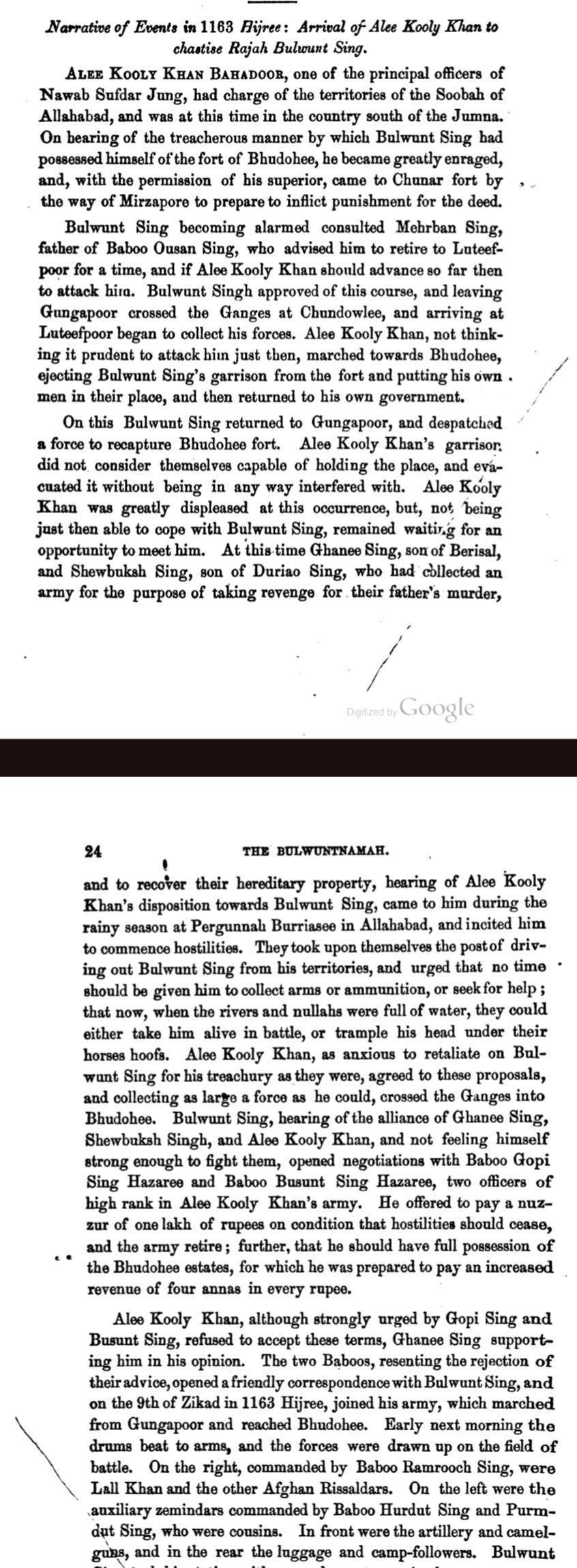
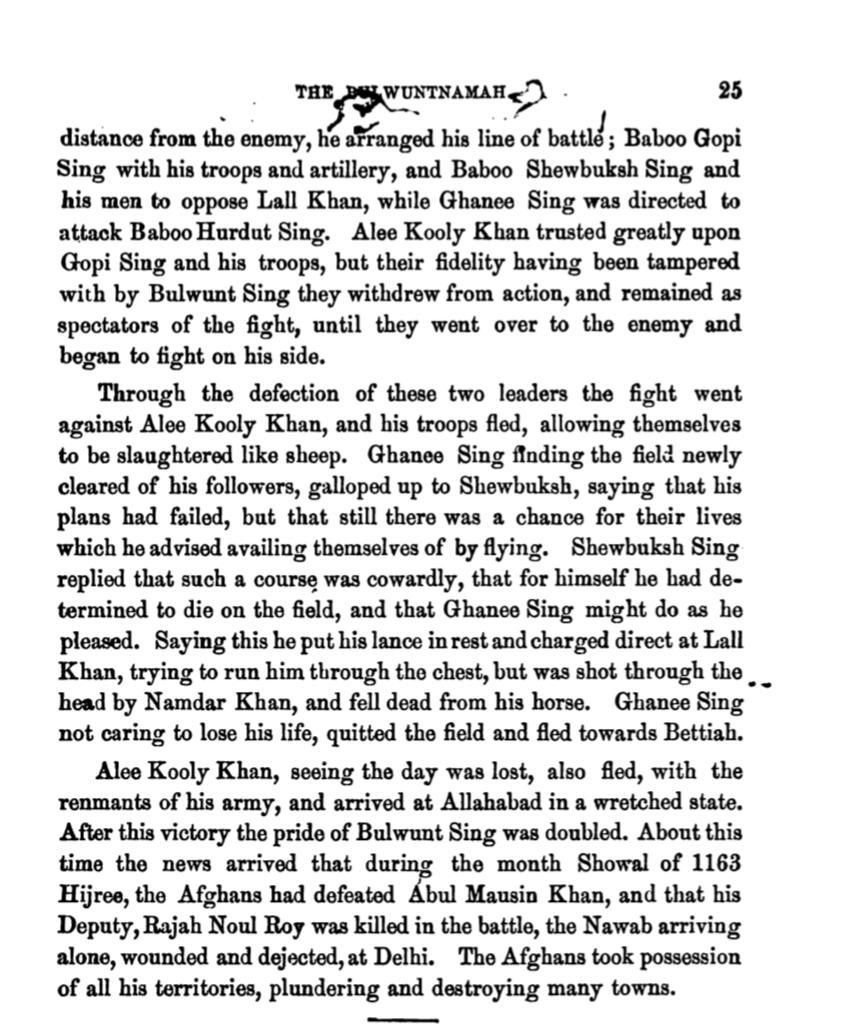
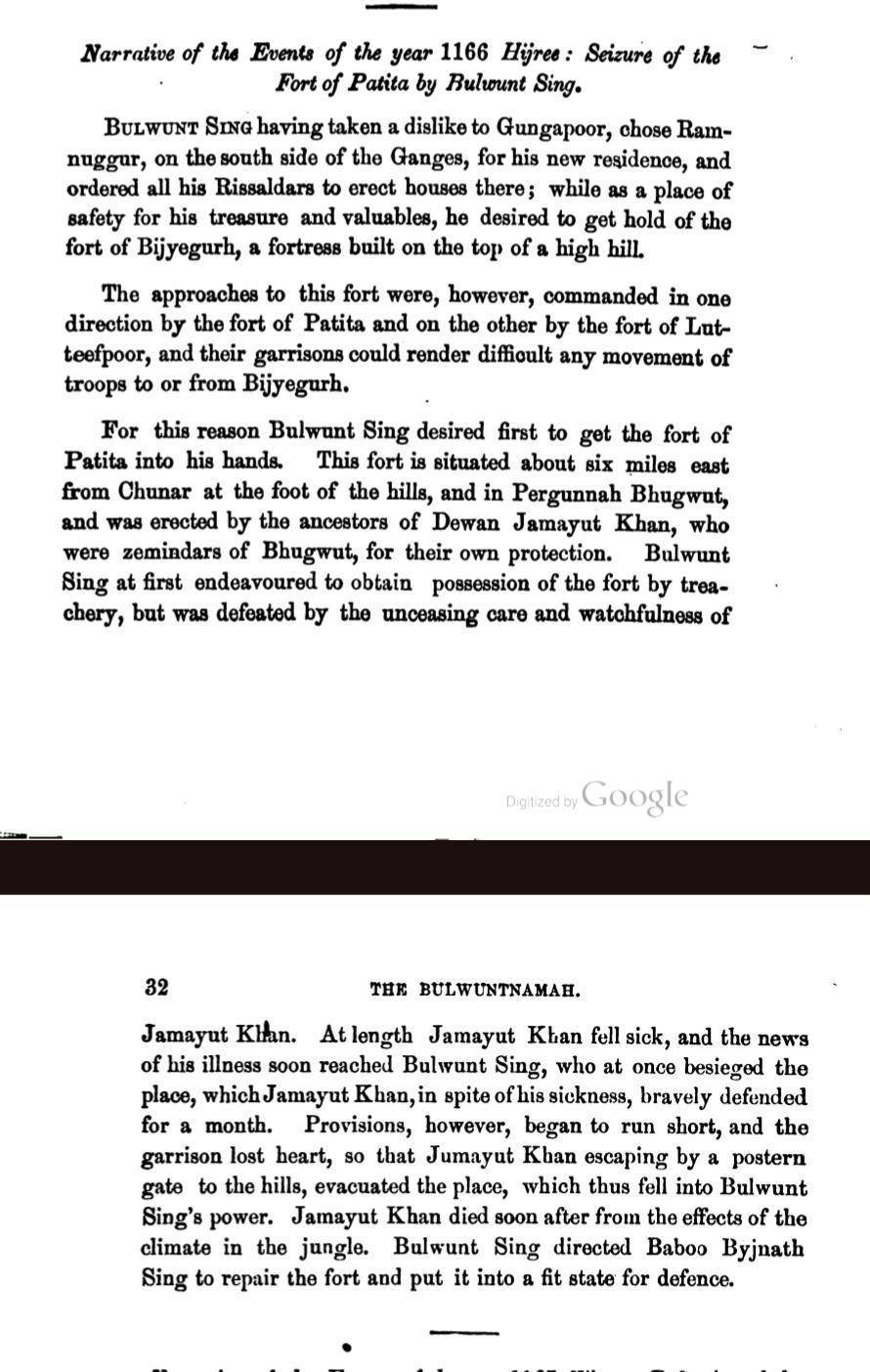
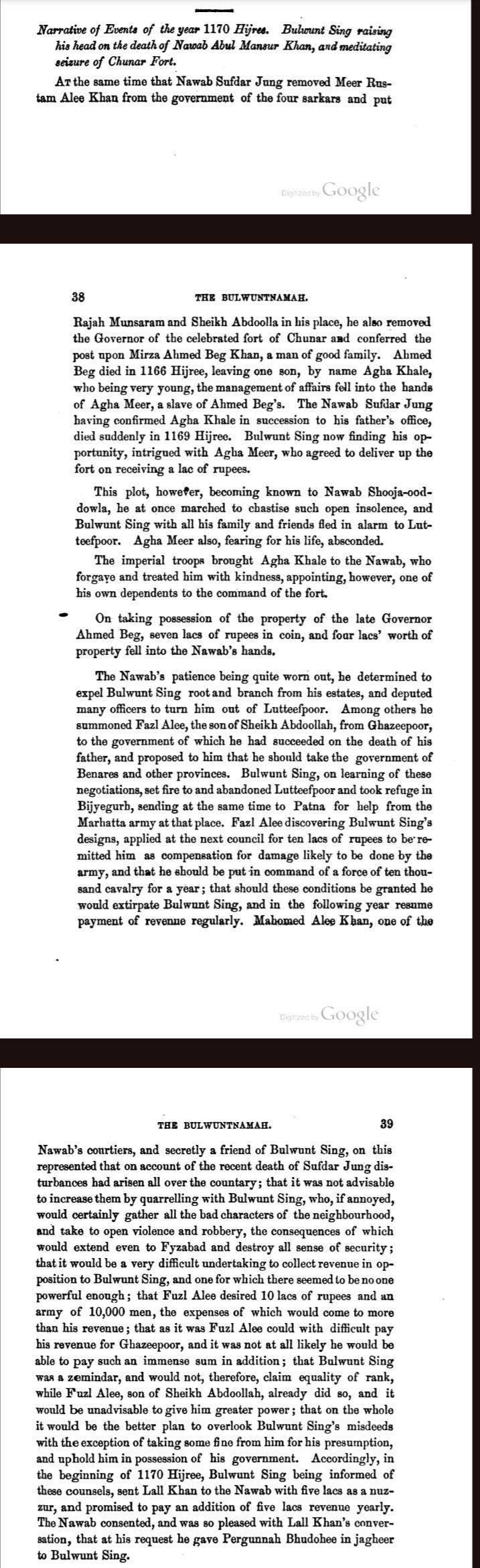
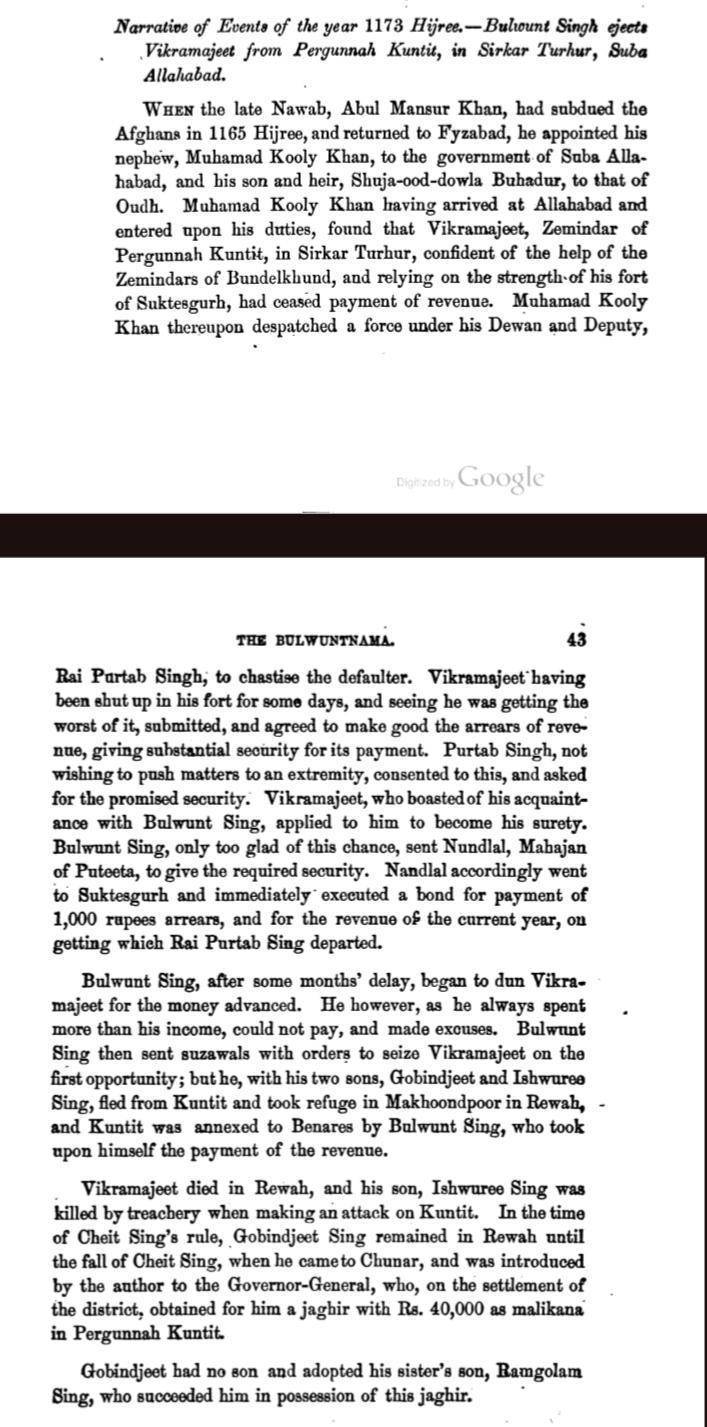
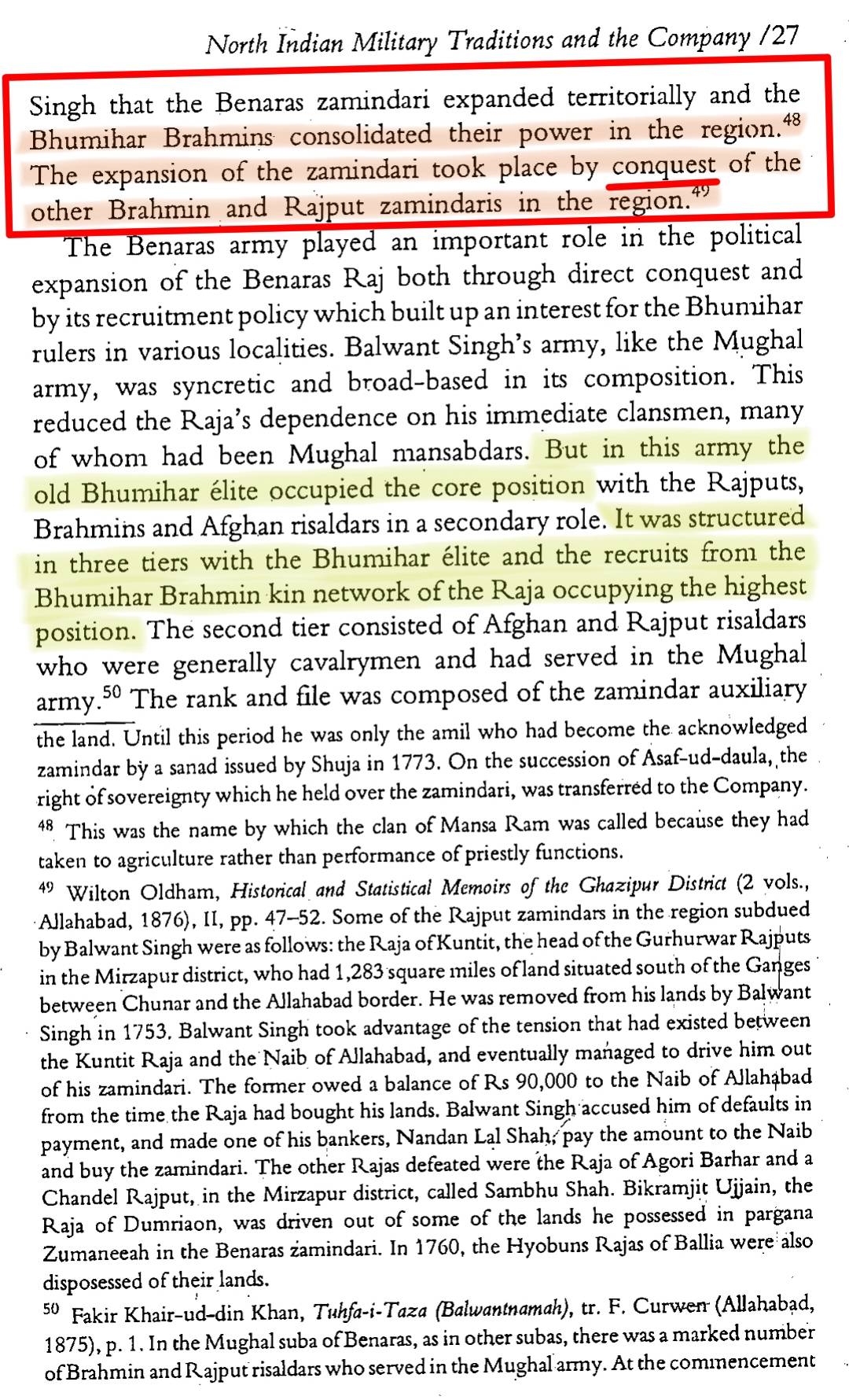
Bhumihars expanded their control by the conquest of the other
Brahmin and Rajput zamindaris in the region.
Their army's core position was occupied by Bhumihar elites and other Bhumihar
recruits
from the Bhumihar Raja's kin network.
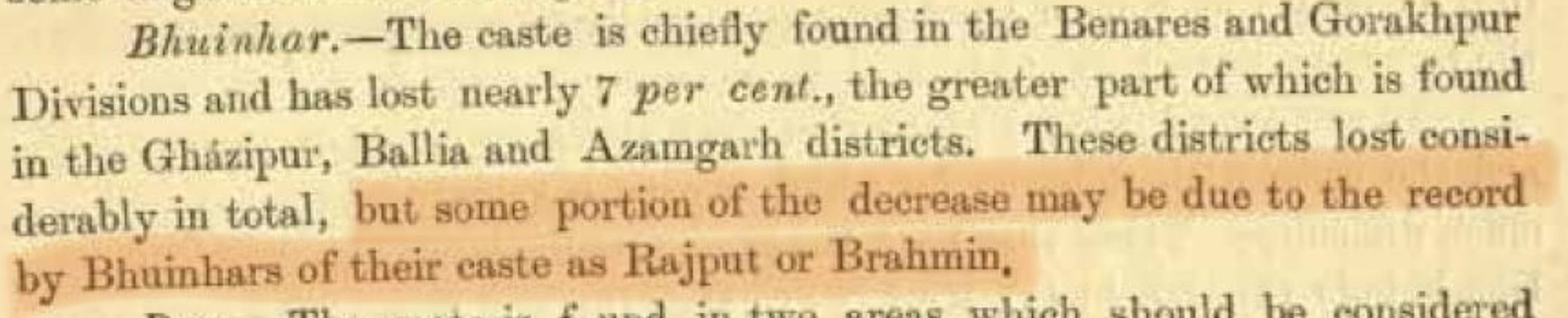
Bhumihars of Uttar Pradesh registered a decline of 7% in their
population in the 1901 census because a lot of them declared themselves as
Brahmans/Rajput. The decline was remarkable enough to be noticed by the British.
Census of India 1901 vol.16 (N. W. provinces and Oudh); pt.1 (Report)
by Burn, R.
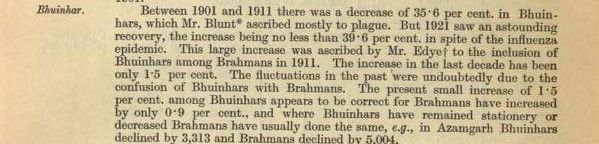
A lot of Bhumihars from Uttar Pradesh declared their caste as
Brahman that led to a sharp decline in their population which caught the attention
of
Census officials.
[70]
Census of India 1931 vol.18 (United Provinces
of Agra and Oudh); pt.1- Report
Go to References
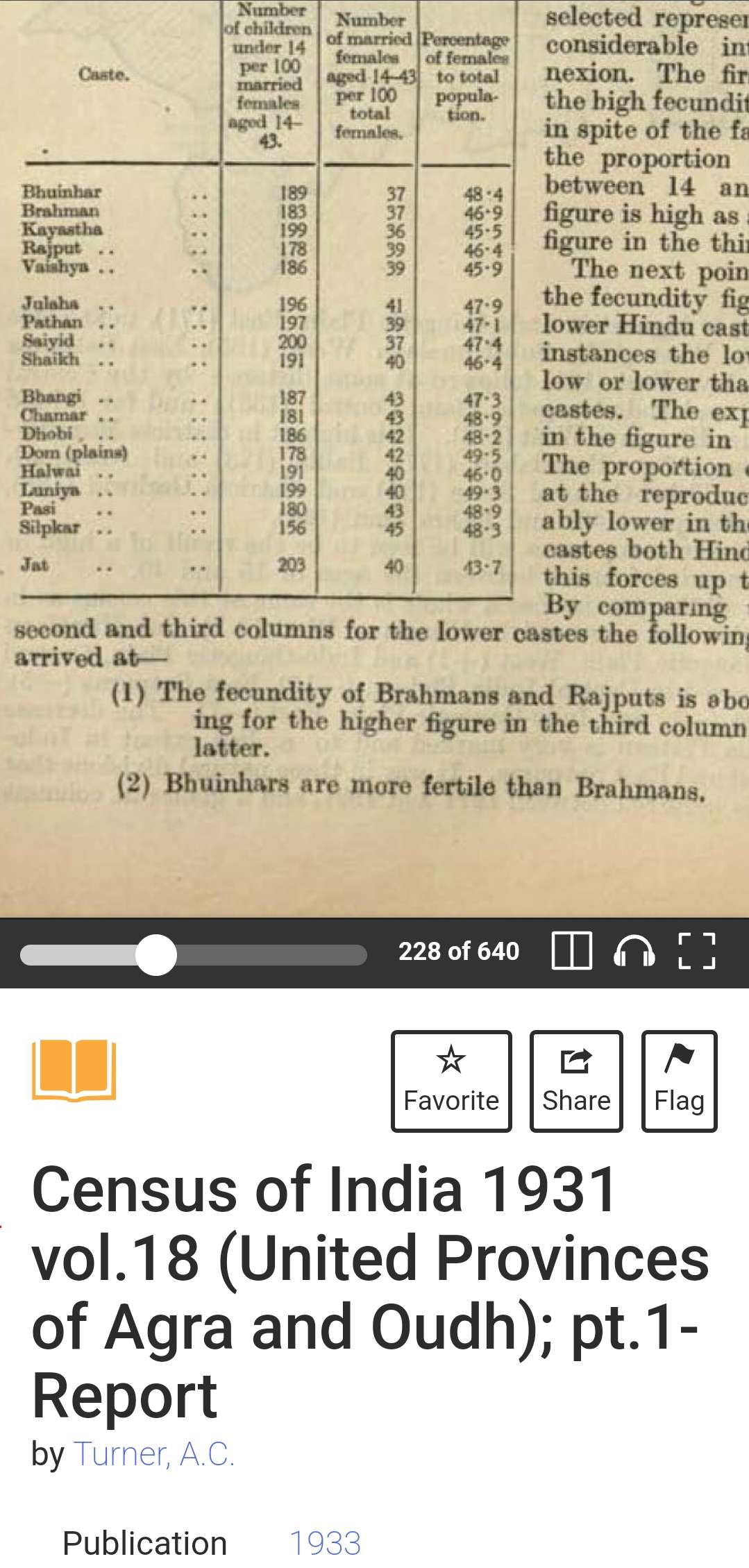
Bhuinhar/Bhumihar was a title, also taken up by aborigine
Dravidian tribes.
Proof of the fact that the majority of Bhumihars found in
Mithilanchal are actually recent migrants from Bhojpur and Magadh, not local ethnic
Maithils.
Brits often restored the agency of Rajput Rajas whom Balwant
Singh
had previously expelled and deposed.