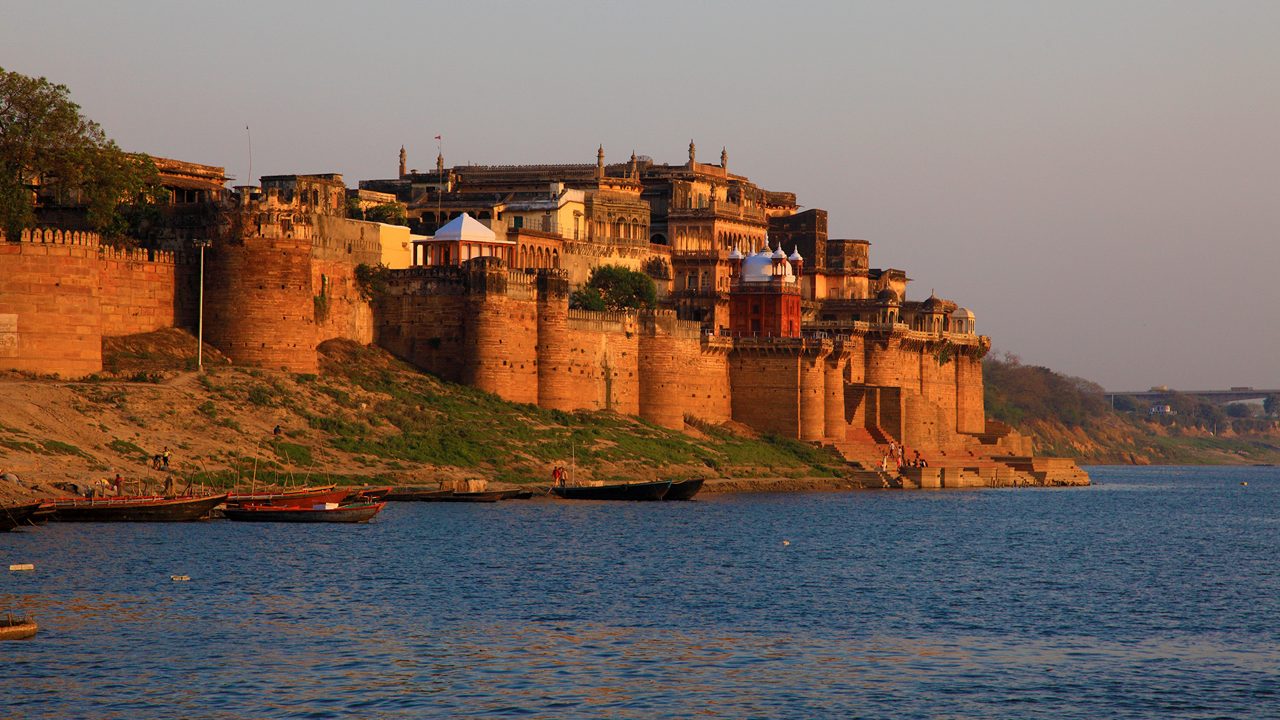
Bhumihars Origin
Introduction
Bhumihars or Babhans were originally the native Brahmins of Magadha, who had almost entirely converted to Buddhism and later reconverted to Hinduism after Buddhism declined. Having spent many centuries as Buddhists, they had largely shed their ritual status and priestly functions and, since they were returning to Hinduism from another religion, they were naturally regarded as having branched off and thus emerged as a distinct caste. Yet they still retained their gotras, pravars, ved, upved etc.
While numerous theories have been historically proposed regarding the ethnogenesis and origins of the Bhumihars, some criminally scandalous, penned by orthodox Brahmins in 20th century, to malign the Babhans/Bhumihars, and others speculative, misguided, and half baked originating from some British writers, the true story is far off from both.
The most credible and historically supported, firmly established origin story, endorsed by respected historians and corroborated by authentic published sources, holds that the Bhumihars are the erstwhile native Brahmins of Magadha who had converted to Buddhism. Upon their later reconversion to Hinduism, they lost their former ritual status Babhans are thus former Brahmins who adopted Buddhism and subsequently reintegrated into Hinduism with a relegatede status, lower than Brahmins but higher than Rajpoots. During this religious transition, they drifted away from the Brahminical order and became a completely distinct caste, while assuming control over lands and shrines associated with abandoned Buddhist monasteries, hence the name Bhūmi + Hāraka (Bhumihar), meaning “Those who usurped lands”.
We will discuss the evidence supporting this in the next section
Historical Testimony of Conversions
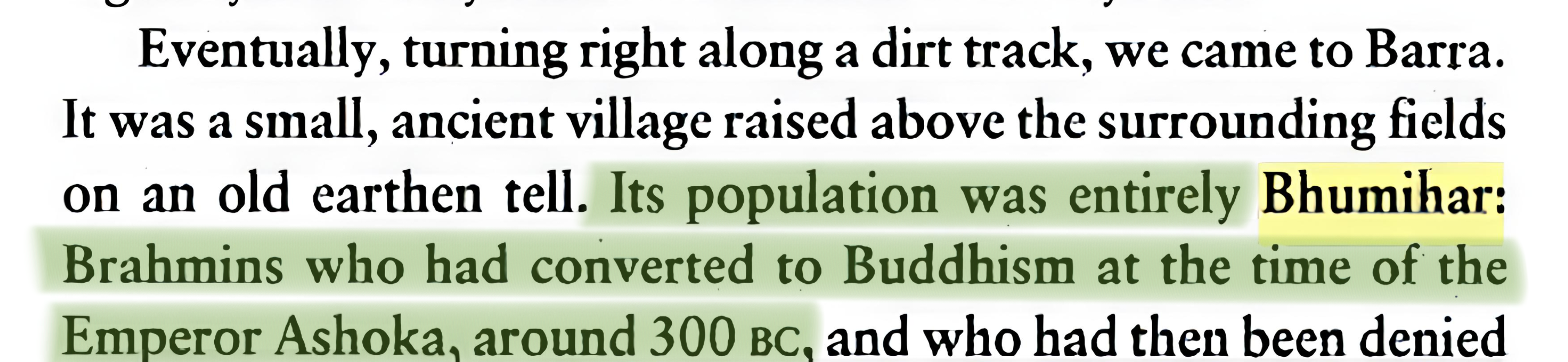
The internationally renowned historian William Dalrymple, through his field research, identified an entire village of Brahmins who had converted to Buddhism (present day Bhumihars) during Ashoka’s reign around 300 BCE. If anyone needs a proven example of such a conversion, it is now available
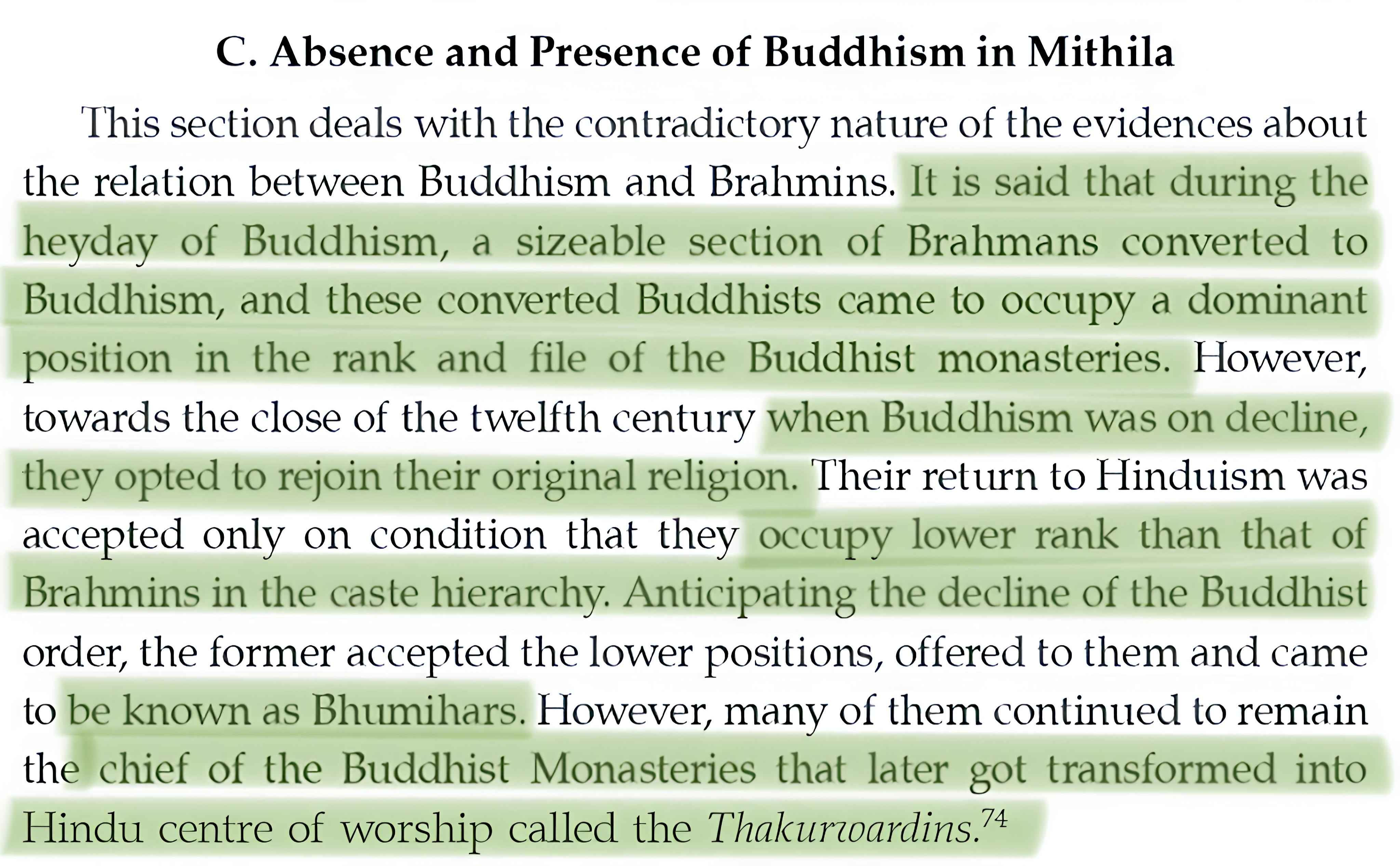
Origins according to report of The Asiatic Society, Ministry of Culture, GOI
During Buddhism’s height, many Brahmins converted and rose to prominence within monasteries. But as Buddhism declined by the twelfth century, they returned to Hinduism, accepted back only with a relegated status. Anticipating Buddhism’s fall, they accepted this term and came to be known as distinct caste called Bhumihars. Some continued as heads of former Buddhist monasteries, which later turned into Hindu worship centres called Thakurwadis which could be found in many Bhumihar villages even to this day.
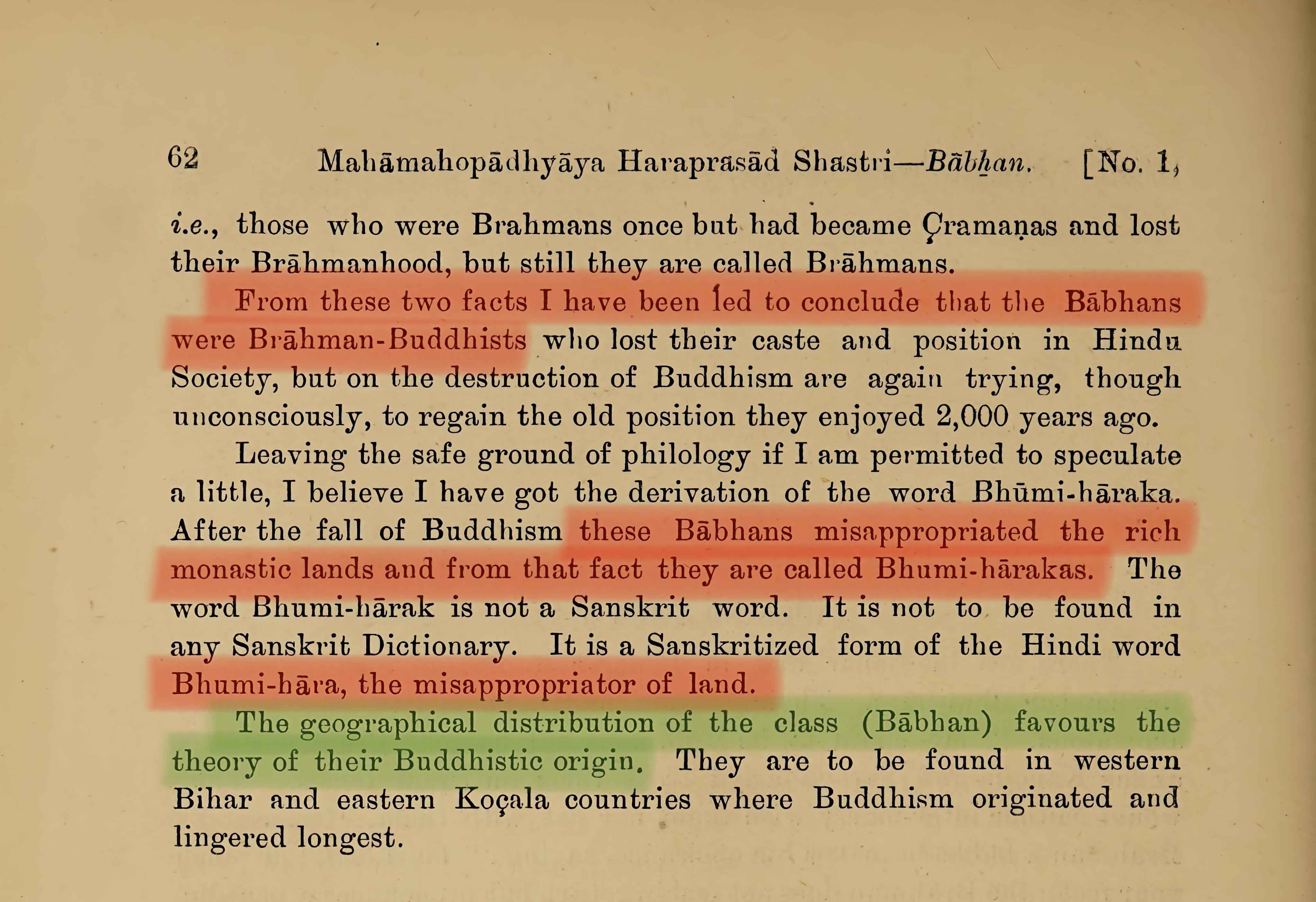
Linguistic and Geographical proofs of origin
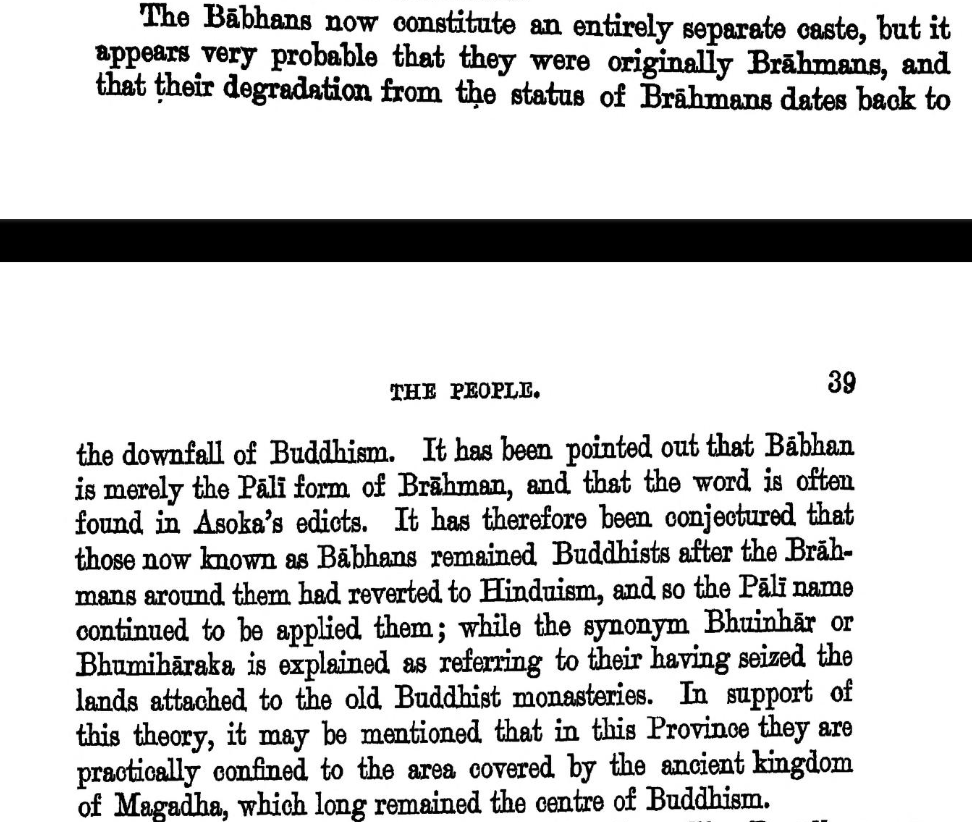
Bhumihar’s synonym or traditional name ‘Babhan’, is the Pali form of Brahman from Ashokan times and it points to Brahmins who had converted to Buddhism and their Pali name stuck with them ever since. The term Bhumihāraka reflects their control of lands once tied to Buddhist monasteries. The centre of their population, Magadha, and their other settlements coincide with the regions where Buddhism was strongest and persisted for the longest time according to British era historian and Sanskrit linguist Haraprasad Shastri Bhattacharya

Geographical Continuity in the Buddhist Heartland
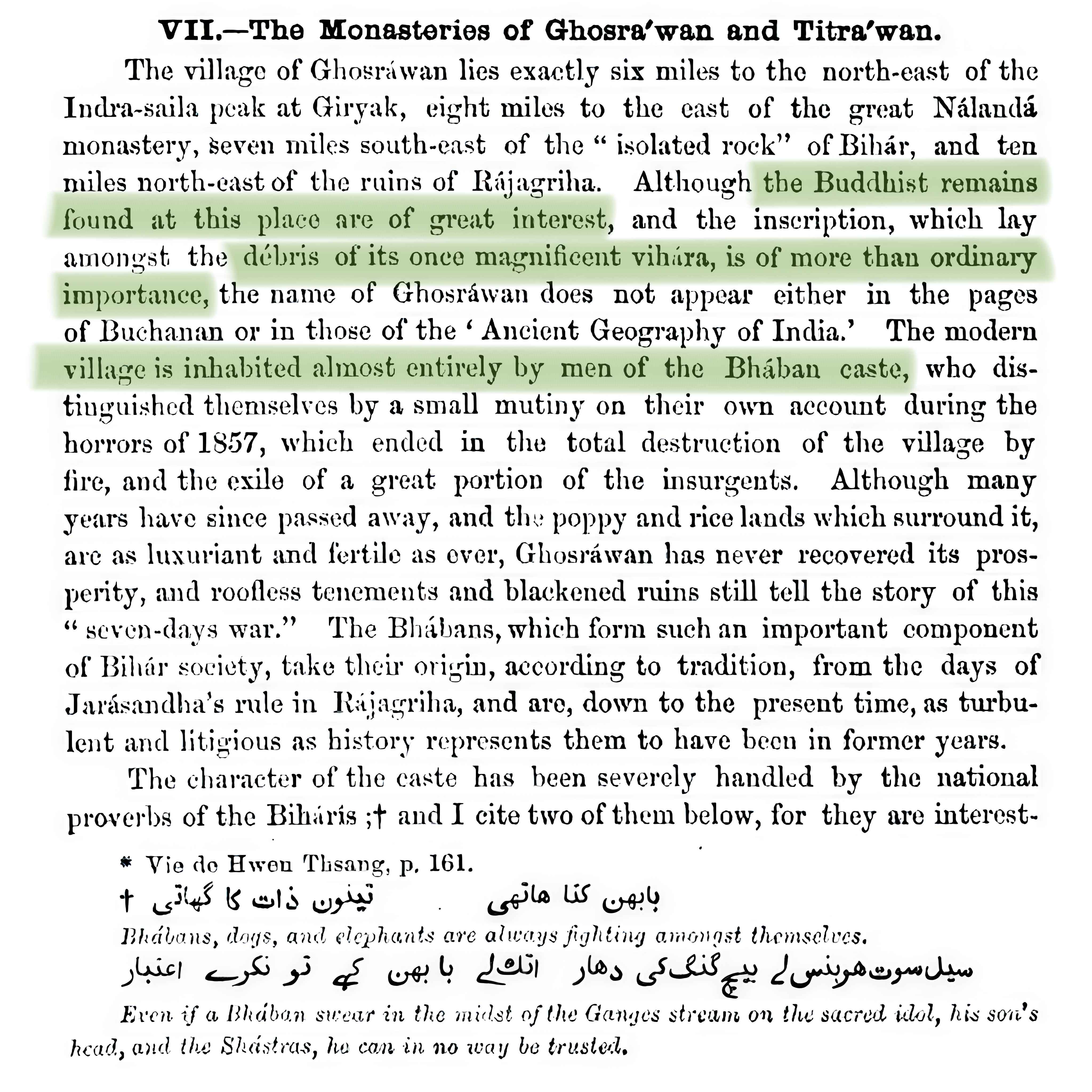
Some archaeological and settlement related information are given below to show how Bhumihars have long inhabited important sites associated with Buddhism, further strengthening the claim of their Buddhist past.
(a) The Magadh region of Bihar is dotted with sites of Buddhist
significance, many of which are either heavily inhabited by Bhumihars or have Bhumihar
settlements in close proximity. Ghosrawan lies six miles northeast of Indra-śilā peak
(Giryak), eight miles east of Nālandā, seven miles southeast of Bihar’s “isolated rock,” and
ten miles northeast of the Rājgir ruins—placing it at the heart of ancient Buddhist Magadha.
Titrawan, mentioned alongside Ghosrawan, is another site noted for important Buddhist
remains. The fact that these villages are almost entirely inhabited by Babhans or Bhumihars
lends further weight to the Buddhist-Brahmin origin theory by establishing geographical
continuity
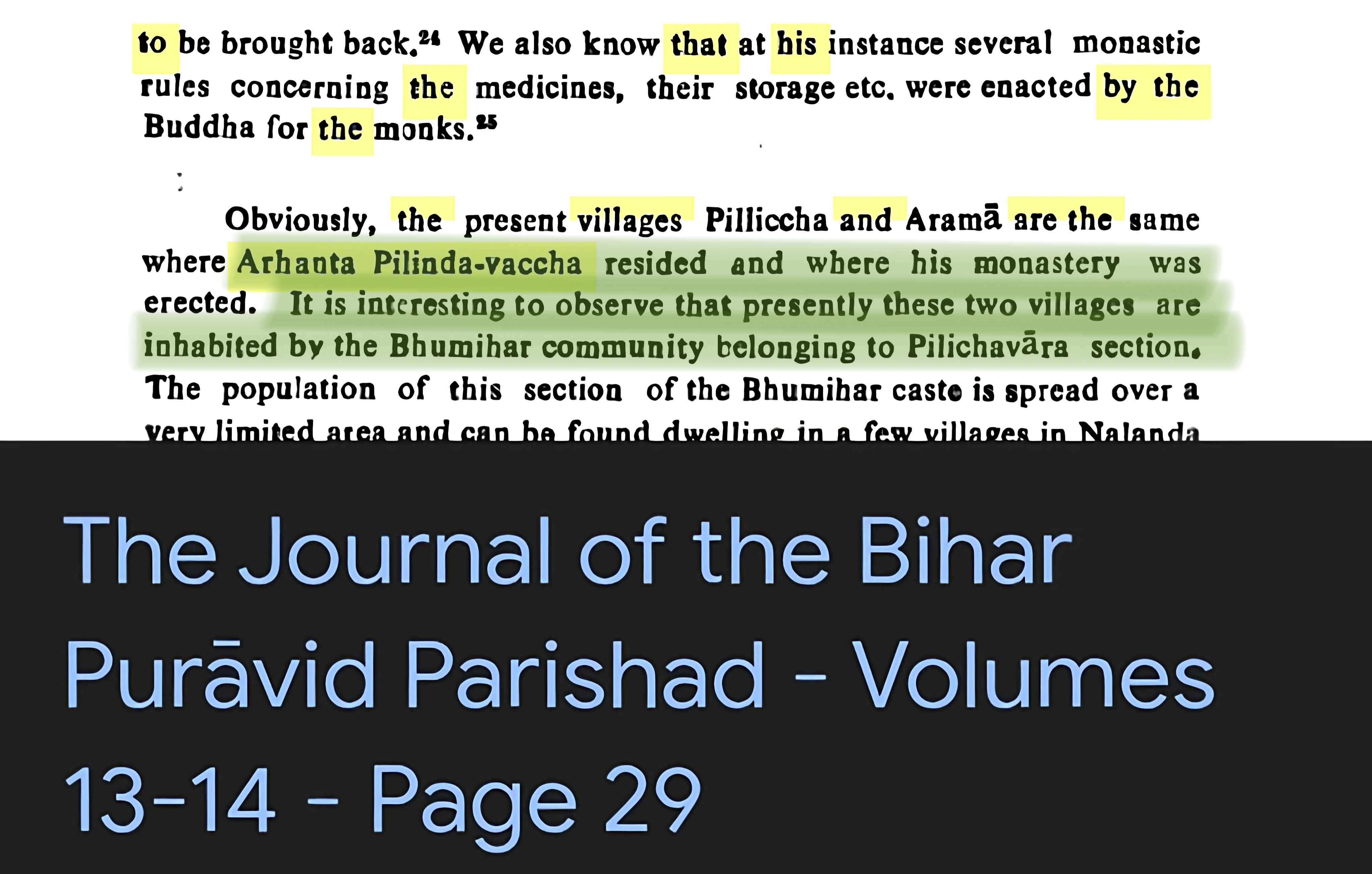
(b) The villages of Pilliccha and Aramā, where Arahanta Pilinda-Vaccha, a
noted disciple of Gautama Buddha, resided, are inhabited by the Bhumihar community of the
Pilichavara Mool, that's based on the name of the village itself and their Mools are based
on villages that they've been inhabiting since thousands of years, indicating their ancient
presence in that village. This adds further credence to the view that early Bhumihar
settlements coincided with Buddhist centres, strengthening the theory that their origins
trace back to Brahmin groups who had adopted Buddhism.
Countering Misconceptions
Regarding the origins and ethnogenesis of the Bhumihars, many unsubstantiated, defamatory and scandalous theories were propagated by their enemies with the intent of slandering them and tarnishing their reputation. This assertion is based not only on the patently silly and unscientific nature of those slanders, but also on the observations of Sir Alexander Cunningham, the founder and first Director-General of the Archaeological Survey of India, who remarked that defamatory stories about the Bhumihars were spread by “their enemies.”
Below are those theories, together with their rebuttals drawn from the very same books :
In his assessment, doubts about the purity of their Brahmin status were based on assertions for which he could obtain no trustworthy evidence.
He noted that such views were rumours rather than conclusions based on evidence.
He treated this tale as unsubstantiated legend rather than a historical fact.
References
| ID | Book/Article | Author | Year | Snippet |
|---|---|---|---|---|
| [1] | The Tribes and Castes of the North-Western Provinces and Oudh | William Crooke | 1896 | |
| [2] | The Tribes and Castes of the North-Western Provinces and Oudh | William Crooke | 1896 |